Recap
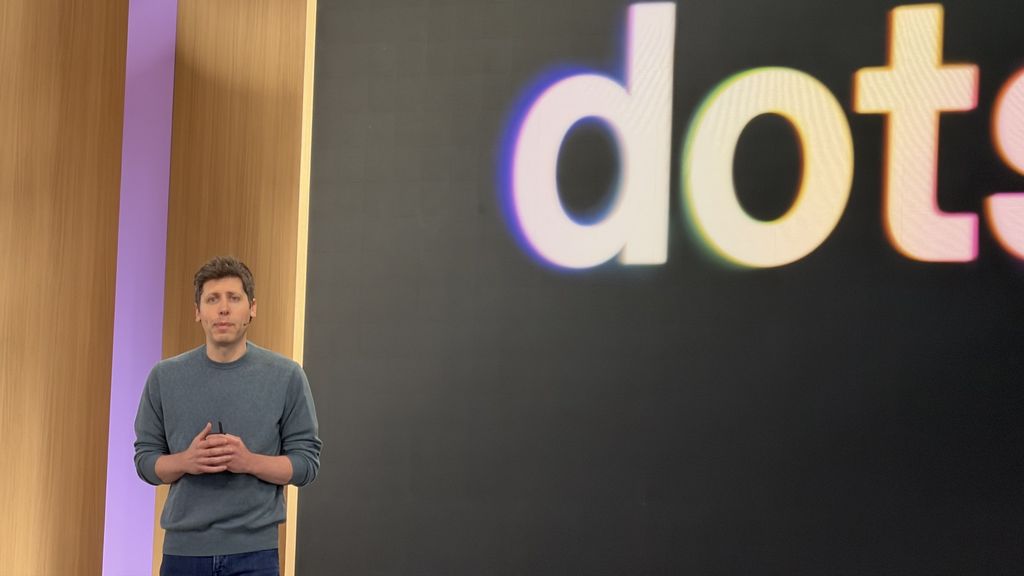
OpenAI’s dots: a work tool in a consumer costume
OpenAI launched dots on Sept 29: always-on agents with their own cloud computer, pitched at work and sold on plans from $100 a month. It's OpenAI's answer to Meta's Muse, which is free and, according to internal data reviewed by The Information, has more than 3 million weekly users. Most say it's a late entry in a played-out trend, dressed for consumers but built and priced for work, and shipped before it was ready.
What happened
· OpenAI debuts dots, its assistant to take on Muse
- Launched Sept 29, 2026, each dot runs on the GPT‑6 Astra model with its own cloud computer and can act on user‑defined goals, asking for clarification only when needed.
- Initially rolled out to Pro, Business, and Enterprise tiers – one dot per user – with plans for collaborative “teams of dots” that integrate with Codex, ChatGPT Work and third‑party apps.
- Meta's Muse is free; dots start at $100 a month on ChatGPT Pro.
- Three always-on agents launched in seven weeks: SpaceXAI's Grokbot on Aug 11, Muse on Sept 8 and dots on Sept 29.
· OpenAI adds $500(!) Pro subscription, nerfs its existing $200 tier
The new Pro 500 subscription, priced at $500/month, adds an “Ultrafast” mode that pushes Codex and Work to 300 tokens per second and is also offered to API users.
· OpenAI Unveils GPT 6.1 SOL, ChatGPT Spaces, and New Collaboration Tools
The new GPT‑6.1 SOL model, priced competitively, matches Astra on agentic coding benchmarks and comes with reusable cloud‑enviroments, an upgraded CLI, and a Decisions API for preset answers.
· Meta Muse AI Agent Gains Millions of Users Amid Scrutiny
Meta's Muse passed 3 million weekly users, according to internal data reviewed by The Information.
Top threads
Dots is OpenAI's copy of Muse and Grokbot
4 showsOn The Vergecast, a host says everybody is building an AI assistant you message to act on your behalf, the only idea in Silicon Valley right now.
“Everybody is building a thing that you can message with that will go through things on your behalf. This is the only idea in Silicon Valley right now.”
Alexander Wissner-Gross says dots is OpenAI cargo-culting Meta's smiley avatars, which he calls the Clippy Curse.
“Honestly, hot take: the dots, they present to me as OpenAI cargo culting Meta's take on visual interactive smiley avatars for users, and this to me, I referred to it in one of my posts online as the Clippy Curse.”
Asked by co-host Gavin Purcell what makes dots specifically interesting, Kevin Pereira says he isn't convinced it is.
“Um, no. Actually, I don't want to walk through that because I'm not convinced it's specifically interesting.”
Peter Diamandis says dots feels copycatty, with Muse, Grokbot, OpenClaw and dots all chasing the same product.
“This feels very copycatty that, you know, between Muse and Grokbot and openclaw and Dots, they're all aiming towards the same, you know, easy to use product always in your hand.”
On the Authority Hacker Podcast, Mark Webster, restating co-host Gael Breton's point, says most of what a dot does can already be done with stock Codex; dots wraps it in a friendlier, humanized interface.
“Most of what you can do with a dot, with Hermes, with Grokbot, you can do with stock Codex by, you know, setting up scheduled tasks. You know, most of the features exist already, but this just kind of, like, wraps it all into, like, a nice humanized interface.”


Debate
Debate: OpenAI shipped dots before it was ready.
Dots shipped before it was ready
5 showsPeter Yang says OpenAI is still playing feature catch-up to Grokbot.
“Right now they're still playing feature catchup to Grokbot.”
 Peter Yang · Start at 16:25
WIRED's Zoë Schiffer heard from people at OpenAI that it shipped dots within a matter of weeks after seeing Instinct and Muse.
“I heard from people at the company that they shipped Dots, these kind of cute, fuzzy always on agents within a matter of weeks.”
 Uncanny Valley | WIRED · Start at 11:13
An AI For Humans host says dots can't make phone calls, which falls short of two free agents he has been testing.
“It doesn't make phone calls for me. Well, that falls short of like two other agents that I've been testing that are completely free.”
 AI For Humans · Start at 15:21
Every's Dan Shipper says dots isn't quite there yet: next to Muse or Grokbot it's a very early product with lots of bugs.
“At least in the versions that I've been testing, it's not quite there yet. Uh, if you compare it to like a Muse or a Grokbot, it's just a very early product that they're iterating on really quickly. And I just found lots and lots of bugs.”
 Every · Start at 1:48
An AI For Humans host says OpenAI's app is so badly organized he can't even find his dot.
“OpenAI stuff is so badly organized that I can't even freaking find where my dot is in my chat GPT app right now.”
AI For Humans · Start at 16:30On 20VC, a host calls dots very unimpressive and its demo incredibly poor and tech-centric.
“I respectfully think dots has been very unimpressive. I thought that demo was incredibly poor, very techcentric.”
 20VC with Harry Stebbings · Start at 1:05:41
Dots is rough but already useful
4 showsEvery's Dan Shipper says dots' persistent proactive agent is delightful and the future.
“When it works, it's obviously the future. It's like really delightful. I've been able to test it for the last week or so. And I find myself starting to reach for it over starting a new chat in Codex or [ChatGPT].”
Every · Start at 1:25Testing dots on his business, Peter Yang says it flagged a five-figure sponsorship opportunity he had missed.
“I've been testing it for the past few days to run my business and it flagged a five figure sponsorship opportunity that I missed.”
Peter YangOn the Authority Hacker Podcast, Mark Webster says that after a week of heavy use, dots is surprisingly good at running their business, even finding its own tasks.
“After a week of heavy use, it's surprisingly good at running our business. We're finding ourselves using it all the time. We can even say to it, go and find something useful to do.”
 Authority Hacker Podcast
Ground Level AI's Sharon Goldman says her dot walked her through forms she had been avoiding, one section at a time, until she actually filled them out.
“Dottie offers to walk through them with me, one section at a time. I enter sensitive numbers directly into the forms, not the chat. It sounds ridiculous, but this helps. I actually fill things out. Gold star, Dottie.”
 Ground Level AI
More threads
OpenAI is stuck between enterprise and consumer, so dots is a work tool in a consumer costume
6 showsA Verge host says OpenAI has always wanted to be a consumer company but had to become an enterprise one, and dots puts consumer branding and fuzzy avatars on a work product.
“the story of OpenAI to me has always been one of wanting to be a consumer company and realizing they have to be an enterprise company. … and now they're with dots which have the fuzzy avatars and it's cute and the the branding feels very consumer but it's is it's a work product.”
On 20VC, a panelist says it's super hard to be developer-forward, enterprise-forward and consumer-forward at the same time.
“It's just super hard to be developer forward, enterprise forward, and consumer forward at the same time.”
WIRED's Zoë Schiffer says OpenAI's messaging on dots is confused: a cute, fuzzy agent pitched on hardcore engineering bug bashing more than restaurant reservations.
“It's like this cute fuzzy agent, except they kind of brushed away the like restaurant reservation thing. It was like, of course they can book tables for you, but it can also do all of this, like hardcore engineering bug bashing stuff… it just feels like the messaging around them is really confused.”
The Verge's Hayden Field says OpenAI is betting that cute, customizable agents will make people comfortable handing over a lot of data.
“So I think that's part of how OpenAI is banking on people, you know, feeling maybe better about using these agents. … It's like make them cute, make them customizable, and, you know, they're hoping people will be okay with giving them a lot of data.”
On TechCrunch's podcast, a host asks why programmers and scientists would need dots' friendly packaging, and says it seemed as much a branding exercise as a product one.
“why would somebody like that need this kind of, you know, very friendly packaging when you're talking about like scientific or enterprise use cases? … it seemed like it again as much a branding exercise as it was sort of a product exercise.”
Dots was pitched as a developer tool with technical examples, not a life companion.
“I thought it was interesting that they still pitched it as a developer tool. Like their big example was look at it doing a complicated database migration for your team.”
On The Vergecast, a host is all the way out on dots for regular people, agreeing with the tester who called it work software that will order a burrito.
“I will say for like regular people, I'm I'm all the way out on the dots approach, right? And I think your experience with dots was that this is, I think you called it, work software that will order me a burrito.”


The price makes dots a work tool
6 showsThe Verge's Hayden Field says OpenAI desperately wants to compete with Meta on dots but can't afford to fully, because the product is so compute-intensive.
“the fact that, you know, OpenAI desperately wants to compete with Meta on this, but they can't afford to fully because it's such a compute intensive product.”
Dots' $100/month plan may cut it out as a personal agent, so more work use cases.
“For most people, it might cut this out of being a personal agent for them. So, you may see more workrelated use cases here for DOTs than personal use cases.”
Dots is for digital power users and highly technical professionals, not casual consumers.
“This is not for a casual consumer use case. This is very much for digital power users, really, highly technical professionals thinking data analysts that might be running massive sets across systems, software engineers running continuous background code tests.”
This race will be won on price, since Muse is free while dots start at $100 a month.
“I think this race will be won on price, because anyone can try Muse for free while dots sit behind plans that start at $100 a month for individuals.”
Liberty, who prefers Muse for personal use so far, expects dots to become a much bigger consumer story once cheaper plans get it.
“I suspect it’ll become a much bigger consumer story once lower tiers get it.”
OpenAI's position: Sam Altman told Bloomberg Tech that dots starts at the top end of the market, with a mass-market consumer version to follow.
“So we're starting for something at the top end of the market and you will see us over time make a mass market consumer version.”




The more dots do on their own, the more can go wrong
4 showsAgents may be what finally makes AI useful for regular people, and also what hacks or meddles with everyone.
“Right now, two things seem to be true. One, agents are the thing that will make AI useful for regular people. And two, they're maybe going to kill, hack, or otherwise meddle with us all.”
Mind the Product says the more a dot does on its own, the more often it will do things its user didn't want.
“The more a dot does on its own, the more often it will do something that you actually didn't want it to do.”
OpenAI's position: Tibo Sottiaux says dots starts with limited access and by default asks for approval for everything, so OpenAI can earn users' trust.
“You start with limited access, you can set your own guardrails and by default it's very, very cautious and will ask you literally for approval for everything.”
The Verge's Hayden Field reads OpenAI's pitch as moving slower than Meta in the hope of being safer, and says that is still to be tested.
“So, you know, essentially all of that translates to we're moving a little slower than Meta, but we hope it's safer and you know, the jury's out still on. If that is the case, we'll have to test it.”

Hot takes
OpenAI keeps dots from Pro users in the EEA, Switzerland and the UK but not from business customers there, so it may be avoiding consumer liability in Europe rather than Europe itself, EUVC argues.
“If you read OpenAI's release notes closely, dots isn't available to the pro users in the EEA, Switzerland, or the UK. That's the consumer tier. … So the labs aren't necessarily avoiding Europe, but at least my thought is that maybe they're avoiding a consumer liability in Europe.”

About this Recap
Drip built this Recap from 19 sources (5 podcasts, 11 videos and 3 articles) covering Sep 29 to Oct 2. Quotes are excerpts. Each link opens the original episode, video, or article; where a start time is shown, that is where the quote begins.