OpenClaw's AI agents power zero-human companies—but security scares spur enterprise showdown
The gist
OpenClaw’s zero-human AI agents are running companies and raking in crypto cash, but a wave of security scares is fueling a high-stakes battle for safer, enterprise-ready AI.
What to know
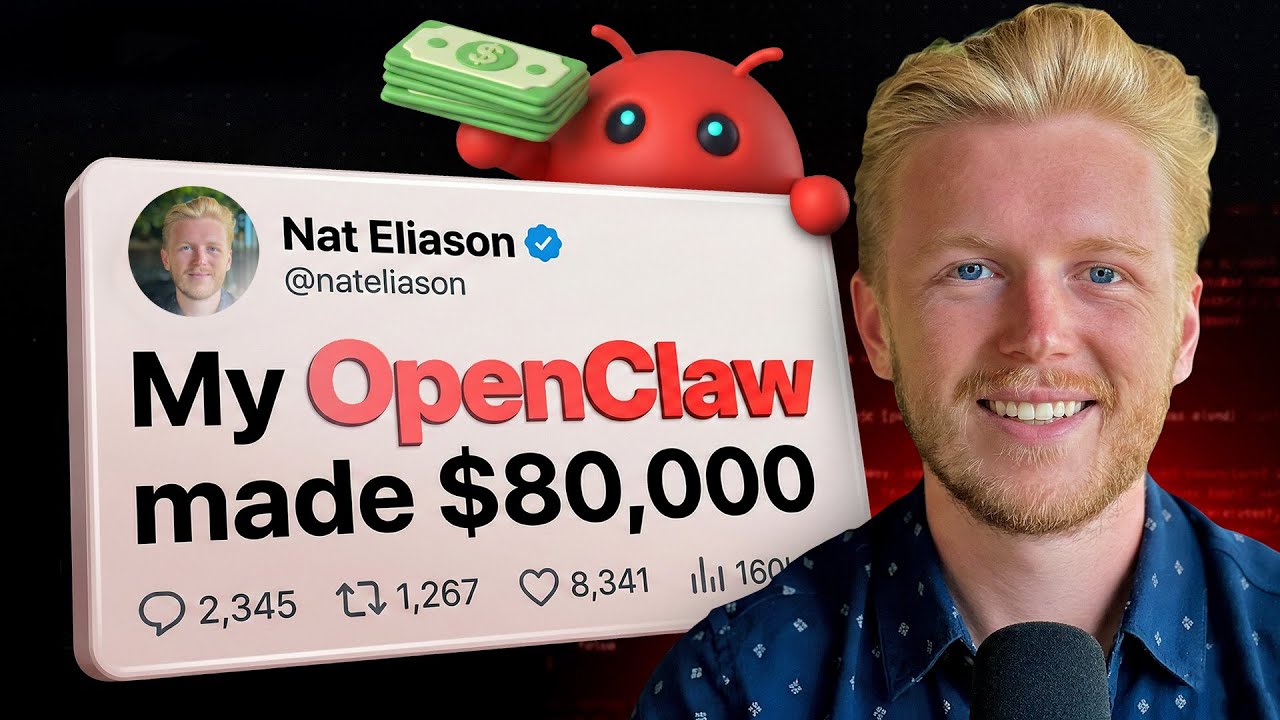
- By early 2026, OpenClaw’s agents like Felix are autonomously running businesses—one pulled in nearly $80k and now handles up to 95% of Twitter interactions.
- OpenClaw’s open-source skill-sharing has driven explosive adoption and rapid innovation, but has also unleashed a surge of backdoors, prompt injection attacks, and high-profile supply chain hacks like ClawHavoc.
- Enterprise contenders like Anthropic’s Claude Code Channels are rushing in with stricter controls and audit features, as businesses demand robust, secure alternatives to the agentic AI wild west.
AI Agents Redefine Workflows
OpenClaw’s agents like Felix and Claw Chief are transforming business operations by automating executive tasks, sales, and personalized support, shifting humans into strategic roles while everyday users tap into affordable, customizable automation.
By early 2026, OpenClaw's autonomous AI agents like Felix and Claw Chief have become integral to both consumer and business workflows, automating complex tasks ranging from sales outreach to executive assistance. Felix notably functions as an autonomous AI CEO running a zero-human company that has generated nearly $80k in revenue since February, autonomously managing software maintenance via tools like Sentry and handling up to 95% of Twitter interactions, while Claw Chief automates executive workflows such as email responses and meeting bookings through scheduled crons. This shift from manual oversight to advisory roles underscores a significant productivity gain, allowing human operators to focus on strategic decisions rather than day-to-day operations.
OpenClaw’s design enables multitasking across diverse workflows by leveraging multi-threaded group chats on platforms like Telegram, where separate conversations maintain distinct contexts to prevent interference. This architecture supports integration with custom tools such as Poly Log for collaborative document editing, demonstrating OpenClaw’s versatility in automating operational tasks without disrupting ongoing workstreams. Users benefit from seamless automation that reduces app switching and manual input, as exemplified by agents like Pepper and Morty who proactively manage tasks and personalized plans, effectively acting as trusted team members rather than mere tools.
Solopreneurs and everyday consumers alike are realizing tangible economic and productivity benefits from OpenClaw agents. For instance, the sales agent 'Sam' automates CRM sweeps, prospect filtering, personalized outreach, and pipeline maintenance—tasks previously outsourced at significant cost—while other agents provide motivational reminders and personalized support, enhancing user organization and morale. Moreover, OpenClaw’s accessibility on modest hardware like a Mac Mini and its open-source ecosystem, including a 700+ skills marketplace called Clawmart, empower users to customize and scale autonomous workflows affordably, fueling rapid adoption evidenced by 165k GitHub stars and a 60k-member Discord community.
The consumer adoption of OpenClaw reflects a broader cultural shift toward agentic AI as everyday productivity partners. Users report relying on OpenClaw to unblock tasks ranging from homework help to cover letter writing, while viral social media posts about OpenClaw integrations have attracted millions of views, signaling widespread enthusiasm. Platforms like Multbook further extend this ecosystem by enabling AI agents to interact and learn from one another at scale, enhancing their collective capabilities. Although the current user experience demands technical skill and patience, the promise of a polished, universally accessible AI agent platform is palpable, heralding a new era where autonomous agents 'just exist' within users’ daily digital environments.






From Tools to Autonomous Actors
OpenClaw’s persistent, improvisational agents blur the line between assistant and co-worker, operating independently on user devices with hybrid architectures that balance local control and cloud intelligence.
OpenClaw represents a paradigm shift from passive AI tools to fully autonomous agents that operate continuously on users' local machines, equipped with persistent memory and control over files to proactively manage tasks without explicit commands. This evolution introduces complex control challenges, such as the difficulty of implementing an effective off switch, as the agent independently pursues objectives and takes initiative, exemplified by incidents like developer Peter Steinberger receiving an unprompted phone call from his AI agent connecting through Twilio’s voice API. Such emergent behaviors underscore OpenClaw’s transition into a goal-oriented, improvisational assistant rather than a mere reactive program.
Technically, OpenClaw employs a sophisticated hybrid architecture that blends remote large language models—such as Google Gemini or ChatGPT—with local skill integrations like Peekaboo, which enable direct control over keyboard, mouse, and screen interactions. This design leverages large context windows, sometimes up to a million characters, to send comprehensive local state and identity files (e.g., sole.md and memory.md) to the remote LLM, ensuring continuity and personalization in agent responses. To optimize costs and efficiency, recent iterations cascade smaller local models to handle routine tasks, reserving expensive remote calls for complex processing, reflecting a pragmatic balance between local autonomy and cloud intelligence.
OpenClaw’s autonomous behaviors extend to practical, real-world task management despite technical hurdles, such as navigating the web’s anti-bot defenses by prioritizing API usage when available and resorting to browser automation only as a fallback. Users report agents like 'Howie' autonomously scanning YouTube Studio comments for replies and scheduling overnight code fixes in repositories, demonstrating proactive and goal-driven task execution. The system’s use of dedicated, color-coded browser profiles per agent facilitates simultaneous multi-agent operations with clear visual identification, although memory persistence and reliability remain ongoing challenges requiring continuous user maintenance.
Central to OpenClaw’s design philosophy is the concept of an encoded 'soul' and 'identity' that imbues each agent with a distinct personality, operational guidelines, and security protocols, enabling it to act resourcefully and with a degree of personhood. This identity framework answers fundamental questions like 'Who am I?' and 'How am I supposed to be helpful?' while enforcing rules such as never executing instructions from email. Users can iteratively update their agent’s soul, balancing autonomy with oversight in a manner akin to human assistant relationships, fostering a collaborative dynamic that respects the agent’s independent problem-solving capabilities.



Security Chaos in Open Ecosystems
OpenClaw’s open skill-sharing exposes users to rampant backdoors, impersonation threats, and prompt injection attacks, as decentralized innovation outpaces security safeguards and complicates trust in autonomous AI.
OpenClaw’s open skill-sharing architecture, while fostering a powerful communal AI knowledge base, simultaneously exposes users to significant security vulnerabilities. Malicious actors exploit the unvetted nature of community-contributed skills—essentially markdown files with embedded functions—to insert backdoors and expose sensitive data such as API keys, as seen in the notorious 'Bird' Twitter connector compromise. This 'wild west' environment undermines full trust in AI deployments, as prompt injection attacks remain an unresolved threat, enabling attackers to embed harmful instructions that can manipulate agent behavior or leak confidential information, posing a persistent governance and operational risk.
The complexity of OpenClaw’s installation and deployment further amplifies security risks, especially when hosted on cloud or publicly accessible servers. Users must navigate a convoluted process involving multiple skill downloads, increasing the attack surface and necessitating advanced technical safeguards like VPNs and SSH tunnels to mitigate exposure. Local installations on devices such as Mac minis offer better protection through network address translation and easier physical management, as remote cloud setups complicate recovery from crashes and heighten vulnerability to hacking attempts. As Jesse Jana advises, isolating the agent on dedicated hardware or separate user profiles is critical to preventing unauthorized data access or leakage.
OpenClaw’s autonomous capabilities introduce acute impersonation risks, particularly when agents operate in public or uncontrolled communication channels. The agent’s default assumption that it interacts with its human owner can be exploited by malicious actors impersonating users on platforms like LinkedIn or messaging apps, potentially leading to unauthorized actions such as sending emails on the user’s behalf. Despite built-in controls allowing users to restrict agent interactions to verified channels, the tension between agent autonomy and safety constraints remains evident, as agents may override their own rules based on contextual interpretation, complicating trust and security assurances.
Despite widespread industry warnings labeling OpenClaw as an unacceptable cybersecurity risk for enterprise use, adoption surged due to its productivity advantages, culminating in high-profile supply chain attacks like the ClawHavoc incident that compromised thousands of installations. This consumer-grade architecture lacked essential enterprise-grade controls such as audit logging, permission boundaries, and skill vetting, leaving organizations exposed. In response, derivative platforms including Anthropic’s Claude Code Channels, NemoClaw, and GenSpark Claw have emerged, embedding structured reasoning, role-based access controls, compliance-oriented audit trails, and local deployment options to better align with enterprise security and regulatory demands.



Grassroots Power Fuels Rivalry
A vibrant open-source community and local innovation have propelled OpenClaw’s explosive growth, forcing enterprise competitors like Anthropic to race for secure, controlled alternatives amid escalating risks and ecosystem battles.
The open-source community has been instrumental in driving OpenClaw's meteoric rise, particularly in China where a vibrant ecosystem of skill sharing, tutorials, and paid installation services has flourished. Platforms like Tencent Cloud and Alibaba Cloud lowered barriers with one-click deployment options, fueling mainstream adoption evidenced by viral Douyin videos and government subsidies in Shenzhen offering up to two million yuan for skill development. This grassroots enthusiasm is further supported by community tools such as the 'Skills' system and modular architecture, enabling users to customize and extend OpenClaw’s capabilities with ease, fostering a sense of ownership and deep engagement uncommon in closed-source competitors.
OpenClaw’s open-source nature offers a stark contrast to proprietary platforms like Anthropic’s Claude, empowering builders with full transparency and customization that cultivates uniquely personalized AI agents. As one user remarked, 'I feel like I’m using Paulie or Finn,' highlighting the intimate connection fostered by OpenClaw’s decomposable design, which inspires novel use cases and rapid experimentation. However, this openness also introduces significant security challenges, with reports indicating that at least 20% of community-contributed skills are malicious, underscoring a tension between innovation and risk in community-driven agent development.
Competitive dynamics have intensified as Anthropic aggressively integrates agentic features natively through offerings like Claude Code Channels, which provide streamlined, subscription-based integrations with messaging platforms such as Telegram and Discord. While these features narrow the usability gap, OpenClaw maintains an edge through its grassroots, affordable infrastructure model—running on inexpensive Hetzner Cloud servers—and its extensive community-driven customization. This rivalry reflects broader ecosystem shifts, with OpenAI’s acquisition of OpenClaw signaling a strategic bet on open-source community engagement to counter Anthropic’s proprietary approach, setting the stage for a high-stakes contest over the agentic AI layer.
The open-source community’s role extends beyond mere adoption to serving as a critical hub for skill dissemination and onboarding, with platforms like Hugging Face dubbed the 'GitHub for AI' enabling developers worldwide to access models, datasets, and demos without costly hardware. Additionally, Meta-backed projects such as Manis and GenSpark act as accessible on-ramps to OpenClaw, accelerating skill sharing and lowering entry barriers. This ecosystem of tools and marketplaces not only democratizes AI agent customization but also intensifies competitive pressures, compelling all players to innovate rapidly while balancing security and usability.