Philippines bets big on drones amid regional arms race
The gist
The Philippines is betting big on drones and next-gen defense tech to punch above its weight in an escalating regional arms race.
What to know
- The Armed Forces of the Philippines are rolling out new high-tech mortars, an air defense system, and upgraded frigates, with expanded infrastructure and South Korean shipbuilding contracts by mid-2026.
- A 50 billion peso investment in drones and AI—a 25% budget jump—will power international collaborations with Ukraine and the U.S. as Manila hustles to integrate advanced autonomous systems by 2027.
- Trilateral and multilateral defense ties with Japan, the U.S., and Australia are tightening, backed by Japan’s record $58B defense budget and a $144M U.S. infrastructure boost, all aimed at countering China’s growing muscle in the Indo-Pacific.
Beyond Drones: AFP’s Arsenal Surge
The Philippines is racing to upgrade not just with drones, but with a sweeping arsenal overhaul—modernizing mortars, frigates, radars, and command systems to close the firepower gap with regional rivals.
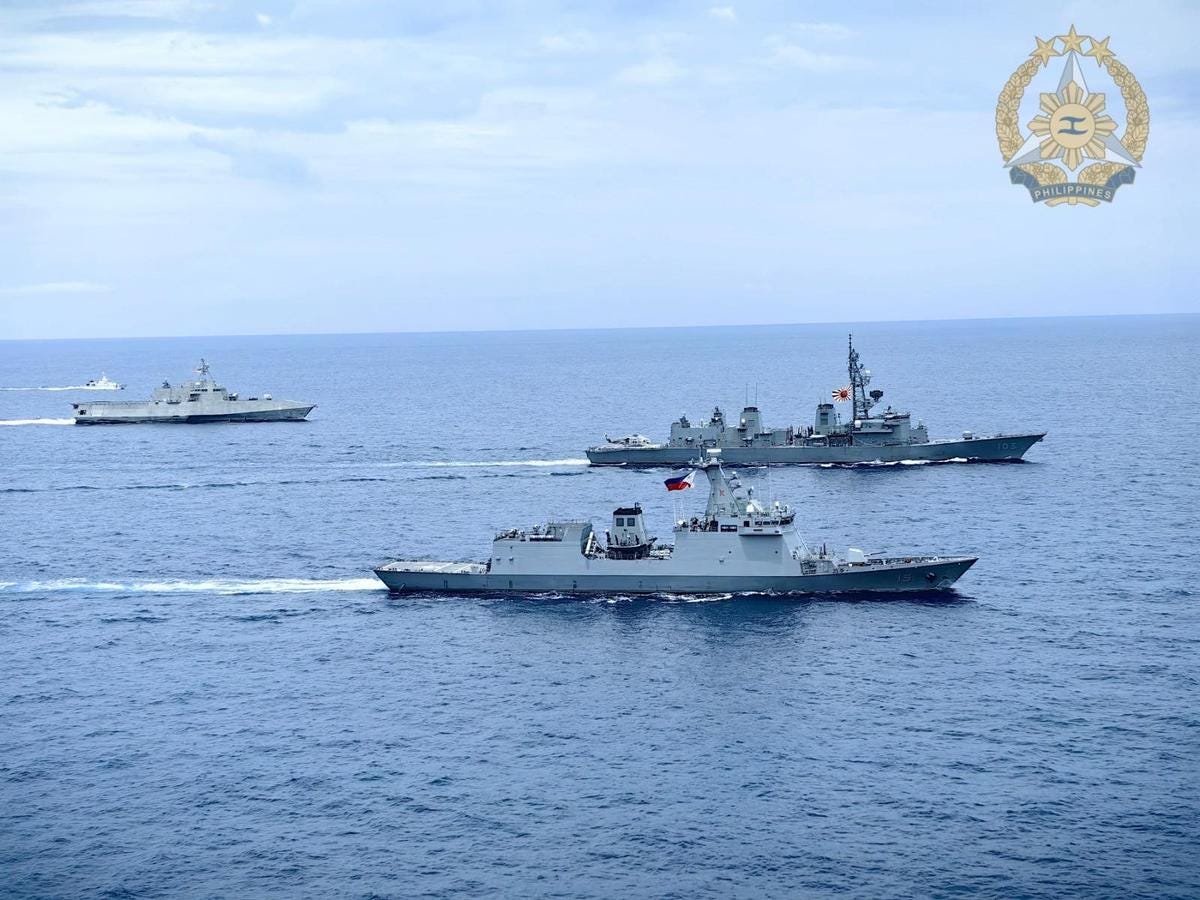
By mid-2026, the Armed Forces of the Philippines (AFP) has made significant strides in modernizing its traditional military capabilities across land, naval, and air domains. Key procurement milestones include the issuance of Notices of Award for the Army's mortars and the Air Force's Ground-Based Air Defense System, signaling concrete enhancements in conventional firepower and air defense. Naval modernization is notably focused on upgrading frigates’ weapon and sensor systems, supported by infrastructure expansions such as floating dry docks, with further fleet growth anticipated through contracts with South Korean shipbuilder HD Hyundai Heavy Industries.
The AFP’s modernization agenda extends beyond core weaponry to encompass a broad spectrum of capability improvements, including self-propelled howitzers, flight simulators, advanced radar and electronic warfare systems, and even a new presidential aircraft. This comprehensive approach reflects an understanding that modern defense requires not only frontline assets but also sophisticated support and command systems to maintain operational readiness and strategic flexibility.
While embracing cutting-edge autonomous and unmanned systems as force multipliers to offset its relatively small size, the AFP leadership emphasizes that conventional platforms such as ships and aircraft remain indispensable. Rear Admiral Roy Vincent Trinidad underscores this balance, noting that despite the advantages of asymmetric warfare through technology, the military must sustain and enhance its traditional firepower and support infrastructure to effectively deploy and maintain these assets. He also warns of the urgent need to accelerate modernization efforts to prevent the capability gap with regional adversaries from widening further.
Drone Ambitions Meet Cyber Demands
Manila’s multibillion-peso bet on drone warfare hinges on securing networks and integrating AI, as military leaders warn that tech alone won’t win wars without robust operational and cyber defenses.
The Philippines is making a significant strategic investment in drone and autonomous technologies as a cornerstone of its 2027 military modernization, allocating 50 billion pesos—an increase of 25% from the current budget—to expand these capabilities. This financial commitment is complemented by active international collaborations, including ongoing discussions with Ukraine on drone technology and the receipt of four solar-powered sea drones from the United States, underscoring Manila's intent to leverage global partnerships to enhance maritime and aerial surveillance.
Defense Secretary Gilberto Teodoro highlights that the AFP's focus extends beyond mere acquisition of unmanned systems to the critical integration of these technologies into operational frameworks, emphasizing the development of secure communications and network capabilities to safeguard sensitive drone and AI assets from compromise. This holistic approach reflects a sophisticated understanding that technology's true value lies in its effective deployment and protection within complex military operations.
Facing a smaller military footprint, the AFP is strategically embracing autonomous and unmanned systems as force multipliers to offset its size disadvantage and narrow the capability gap with regional adversaries. Rear Admiral Roy Vincent Trinidad articulates this asymmetric approach as essential, warning that without accelerated modernization, the gap will widen further; however, he also stresses that such technological advancements must be balanced with sustained investment in conventional firepower and support systems to ensure operational readiness and deployment flexibility.
Allied Web Tightens on China
A surge in trilateral and multilateral military drills, new agreements, and U.S. infrastructure funding is forging a security network designed to counter China’s expanding reach in the Indo-Pacific.
By mid-2026, the Philippines, Japan, and the U.S. had significantly deepened their trilateral defense cooperation as a strategic counterbalance to China’s assertiveness in the South China Sea. This collaboration materialized through expanded joint maritime exercises, enhanced intelligence sharing, and the signing of a visiting forces agreement between Japan and the Philippines, which facilitated increased joint training and port visits. Complementing these efforts, the U.S. Congress demonstrated tangible support by allocating an additional $144 million in fiscal year 2026 to upgrade infrastructure under the Enhanced Defense Cooperation Agreement, underscoring Washington’s “ironclad” commitment to Philippine military modernization and regional deterrence.
Beyond the trilateral framework, regional security cooperation broadened with multilateral engagements involving Australia alongside the U.S., Philippines, and Japan. By August 2026, defense ministers from these four nations had convened in four multilateral meetings aimed at bolstering collective readiness and interoperability to address China’s expanding military footprint. This evolving network of alliances reflects a strategic pivot toward integrated defense postures in the Indo-Pacific, leveraging shared intelligence and coordinated military commitments to present a united front against regional coercion.

Asia’s Drone Arms Race Escalates
Inspired by Ukraine’s battlefield drone revolution and Japan’s record defense spending, the Philippines is leveraging tech transfers and alliances to reshape its military playbook for a new era of asymmetric warfare.
By mid-2026, the Philippines has strategically deepened its defense ties with key allies like the U.S. and Japan, leveraging technology transfers and joint training to bolster its maritime capabilities against Chinese assertiveness in the South China Sea. This cooperation is underscored by Japan’s record $58 billion defense budget—the 12th consecutive year of growth—reflecting a regional trend of Asian democracies, including the Philippines, recalibrating their security postures amid an increasingly complex environment. Defense Minister Shinjiro Koizumi’s characterization of Japan’s spending as the minimum necessary highlights the gravity of these shifts influencing Manila’s modernization efforts.
The U.S. is reinforcing its commitment to the Philippines through substantial fiscal support and multilateral defense initiatives, exemplified by the $144 million boost for Enhanced Defense Cooperation Agreement infrastructure and frequent high-level meetings with allies including Japan and Australia. This enhanced cooperation aims to deter Chinese coercion by integrating the Philippines more deeply into a regional security architecture that prioritizes interoperability and shared intelligence, signaling Washington’s strategic pivot to maintain balance in the Indo-Pacific.
The rapid evolution of drone warfare, driven by Ukraine’s innovative battlefield tactics and massive drone production—projected at over seven million units in 2026—has catalyzed a global shift in military strategy that the Pentagon is actively adopting. The U.S. Department of Defense’s $1 billion Drone Dominance program and the establishment of a Direct Reporting Portfolio Manager for Unmanned Systems underscore a decisive move to field swarms of low-cost, approximately $5,000 attack drones, reflecting a broader trend where commercially available drones are repurposed for large-scale asymmetric conflicts. This paradigm shift offers the Philippines a blueprint for cost-effective modernization amid regional tensions.
The burgeoning global military drone market, valued at nearly $20 billion in 2025 with North America commanding over 40% of the share, illustrates the accelerating investment in unmanned systems technology that is reshaping defense priorities worldwide. For the Philippines, this trend not only signals the availability of advanced drone technologies through allied partnerships but also highlights the necessity of integrating such capabilities to keep pace with regional competitors and evolving threats, thereby influencing its strategic defense planning.