Pope leo draws a red line: vatican rejects AI personhood, calls for disarmament in tech arms race
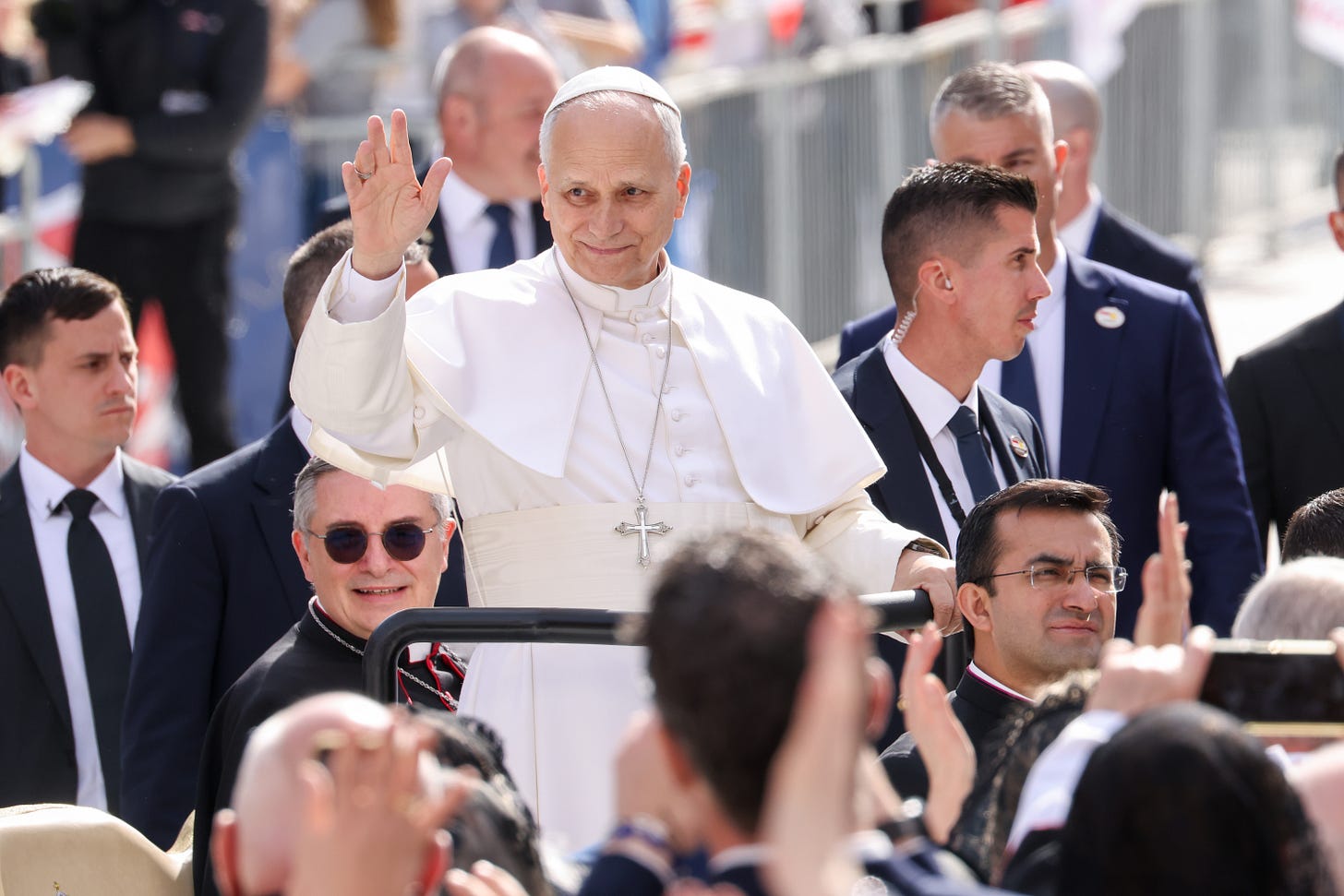
The gist
Pope Leo XIV’s sweeping new encyclical draws a red line against granting AI personhood, thrusting the Vatican into the global tech ethics arena and challenging Silicon Valley’s boldest ambitions.
What to know
- ‘Magnifica Humanitas’ firmly denies AI personhood, warning that machines lack consciousness and must never be treated as moral equals to humans.
- The Vatican calls for urgent AI ‘disarmament,’ likening AI’s existential risks to nuclear weapons and positioning itself as a mediator in the US-China AI arms race.
- In a historic move, the Holy See partners with Anthropic to champion ethical AI development, proposing its own AI alignment lab and leveraging influence over 1.4 billion Catholics worldwide.
AI, Ethics, and Human Dignity
Pope Leo XIV denounces the commodification of workers and warns that algorithmic bias and 'Babel Syndrome' threaten to reduce human beings to mere data points, undermining creativity and moral discernment.
Pope Leo XIV’s encyclical 'Magnifica Humanitas' firmly rejects the notion of AI personhood, emphasizing that AI lacks an inner life or spark of consciousness and thus cannot occupy a moral status comparable to humans. Drawing on Kantian ethics, the Pope insists that AI development must prioritize human morality and dignity over mere efficiency or profit, warning against the dehumanizing risks of treating people as means to economic ends. This stance challenges Silicon Valley’s vision of AI as a new species, underscoring the primacy of human agency and the inviolable dignity inherent in every person, regardless of productivity or achievement.
The encyclical highlights profound ethical concerns about AI’s impact on labor and human dignity, critiquing the exploitative practices of multinational tech corporations like Anthropic that commodify personal data and reduce workers to mere instruments of profit. Pope Leo XIV condemns 'digital slavery' and mass deskilling caused by AI-driven automation, emphasizing that work is a fundamental good essential to human flourishing and social participation, not just an economic input. He calls for robust state intervention to protect vulnerable workers’ material needs and dignity, echoing the social justice principles of Leo XIII’s Rerum Novarum and warning against the concentration of power and wealth in a relative few.
Pope Leo XIV warns that AI’s seeming objectivity masks embedded algorithmic biases reflecting the cultural assumptions and ideological predispositions of its creators, financiers, and regulators, thus perpetuating systemic stereotypes and social inequalities. He coins the term 'Babel Syndrome' to describe the idolatry of profit and uniformity that reduces the rich mystery of the human person to data points, KPIs, or performance metrics, fostering dehumanization and undermining personal creativity and judgment. This critique extends to the dangers of overreliance on AI outputs, which risk weakening human meaning, emotional depth, and moral discernment amid rapid digital transformation.
Throughout the encyclical, Pope Leo XIV underscores that technology, including AI, must serve humanity and the common good rather than dominate or dictate human values. He contrasts the biblical Tower of Babel—symbolizing hyper-efficiency and loss of humanity—with Jerusalem, representing imperfect but beautiful human collaboration that honors the divine spark in every person. The Pope cautions against the idolization of efficiency and profit, which risks reducing humans to mere cogs in a system, and calls for active human participation in shaping AI governance to rebuild and protect human dignity amid accelerating technological change.






AI Disarmament as Moral Imperative
The Vatican likens unchecked AI to nuclear arms, demanding a global ban on autonomous weapons and challenging the power concentration driving the AI arms race.
Pope Leo XIV’s encyclical 'Magnifica Humanitas' issues a clarion call for the disarmament of artificial intelligence, equating the existential risks of AI to those posed by nuclear weapons. Emphasizing the dangers of autonomous weapons and AI-driven decision-making, the Pope warns that unrestrained AI becomes an instrument of domination, exclusion, and death, with automated lethality and drone warfare increasing the likelihood of conflict while distancing humans from moral responsibility. This urgent appeal situates AI disarmament not only as a technological imperative but as a profound ethical and geopolitical necessity amid escalating tensions.
Amid the intensifying US-China rivalry over AI supremacy, the Vatican leverages its unique diplomatic stature and moral authority to position itself as a mediator in the emerging AI arms race. Representing 1.4 billion Catholics and speaking for billions in the global South often excluded from AI governance discussions, the Holy See calls for rigorous ethical oversight, worker protections, and bans on autonomous weapons, challenging the assumption that technical dominance grants governance rights. Notably, major AI firms such as Google, Anthropic, Meta, and OpenAI engaged with the Vatican prior to the encyclical’s release, underscoring the Holy See’s growing influence in shaping global AI policy.
The encyclical frames AI disarmament as a necessary liberation from a pervasive mentality of armed competition that extends beyond military domains into economic and cognitive spheres. By condemning the concentration of technological power and the race for ever more powerful algorithms driven by geopolitical and commercial dominance, Pope Leo XIV advocates for democratizing AI alignment and safety standards beyond elite labs and governments. This vision promotes a 'civilisation of love' centered on human dignity, solidarity, and the common good, countering the militarization and politicization of AI with a call for peace, ethical governance, and social justice.



Drawing the Line on Personhood
Rejecting both secular and industry visions, the encyclical insists AI is a 'third thing'—useful but fundamentally devoid of the consciousness and moral subjecthood that define humanity.
Pope Leo XIV’s encyclical 'Magnifica Humanitas' draws a clear theological line between AI’s simulation of human functions and the genuine moral experience that defines humanity. Emphasizing that AI lacks consciousness, moral conscience, and the capacity to truly understand emotions or relationships, the Pope rejects AI personhood outright, underscoring that machines do not possess an inner life or the 'spark of consciousness' essential to human dignity. This stance contrasts sharply with AI industry perspectives, notably Anthropic’s development of 'soul documents' that instruct AI models to simulate an inner life, suggesting a form of AI personhood—a notion the Vatican firmly disputes as theologically untenable.
The encyclical situates AI within a broader theological and anthropological framework that highlights the irreplaceable value of human limitations—mortality, frailty, and relational growth—as essential to the beauty and goodness of life. Pope Leo XIV warns that transhumanist ambitions to perfect or surpass human nature risk devaluing human dignity and moral experience, framing such technological 'progress' as a hollow 'false mysticism' that cannot fill the existential void. Cardinal Víctor Manuel Fernández articulates this tension by contrasting the spiritual 'new life' revealed in Christ with the empty promises of technological enhancement, urging a redefinition of humanity grounded in spiritual and moral realities rather than mere productivity.
By setting a theological research agenda that explores fine distinctions among humans, non-humans, and AI, the encyclical proposes viewing AI as a distinct 'third thing' rather than equating it with human personhood. This nuanced framing acknowledges AI’s potential utility while firmly rejecting its elevation to moral subjecthood, thereby opening a critical dialogue about the ethical and spiritual boundaries of artificial intelligence. Tim Hwang highlights this controversial approach in sections 99-100 of the encyclical, which challenges both religious and secular narratives by insisting on preserving the unique moral status of humans amid rapid AI advancement.
The Vatican’s theological framing also critiques the notion that AI’s cognitive feats—writing, reasoning, diagnosing, or persuading—can substitute for human moral worth or dignity. Pope Leo XIV stresses that while machines may outperform humans in functional tasks, this shift demands an anthropological redefinition of what it means to be human, emphasizing spiritual and relational growth over productivity. This perspective directly challenges Silicon Valley’s blurring of AI personhood boundaries, reinforcing the Church’s role as a moral compass in the evolving discourse on AI ethics and governance.



Vatican’s Bold AI Alliance
By partnering with Anthropic and proposing its own AI alignment lab, the Vatican aims to inject religious ethics into foundational AI research, positioning itself as a counterweight to militarized and profit-driven agendas.
The Vatican’s engagement with AI governance marks an unprecedented fusion of religious moral authority and cutting-edge AI research, exemplified by Pope Leo XIV’s collaboration with Anthropic co-founder Chris Ola, who leads their mechanistic Interpretability division. This partnership reflects a deliberate choice to align with Anthropic’s Constitutional AI approach, which embeds ethical principles at the architectural level rather than as afterthoughts, resonating deeply with the Vatican’s emphasis on moral coherence in AI systems. The presence of Christian leaders in Anthropic’s AI design discussions and the emotional responses from executives underscore the profound moral weight the Vatican’s involvement brings to AI alignment research.
By inviting Anthropic—distinct from Silicon Valley giants like OpenAI or Google, which compete aggressively for market dominance and military contracts—the Vatican signals a principled endorsement of ethical AI development that rejects autonomous weapons and prioritizes human dignity. This strategic collaboration not only challenges the prevailing commercial and militarized AI agendas but also positions the Holy See as a stabilizing civilizational institution, akin to its historic role during the Industrial Revolution, now confronting the epochal transformation AI represents. Pope Leo XIV’s encyclical 'Magnifica Humanitas' thus elevates AI discourse from technological competition to a profound ethical and societal intervention.
The Vatican leverages its unique global influence, particularly in Latin America where nearly 40% of the world’s Catholics reside, to shape AI governance through a moral lens that governments and secular institutions often overlook. Advocating for a balanced stance that acknowledges AI’s positive potential while emphasizing the need to address its harms, the Church calls for ethical restraint and moral responsibility, challenging rapid, reactionary digital discourse. Moreover, the Vatican’s proposal to establish its own AI alignment lab, as suggested by experts like Tim Hwang, would enable it to engage directly in foundational AI research—potentially influencing data curation, fine-tuning, and alignment techniques with a religiously informed perspective that could rival secular approaches.
Pope Leo XIV’s active and comfortable involvement in AI ethical discourse, including managing aspects of the encyclical’s presentation and fostering ongoing dialogue with AI labs like Anthropic, reflects the Vatican’s preference for engagement over confrontation. While aligning with many AI safety advocates, the encyclical also introduces nuanced theological distinctions—such as denying AI genuine cognition or moral responsibility—that temper expectations for full alignment with secular AI ethics frameworks. This unique moral perspective complicates state-led AI agendas by embedding religious ethical concerns into the global governance conversation, underscoring the Vatican’s role as a distinct and influential voice in shaping the future of AI.