Powell faces DOJ pressure as Fed backlash grows
The gist
Trump’s aggressive legal and political assault on Fed Chair Jerome Powell has sparked bipartisan uproar, roiled global markets, and thrown the future of U.S. monetary policy into chaos.
What to know
- The Trump administration has unleashed DOJ investigations and public threats against Powell, drawing condemnation from both parties and former central bankers.
- Populist moves like capping credit card interest rates at 10% have scrambled political alliances and sent the S&P 500, Nasdaq, and Bitcoin into sharp declines.
- With Powell’s future uncertain, deep divisions at the Fed and fears of political interference are shaking global confidence in the dollar and fueling a flight to safe havens like gold.
Fed Independence on Trial
Trump’s DOJ investigations and legal threats against Powell mark a historic escalation in political interference, igniting global alarm over the Federal Reserve’s autonomy.
The political assault on Federal Reserve leadership has escalated from public criticism and policy pressure to direct legal threats, with the Trump administration leveraging the Department of Justice to investigate Chair Jerome Powell for alleged false testimony. This unprecedented move—marked by grand jury subpoenas and accusations related to Fed office renovations—signals a dramatic intensification of efforts to undermine Powell’s authority and the institution’s independence. The legal campaign, widely seen as a pretext for exerting control over monetary policy, has triggered backlash from former Fed and Treasury officials, bipartisan members of Congress, and even international actors like the ECB, all concerned about the destabilizing effect on market confidence and the global financial system.
While political pressures have mounted, including the installation of a White House representative on the FOMC and public signaling of preferred successors like Kevin Hassett, the Federal Reserve’s internal dynamics have so far resisted forming a politically aligned voting bloc. Trump-appointed governors Bowman and Waller notably declined to join White House representative Mr. Marin’s dissent on rate cuts, and Chair Powell has repeatedly emphasized the committee’s collective, data-driven decision-making. However, the increasing politicization of Fed deliberations and the looming possibility of multiple politically motivated appointees raise serious questions about the institution’s ability to maintain its traditional independence in the face of coordinated executive branch pressure.
The Trump administration’s aggressive tactics—ranging from public threats of termination and criminal indictment to the orchestration of DOJ investigations—are widely viewed as an attempt to force Powell’s early departure and install a more compliant Fed chair ahead of the May 2026 succession. This campaign has injected volatility into financial markets, with every Fed communication becoming a market-moving event and fueling high-frequency trading. The political motivations behind these attacks are closely tied to electoral concerns, particularly Republican losses in states where affordability issues like housing and food prices dominate, prompting Trump to push for rapid rate cuts and populist economic measures regardless of inflation risks.
Despite the onslaught, Powell’s leadership has galvanized an unlikely coalition of support, uniting markets, policymakers, and even meme stock traders in defense of central bank autonomy. Bipartisan voices, including Senator Elizabeth Warren and key Republican senators, have underscored the non-negotiable value of Fed independence, with some GOP lawmakers delaying new chair nominations until Powell’s legal matters are resolved. This episode has not only highlighted the cyclical nature of political attacks on the Fed—recalling past episodes like Lyndon Johnson’s physical intimidation of a Fed chair—but has also reinforced the critical role of institutional independence in safeguarding both U.S. and global financial stability.





History’s Political Flashpoints
Decades of legal battles and Supreme Court rulings have repeatedly tested—but so far upheld—the fragile independence of the Federal Reserve against waves of political pressure.
The Federal Reserve’s independence has always been a fragile achievement, shaped by a century of legal, institutional, and political battles. From the post-World War II struggle to break free from Treasury control—a process that stretched into the 1950s—to more recent episodes like Lyndon Johnson’s notorious physical confrontation with a Fed Chair, history shows that political interference comes in waves. These cycles underscore that today’s pressures, while intense, are not without precedent; the institution’s autonomy has repeatedly been tested and, so far, survived.
Despite the current administration’s aggressive posture—culminating in legal challenges and a Department of Justice investigation into Jerome Powell—legal experts and the Supreme Court have reinforced the Fed’s unique protections. The President’s authority to remove a Fed Chair remains highly questionable, with recent court skepticism toward attempts to oust officials like Lisa Cook highlighting the judiciary’s commitment to safeguarding central bank independence. As Debbie Cunningham notes, the Supreme Court has consistently treated the Fed as a special entity, distinct from other agencies, and is signaling strong support for its autonomy even as political pressure mounts.
Institutional and market-based checks further buttress the Fed’s independence, as any abrupt move to remove its leadership would send shockwaves through debt markets and undermine confidence in U.S. monetary policy. Experts warn that such actions could complicate rate decisions, risk persistent inflation, and erode the trust that anchors both domestic and global financial stability. As Eric Rosengren cautions, even the perception of political interference can raise long-term rates and make effective policy much harder to achieve, a sentiment echoed by market participants who have so far responded with cautious optimism but remain vigilant.
The current wave of political pressure—marked by succession drama, partisan maneuvering, and public hints from former President Trump—has transformed Fed independence from an academic concern into a national political flashpoint. International central banks, including the ECB and Bank of England, have rallied in support of Jerome Powell, underscoring the global stakes. Yet, as domestic senators threaten to block nominations and potential Fed Chair candidates like Jamie Dimon and Scott Bessent balk at the risks, it’s clear that the institution’s reputation and ability to attract top talent are under unprecedented strain, with long-term consequences for monetary policy and market stability.




Populism Redraws Economic Lines
Trump’s push for sweeping credit card rate caps and aggressive consumer measures has shattered traditional party alliances and triggered fierce backlash from Wall Street and lawmakers.
The recent surge in populist economic proposals—most notably the push to cap credit card interest rates at 10%—reflects a calculated political strategy aimed at addressing voter frustration over affordability, particularly in the wake of high-profile election losses in states like New York and Virginia. President Trump’s embrace of these measures, which places him politically to the left of figures like Bernie Sanders and alongside Elizabeth Warren, has upended traditional partisan lines and injected new volatility into the policy debate. While these proposals are framed as consumer relief, critics like Rahm warn that such 'economic populism on steroids' risks fueling inflation in asset and commodity markets, as evidenced by the rally in gold, silver, and copper, and—more critically—threatens the Federal Reserve’s independence by subjecting monetary policy to short-term political imperatives.
The proposed credit card rate cap has ignited fierce opposition from the financial sector and many lawmakers, who argue that such price controls would backfire by restricting credit access for high-risk borrowers and undermining economic growth. Executives from JPMorgan, Citigroup, and Bank of America have publicly rejected the cap, warning that it could force banks to cut off millions of vulnerable consumers and reduce overall spending—a view echoed by Republican Congressman French Hill, who likened the move to failed historical price controls. Despite the populist appeal, the legislative path remains uncertain, with stalled bills and threatened legal challenges signaling that industry resistance may ultimately blunt the policy’s impact.
This populist turn in consumer finance policy is also straining the traditional balance between fiscal and monetary authority, as President Trump’s aggressive tactics—ranging from public attacks on Fed Chair Jerome Powell to unprecedented legal threats—raise alarms about the erosion of central bank independence. Analysts note that Powell may now hesitate to adjust interest rates for fear of appearing politically compromised, while the administration’s broader push for simultaneous fiscal, monetary, and credit expansion further blurs the lines between the branches of economic governance. The resulting market volatility and uncertainty, intensified by every Fed communication, highlight the risks to financial stability when political pressures encroach on the central bank’s autonomy.
While the credit card cap debate has captured headlines, it is emblematic of a wider populist impulse to deliver immediate, visible relief through price controls—whether on credit, housing, or food—rather than tackling the more complex supply-side reforms needed for sustainable growth. Banking leaders and some policymakers advocate for alternative approaches, such as regulatory right-sizing and innovative lending products, to enhance affordability without triggering negative side effects. As the administration pursues a study-driven recalibration of banking rules, the challenge remains to balance the political appeal of quick fixes with the economic necessity of maintaining credit access, financial sector health, and central bank independence.

Fed Divisions Shake Markets
Fractured leadership and rare public dissent within the Fed have fueled wild swings in stocks, bonds, and crypto as investors brace for unpredictable policy shifts.
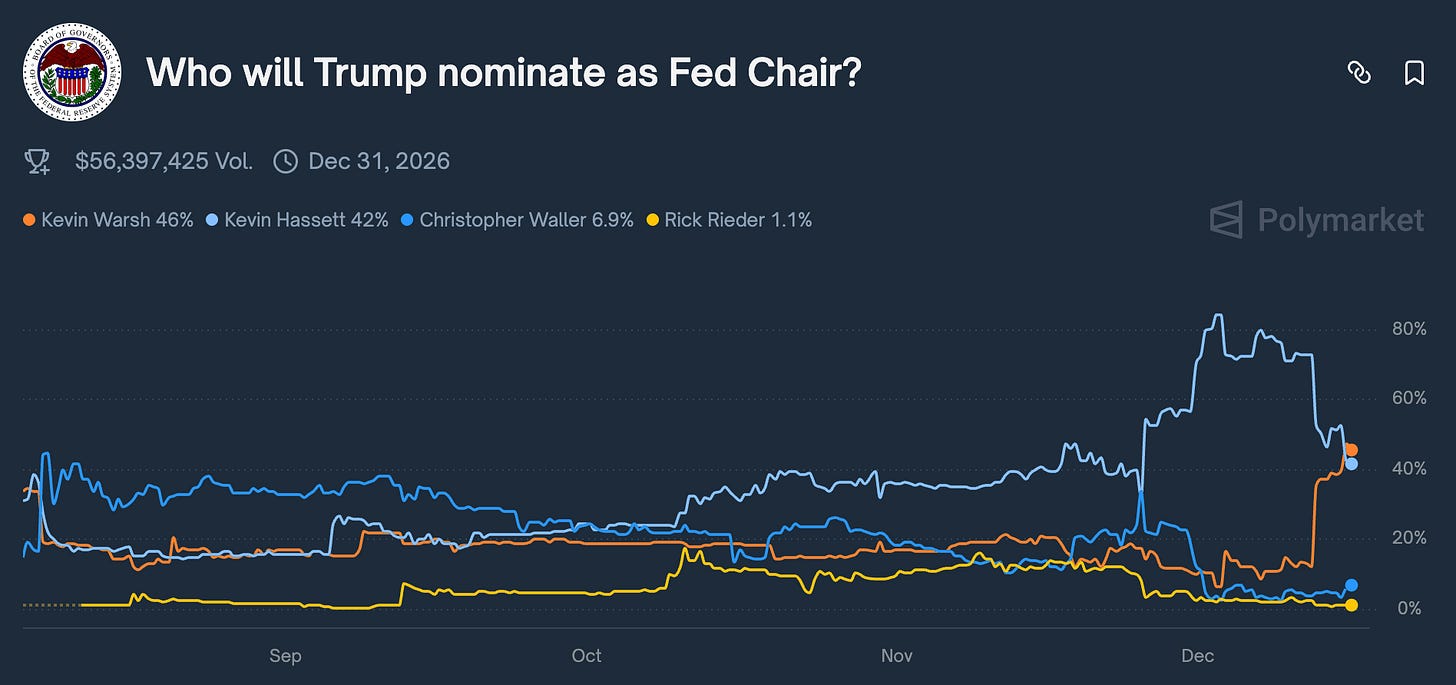
Throughout late 2025 and into 2026, the Federal Reserve has been riven by deepening internal divisions and unprecedented leadership uncertainty, fueling volatility across equities, bonds, and crypto markets. The committee's once-united front has fractured, with rare dual dissents—unseen since 1993—and a near-even split among FOMC members over the December rate cut, as highlighted by officials like Waller, Williams, Bowman, and Myron pushing for aggressive easing while others remain staunchly opposed. This discord is amplified by the looming end of Jerome Powell’s term in May 2026 and the political spectacle surrounding his potential replacement, with market odds swinging wildly between candidates like Kevin Hassett and Kevin Warsh, and President Trump openly signaling his intent to install a more compliant chair—moves that have left investors bracing for abrupt policy shifts and further market turbulence.
These internal rifts are not merely academic; they have translated directly into heightened market volatility and risk-off sentiment, as traders struggle to interpret the Fed’s mixed signals and shifting leadership prospects. The S&P 500, for instance, saw a 1.3% plunge and subsequent recovery in November, while Bitcoin dropped below $96,000 for the first time in six months, and the Nasdaq lost $1.74 trillion in value over two weeks. With every economic data release—already complicated by the lingering effects of a six-week federal shutdown—becoming a binary event for rate expectations, the Fed’s data-dependent approach has left markets in a state of perpetual uncertainty, as evidenced by CME FedWatch probabilities swinging from a 95% chance of a December rate cut to less than 50% within a month.
Complicating matters further, the Fed’s policy debate has become a political Rorschach test, with market participants and policymakers alike interpreting the same economic signals—such as rising inflation and a weakening labor market—through polarized lenses. The institution’s expanded role, now encompassing not just monetary policy but also balance sheet and regulatory decisions, has made the succession question even more fraught, as both hawks and doves vie for influence in an environment where the next chair could dramatically alter the Fed’s stance. As Governor Myron and others have noted, the chair’s ability to unify the committee is being tested as never before, and until a new leader emerges, the Fed’s fractured consensus will continue to reverberate through global markets.



Dollar’s Safe Haven Status Wobbles
Surging debt and political attacks on the Fed are eroding global trust in U.S. assets, driving investors toward gold and raising doubts about the dollar’s future dominance.
Mounting political interference in Federal Reserve policy is eroding global confidence in U.S. financial stability, with investors and international policymakers increasingly questioning the sustainability of U.S. fiscal deficits and the dollar’s reserve currency status. As Pierre Lassond observes, the world is 'drowning in debt,' with U.S. federal debt ballooning from $1 trillion in 1980 to $37 trillion in 2024, and this fiscal recklessness—mirrored in other major economies—has begun to exhaust the willingness of both domestic and foreign investors to hold U.S. securities. This skepticism challenges the long-held assumption that the U.S. can borrow without limit, raising the specter of capital flight and a diminished role for the dollar in global markets.
Episodes of political turmoil, such as government shutdowns and direct attacks on Fed leadership, have triggered sharp market reactions and heightened volatility, undermining investor confidence and prompting a risk-off sentiment. For example, after the October 2025 FOMC meeting, the implied probability of a December rate cut tumbled from over 85% to about 69%, while the 10-year Treasury yield surged above 4.0%, reflecting skepticism about sustained easing and the Fed’s independence. These disruptions have not only led to a repricing of U.S. assets but have also fueled a flight to safe havens like gold and Bitcoin, with the Nasdaq shedding $1.74 trillion in market value over two weeks and Bitcoin dropping below $96,000 for the first time in six months.
International perceptions of U.S. financial stability are being shaken by the politicization of the Fed, as foreign investors grow wary of the dollar’s reliability and the credibility of U.S. monetary policy. The 10-year Treasury yield’s 'insanely sticky' range between 4% and 4.2%, despite expectations of rate cuts, highlights persistent doubts about long-term stability and complicates global capital flows. Meanwhile, surging prices in gold and silver—gold hitting all-time highs and silver up 23% year-to-date—signal a global shift from Treasuries to metals, reflecting a broader loss of faith in U.S. assets amid political attacks on Fed independence.
Political unpredictability, especially from the Trump administration, has amplified global risk-off sentiment and triggered episodes of capital flight from U.S. assets, as seen in the 'Sell America' panic following aggressive rhetoric and policy threats. The U.S. Dollar Index fell nearly 1% and the euro jumped 0.6% against the dollar amid escalating tensions over Greenland and tariffs, with Krishna Guha of Evercore ISI describing the market reaction as a 'sell America' trade. While some market recoveries have occurred when tensions de-escalate, the repeated pattern of political brinkmanship forces investors to anticipate ever more extreme actions, steadily undermining the perceived reliability of U.S. financial leadership.