Railroads ride intermodal wave, hike prices amid truck crunch
The gist
Railroads are cashing in as a trucking crunch and surging intermodal demand let them hike prices, expand capacity, and post blockbuster financials.
What to know
- U.S. intermodal rail traffic soared 10.4% year over year in late October 2026, with BNSF, Union Pacific, CSX, and Norfolk Southern all reporting big gains.
- A tight truck market and soaring diesel costs have widened the cost gap—intermodal is now about 70% more fuel-efficient and 34% cheaper than truckload, giving railroads major pricing power.
- CSX and Union Pacific posted record Q3 2026 revenue ($4.02B and $6.8B respectively), while expanding terminals and signing deals like Norfolk Southern’s 23,900-chassis pact with Schneider National to lock in growth.
Broad-Based Rail Traffic Spike
A late-October surge saw intermodal and carload volumes jump across all major U.S. railroads, revealing a pricing-driven revenue boom beneath the headline growth.
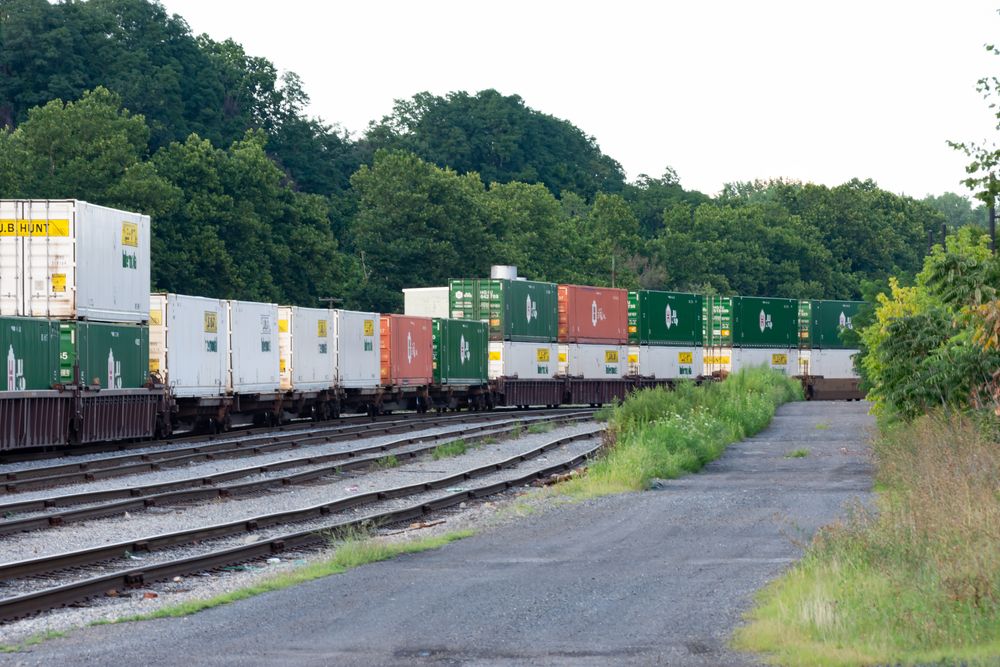
The timing of the rail story matters: in late October 2026, week 40 data showed a broad-based surge that carried into early November as carriers reported unusually strong intermodal results. According to Association of American Railroads data cited by Bill Stephens in Why Rail Is Booming: Intermodal & Carload Growth Explained, U.S. intermodal traffic jumped 10.4% year over year while domestic carloads rose 3.4%, lifting total U.S. rail traffic 7.2% versus the same week in 2025; across North America, carloads increased 2.6% and intermodal climbed 9.1%, for a combined 5.9% gain. In the related report discussion, spend was described as up considerably over 30%—32.1% in the report—while shipments themselves only grew marginally, reinforcing the pricing and mix story behind the volume data.
That strength was visible across major rail networks rather than in a single corridor, underscoring why late-October and early-November earnings commentary turned so bullish. Why Rail Is Booming reported week 40 intermodal gains of 12.5% at BNSF, 19.4% at Union Pacific, 8.9% at CSX, and 5.4% at Norfolk Southern, while the AAR’s September and third-quarter Rail Industry Overview, released the day before, found that 17 of 20 carload categories posted year-over-year gains in September and that chemicals traffic set a September record and was on pace for a new annual record.
Truck Shortages Shift Market Power
Railroads are capitalizing on a sustained trucking labor crunch and high diesel costs, using their efficiency edge to lock in long-term pricing advantages and secure more freight.
Railroads’ truck-to-rail edge is being created first by economics: elevated diesel and scarce trucking capacity make intermodal materially cheaper even before rail raises price. Analysis on Aug. 20 said “rising fuel costs widen its relative advantage and drive incremental volume” because intermodal is roughly 70% more fuel-efficient than truckload, while IANA’s Andrew Sibold said diesel matters but “the labor supply shortage that is happening in trucking has been the primary driver of that shift,” a condition he expects to persist for the next two-to-three years.
That cost gap is now wide enough for railroads to monetize and defend with service: on Sept. 2, discussion of a 34% truck-rail price delta tied the spread to softer trucking momentum and said “a lot of the shippers are taking advantage,” while also stressing these are not fleeting oil trades because “it takes like three months to reconfigure your supply chain” and the market is seeing sustained volume. Truck scarcity reinforces the leverage, with dry-van tender rejections at 10% to 13% and one carrier taking only 50 of 100 committed loads to chase better-paying freight elsewhere or in spot.

Railroads Push Aggressive Rate Hikes
With trucking tightness handing them leverage, railroads are actively renegotiating contracts at higher rates, turning market disruption into lasting revenue gains.
Railroads’ pricing posture has turned notably more assertive as trucking tightness shifts bargaining leverage in intermodal contract talks. Journal of Commerce captured that turn directly in late October, describing railroads as “eager to raise intermodal rates as market dynamics shift,” a framing that matters because it shows carriers are not merely benefiting from stronger demand but actively using the changed market to press for higher renewal pricing and convert that leverage into better revenue per load on freight that might otherwise have moved by truck.
CSX has made that strategy explicit. Speaking at the Baird 2026 Global Industrial Conference on Nov. 11, CFO Kevin Boone said “pricing and returns remain priorities” and identified 2027 priorities as “service-led pricing” and “higher prices,” while the transcript also tied growth to “Truck-to-rail conversion” and “intermodal demand.” That combination shows CSX treating the tighter truck market not just as a volume opportunity but as a chance to renew business at steeper rates and capture more revenue per intermodal load.

Rail Networks Invest for Growth
Major carriers are expanding terminals, infrastructure, and partnerships—like the massive Norfolk Southern-Schneider deal—to handle rising intermodal demand and lock in future business.
Railroads are backing the intermodal push with visible physical expansion, not just sales efforts. Tri-State Alert captured that in the headline “CSX Boosts Chambersburg Terminal with Gantry Crane and Reach Stackers as Freight Surges 21%,” a concrete example of adding handling capacity and equipment at the terminal level so converted freight can be processed faster and more reliably, while Yahoo! Finance Canada said completion and ramp-up of CSX projects including the Howard Street Tunnel double-stack route and other corridor upgrades are meant to support higher intermodal volume and make those flows operationally easier to keep on rail.
Norfolk Southern’s response is broader still: “Norfolk Southern and Schneider National previously announced a US intermodal agreement that combines Schneider's 35 years of intermodal operations and assets with Norfolk Southern's eastern rail network,” and the buildout is substantial because “Schneider brings about 23,900 chassis, 26,800 containers and more than 60 rail hubs, while Norfolk Southern contributes a 22 state eastern network and a series of terminal and clearance projects already underway.” That matters because the Schneider agreement “adds scale to intermodal” and is explicitly tied to those existing terminal and clearance projects and to PSR 2.0 execution, with productivity savings of at least US$150 million over three years and efforts to win truckload conversions positioning service and operational improvements as the mechanism for holding freight when trucking loosens.
Intermodal Drives Record Profits
Surging intermodal volumes are translating directly into record revenues, margin expansion, and productivity gains at CSX and Union Pacific, reshaping financial results industry-wide.
The clearest sign that intermodal has become financially material is that it is now showing up in railroad-wide income statements, not just traffic tables. AlphaStreet News said CSX “beats forecast” with “$4.02 B Revenue,” “$0.57 EPS,” and a “39.1% Margin” in Q3 2026, while Trains Magazine separately reported “Record $4.02 B Revenue” and a “44% Operating-Income Surge,” evidence that the intermodal lift is large enough to move earnings, margins, and investor-facing headline results at one of the industry’s biggest carriers.
Union Pacific’s quarter shows the same scale effect: it reported “创纪录的第三季度财务成果,” with “净收入达到21亿美元,” “调整后每股收益增长了15%,达到3.53美元,” and “运营收入同比增长了15%,达到72亿美元,” while freight revenue also rose 15% to $6.8 billion. Crucially, “大约75%的季度交通量增长来自于国内和国际集装箱运输,” and even with diesel pressure—average fuel per gallon rising from $2.56 to $4.21—its core operating ratio still improved 110 basis points, helped by record labor productivity, a 1% workforce reduction despite 6% volume growth, and a 2% fuel-efficiency gain.