Regulatory crackdown squeezes trucking supply, drives rates up
The gist
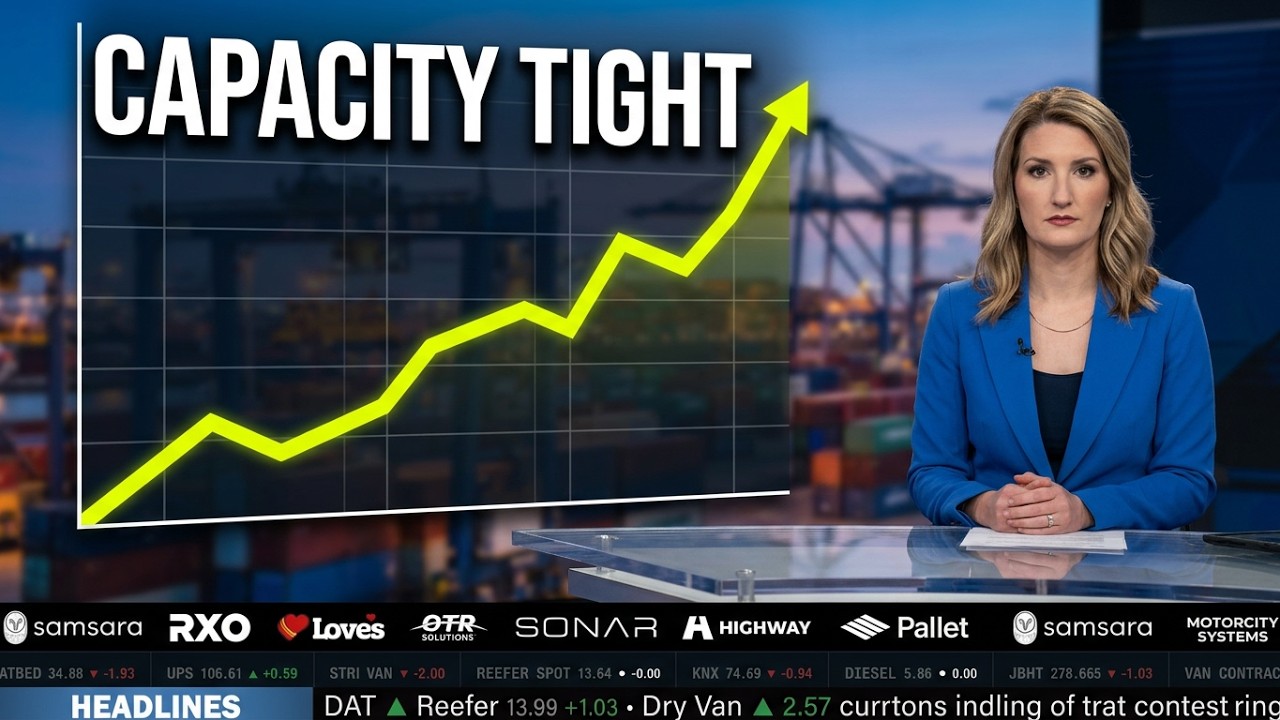
A sweeping regulatory crackdown is squeezing over 200,000 carriers out of trucking, driving freight rates sky-high and tightening capacity even as demand stays soft.
What to know
- Since mid-2026, stricter rules on non-domiciled drivers and broker compliance have forced thousands of carriers out, with industry voices warning the fallout is just beginning.
- FreightWaves reports 17,000 CDL cancellations in California alone, and analysts say up to 25% of for-hire truckload capacity could exit the market—spot rates are already 30% to 60% higher year over year.
- Analysts now call the market ‘structurally tighter,’ with compliance risks and legal exposure making a quick capacity comeback unlikely even if freight picks up.
Regulations Redefine the Market
Sweeping compliance changes since March 2026 have forced out carriers at a historic pace, shifting pricing power as the market adapts to stricter entry barriers.
What changed after mid-2026 was not freight demand but the compliance perimeter around who could legally and practically stay in the market. On Supply Chain Now, a speaker tied the shift directly to “the non-domicile carrier issue” and “the English proficiency issue” that “passed March 2026,” adding that it “is going to take out over 200,000 carriers out of the marketplace,” and said, “we thought a lot of carriers would exit the market faster than they did… in 2026… I wouldn’t call this a recovery… This is all supply driven… And as those drivers are leaving the marketplace, pricing is currently going up.”
By September, FreightWaves described trucking as moving through a regulatory tightening cycle that felt historically unusual, warning that continued federal and state crackdowns would leave the industry unable to replace lost drivers. That broader enforcement push reached driver qualifications, non-domiciled operations and CDL pipelines, while market behavior reflected the squeeze, with “Tinder rejection rates 10 12 13% in the drive van sector”; notably, FMCSA did briefly soften one compliance channel when it “temporarily suspended enforcement of its bianial update requirement and stopped inactivating USD do numbers when registrants miss those filings,” relief covering deadlines on or after June 1, 2026 during its system migration.


Enforcement Drives Out Operators
Aggressive regulatory action—not weak demand—is sidelining tens of thousands of drivers, cutting up to a quarter of truckload capacity and sending spot rates soaring.
The capacity hit is no longer theoretical; enforcement is already removing drivers and trucks from the usable pool. FreightWaves cited a California example where the state has 680,000 commercial drivers licenses and 17,000 trucks registered at the LA-Long Beach twin ports, yet 17,000 CDLs were canceled for regulatory reasons, leaving 17,000 folks no longer working in that sector. In a separate FreightWaves analysis, a speaker estimated as much as 20 to 25% of the for-hire truckload market is likely to come out from a supply perspective, calling it not a trivial amount.
Executives increasingly tie that washout directly to enforcement, not to a normal freight cycle. RXO’s Jared Weisfeld told FreightWaves that actions around non-domiciled CDLs, English language proficiency, CDL mill crackdowns, ELDs and cabotage rules have been underway for roughly a year and represent the largest structural change since deregulation, with as much as 20% to 25% of for-hire truckload supply likely to exit. He pointed to spot rates running 30% to 50% higher year over year despite muted freight demand, tender rejections hitting 17%–18% around the July 4th holiday and remaining approximately 13%, operating costs rising approximately 26%, and 30-year mortgage rates near 7%, making rapid capacity re-entry economically difficult.
Tight Supply, Surging Prices
Rates are climbing sharply even with flat freight volumes, as the market feels the squeeze from a regulatory-driven supply crunch, not a demand boom.
The clearest sign this is not a demand-led rebound is that pricing has broken upward while freight activity remains subdued. The latest Q2 earnings reports from major trucking and rail carriers paint a clear picture: the freight market is tight, and rates are rising. In FreightWaves, an analyst contrasted “the last four years of a soft market” with “the new market,” saying the turn began “the last like I would say four months or so, so from the spring time,” while Jason Seidl said combined dry van, flatbed and refrigerated rates were up around 45% year over year even as demand was merely “stable” and the Cass Freight Index still showed shipments improving but negative year over year.
Carrier and market data point the same way: tighter supply is lifting the rate floor faster than freight volumes can explain. Ryder’s Kendra Phillips said, “You could feel capacity tightening,” with spot rates up 60% year over year and contract rates up 15% since January, while Logistics Management described the recovery as “supply-driven” and tied it to enforcement that may have cut capacity by 5% to 10%; FMCSA said as many as 600 drivers a week were being placed out of service, and DAT’s headline captured the result: tight truck capacity pushing spot rates above contract rates for the first time since 2022.
Barriers Slow Industry Recovery
Heightened legal risks and compliance costs have made re-entering trucking so difficult that capacity is unlikely to rebound quickly, locking in higher prices and stricter standards.
What has changed, analysts argue, is not just the amount of capacity in the market but the ease with which it can come back. FreightWaves reported that “Tender rejections remain well above historical norms across all modes… The Sonar Truckload Rejection Index, or STRI, stands at 14.36%, above the six-month average of roughly 10.9%,” while “over the last five years… accepted volumes are actually down… but rejection rates are up,” a pattern used to argue that supply is staying constrained because compliance friction and enforcement risk are slowing the normal refill of trucks and drivers. Public carriers are describing the same tightening from the pricing side: Knight-Swift “reported that its truckload segment operating income rose 69% year over year,” and noted “strategic pricing recovery accelerated in June as recent bids took effect,” describing “rapid tightening in” the market.
Executives increasingly describe that slower refill as structural because the cost of participating has risen and the penalty for getting it wrong has become existential. One carrier executive said “it's very difficult as a business owner when you're getting paid $2,000 to move freight… to wrap your head around the fact that you might be staring at a $30 million verdict,” while Thom Albrecht said that if regulators further tighten CDL rules, insurance minimums or broker bonding, “the odds of us having more than a two-year cycle increase dramatically,” pointing to a market with higher barriers and fewer easy re-entries. That is also changing investment behavior in ways that make a quick capacity snapback less likely even when pricing improves: a CFO at a fleet with about 2,000 U.S. assets said, “you don’t at the first sight of good times, you don’t actually just go invest in assets and add a bunch of assets,” adding that “this is the first time that this last quarter… trucks were an investable asset for his company… any cash they made before the previous three years, they viewed investing in a truck as a net losing investment,” while another forecast the market will become “a more safer, more vetted… better overall capacity at a higher price” over the next two years rather than reverting to the old low-bar model.