RELX’s AI premium spurs investor debate amid buybacks
The gist
RELX’s sky-high stock price and aggressive buybacks are fueling a heated investor debate over whether its AI integration is hype, hope, or a real moat.
What to know
- RELX trades at a hefty 56.6% premium over its DCF intrinsic value, with shares near $34.51 and analysts split on further upside.
- The company has repurchased over 77 million shares at elevated prices, propping up EPS and signaling confidence despite recent revenue misses.
- RELX’s AI strategy bets on embedding trusted language models in proprietary data—investors want proof it translates to real, recurring revenue, not just buzz.
Premium Price, Divided Opinions
RELX’s valuation gap sparks fierce debate as analysts weigh limited upside against investor caution and ongoing buybacks.
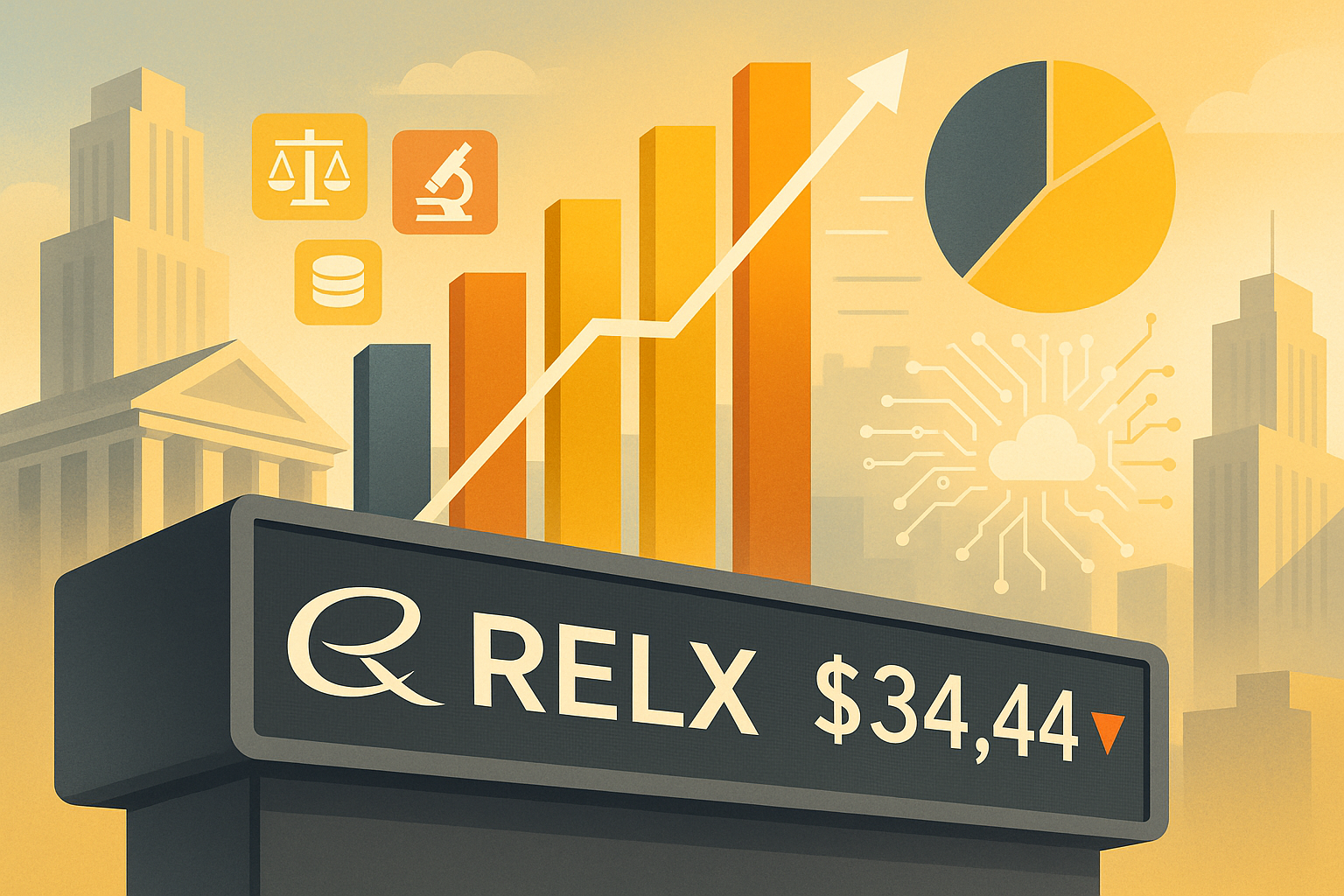
RELX's stock currently trades at a notable premium, approximately 56.6% above its intrinsic value estimated by a discounted cash flow model, with the market price near $34.51 compared to a DCF-derived fair value of $22.03 per share. This sizable gap has fueled a heated valuation debate, particularly among portfolio managers who prioritize a margin of safety. Meanwhile, analyst consensus price targets hover close to the market price—around £33.91 in London listings—indicating limited upside potential from current levels despite the premium, which adds nuance to the overall valuation narrative.
Despite RELX missing Q2 revenue estimates by $25 million, analysts remain broadly optimistic, projecting a 34% upside potential in the stock price. This optimism persists even as the stock trades near recent highs with a market capitalization exceeding $63 billion, supported by ongoing share buyback programs that bolster investor confidence and help stabilize the share price amid volatility. The combination of steady cash returns through repurchases and a resilient market cap underscores a cautious yet positive analyst stance on RELX’s valuation trajectory.
AI’s Real-World Test
Investors demand hard evidence that RELX’s AI-powered workflow tools can generate recurring revenue amid skepticism and shifting market sentiment.
RELX’s AI integration strategy centers on embedding advanced language models and machine learning into its proprietary datasets to enhance entrenched professional workflows across scientific research, legal, and risk analytics sectors. This approach leverages verifiability, provenance, and regulatory defensibility as core differentiators, emphasizing that unverified generative AI outputs cannot replace curated, accurate information critical in legal and clinical contexts. By focusing on workflow integration rather than competing on raw AI model capabilities, RELX deepens customer reliance on its trusted tools, creating a durable competitive advantage rooted in exclusive data archives rather than algorithmic novelty.
Investor sentiment around RELX’s AI initiatives remains mixed amid broader economic headwinds such as elevated energy costs and unsettled bond markets, which complicate margin and cash flow interpretations. While initial optimism greeted RELX’s AI exposure, concerns about regulatory pressures, open access mandates in academic publishing, and potential customer pushback on pricing due to automation reducing workload have tempered enthusiasm. This nuanced market view reflects a reassessment of what AI exposure truly means within the London market, especially as technology investment trusts face pressure and investors demand clear evidence of tangible financial outcomes rather than hype.
The market increasingly evaluates RELX’s AI progress through an evidence-based lens, prioritizing the quality and impact of proprietary data and workflow integration over speculative hype. Investors are scrutinizing whether RELX’s business model can convert AI-driven demand into observable revenue, cash flow, and operational milestones supported by contracts, repeat customers, and regulated frameworks. This shift underscores a broader skepticism in the UK AI stock landscape, where structural progress must be clearly distinguished from favorable market conditions to sustain investor confidence.
Data Moats and Sticky Workflows
RELX’s unrivaled proprietary data and embedded AI create high switching costs, locking in customers and insulating its recurring revenue streams from competitors.
RELX’s competitive edge is deeply rooted in its proprietary and permissioned datasets amassed over decades across scientific, medical, legal, and risk analytics fields, which form an exclusive foundation that generic AI models cannot replicate. This unique corpus, combined with rigorous verifiability, provenance, and regulatory defensibility, ensures that RELX’s AI-enhanced workflow products meet the exacting standards of professional users who require authoritative, citation-backed information, particularly in legal and medical contexts where accuracy has critical consequences.
Rather than focusing solely on AI algorithms, RELX embeds language models and machine learning within entrenched professional workflows, creating behavioral and operational switching costs that go beyond contractual obligations. This integration of intelligent assistance into trusted environments not only deepens customer entrenchment but also generates high stickiness, as users rely on tools that draft, summarize, and cross-reference within familiar systems, making replacement difficult and reinforcing RELX’s competitive moat.
RELX’s business model leverages subscription and transactional recurring revenue streams supported by its proprietary data and AI-enhanced products, providing greater revenue stability and visibility compared to project-based technology spending. This model, underpinned by contributory data networks—especially in risk analytics where competitors contribute to and benefit from shared data pools—creates a near-impossible-to-replicate ecosystem that further solidifies RELX’s market position and appeals to investors seeking tangible operational milestones beyond AI hype.
Buybacks Signal Unwavering Confidence
Aggressive share repurchases at premium prices reinforce RELX’s faith in its future, boosting earnings and providing a safety net for its market value.
By mid-2026, RELX has aggressively expanded its share buyback program, repurchasing over 77 million ordinary shares and now holding upwards of 81 million shares in treasury. This large-scale repurchase effort not only enhances earnings per share but also signals the company’s strong confidence in its long-term financial performance and capital efficiency across its diverse business units.
RELX’s buybacks, executed at elevated trading prices ranging from 2,464 to 2,627 pence per share, underscore a strategic commitment to capital allocation that supports both market capitalization and investor confidence. These transactions help reduce the share count, provide a price floor, and contribute to steady cash returns amid moderate share-price volatility, reinforcing the company’s $63.37 billion valuation despite trading below its 52-week high.