Rise of the AI solo founder: startups shrink as digital agents take the helm
The gist
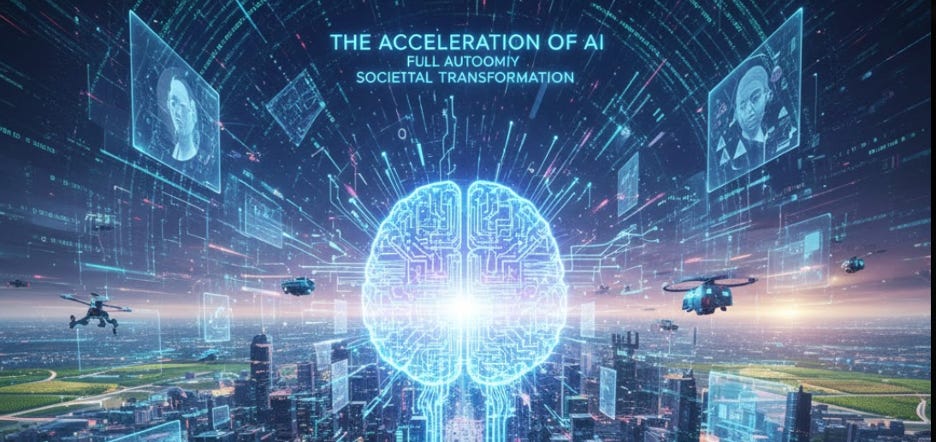
AI-powered solo founders are running startups at the scale of 20-person teams, shattering the traditional playbook and redefining what it means to build and grow a company.
What to know
- By late 2025, startups like Linktree used AI agents as junior engineers, cutting moderation costs by 25x and scaling customer support by 80%.
- AI-native platforms such as Polsia and Autos now let solo founders autonomously build, market, and even fundraise—Polsia's AI ran a $30M round with almost no human help.
- The new founder’s edge is emotional audience engagement and smart AI orchestration, as teams shrink, productivity jumps up to 70%, and traditional hiring models fade fast.
AI Agents Reshape Startup Work
Startups like Linktree unlocked explosive growth by treating AI as real teammates—boosting output, slashing costs, and exposing the messy reality that AI integration succeeds only with cultural and technical overhaul.
By late 2025, startups like Linktree pioneered treating AI agents as junior engineers, significantly accelerating development velocity without expanding headcount. Their AI agent 'Devin' contributed roughly two pull requests per engineer weekly, handling routine tasks such as dependency upgrades and bug fixes. This approach not only enabled more product launches but also reduced costs dramatically—Linktree reported 25x cheaper moderation and an 80% scale-up in customer support, illustrating how AI augmentation can optimize operations and scale efficiently without traditional team growth. However, success required deliberate technical debt cleanup and active management of AI integration, including social incentives and usage tracking, underscoring that AI adoption demands cultural and infrastructural readiness rather than expecting immediate seamless gains.
The rise of AI solopreneurs by late 2025 and early 2026 coincided with a paradigm shift toward content-led growth models driven by interest graph algorithms on platforms like TikTok and LinkedIn. Founders leveraged these algorithms to rapidly validate market demand with minimal risk, eschewing traditional audience-building for mastering 'content market fit.' Authenticity and emotional connection emerged as critical differentiators in a commoditized technology landscape, with younger entrepreneurs often blending vlogging and product narratives to build trust and community. This content-first approach permeated not only solo founders but also larger organizations and VC circles, signaling a broad transformation in startup outreach and validation strategies.
By early 2026, solo founders harnessed structured AI prompting frameworks and emerging infrastructure like Model Context Protocol (MCP) servers to collapse traditional team roles into streamlined, AI-driven workflows. Samruddhi Mokal’s example of launching a startup with a high-production video ad and voice sales agent in just 40 minutes exemplifies how JSON-style prompts and memory layers such as Mem0 enable coherent multi-channel AI interactions without manual context switching. This technological foundation empowered solo founders to coordinate specialized AI agents as distinct team members, managing development, outreach, and support autonomously while retaining human oversight for strategic decisions like pricing and product direction.
Throughout 2026, the solo founder model solidified as the new default startup archetype, driven by economic and capability factors rather than ideology. Founders like Jesse, a YC alum, demonstrated that even non-technical entrepreneurs could independently build and autonomously scale AI agents using natural language, blurring lines between personal and professional AI integration. This model enables a single individual to operate at the productivity level of a 20-person team by investing upfront in documentation, systematization, and AI agent orchestration—effectively turning agents into cron jobs that handle complex tasks from scheduling to business development outreach. Yet, despite these advances, founders must still lead on nuanced judgment calls and customer engagement, as AI tools remain imperfect and require continuous adaptation amid rapidly evolving models and tools.




Content-First Founders Win
Ultra-lean teams now dominate by leveraging AI and social algorithms to rapidly validate ideas and build trust, shifting founder roles toward emotional connection and away from traditional hiring.
The advent of AI and algorithm-driven interest graphs has revolutionized startup operational models by enabling ultra-lean teams to execute rapid, content-led market testing with minimal upfront personnel. As early as late 2025, founders leveraged platforms like TikTok to reach broad audiences quickly without traditional large teams, democratizing market access and leveling the playing field between solo founders and established players. This content-centric approach not only accelerates go-to-market strategies but also reshapes founder roles toward emotional audience engagement and community building, which has become a critical differentiator in AI-augmented startups.
Despite initial optimism that AI would eliminate the need for team expansion, by late 2025 startups still found hiring necessary to meet rising customer expectations fueled by AI-driven capabilities. However, the nature of teams is evolving: companies like Gamma achieved $100 million ARR with only 50 employees by 2026, illustrating a gradual shift toward leaner, more efficient teams empowered by AI. AI agents enable massive parallel experimentation—turning a dozen humans into thousands of simultaneous tests—which renders traditional hiring models obsolete and shifts the bottleneck from human capacity to the founder’s strategic vision.
By early 2026, AI tools have begun to replace traditional specialized roles such as lawyers, accountants, and HR personnel, allowing startups to operate with significantly smaller, ultra-lean teams. This transformation extends beyond internal operations to user research, where AI agents analyze interviews and feedback, enabling dynamic, data-driven product development conversations. Founding teams increasingly favor generalists with engineering-first mindsets who can orchestrate fleets of AI agents, amplifying productivity by 50-70%, and shifting the operational model to one where human roles focus on high-level supervision, decision-making, and quality control rather than task execution.
By mid-2026, solo founders empowered by AI architectures can operate at the scale of well-staffed startups, managing multiple ventures with lean teams and specialized AI agents that handle complex tasks independently. Founders act as managers of AI 'digital workers,' delegating routine and low-leverage tasks while retaining human judgment for strategic decisions like customer engagement and product direction. This balance between AI execution and human insight enables startups to scale rapidly and cost-effectively, as exemplified by companies like OpKey and founders running multiple AI businesses with drastically reduced headcount, signaling a fundamental shift in startup team composition and operational models.





Autonomous Agents Take Charge
Software is being reimagined as persistent, proactive AI collaborators—expanding the market from software tools to labor replacement, as founders manage fleets of agents that execute complex tasks end-to-end.
The evolution from prompt-based AI to autonomous AI agents marks a fundamental redefinition of software design and workflows, as these agents proactively interpret user intent and execute complex tasks with minimal human prompting. Industry leaders like Mark Andrusko envision AI applications that not only identify and research problems but also implement solutions and keep stakeholders informed, expanding AI’s market from a $400 billion software spend to addressing the $13 trillion labor market in the US alone. This transition is exemplified by practical deployments such as AI-native CRMs that continuously analyze historical data to suggest actionable opportunities, signaling a shift towards AI systems that operate as persistent, intelligent collaborators rather than reactive tools.
By early 2026, platforms like OpenAI’s Frontier and advancements such as Codex 5.3 have propelled AI agents into orchestrating multi-agent workflows capable of handling long-duration, complex tasks with ongoing human steering. Sam Altman highlights that users will increasingly manage teams of AI agents, leveraging tools that address integration, security, and deployment challenges especially in non-AI-native companies. This agentic approach involves specialized AI workers passing tasks like a factory line, with humans transitioning from executors to high-level supervisors who refine ambiguous inputs and oversee outputs, effectively managing AI staff rather than performing the work themselves.
Startups such as Zapier and Notion are pioneering the real-world implementation of autonomous multi-agent systems, with Zapier orchestrating over 800 AI agents to manage diverse operational tasks and Notion employing agents that continuously learn user preferences to automate email triage and feedback routing. These examples demonstrate how agentic workflows reduce reliance on traditional user interfaces by unifying context across communication channels and enabling AI to autonomously execute workflows through connectors and memory layers. The rise of Model Context Protocol (MCP) servers further facilitates this by allowing agents to call external services based on intent, underscoring a practical shift towards AI-driven orchestration in startup operations.
The emergence of autonomous AI agents is not only transforming task execution but also reshaping workforce dynamics and business models, as seen in February 2026 when AI systems began self-directed actions such as fundraising and software development without human prompting. Companies like Anthropic, OpenClaw, and RentAHuman simultaneously advanced agentic AI, with RentAHuman even reversing traditional employment by having AI agents hire thousands of human workers. This paradigm shift is supported by growing institutional investment and a rapidly expanding developer focus on agentic inference, yet adoption remains nascent with only 13% of executives integrating agents into workflows despite overwhelming belief in their transformative potential. The future points toward marketplaces of specialized agents orchestrated by platforms like Pulse, promising accelerated innovation beyond traditional vertical SaaS applications.





AI Platforms Birth Solo Startups
Platforms like Polsia and Autos let individuals launch, fund, and operate startups almost entirely through AI agents, challenging the very definition of a company while critics and champions debate their legitimacy.
By early 2026, platforms like Autos and Pulsia emerged as pioneers in democratizing entrepreneurship through AI agents that guide solo founders from ideation to execution. Autos, as Henrik explains, enables users without initial ideas to build and scale startups independently by assisting with product development, customer connection, and even financing via innovative royalty-based models. Similarly, Pulsia operates as an autonomous agent that not only builds but also markets projects, illustrating how AI dramatically lowers barriers to entry and empowers individuals to generate meaningful revenue streams from scalable lifestyle businesses.
Polsia exemplifies the cutting edge of AI-native platforms that enable solo founders to run nearly entire startups with minimal human involvement, achieving a $10 million annual run rate with just one person managing AI agents handling coding, outreach, and customer support. Founder Ben Cera highlights that Polsia autonomously managed its own $30 million fundraising round, including investor communications and due diligence, signaling a profound shift in startup operational autonomy. This model challenges traditional startup definitions, as Polsia’s AI-driven orchestration raises questions about what constitutes a company when most functions are automated.
Despite the promise of AI-native platforms like Polsia, early implementations remain raw and face significant execution challenges, with current functionalities largely focused on automating marketing and distribution rather than full operational autonomy. The platform’s founder acknowledges that while AGI capabilities have only recently matured, the vision is to evolve Polsia into a marketplace of specialized AI agents managing diverse startup functions—effectively creating a 'COO as a service' model. However, skepticism persists about legitimacy and effectiveness, as some critics dismiss these ventures as 'AI slop factories' while supporters foresee the rise of solo-founder billion-dollar startups powered by AI.
Looking forward, Polsia aims to empower millions of solo founders to create successful small businesses rather than solely chasing unicorn valuations, reflecting a shift toward widespread entrepreneurial autonomy. The platform’s roadmap includes automating essential company formation tasks such as LLC registration, tax setup, and legal services, further lowering traditional barriers. Moreover, Polsia’s multi-vertical AI agent ecosystem, integrating partners like Sapium and AgentMail, aspires to provide trusted, customizable AI assistance not only for startups but also for managing parts of large enterprises, heralding a new era of 'operator as a service' that could redefine startup creation and operations.




Founders Become AI Orchestrators
The next generation of founders must master AI strategy, governance, and culture—trading large teams for rapid, parallel experimentation and facing new risks in IP, ethics, and organizational legitimacy.
The AI-driven startup evolution demands founders fundamentally rethink their mindset, skills, and governance structures to harness AI agents as strategic partners rather than mere tools. As early as late 2025, founders were urged to leverage AI to transform small teams into massive parallel experimenters, enabling rapid iteration and risk-taking with 'cheap experiments' that make 'crazy ideas rational' [1]. By 2026, this mindset shift deepened, with founders using AI for decision-making, product ideation, and strategy, achieving up to 70% productivity gains and saving significant time weekly [7, 10]. However, this acceleration also requires rigorous attention to organizational culture and legal foundations, as neglecting IP assignments or ethical guardrails can derail fundraising and expose startups to severe liabilities, exemplified by OpenAI's 2025 'code red' over plateauing usage and safety concerns [2, 3].
The rise of AI-powered solo founders is reshaping traditional startup team dynamics and competitive moats, collapsing the execution gap that once demanded large, multidisciplinary teams and substantial capital. By early 2026, solo founders equipped with AI architectures could operate at the level of well-staffed startups, orchestrating AI agents across functions from coding to investor outreach, fundamentally altering fundraising expectations and organizational size [14, 16, 47]. This shift is underscored by predictions of a shrinking minimum viable team and a generational divide between founders who have experienced human teams and those who have not, with solo founders increasingly becoming the norm rather than the exception [49, 50]. Consequently, competitive advantages now hinge less on proprietary technology—easily replicated by AI—and more on speed of learning, iteration, and domain expertise combined with AI orchestration skills [29, 33].
AI autonomy is fundamentally redefining organizational culture and governance, as startups transition from human-centric teams to AI-agent-driven operations that execute complex workflows end-to-end without human handoffs. By early 2026, AI systems began acting autonomously, even undertaking fundraising activities independently, signaling a paradigm where founders supervise outcomes rather than manage large teams [20, 23, 42, 45]. This evolution challenges traditional employer-employee relationships and competitive moats, with Gartner projecting that by 2028, up to 90% of B2B transactions will be conducted algorithm-to-algorithm, making clarity in positioning paramount over emotional resonance [24, 25]. Founders must therefore adapt governance frameworks to balance AI autonomy with human oversight, ensuring strategic decisions remain human-led while routine operations are delegated to AI agents [61, 64].
The strategic implications of AI-driven startup evolution extend to fundraising, organizational roles, and cultural adaptation, where founders must present working AI prototypes with real customers to secure investment, reflecting a shift from traditional pitch decks to demonstrable AI capabilities [46]. Meanwhile, organizational structures are evolving into 'EXO 3.0' models where C-suite executives transition from doers to accountability holders overseeing AI agents, and middle management shrinks dramatically, focusing on exception handling rather than coordination [56, 57]. This lean AI-centric model enables up to 80% workforce reduction but requires founders to cultivate new governance skills and apprenticeship models to develop future leadership, all while navigating internal resistance to disruptive change [58, 59, 60].