Rising wages, rising rage: youth anxiety and party fractures reshape 2026 political battlefield
The gist
Rising wages haven’t quelled Millennial and Gen Z economic anxiety, fueling a fierce political realignment as party fractures and anti-elite rage redefine the 2026 battlefield.
What to know
- Despite higher real incomes, younger Americans feel squeezed by relentless social expectations, inflated lifestyle standards, and delayed milestones like homeownership and marriage.
- The Democratic Party is splintering between progressive insurgents (like Zohran Mamdani and Alexandria Ocasio-Cortez), centrists, and establishment loyalists, complicating their fight against a resurgent right.
- Voter demand for fighter-style, anti-oligarchy leadership is driving unprecedented cross-partisan coalitions and making the 2026 and 2028 elections a high-stakes showdown for America's future.
Why More Money Feels Less
Rising real wages mask a deeper crisis as expanding financial and social pressures leave young Americans feeling more insecure than ever despite statistical gains.
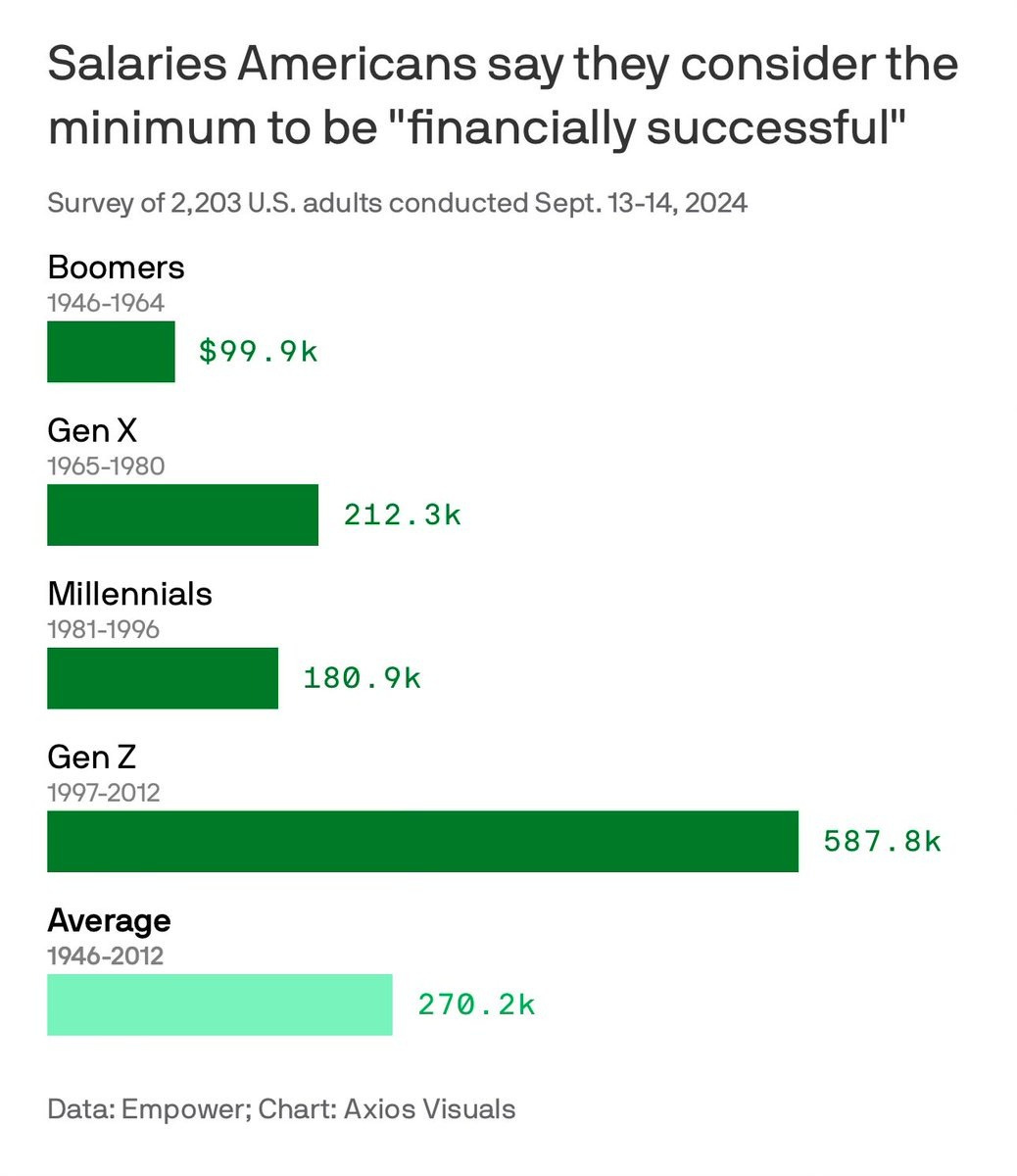
Despite measurable increases in real wages and wealth accumulation among younger Americans, economic anxiety remains stubbornly high because these income gains fail to account for the broader and evolving financial pressures they face. Analysts highlight the Revolutions of Rising Expectations and Rising Requirements as critical frameworks explaining this paradox: while nominal earnings have improved, the expanding scope of costs—from housing and healthcare to social and familial obligations—means that higher incomes do not translate into the financial security or life milestones, such as raising a family, that previous generations might have expected. This disconnect underscores why, as one analysis puts it, 'Guy’s life should be easier,' yet persistent insecurity endures.

The New Price of Normal
Legal mandates, social media-fueled lifestyle inflation, and relentless expectations have made traditional milestones like homeownership and family life feel unattainable—pushing youth into riskier financial behaviors.
Despite real wages rising and material living standards improving, families and youth face unprecedented social and legal demands that dramatically raise the perceived cost of achieving a 'normal' life. The so-called Revolution of Rising Expectations means that compromises once deemed acceptable—such as tolerating unpleasant jobs or renting rather than owning—are now intolerable, while the Revolution of Rising Requirements imposes 'insane' levels of mandatory child supervision and safety regulations, significantly increasing time and financial pressures on parents. This paradox explains why economic data shows improvement but many feel economic strain and dissatisfaction, as the socially acceptable basket of goods and experiences has expanded beyond mere material comfort to include higher standards of fairness, supervision, and lifestyle quality.
Social media has intensified these rising expectations by reshaping young adults' perceptions of success and homeownership, turning starter homes into curated expressions of identity rather than simple shelters. By early 2026, influencer culture on platforms like Instagram and TikTok had elevated aesthetic standards—granite countertops, smart lighting, and luxury finishes are now baseline expectations—leading many Millennials and Gen Z buyers to dismiss affordable homes that don't meet these inflated criteria. This aesthetic inflation, combined with constant social comparisons online, fosters a 'universal poverty' mindset, as John Ganz describes, where even the wealthiest appear perpetually dissatisfied, deepening feelings of economic inadequacy despite objectively higher incomes and wealth accumulation among young people.
The cumulative effect of heightened social expectations, legal requirements, and the psychological pressures amplified by social media has led many young adults to postpone or indefinitely delay traditional life milestones like marriage and having children. Feeling that success is a prerequisite for starting a family, and facing an environment rife with bureaucratic hurdles and hostile information landscapes, youth increasingly turn to alternative, often risky financial behaviors such as gambling, day trading, and cryptocurrency speculation as they seek to 'strike it rich' outside conventional pathways. This shift underscores how rising social demands not only elevate living costs but also reshape life trajectories and economic behaviors.

Pragmatic Socialism’s Surge
Millennials and Gen Z are fueling a progressive political realignment, turning to pragmatic socialism and the DSA as disillusionment with asset-driven capitalism and establishment politics deepens.
By mid-2026, the surge of pragmatic socialism among Millennials and Gen Z has been vividly embodied by figures like Zohran Mamdani and Alexandria Ocasio-Cortez, whose coalition has reshaped the Democratic Party’s landscape, extending progressive influence even into conservative territories as seen with Charles Booker's Senate primary victory in Kentucky. This political realignment reflects a broader generational and ideological shift where voters, frustrated by entrenched establishment politics, increasingly support candidates promising tangible governance and systemic change.
Economic hardships such as soaring housing costs, crippling student debt, and stagnant asset accumulation have fundamentally altered younger generations’ relationship with capitalism, driving Millennials and Gen Z toward socialism not as an abstract ideology but as a practical response to exclusion from the traditional 'American Dream' of homeownership and wealth-building. As one analysis notes, lacking a stake in the capitalist system—particularly through asset ownership—fuels political alienation and a turn toward progressive movements like the Democratic Socialists of America (DSA), which have gained traction among urban, college-educated voters despite critiques of their economic proposals as potentially self-defeating.
The DSA’s rising influence, especially in urban centers like New York City, signals a complex and evolving progressive movement that blends youthful idealism with pragmatic activism, yet faces challenges in coalition-building as it increasingly represents a fusion of downwardly mobile affluent white liberals and organizers distanced from traditional working-class communities. This internal tension is compounded by systemic issues such as the outsourcing of public funding to NGOs, which some argue has fostered organized corruption, complicating grassroots efforts amid a political environment marked by rising extremism, migration pressures, and institutional distrust.
Observers like Michael Malice interpret the socialist surge not as a radical rupture but as a continuation of the Democratic Party’s evolution toward stronger ideological branding, amplified by the power of narrative and social media influence rather than policy wonkery. For younger voters, socialism is increasingly associated with tangible social issues—healthcare, minority rights, and housing affordability—rather than Cold War-era communism, with recent policy victories such as New York City’s rent freeze exemplifying how economic pressures translate into support for interventionist, progressive policies amid a polarized and volatile political landscape.




Democrats’ Identity Crisis
Ideological rifts and generational divides are tearing at the Democratic Party’s fabric, as it struggles to balance moderate appeals with a restless, insurgent base demanding existential change.
By early 2026, the Democratic Party found itself embroiled in a profound identity crisis marked by ideological, generational, and strategic fissures. As Chris Hayes framed it, the party was caught between 'business as usual versus radical break,' struggling to reconcile pragmatic governance with a base energized for existential political battles. This tension was further complicated by persistent voter trust deficits on issues like immigration, crime, and the economy, which hampered efforts to present a unified front against Trump’s resurgence and adapt to emerging challenges such as artificial intelligence.
Leadership within the Democratic Party post-2024 reflected a delicate balancing act between acknowledging the 'rupture and abnormality' of the Trump era and restoring a sense of normalcy to appeal to moderate and swing voters. Figures like Senators Mark Kelly, Raphael Warnock, Ruben Gallego, and Jon Ossoff exemplified this dual strategy by combining moderate legislative records with rhetoric condemning political aberrations, focusing on relatable 'kitchen table' issues to maintain electoral viability amid factional pressures.
The party’s internal divisions deepened as progressive insurgents, exemplified by Zohran Mamdani and Charles Booker, gained momentum, challenging the establishment’s resistance to what some dismiss as electorally risky policies reminiscent of a social safety net even Eisenhower might have endorsed. This leftward shift, particularly visible in urban centers like New York City with rising Democratic Socialists of America influence, exposed generational divides and ideological tensions between affluent, college-educated liberals and traditional working-class constituencies, complicating efforts to maintain party unity.
Strategic debates within the Democratic Party revealed a tripartite factional landscape: the left wing led by figures like AOC and Bernie Sanders advocating bold progressive reforms; the centrist 'abundance libs' focused on pragmatic governance and market-friendly policies; and the combative 'resistance libs' loyal to the establishment and emphasizing partisan defense. This complex interplay, coupled with generational tensions—highlighted by the political absence of Gen X and the lingering 'Hillary Clinton problem'—underscored the party’s ongoing struggle to define leadership and policy direction in a rapidly evolving political environment.




Anti-Elite Rage Redefines Politics
A revolt against elite power, secrecy, and coercion is forging unexpected cross-partisan alliances and driving both left and right to challenge establishment norms and oligarchic dominance.
By late 2025, a 'Revolution of Rising Expectations' had taken root, where the public increasingly rejected tolerating unpleasant experiences, unfairness, and coercion, fundamentally challenging traditional social compromises and norms. This shift, exemplified by demands against elite secrecy, discrimination, and coercive social norms, also intensified burdens such as mandatory child supervision, uniting diverse constituencies across political lines around anti-elite and reformist agendas.
Entering 2026, widespread anger toward oligarchic consolidation and endless war catalyzed a political realignment as traditional parties lost credibility; figures like New York City Mayor Zohran Mamdani emerged as symbols of serious anti-elite politics, pushing policies like rent freezes and challenging economic power concentration. Simultaneously, initiatives such as California's billionaire tax provoked fierce elite backlash, underscoring the intensifying contest over wealth and power in America’s fracturing political landscape.
By mid-2026, the political implosion deepened with populist forces from both right and left dismantling establishment orthodoxies: the fracturing of the 'America First' movement, marked by defections from Tucker Carlson and Marjorie Taylor Greene, paralleled the rise of democratic socialists backed by Mamdani disrupting the Democratic Party. This turmoil fostered unprecedented cross-partisan pro-worker coalitions around shared concerns like AI’s economic impact, while both major parties faced historic distrust, rendering upcoming elections highly unpredictable.
The resurgence of socialism among Millennials and Gen Z, who associate it with social welfare and economic justice rather than Cold War communism, reflects broader societal tensions including political extremism, mass migration, and foreign influence in institutions. This environment fuels a potent anti-elite backlash as many perceive political elites as enabling radical movements that threaten property rights and social stability, creating fertile ground for new cross-partisan coalitions united against oligarchic consolidation and elite impunity.


Fighter Politics Take Center Stage
Voters’ hunger for combative, anti-oligarchy leaders is fracturing both parties, turning the 2026 and 2028 elections into a volatile showdown over democracy, class, and the future of American power.
By early 2026, the 2026 and 2028 elections are shaping up as pivotal battlegrounds defined by a widespread backlash against authoritarian overreach and oligarchic dominance, fueling voter demand for leaders who actively fight for democracy and working-class interests. This environment of rising economic anxiety, political violence, and media manipulation is reshaping voter identities and political alignments, making these contests not just about preserving democratic norms but about reimagining the future with fighter leadership that confronts entrenched elite power. The tragic consequences of unchecked political violence underscore the urgency and transformative potential of these elections.
The political landscape is increasingly fractured and volatile, with both major parties deeply unpopular and internally divided, creating an unpredictable electoral environment where control of Congress is a toss-up. On the right, schisms over 'America First' have splintered Trump's coalition, while on the left, a rising Democratic socialist movement challenges centrist incumbents, exemplified by New York Mayor Zohran Mamdani's backing of insurgent candidates who unseated establishment Democrats. This realignment reflects a broader voter shift toward combative, fighter-style leadership that rejects traditional moderation in favor of activism and direct confrontation with elite corruption and injustice.
Campaign strategies for 2026 and 2028 are evolving to meet the electorate's demand for 'fighter' candidates who embody urgency and resilience against oligarchic influence and media capitulation. Democratic figures like Gavin Newsom signal loyalty to the party’s resistance liberals through combative rhetoric and aggressive media tactics, while voters increasingly prioritize pragmatic survival over ideological purity, often voting to impose checks on executive power rather than out of conviction. This shift toward dynamic, confrontational leadership styles reflects deep ideological convulsions and a fracturing political environment where traditional norms are being upended.
Amidst this turbulence, there is an urgent call to restore functional democratic processes and curb extremism to prevent further political and economic implosion, a theme that will heavily influence voter expectations and candidate platforms. The rise of polarized 'demon' candidates on both the right and left—such as Trump and Bernie Sanders—signals a governance crisis rooted in late-stage financialization and populist backlash. How parties navigate these fractures and address demands for fighter leadership while reestablishing checks and balances will determine the trajectory of American democracy in these critical upcoming elections.