Sanctions squeeze russia’s shadow fleet—but loopholes persist
The gist
Western allies are ramping up sanctions to choke off Russia’s shadow fleet and war chest—but loopholes and internal wrangling keep Moscow’s revenues flowing.
What to know
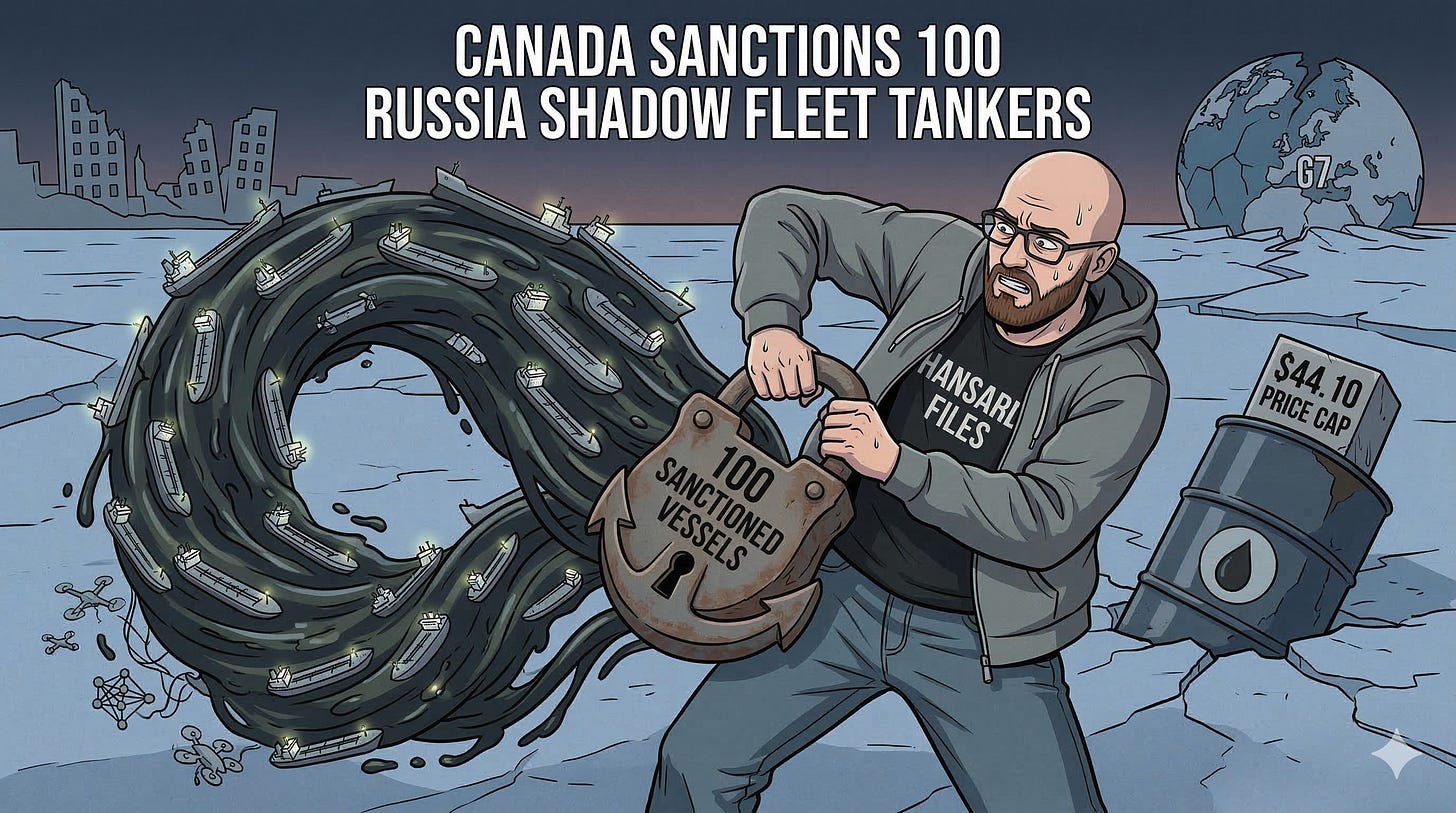
- By early 2026, Canada, the EU, and G7 partners blacklisted over 100 tankers and slashed the crude oil price cap to $44.10 per barrel in a synchronized bid to hit Russia’s energy exports.
- The EU’s 21st sanctions package included high-profile carve-outs—like Greece’s ongoing Russian LNG shipments—spotlighting internal deals that blunt the impact.
- The US Senate advanced a new sanctions bill, Switzerland banned Russian LNG shipping and crypto evasion, but enforcement remains tangled by political compromises and creative workarounds.
Sanctions Target Shadow Fleet
Western allies coordinated an unprecedented crackdown on Russia’s covert oil shipping, blacklisting over 100 tankers and tightening price caps to disrupt Moscow’s revenue lifelines.
By early 2026, Western allies orchestrated a robust, synchronized expansion of sanctions aimed squarely at crippling Russia’s shadow fleet and energy export apparatus. Canada spearheaded this effort in July by blacklisting 100 tankers linked to Russia’s covert shipping network and lowering the crude oil price cap to $44.10 per barrel, a move harmonized with G7 partners to tighten the economic noose. This strategic clampdown was mirrored by the EU’s 21st sanctions package targeting 41 vessels and 94 banks, the UK’s fresh restrictions on Russian shipping and LNG operations, and the U.S. Senate’s advancement of a revised sanctions bill—all designed to close evasion loopholes and choke off vital revenue streams.
The sanctions wave also struck at the financial and technological backbone supporting Russia’s war economy, with Canada adding 21 individuals and 53 entities—including Rosatom Digital Solutions and VTB Bank—to its blacklist. Targeting these key players in Russia’s energy and banking sectors was a calculated effort to disrupt the flow of funds fueling Moscow’s military ambitions, signaling a shift from broad economic pressure to precision strikes on critical infrastructure and revenue conduits.

Loopholes Fuel Sanctions Evasion
Despite sweeping restrictions, Russia’s shadow fleet exploits regulatory gaps and flag-of-convenience tactics to keep oil exports flowing, exposing the limits of enforcement.
Despite sweeping restrictions, Russia’s shadow fleet exploits regulatory gaps and flag-of-convenience tactics to keep oil exports flowing, exposing the limits of enforcement.
EU Carve-Outs Undermine Unity
Internal EU deals—like Greece’s LNG exemption—reveal how national interests dilute sanctions, allowing Russian energy revenues to persist despite headline restrictions.
The EU's 21st sanctions package against Russia reveals a complex web of internal compromises, notably the strategic exemption allowing Greece to continue shipping Russian LNG under existing contracts. This carve-out, championed by Greek shipping company Dynagas, which handles a significant share of Russian LNG imports, underscores the challenge of maintaining sanctions effectiveness while accommodating member states' economic interests. Analysts remain skeptical about the overall impact, as these exemptions help sustain Russian revenues despite the broader restrictions.
Balancing sanctions enforcement with economic trade-offs, the EU shelved a proposed full maritime services ban due to disagreements, particularly from Greece, allowing continued transport of Russian oil and LNG under the frozen $44.10 per barrel price cap extended until July 2027. To tighten control, the package expanded maritime enforcement by sanctioning 41 additional vessels and targeted ship managers, crewing agencies, and intermediaries involved in sanctions evasion, while authorizing safe disposal of seized Russian oil cargoes, reflecting a nuanced approach to pressure Russia's war economy.
The sanctions package also highlights the EU's ongoing internal negotiations and balancing act, with member states like Bulgaria and Austria leveraging their positions to secure concessions such as lifting vetoes and compensation mechanisms for banks like Raiffeisen. France and Italy negotiated additional time to implement bans on former Russian military personnel entering the EU, with practical details on these sensitive restrictions still being worked out, illustrating the bloc's struggle to maintain unanimity amid diverse national priorities.
European Commission President Ursula Von Der Leyen framed these measures as essential to weakening Russia's war capabilities amid Ukraine's military advances, signaling the political imperative behind the sanctions despite the economic and enforcement complexities. This tension between strategic objectives and practical compromises continues to shape the EU's evolving sanctions regime.
US Ramps Up Legislative Pressure
A bipartisan US Senate bill shifts strategy from blocking entities to imposing punitive tariffs and targeting Russia’s shadow fleet, signaling a new phase in economic warfare.
By mid-2026, the US Senate was poised to escalate its legislative offensive against Russia's war economy with the Lindsey O. Graham Sanctioning Russia Act of 2026, a bipartisan bill boasting over 60 co-sponsors—enough to overcome a filibuster. This legislation marked a strategic pivot from traditional entity blocking to imposing punitive tariffs of up to 100% on the world's five largest importers of Russian oil and gas, as well as on major facilitators of sanctions evasion. Additionally, it targeted Russia's shadow fleet, the aging tanker network responsible for transporting roughly 65% of Russia's crude exports in defiance of the G7 oil price cap, while restricting US persons from engaging with Russia's sovereign debt and energy sectors.
Simultaneously, the US Treasury's Office of Foreign Assets Control (OFAC) maintained relentless pressure through continuous updates to its Specially Designated Nationals list, reinforcing secondary sanctions risks for foreign financial institutions operating in key jurisdictions such as the UAE, Turkey, China, and India. Notably, on July 20, 2026, OFAC added entities like ATS Heavy Equipment and Machinery Spare Parts Trading LLC in Dubai and Pitersnab LLC in Saint Petersburg, underscoring the sustained multilateral effort to choke off Russia's war supply chain and complicate its financial networks.
Switzerland Breaks with Tradition
Switzerland’s latest sanctions package bans Russian LNG shipping, cracks down on crypto evasion, and introduces anti-circumvention tools, marking a historic pivot from neutrality.
In August 2026, Switzerland took a decisive step by adopting its 20th sanctions package against Russia, closely mirroring the EU's stringent measures. This latest round notably targets Russian-linked LNG shipping and infrastructure, imposing bans on LNG tankers, icebreakers, and terminals, while also broadening export restrictions to encompass goods that could bolster Russia's military, technological, or industrial capabilities. By aligning so tightly with the EU, Switzerland signals a significant shift from its traditional neutrality, underscoring a growing commitment to curtail Russia's war economy through comprehensive trade and export controls.
For the first time, Switzerland introduced an innovative anti-circumvention mechanism designed to thwart sanctions evasion via third countries, a move that elevates its enforcement rigor beyond previous packages. This tool aims to close loopholes that allowed Russia to sidestep restrictions by rerouting goods or financial flows through intermediaries, thereby enhancing the integrity of the sanctions regime. Complementing this, Switzerland also banned the use of Russian platforms for cryptocurrency transfers and exchanges, recognizing the growing role of digital assets in circumventing traditional financial controls and further tightening the noose on illicit capital flows.
Beyond direct sanctions, Switzerland has proactively introduced protections for its domestic companies to shield their intellectual property rights from adverse Russian court rulings, reflecting concerns over legal vulnerabilities amid escalating geopolitical tensions. This protective measure not only safeguards Swiss business interests but also signals a nuanced approach to balancing economic security with broader sanction objectives. Together, these steps illustrate Switzerland’s evolving strategy to align with international sanctions while managing the complexities of its historic neutrality and economic ties.
Enforcement Hurdles and Workarounds
Political compromises, creative shipping routes, and digital asset loopholes continue to blunt sanctions’ impact, challenging Western efforts to choke off Russia’s war economy.
Political compromises, creative shipping routes, and digital asset loopholes continue to blunt sanctions’ impact, challenging Western efforts to choke off Russia’s war economy.