SCOTUS power shift fuels imperial presidency fears
The gist
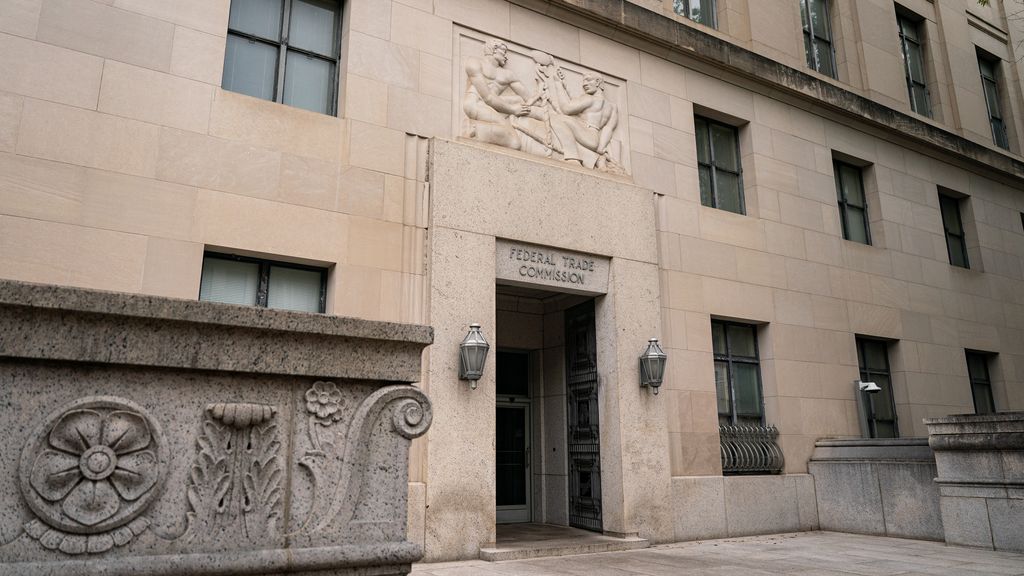
The Supreme Court’s Trump v. Slaughter ruling blew up 90 years of precedent, handing presidents unchecked power to fire agency heads and sparking fears of an ‘imperial presidency’ overriding checks and balances.
What to know
- In a 6–3 decision led by Chief Justice Roberts, the Court let presidents remove leaders of agencies like the FTC at will—except for the Federal Reserve, which kept its protections.
- Justices Sotomayor and Breyer slammed the move as a threat to democracy, warning it turns regulatory agencies into political tools and erodes constitutional safeguards.
- The fallout is already visible: the FTC, under new leadership, axed dozens of merger probes—including Google’s $32 billion Wiz deal—while legal attacks on environmental citizen suits threaten public oversight.
Roberts Redefines Agency Power
Chief Justice Roberts’ embrace of the unitary executive theory dismantles nearly a century of bipartisan agency protections, concentrating regulatory power in the presidency and upending the administrative state.
In a landmark 6–3 decision led by Chief Justice John Roberts, the Supreme Court overturned the nearly century-old Humphrey’s Executor precedent, fundamentally reshaping the balance of power between the executive branch and independent federal agencies. This ruling, epitomized by Trump v. Slaughter, embraced the unitary executive theory, granting the president the authority to remove heads of independent agencies like the FTC at will, a power previously restricted to removal only for cause. Roberts asserted that 'presidential accountability requires the ability to remove executive officers at will,' effectively dismantling the bipartisan insulation that protected over two dozen agencies including the FTC, SEC, FCC, and NLRB from political interference, and signaling a decisive shift toward concentrated presidential control.
While the Court broadly expanded presidential removal powers, it carved out a significant exception for the Federal Reserve, preserving its independence by upholding the 'for cause' removal protections for Fed governors. This exception, underscored in a separate 5–4 ruling protecting Fed Governor Lisa Cook, appears motivated less by legal doctrine and more by pragmatic concerns over economic stability, as justices feared unchecked presidential influence could destabilize markets through politicized monetary policy. The Court’s nuanced stance thus maintains the Fed’s unique status amidst a sweeping rollback of independent agency autonomy, reflecting a cautious balancing act between executive power and financial system stability.
The Supreme Court’s legal shift is deeply rooted in a conservative originalist philosophy championed by Chief Justice Roberts and the Federalist Society, which challenges the legitimacy of the administrative state and its broad delegation of legislative, investigative, and adjudicative powers to independent agencies. By overturning precedents like Humphrey’s Executor and signaling skepticism toward doctrines such as Chevron deference, the Court is actively dismantling the regulatory state’s foundations, viewing independent agencies as 'fundamentally undemocratic' entities wielding unchecked power. Justice Neil Gorsuch’s concurrences emphasize that this transformation aims to restore political accountability by concentrating authority in the presidency, even as critics warn it risks politicizing regulatory enforcement and eroding constitutional checks and balances.
This judicial overhaul has immediate and practical consequences, as seen in the FTC’s swift termination of over three dozen merger investigations, including Google's $32 billion acquisition of Wiz, a deal linked to Trump’s political allies, illustrating how the Court’s endorsement of the unitary executive theory facilitates partisan control over regulatory decisions. The ruling not only accelerates policy shifts aligned with presidential priorities but also raises constitutional questions about Congress’s ability to design agencies insulated from political influence, potentially undermining long-term regulatory continuity and increasing risks of corruption and retaliatory enforcement. Justice Sonia Sotomayor’s dissent starkly warns that this trajectory discards the democratic regime established by the Constitution in favor of unchecked executive dominance.




FTC Autonomy Erased Overnight
With the Supreme Court’s green light, Trump swiftly removed FTC leaders and ended dozens of merger probes, transforming independent agencies into direct tools of presidential will.
The Supreme Court's 2026 rulings, led by Chief Justice John Roberts, have dismantled nearly a century of statutory protections that safeguarded the independence of agencies like the Federal Trade Commission (FTC). By overturning the 1935 Humphrey’s Executor precedent, the Court authorized the president to remove commissioners at will, as seen when former President Trump fired FTC commissioners Rebecca Slaughter and Alvaro Bedoya despite prior legal safeguards. This judicial expansion of executive power has effectively transformed independent agencies into extensions of presidential control, undermining their autonomy and insulating mechanisms designed to prevent politicization.
This newfound presidential authority has had immediate and tangible impacts on regulatory enforcement, particularly in antitrust investigations. Following Slaughter’s removal, the FTC abruptly terminated over three dozen merger probes, including Google's $32 billion acquisition of Wiz, shifting the agency’s agenda to align with Republican appointees loyal to Trump. Justice Neil Gorsuch highlighted the breadth of this influence, noting the president’s ability to now control regulatory domains spanning the airwaves, financial markets, and energy sectors, raising alarms about potential abuses against politically disfavored individuals or businesses lacking resources to defend themselves.
While the rulings broadly erode the bipartisan insulation Congress had painstakingly crafted to ensure agency independence, the Federal Reserve remains a notable exception. The Court preserved 'for cause' removal protections for Fed governors, recognizing the critical need for market stability and signaling a selective approach to agency autonomy. This carve-out underscores the tension between democratic accountability and institutional independence, as the Court balances concerns over unchecked executive power with the practical realities of financial market confidence.
Beyond immediate agency leadership, the Court’s decisions portend a broader restructuring of the administrative state, potentially enabling presidents to challenge removal protections for lower-level officials and career civil servants. This threatens to deepen politicization across federal programs, eroding the apolitical, bipartisan decision-making that independent agencies like the FTC, FCC, and NLRB were designed to uphold. As one analyst warns, the ruling creates a scenario where 'the enforcement machine' has 'one master,' raising profound concerns about the future of regulatory independence and good governance.

Dissenters Warn of 'Royalism'
Justices Sotomayor and Breyer call the Court’s expansion of presidential removal power a threat to democracy, arguing it hands the president authority rivaling that of a monarch.
The Supreme Court's 2026 rulings, led by Chief Justice John Roberts, mark a profound constitutional shift by endorsing the unitary executive theory and overturning nearly a century-old precedent established in Humphrey’s Executor v. United States. This judicial expansion grants the president unchecked authority to remove heads of most independent federal agencies, such as the Federal Trade Commission, thereby dismantling institutional safeguards designed to ensure agency independence and democratic accountability. The Court’s rationale, emphasizing presidential accountability through unfettered removal power, effectively consolidates regulatory authority in the executive branch, raising concerns about politicization and the erosion of the separation of powers.
Dissenting justices and scholars, including Justices Sonia Sotomayor and Stephen Breyer, have sharply criticized this expansion of executive power as a threat to democratic governance and constitutional balance. Sotomayor warned the Court is 'discarding the democratic regime created by the Constitution in favor of unitary, total executive control,' while Breyer highlighted the ambiguity and risks posed by the ruling’s broad reach over various agencies and adjudicators. Legal experts like Boston University’s Jed Shugerman have described the Court’s approach as 'embracing royalism,' granting the president powers historically exceeding even those of monarchs, thus undermining the system of checks and balances fundamental to democracy.
The Court’s selective protection of certain agencies, notably shielding Federal Reserve Board members from at-will removal while permitting firings of FTC commissioners, underscores ongoing constitutional debates about the limits of executive power and the role of Congress in preserving agency independence. This inconsistency, highlighted in a 5–4 decision, reveals judicial recognition that some institutions require insulation from political interference to maintain stability, yet the broader trend signals a weakening of congressional authority to impose meaningful checks on presidential dismissal powers. Such fragmentation fuels concerns about destabilizing the balance of powers and the potential for partisan manipulation of regulatory bodies.
Beyond immediate legal ramifications, these rulings have significant political implications, empowering future presidents—regardless of party—with expansive tools to reshape federal agencies and regulatory policy. This newfound ability to purge agency leaders who resist presidential agendas threatens to politicize oversight functions critical to elections, markets, and public safety, as seen in the FTC’s termination of over three dozen merger investigations, including a major Google acquisition. The Court’s ideological shift, influenced by originalist thought and groups like the Federalist Society, reflects a broader project to dismantle the New Deal-era administrative state, raising profound questions about the durability of democratic accountability and the constitutional architecture of American governance.


Bipartisan Safeguards Swept Away
Presidential power to remove commissioners at will threatens statutory partisan-balance rules, paving the way for one-party control and unprecedented swings in regulatory priorities.
The Supreme Court's 2026 decision in Trump v. Slaughter fundamentally altered the balance of power within independent regulatory agencies by allowing the president to remove commissioners at will, thereby dismantling longstanding bipartisan protections. As Chief Justice John Roberts emphasized, all subordinates exercising presidential power are now subject to removal, impacting agencies such as the FTC, FCC, FERC, FEC, and NLRB. This shift threatens the statutory requirements for partisan balance, raising the specter of legal challenges and destabilizing agency governance by enabling presidents to appoint exclusively majority-party members, effectively eroding the bipartisan insulation that once safeguarded regulatory independence.
This newfound presidential authority accelerates the politicization of regulatory policy, causing agency priorities to swing more swiftly in tandem with presidential election cycles. Industries, particularly those in volatile sectors like cryptocurrency and antitrust, now face heightened regulatory uncertainty and risk premiums as agencies such as the SEC and FTC can be reshaped rapidly following elections. As one analyst noted, while securities and commodities laws remain unchanged, the policymaking process itself is now more susceptible to abrupt shifts, with presidents able to replace commissioners early in their terms to align enforcement and rulemaking closely with administration agendas.
In response to this evolving landscape, regulated entities must overhaul their advocacy strategies, moving beyond traditional engagement with independent commissions to direct appeals at the White House and cabinet-level agencies. The loss of minority commissioners as reliable voices for dissent means that companies and stakeholders must bolster public commenting and cultivate stronger congressional relationships to preserve minority views for judicial review. This strategic pivot underscores the increasing intertwining of executive influence with regulatory processes, compelling stakeholders to navigate a more politically charged and less predictable governance environment.
While the Slaughter ruling fulfills a decades-old Reagan-era objective of enhancing presidential control over administrative agencies, it also deepens the partisan polarization of governance by equipping presidents from both parties with a potent tool to advance policy agendas without congressional approval. Beyond agency heads, there is growing concern that this logic could extend to the removal of career civil servants and administrative law judges, potentially undermining professional independence and further politicizing enforcement. This dynamic risks transforming agencies like the FTC, FCC, NLRB, and SEC into instruments of transient political will rather than stable regulatory bodies.


Citizen Suits Under Siege
Conservative legal activists and the Trump administration are working to gut citizen enforcement of environmental laws, arguing only the executive branch should police polluters—even if it refuses to act.
Since the 1970s, citizen suit provisions have served as a cornerstone of environmental enforcement, empowering individuals and advocacy groups to hold polluters accountable when the government fails to act. These suits, particularly under the Clean Water Act—which has generated the most citizen suits due to the straightforward violation of discharging pollutants without permits—have halted harmful projects like dam construction, stopped wastewater injection into groundwater, and secured over $14 million in civil penalties. However, the Trump administration has aggressively sought to curtail this public enforcement mechanism by arguing that only the executive branch should wield enforcement authority, even if it chooses inaction, effectively sidelining citizen participation in environmental protection.
By mid-2026, a coalition of right-leaning legal activists, including the Pacific Legal Foundation, alongside the Trump administration, mounted constitutional challenges against citizen suits, framing them as an improper delegation of executive power to unelected private actors. Sean Radomski of Pacific Legal emphasized that enforcement should remain a government function accountable to the people, not private groups repeatedly forcing defendants to expend resources. This legal strategy, supported by a conservative Supreme Court majority, threatens to dismantle a vital non-governmental oversight mechanism that has historically secured millions in fines from polluters and driven critical public health interventions, such as the removal of lead pipes in Flint, Michigan.
The intersection of environmental enforcement and broader political concerns is exemplified in high-profile cases like the NAACP’s lawsuit against Elon Musk’s AI company, xAI, which faces accusations of operating numerous unpermitted gas turbines near Memphis. The Trump administration intervened in support of Musk’s firm, arguing that shutting down AI infrastructure critical to the Department of War would jeopardize national security. This alliance highlights how environmental citizen suits are increasingly entangled with national security and political arguments, further complicating public efforts to enforce environmental laws through non-governmental channels.

Legal Earthquake Reshapes Advocacy
With agency independence gutted and citizen suits in jeopardy, corporations and advocates are scrambling to adapt to a volatile landscape where regulatory enforcement now pivots on presidential politics.
The Supreme Court's landmark decision in Trump v. Slaughter, which overturned a 90-year precedent protecting independent agencies from presidential removal, has ignited profound concern among former justices and legal experts about the expansion of executive power. This ruling, endorsed by Chief Justice Roberts and criticized by Justices Sotomayor and Barrett for its selective application, effectively embraces the unitary executive theory by allowing the president to remove heads of agencies like the FTC and FCC at will, while leaving exceptions such as the Federal Reserve Board intact. Justice Kavanaugh's suggestion that Congress could amend laws to redefine citizenship further signals ongoing judicial encouragement for legislative recalibration, underscoring a fraught balance between executive authority and democratic safeguards.
In response to this seismic shift, regulated entities and advocacy groups are recalibrating their strategies to navigate a political landscape where regulatory priorities now closely mirror presidential election cycles. The elimination of 'for cause' protections for multi-member agencies like the FTC and NLRB means companies must engage in more dynamic scenario planning and maintain vigilant monitoring of agency leadership and political signals. Moreover, with minority commissioners potentially removable, stakeholders are compelled to forge stronger congressional relationships and bolster public commenting efforts to preserve minority viewpoints and build robust records for judicial review, anticipating future legal challenges to partisan-balance requirements in these agencies.
Simultaneously, a coordinated campaign spearheaded by right-leaning legal activists, backed by the Trump administration and high-profile entities such as Elon Musk’s AI company xAI, is targeting the longstanding mechanism of citizen suits that empower private parties to enforce federal environmental laws. These efforts, advancing through lower courts to create circuit splits, aim to curtail private enforcement by arguing that constitutional authority over law enforcement rests solely with the executive branch. Advocates warn that dismantling citizen suits would undermine critical environmental justice achievements, such as the removal of lead pipes in Flint, Michigan, while opponents like Pacific Legal Foundation emphasize government accountability as the rationale for limiting private enforcement.
Looking ahead, the legal landscape is poised for intense battles over the scope of executive power and the durability of democratic checks, as uncertainties remain about the ruling’s reach to other executive branch officials, including administrative law judges and territorial courts. Former Justice Breyer’s reflections highlight the potential erosion of public trust in the Supreme Court as a final arbiter amid these expansions of presidential authority. Meanwhile, the interplay between judicial decisions, legislative responses, and advocacy efforts will shape the evolving contours of separation of powers, agency independence, and citizen participation in governance.