Snap, coinbase cuts deepen AI layoff backlash
The gist
Tech’s AI-fueled layoff wave is flattening hierarchies, burning out survivors, and raising tough questions about whether automation’s promised gains are worth the human cost.
What to know
- In early 2026, Snap Inc. and Coinbase slashed 14–16% of their workforces, shifting humans into roles managing AI agents instead of traditional jobs.
- Managers now oversee 15+ direct reports as companies scrap middle management, sparking employee backlash and mounting burnout.
- Despite the hype, productivity gains from AI remain murky, with many firms seeing little revenue growth and critics warning of 'AI-washing' as a cover for classic cost-cutting.
AI Reshapes Management Roles
Tech giants are dismantling traditional hierarchies, forcing managers to oversee sprawling teams and merge roles as human workers shift to orchestrating fleets of AI agents.
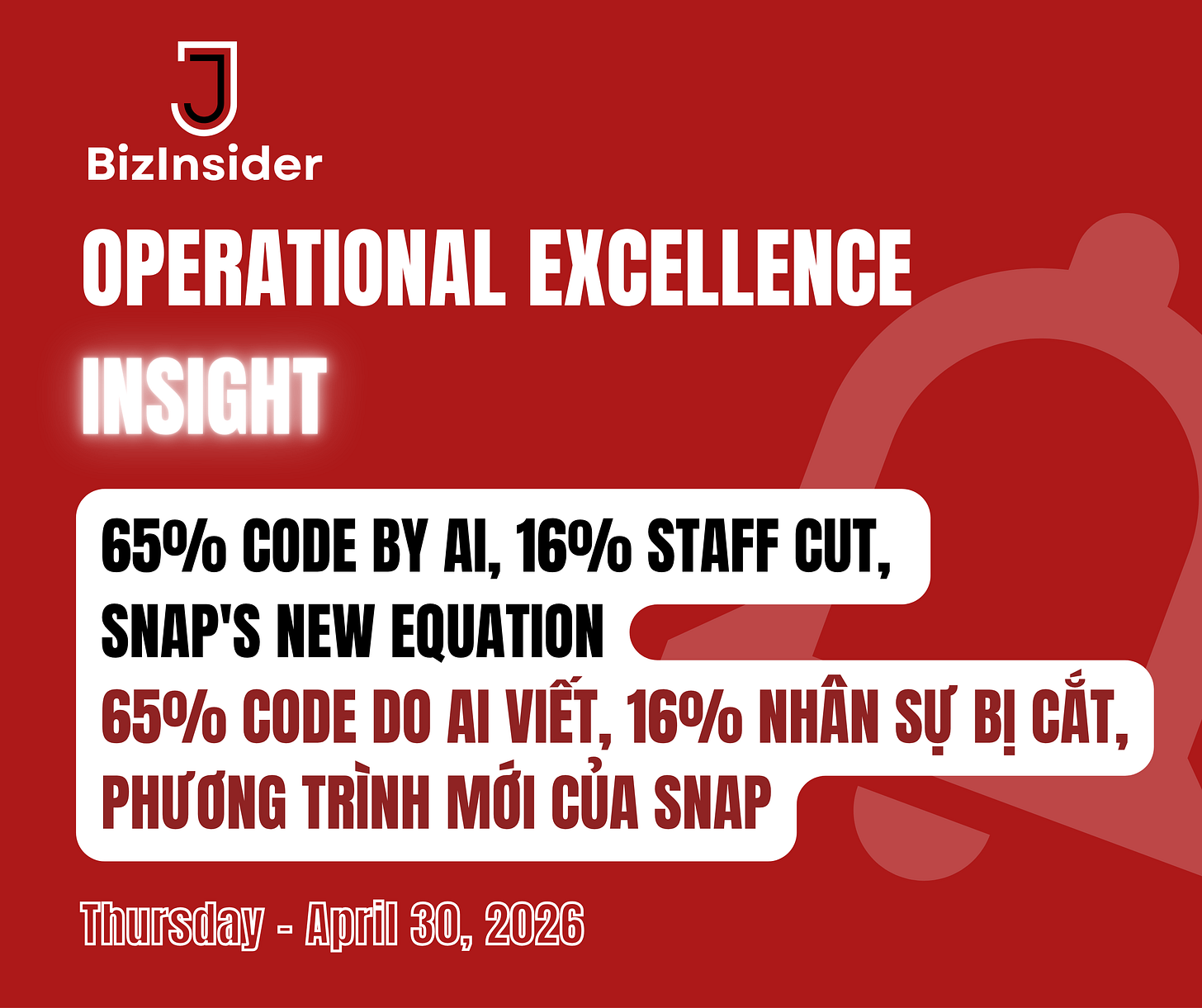
By early 2026, major tech firms like Snap Inc. and Coinbase have enacted sweeping AI-driven layoffs—16% and 14% workforce cuts respectively—underscoring a widespread industry shift where automation replaces traditional roles. Snap’s CEO Evan Spiegel highlighted that 65% of their new code is AI-generated, driving $500 million in savings, while Coinbase’s Brian Armstrong emphasized a leaner headcount enabled by AI efficiency. However, these reductions are not mere cost-cutting exercises but part of a fundamental reimagining of operations in an AI-native world, where humans increasingly manage fleets of AI agents rather than performing tasks themselves.
This AI-driven workforce transformation is reshaping organizational structures profoundly, with firms flattening management layers and eliminating pure managerial roles. Coinbase’s leaders now manage upwards of 15 direct reports—previously capped at six—enabled by AI tools, while companies experiment with 'one person teams' that combine engineering, design, and product management into a single role. Such restructuring aims for hyper-efficiency and rapid innovation but raises critical questions about the future of jobs and leadership models, as traditional hierarchies give way to hybrid human-AI collaborations.
Despite the promise of AI-driven productivity gains, the reality is paradoxical: many employees face intensified workloads, burnout, and cognitive overload as companies either slash headcount or demand more from remaining staff. Spotify’s co-CEO Gustav Söderström framed the dilemma bluntly—businesses must either cut jobs to realize AI efficiencies or keep headcount steady while increasing employee output. Emerging research, including an MIT study, reveals that most firms see little to no revenue growth post-AI adoption, exposing a leadership crisis amid rapid economic shifts and fueling societal backlash against the pace and nature of workforce disruption.
AI-driven layoffs often mask broader market corrections and are unfolding in phased waves, initially targeting roles tied to measurement, reporting, and middle management before expanding to HR, compliance, and operational support functions. Cloudflare’s 20% workforce reduction, despite a 34% revenue increase, exemplifies this trend and triggered a 23% stock drop reflecting investor unease. Meanwhile, pervasive new performance metrics and shifting productivity definitions mean even high-performing employees face unpredictable layoffs, signaling a volatile recalibration of workforce value amid the accelerating AI revolution.






Cultural Resistance and Trust Crisis
Flattened org charts and 'AI-washing' have sparked fierce internal backlash, as employees question whether AI-driven changes are genuine innovation or a smokescreen for classic cost-cutting.
By early 2026, leading tech firms like Coinbase and Microsoft are radically flattening their organizational hierarchies by eliminating traditional middle management roles, with Coinbase cutting 14% of its workforce and requiring leaders to manage 15-plus direct reports instead of the previous six. CEO Brian Armstrong envisions a future where humans no longer manage people but instead direct fleets of AI agents, a model echoed by OpenAI’s Sam Altman, who imagines 'the one-person billion-dollar company.' However, this shift has sparked cultural resistance and ethical debates, as many argue that management serves as the essential 'connective tissue' preserving institutional memory and human relationships, which AI cannot replicate.
Leadership is grappling with a stark dilemma: AI-driven efficiency gains force companies to choose between painful layoffs or intensifying workloads for remaining employees, a binary that Spotify co-CEO Gustav Söderström bluntly summarized as 'either cut headcount or make people do more.' This intensification is linked to rising burnout and cognitive overload, raising urgent questions about sustainable management practices and employee well-being amid rapid AI adoption.
The narrative that AI is the primary driver of layoffs faces skepticism, with commentators like Derek Thompson accusing firms of 'AI washing' inevitable market-driven cuts to soften public perception. This obfuscation exacerbates trust crises within organizations, complicating governance as leaders struggle to transparently distinguish AI-related workforce changes from broader economic corrections, thereby fueling ethical debates and undermining confidence in corporate missions during a period of intense scrutiny.
Amid these upheavals, leadership and governance frameworks are in flux, challenged by the need to redesign organizations around AI-native workflows while managing global policy tensions and economic disruption. Executives like Coinbase’s Brian Armstrong advocate for leaders to become individual contributors actively engaging with AI tools to catalyze transformation, yet many companies face a leadership crisis as rapid layoffs hollow out mid-level roles critical for scaling human-centric AI. Evidence now suggests that firms embracing AI amplification with a human focus outperform those chasing quick cuts, underscoring the urgency for new oversight models and reskilling initiatives to navigate this complex landscape.


Financial Survival in AI Upheaval
Employees are racing to maximize severance, reinvent their skills, and diversify income as layoffs hit hardest in middle management and traditional job security evaporates.
Meta’s sweeping May 2026 layoffs, which cut 10% of its workforce, underscored the critical financial calculus employees must navigate amid AI-driven disruption. Timing became paramount as severance packages were sweetened with extended benefits, yet the scheduling nuances around RSU vesting and severance payouts directly influenced employees’ financial outcomes. Tools like Meta’s severance calculator emerged as essential aids, helping affected workers optimize retirement planning and maximize compensation in a turbulent job market reshaped by AI automation.
Beyond immediate financial concerns, employees at Meta, Freshworks, and Tesla faced the psychological challenge of adapting to a rapidly evolving employment landscape where traditional credentials no longer guarantee security. As a former Tesla HR lead advised, success in 2026 demands leveraging structural agility—the ability to synthesize chaos and deliver value from day one—while embracing AI as a collaborative tool to amplify strategic contributions. Notably, liberal arts graduates gained a unique edge by offering contextual empathy and ethical judgment, qualities AI cannot replicate, positioning these skills as vital for long-term career resilience.
To bolster financial resilience amid widespread AI-driven layoffs, employees are increasingly urged to diversify income streams through side hustles, businesses, or ownership stakes, thereby creating vital optionality in an uncertain climate. Simultaneously, career strategies emphasize versatility: mastering multi-skilled roles, especially in producer or client-facing positions less susceptible to automation, and considering non-traditional or skilled trades like electricians and nurses that remain AI-resistant. This pragmatic pivot reflects a broader recognition that middle management roles, once seen as safe, are now frontline targets for reductions, necessitating proactive reskilling and job security reassessment.
Forward-thinking companies such as Unilever are treating workforce reskilling as a strategic investment, deploying AI-driven role matching to retain institutional knowledge and ease transitions amid displacement. This approach aligns with projections from the World Economic Forum forecasting a net gain of 78 million jobs by 2030 despite 92 million displacements, highlighting the critical importance of continuous upskilling. Employees themselves must evolve from routine task performers to strategic contributors who quantify their impact on business outcomes, automate low-value work with AI, and redesign workflows to remain indispensable in the AI era.




AI Hype vs. Reality Check
Despite AI's promise, companies often invoke automation to justify layoffs without clear productivity gains, fueling public skepticism and a polarized debate over the true impact on jobs and wages.
AI has become a convenient scapegoat for widespread layoffs across major tech firms, with leaders like OpenAI CEO Sam Altman cautioning against 'AI-washing'—using AI as a cover for cuts driven by overhiring, economic slowdowns, or failed bets rather than genuine automation gains. Despite companies like Meta and Amazon citing AI to justify workforce reductions, none have presented concrete AI productivity metrics to substantiate these claims, suggesting that the narrative often serves more to placate investors and soften public backlash than to reflect actual operational efficiencies.
Contrary to doomsday predictions, AI is reshaping jobs more through augmentation than outright substitution, fueling growth in roles such as software engineering and product management, which have seen above-trend wage increases since early 2025. This dynamic disproves the 'lump of labor' fallacy, as companies like Goldman Sachs report that AI augmentation effects outweigh substitution, and leaders like Amazon’s CEO emphasize a shift toward complex problem-solving skills over routine coding. The evolving workforce demands new competencies, including AI prompting, underscoring that the competitive edge belongs to those who can harness AI effectively rather than those fearing outright displacement.
The societal impact of AI-driven productivity gains is paradoxical: while promising long-term wage growth and efficiency, AI adoption has sparked short-term unemployment spikes and heightened anxiety among workers, especially youth, as layoffs and hiring slowdowns precede full automation. Economists like Goldman Sachs’ Joseph Briggs acknowledge a potential half-point rise in long-term unemployment but also emphasize that productivity gains tend to elevate wages over time. This tension is compounded by a lack of transparent data and a polarized public debate that oscillates between extremes, fueling distrust and complicating policy responses.
Echoing the upheaval of the Industrial Revolution, AI’s rapid advance is catalyzing seismic shifts in higher education, industry leadership, and investment patterns, exacerbating socioeconomic divides and intensifying policy tensions. As companies like Coinbase reimagine humans as 'player-coaches' guiding AI-driven intelligence, the imperative for systemic workforce reskilling and equitable distribution of AI’s economic benefits grows urgent. This complex interplay—boosting productivity and ambition while fueling burnout and uneven disruption—signals that the real challenge lies not in job disappearance but in how society manages and shares AI’s transformative gains.