Solar surges past coal as AI data centers fuel grid shift
The gist
Supercharged by AI data centers, US solar power has surged past coal and wind for the first time—ushering in a new era of solar-plus-storage dominance on the American grid.
What to know
- In May 2026, US solar generated 47,147 GWh—outshining coal and wind—driven by a massive 28,000 MW utility-scale solar buildout and battery storage boom.
- AI data centers are fueling 90% of the planned grid capacity tripling over five years, accelerating solar adoption and pushing rapid deployment of on-site renewables and virtual power plants.
- Despite the federal solar tax credit expiring, a huge project pipeline and consumer focus on energy security are keeping the solar market resilient and developers optimistic.
Solar’s Grid Takeover
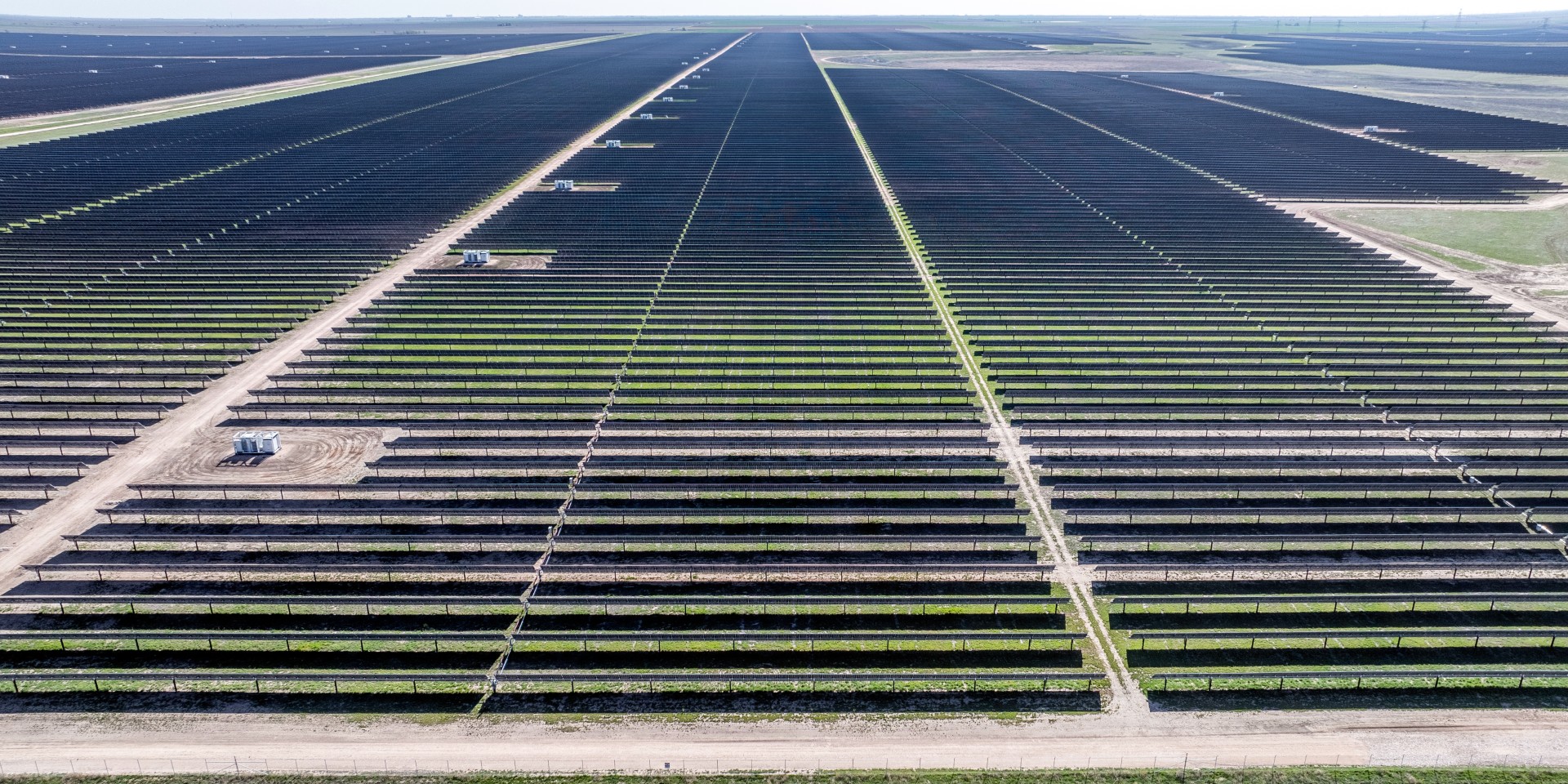
A record-breaking surge in utility-scale solar and storage projects is rapidly displacing coal, with distributed solar infrastructure and small-to-mid-sized projects now driving the US energy transition.
In a landmark moment for renewable energy, solar power generation in the US surpassed both coal and wind in May 2026, producing 47,147 GWh compared to coal's 45,119 GWh and wind's 41,157 GWh. This milestone underscores solar's rapid ascent as a dominant energy source, contributing significantly to renewables accounting for 30.3% of total US electrical generation in early 2026, up from 28.2% the previous year. The combined output of wind and solar during this period was an impressive 57% greater than that of the remaining coal plants, signaling a decisive shift in the energy landscape.
Driving this surge is a massive expansion in utility-scale solar capacity, which grew by nearly 28,000 MW between June 2025 and May 2026, outpacing additions in wind and gas. In the first half of 2026 alone, 207 new utility-scale solar projects came online, adding 11,458 MW of capacity, often paired with battery storage to enhance grid reliability—exemplified by Utah’s Green River Energy Center with its balanced 400 MW solar and 400 MW battery setup. This proliferation of small and mid-sized solar projects, especially concentrated in Texas, New Mexico, and Arizona, reflects a strategic pivot towards distributed, scalable solar infrastructure rather than a few marquee installations.
The rapid rise of solar-plus-storage projects marks a fundamental transformation in the US grid’s build strategy, with battery installations surging alongside solar to 8,207 MW added in early 2026. This shift away from legacy fossil fuel projects toward integrated renewable capacity highlights a new era where solar energy, supported by storage, forms the backbone of grid expansion. As Inside Climate News notes, the near-term build reality is increasingly defined by solar and storage programs, signaling a durable and scalable path for renewable dominance despite the recent expiration of federal solar tax credits.


AI Data Centers Reshape Power
AI-driven electricity demand is forcing utilities and developers to deploy on-site renewables and virtual power plants at unprecedented speed, as traditional grid expansion fails to keep pace.
The explosive growth of AI data centers is reshaping the US electricity landscape, driving an unprecedented surge in demand that utilities must urgently address. According to a major energy utility, AI-related loads will account for 90% of the planned tripling of grid capacity over the next five years—a scale of expansion that dwarfs the previous 125 years of grid development combined. This rapid escalation is a primary catalyst accelerating solar adoption and grid modernization efforts nationwide.
Facing transmission bottlenecks with interconnection queues ballooning to over 2,200 GW—far exceeding the nation’s total installed capacity—AI data centers are increasingly turning to on-site solar, battery storage, and distributed energy resources to meet their urgent power needs. By early 2026, developers planned roughly 56 GW of behind-the-meter capacity, representing 30% of all planned data center builds, while grid operators like SPP fast-track connection agreements for facilities that bring their own generation, exemplified by the High Impact Large Load Generation Assessment (HILLGA) framework.
Innovative solutions such as Virtual Power Plants (VPPs) and demand flexibility tools have become critical to unlocking grid capacity amid soaring AI data center demand. Industry leaders including Sunrun, Tesla, and Renew Home are collaborating on a 16 GW VPP leveraging aggregated home batteries and smart devices, while Google and Voltus have partnered to aggregate 100 MW of flexible assets, illustrating how distributed energy resources are integral to supporting the AI-driven electricity surge.
The US Southwest’s vast federal lands, particularly in Nevada and Arizona, offer enormous untapped solar potential that aligns perfectly with the energy-intensive needs of AI data centers. However, regulatory and data protection considerations heavily influence siting decisions, as seen in regions like Chihuahua, Mexico, where private power generation above 500 kW is prohibited and hyperscalers demand stringent data security to safeguard intellectual property, underscoring the complex interplay between policy, security, and solar adoption in powering AI infrastructure.


Battery Storage Becomes Essential
Battery installations—led by California and Texas—are transforming from grid add-ons to indispensable capacity resources, enabling solar dominance and grid stability during record demand peaks.
The rapid expansion of battery storage capacity in the U.S. is fundamentally reshaping grid reliability and solar integration, with California and Texas emerging as clear leaders. By mid-2026, California's battery storage capacity surpassed 21 gigawatts—enough to meet about one-third of peak demand—driven by over 310 utility-scale projects and hundreds of thousands of distributed batteries across homes and businesses, while Texas aggressively added utility-scale storage that now accounts for 53% of national buildouts. This surge supports the rising solar generation in both states, enabling critical energy shifting to cover evening peaks and reduce fossil fuel reliance, as evidenced by California's record 12.99 GW battery discharge meeting 36% of evening demand and Texas's solar power providing a 20,000 MW buffer during July's record peak loads.
Co-located solar-plus-storage hybrid plants have become the preferred model for developers aiming to optimize capital costs and grid flexibility, especially in regions facing export constraints. By sharing a single site and grid connection, these hybrid projects reduce schedule risks and enable oversized solar capacity behind limited grid ties, allowing excess solar energy to be stored and dispatched during peak demand periods. This approach aligns with the growing standardization of four-hour duration battery systems, particularly in California, where regulatory programs have cemented this duration to better match solar output with evening consumption, transforming batteries from ancillary tools into indispensable infrastructure for grid resilience.
The strategic deployment of battery storage is increasingly recognized as a capacity resource critical to balancing the grid amid soaring solar penetration and surging electricity demand from AI data centers and industrial electrification. Grid operators are now procuring storage based on deliverable megawatt-hours rather than just energy, reflecting a paradigm shift in valuing storage assets. Texas exemplifies this trend by leveraging market price volatility within ERCOT to optimize battery charge-discharge cycles, enabling the state to surpass California in total operational storage capacity and maintain grid stability during peak events, as highlighted by Public Utility Commission Chair Thomas Gleeson's remark on effortlessly meeting all-time peak demand.
The dominance of solar and battery storage in new U.S. power capacity additions underscores their affordability and rapid deployment advantages over traditional generation sources. In early 2026, these technologies accounted for a record 91% of new capacity, with regions like the Southwest Power Pool, ISO New England, MISO, and PJM hitting fresh solar generation highs amid record demand. This regional leadership in solar-plus-storage deployment not only accelerates clean energy transitions but also enhances grid flexibility and reliability across diverse markets, positioning solar and storage as the backbone of the evolving U.S. power system.


Tax Credit Expiry Spurs Resilience
Despite the end of the federal solar tax credit, consumer demand for energy security and a massive project rush are keeping the solar market robust—even as higher prices loom.
The expiration of the 30% federal solar tax credit has led to a moderate market adjustment rather than a collapse, with SEIA and Wood Mackenzie projecting an 18-21% decline in the residential solar sector. However, this impact has been softened by a notable shift in consumer motivations—from primarily seeking cost savings to prioritizing grid resilience and energy security—helping sustain demand despite the loss of the subsidy.
Consumer awareness of the federal solar tax credit was surprisingly low, as reader surveys revealed many homeowners were unaware of the 30% incentive, which likely cushioned the immediate drop in solar adoption rates. Meanwhile, the battery attachment rate for new residential solar installations surged to 45% in Q1 2026, up from just 6% in 2020, signaling a growing consumer preference for paired solar and storage solutions that enhance energy independence.
The tax credit expiration triggered a frenzied rush among developers to lock in subsidies, creating a massive project pipeline exceeding 200 gigawatts—enough to nearly double current U.S. solar capacity, according to Wood Mackenzie. Yet, this surge comes amid rising contract prices for renewables, with LevelTen Energy reporting increases of 40-50%, and some Texas deals spiking as high as 120%, foreshadowing upward pressure on U.S. energy prices amid soaring demand from AI data centers.
Despite losing federal subsidies, solar developers like King Energy’s CEO John Witchel remain optimistic, citing skyrocketing electricity prices driven by AI data center demand that sustain project profitability even without tax credits. Reflecting market uncertainty, contract proposals increasingly include subsidy-free cost estimates, signaling an industry recalibrating to higher costs and a future where solar must compete on its own economic merits.