South korea’s crypto power shift: banks muscle in as stablecoin rules stall and retail retreats
The gist
South Korea's crypto power balance is shifting fast as banks muscle in, stablecoin rules stall, and retail investors retreat, paving the way for a new era of institutional dominance.
What to know
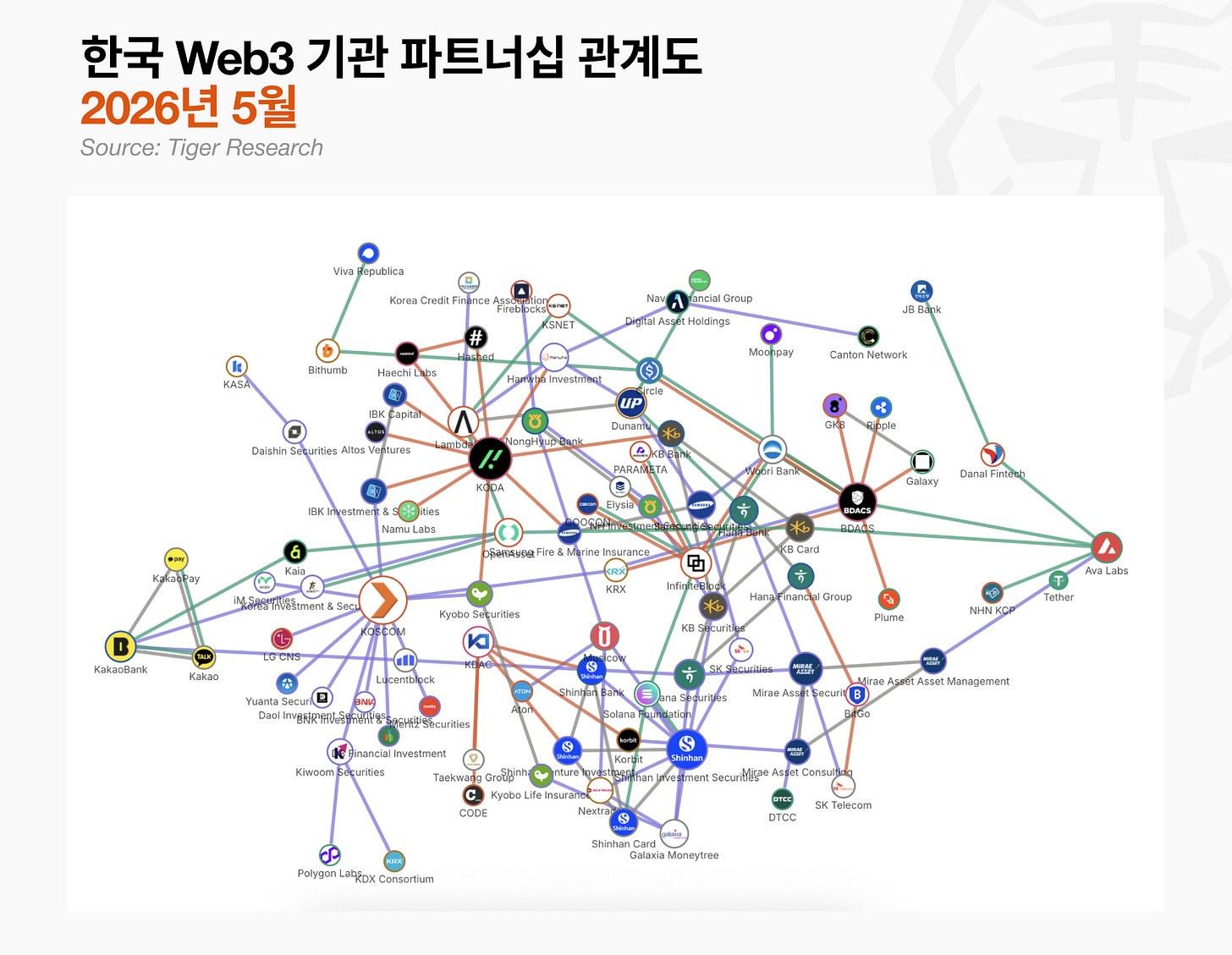
- By early 2026, financial giants like Hana Bank and Samsung affiliates snapped up major stakes in top exchanges (6.55% in Dunamu, 4% across Samsung), chasing VASP licenses amid regulatory delays.
- Retail crypto trading volumes plunged nearly 48% year-on-year, while stablecoin innovation from Kakao and Dunamu faces gridlock thanks to the Bank of Korea’s strict 51% bank-ownership rule.
- South Korea’s digital asset scene is maturing fast, with homegrown STO platforms like Koscom and Shinhan’s PULSE reducing reliance on foreign tech and expanding abroad—just as the big banks take the wheel.
CBDCs Take Center Stage
South Korea’s central bank is sidelining stablecoins in favor of CBDCs and deposit tokens, entrenching banks at the heart of digital currency infrastructure while regulatory uncertainty stalls broader crypto legislation.
By early 2026, the Bank of Korea under Governor Shin Hyun-song has clearly signaled a strategic pivot toward prioritizing central bank digital currencies (CBDCs) and bank-issued deposit tokens over stablecoins, as reflected in his April policy address that notably omitted stablecoins despite their acknowledged complementary role. This focus, embodied in initiatives like Project Hangang and Project Agora, underscores a foundational approach to reinforcing payment system stability and enabling cross-border tokenization, positioning South Korea’s digital currency infrastructure to support the anticipated growth of tokenized assets.
Meanwhile, South Korea’s broader regulatory environment remains in flux, with the government postponing the Digital Asset Basic Act debate until after the June 2026 elections. This delay, driven by a cautious political calculus, stalls the formal introduction of comprehensive regulations for stablecoins, crypto exchanges, and institutional investors, leaving one of the world’s largest retail cryptocurrency markets in regulatory limbo and highlighting the evolving and uncertain legislative landscape that continues to shape digital asset policy.


Banks Race for Exchange Power
Major Korean banks and global players are snapping up stakes in top crypto exchanges to lock in user bases and regulatory leverage before new rules reshape the market.
By early 2026, South Korean financial institutions aggressively pursued equity stakes in leading crypto exchanges as a strategic avenue to cement their foothold in the rapidly evolving digital asset market. Hana Bank’s acquisition of a 6.55% stake in Dunamu for about 1 trillion won, swiftly followed by Hanwha Investment & Securities’ 3.90% and a combined 4.0% by Samsung Securities, Samsung SDS, and Samsung Card, underscores a coordinated institutional effort to secure user bases, liquidity, and indirect access to coveted VASP licenses. This flurry of acquisitions reflects a calculated race to dominate the front-end of digital asset finance, where exchanges serve not just as trading venues but as critical platforms for distributing stablecoins, security tokens, and custody services.
Simultaneously, global crypto exchanges like OKX have strategically targeted the South Korean market by negotiating significant minority stakes in domestic players such as Coinone, often in partnership with Korean financial firms like Korea Investment & Securities. This collaborative approach highlights an international recognition of South Korea’s tightly regulated but lucrative digital asset sector, where early equity participation is seen as essential to influencing regulatory frameworks and securing market presence before rules are finalized. OKX’s proposed 20% acquisition in Coinone exemplifies how global players are leveraging joint ventures to navigate complex local regulations and embed themselves within the institutional fabric of the Korean crypto ecosystem.

Custody Gains, STOs Stall
While crypto custody services go live, regulatory gridlock keeps security token and stablecoin projects stuck in limbo, forcing firms to either double down locally or seek opportunities abroad.
By mid-2026, custody services in South Korea's crypto market have advanced to a notably operational phase, with multiple players successfully running live services after navigating existing regulatory frameworks. This progress contrasts sharply with the stagnation seen in Security Token Offerings (STO) and Real-World Asset (RWA) tokenization, which remain largely confined to contract or Memorandum of Understanding (MOU) stages, as projects await the enforcement of enabling legislation. Similarly, stablecoin initiatives face regulatory ambiguity and lack a definitive standard-bearer, contributing to a broader sector-wide inertia.
In response to these regulatory bottlenecks, market participants are adopting divergent strategies: some are consolidating domestic alliances to strengthen their positions while patiently awaiting legislative clarity, whereas others are proactively seeking regulatory openings abroad to pioneer custody, STO, and RWA offerings through alternative pathways. This dual approach underscores the dynamic yet cautious evolution of South Korea’s crypto ecosystem amid partial institutionalization.
Stablecoin Innovation Bottleneck
Ambitious stablecoin projects from giants like Kakao and Dunamu are stymied by a strict bank-ownership mandate, leaving the market leaderless as fintechs and banks clash over control.
By mid-2026, South Korea's stablecoin landscape is characterized by vibrant innovation from major players like Kakao Group, Shinhan Card, and leading crypto exchanges, each leveraging distinct technological and strategic assets. Kakao's joint task force is pioneering a 'super wallet' that integrates stablecoins, cryptocurrencies, and local currencies via its Kaia public chain, which already supports Tether (USDT) and is undergoing live payment trials. Meanwhile, exchanges such as Dunamu and Bithumb are advancing their stablecoin initiatives differently—Dunamu collaborates with Naver Financial to develop a KRW stablecoin on its proprietary GIWA blockchain, whereas Bithumb prioritizes dollar stablecoin distribution through partnerships with Circle and WLF, effectively sidestepping regulatory delays on KRW stablecoins.
Despite this dynamic innovation, the stablecoin market's growth is significantly hampered by regulatory bottlenecks, chiefly the Bank of Korea's stringent 51% ownership rule mandating that stablecoin issuers be bank-majority consortiums. This policy has sparked resistance from fintech firms eager for market access, resulting in stalled consultations with government and ruling parties and creating a regulatory impasse. The uncertainty surrounding issuance guidelines has left the market without clear leadership, as the eventual dominant players are expected to be those who secure the most comprehensive public-facing touchpoints once the rules are finalized.
Institutions Eclipse Retail
With retail trading collapsing, institutional giants are consolidating control through strategic acquisitions and partnerships, fundamentally shifting Korea’s crypto scene from grassroots to boardroom.
By mid-2026, South Korea's crypto market has undergone a dramatic transformation as retail trading volumes plummeted nearly 48% year-on-year across the top five exchanges, signaling a decisive shift in market gravity toward institutional players. Overseas crypto foundations have recalibrated their strategies accordingly, pivoting from chasing exchange volume to forging strategic partnerships with major financial institutions and conglomerates, underscoring the market's deepening institutionalization.
Institutional actors are not merely expanding their footprint through partnerships but are aggressively acquiring significant equity stakes in leading exchanges, exemplified by Hana Bank's 6.55% acquisition of Dunamu for roughly 1 trillion KRW and Mirae Asset Consulting's 92.06% stake in Korbit. This strategic consolidation, coupled with intense competition among consortiums focusing on stablecoins, STOs, and custody services, reflects a high-stakes race to dominate the core financial infrastructure ahead of impending regulations.
The institutional ascendancy is reshaping the cultural and operational landscape of South Korea's crypto ecosystem, as evidenced by the upcoming KBW 2026 conference in Seoul, where traditional finance leaders will eclipse retail-focused community events. This evolution marks a fundamental departure from the earlier era of token-incentivized grassroots engagement toward a market increasingly orchestrated by large corporations and financial institutions aiming to influence regulatory frameworks and market standards.
Despite the proliferation of partnerships and consortiums, the institutional crypto market remains fragmented without a singular dominant hub, and many collaborations have yet to mature into commercial services. This complexity highlights the nascent stage of institutional consolidation, where strategic positioning and regulatory navigation currently overshadow immediate market monopolization.
Homegrown Platforms Go Global
Korean institutions are building domestic blockchain rails and expanding overseas, signaling a new era of self-reliant, globally connected digital asset infrastructure.
By early 2026, South Korea’s crypto market infrastructure has evolved from mere memorandums of understanding to tangible business operations and equity acquisitions, signaling a significant maturation of the institutional landscape. This progression is exemplified by the dual pillars of the domestic STO market: Koscom-led consortium efforts and Shinhan Investment Securities’ PULSE platform, both rapidly developing proprietary ecosystems that underscore a move toward consolidated, institution-driven infrastructure.
A notable shift away from foreign technology dependence is underway as domestic blockchain infrastructure builders focus on creating regulation-compliant rails tailored to South Korea’s unique environment, including direct involvement in the Bank of Korea’s CBDC initiatives. These homegrown platforms are becoming critical enablers for institutional crypto businesses, fostering a self-reliant ecosystem that aligns with stringent local regulatory frameworks.
South Korea’s crypto ecosystem is not only maturing domestically but also integrating internationally through strategic global partnerships and overseas expansions. Mirae Asset Securities’ issuance of digital bonds in Hong Kong, acquisition of a digital asset retail license from the Hong Kong SFC, and unique participation in the DTCC-led tokenization working group highlight Korea’s growing influence and institutionalization within the global digital asset arena.