Southeast asia on edge: reformists rise, strongmen dig in, and ASEAN’s unity unravels
The gist
Southeast Asia faces a seismic political reckoning as reformists challenge entrenched strongmen, Myanmar’s junta tightens its brutal grip, and ASEAN’s unity wobbles under mounting crises and great power rivalry.
What to know
- Thailand’s 2026 election is a high-stakes battle between surging reformists and military-backed elites, with judicial interventions threatening to override voters’ will amid deep economic woes.
- Myanmar’s military junta has locked in authoritarian rule with sham elections and a handpicked 'super body,' fueling the deadliest regional conflict of 2025 and mass displacement as China and Russia back the regime.
- ASEAN’s credibility is under fire as it fails to respond decisively to crises like Myanmar’s, while Cambodia deftly plays both sides between the US and China and East Timor breaks tradition by pursuing war crimes charges against Myanmar’s generals.
Thailand’s Political Tectonics
Grassroots reformists and military-backed elites are locked in a high-stakes struggle, with economic crisis fueling radical proposals while courts and backroom deals threaten to override the popular will.
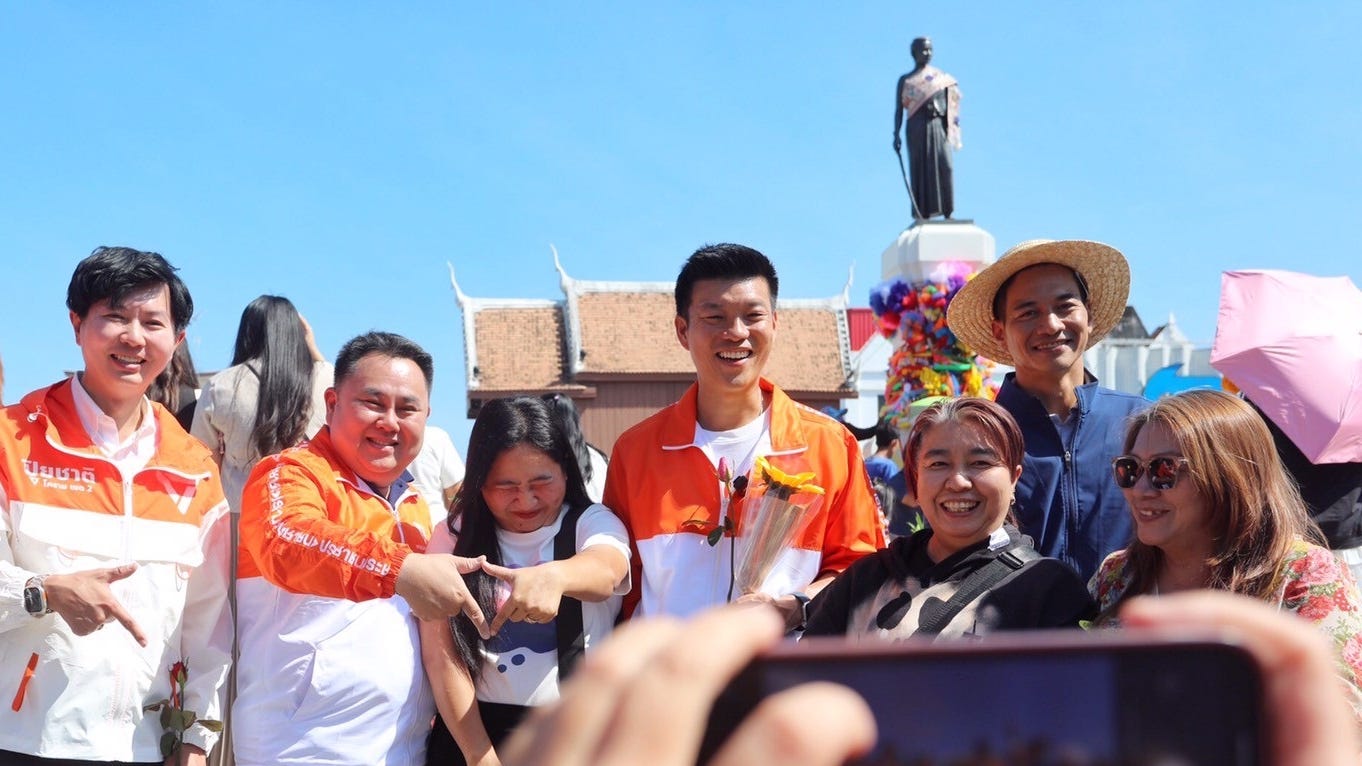
Thailand’s 2026 election cycle has laid bare the collapse of traditional elite bargains and the rise of reformist movements, with the People’s Party—emerging from the ashes of the dissolved Move Forward Party—surging to the forefront by championing structural reforms against entrenched privilege and political exclusion. This momentum is driven by widespread economic anxieties, as the country faces its weakest growth in decades and household debt nears 90% of GDP, pushing economic policy to the center of voter concerns and fueling support for bold proposals like a 20-baht flat fare and direct cash handouts. Yet, despite the People’s Party leading in polls and nearly two-thirds of Thais supporting a new constitution, the specter of judicial intervention and elite maneuvering looms large, with the public now conditioned to expect that electoral victories for reformists may be undermined by dissolutions, disqualifications, or backroom deals that keep establishment forces—backed by the military and patronage networks—firmly in control.
The once-dominant Pheu Thai Party, long synonymous with the Shinawatra dynasty, now finds itself adrift, weakened by Thaksin Shinawatra’s imprisonment, internal fractures, and a loss of credibility among both progressives and conservatives. While the party’s grassroots network still positions it as a potential kingmaker in coalition politics, its shift away from controversial policies like casino legalization toward wellness and medical tourism reflects a broader struggle to redefine its identity amid waning influence and the unraveling of the so-called 'Thaksin Deal.' As political scientist Napon Jatusripitak observes, Pheu Thai 'should be dead' but remains a spoiler—too weak to lead, yet too entrenched to disappear.
Meanwhile, establishment stalwarts like incumbent Prime Minister Anutin Charnvirakul and the Bhumjaithai Party continue to leverage patronage networks and military backing to position themselves as guardians of stability, offering a mix of short-term consumption boosts and medium-term reforms such as the Thailand Individual Savings Account (TISA) and Thailand Fast Pass to attract foreign investment. However, fiscal experts warn that without a clear long-term strategy and the creation of an independent fiscal watchdog, these promises may fall short of delivering sustainable growth—underscoring that political stability alone is insufficient without genuine institutional reform. As Professor Atipat Mutitajaroen notes, 'sound public finances are a prerequisite for effective policymaking,' and the absence of an independent fiscal institution leaves Thailand’s economic future precariously balanced on political rather than structural foundations.


Myanmar: Junta’s New Iron Grip
A handpicked ‘super body’ cements military dominance as sham elections, brutal crackdowns, and mass displacement push Myanmar into deeper crisis, with youth fleeing and the economy turning to the shadows.
By early 2026, Myanmar’s military junta, led by Min Aung Hlaing, has entrenched its grip on power through a sweeping institutional overhaul, most notably by establishing the five-member Union Consultative Council—a 'super body' that sits above the executive, legislature, and judiciary. This council, created by a law enacted solely by the military, enables Min Aung Hlaing to retain decisive control over both the presidency and armed forces, while the military’s guaranteed 25% of parliamentary seats and control over key ministries further cement its dominance. Critics argue these moves, paired with a disputed election that excluded opposition strongholds and saw the military-backed Union Solidarity and Development Party claim 739 of 1,025 seats, are designed to lock in military rule under a nominally civilian framework, rendering the electoral process a façade and weakening already fragile democratic institutions.
Despite the junta’s attempts to project normalization through staged elections and new governance structures, Myanmar remains mired in crisis, with armed resistance, public anger, and widespread attacks on civilians undermining any semblance of stability. The humanitarian toll is staggering: since the 2021 coup, over 5,000 civilians have been killed, more than 1,200 hospitals, schools, and religious sites destroyed, and nearly 14,000 deaths recorded in 2025 alone, making Myanmar the world’s deadliest conflict that year. The military’s brutal tactics—including using civilians as human shields and systematically destroying essential community resources—have deepened displacement, with 3.6 million people uprooted and half the population living below the poverty line, fueling regional instability and challenging ASEAN’s capacity for a unified response.
The protracted conflict and economic devastation have hit Myanmar’s youth particularly hard, driving a surge in outward migration as young people flee poverty, inequality, and the threat of conscription. Economic activity, while expanding in some sectors, is largely informal and unsustainable, dominated by drugs, scams, and smuggling, and hampered by slow recovery from the March 2025 earthquake. This bleak outlook not only erodes prospects for Myanmar’s next generation but also exacerbates the region’s humanitarian and security challenges.
Regionally, Myanmar’s crisis has exposed and deepened rifts within ASEAN, as some member states tolerate the junta’s managed electoral façade—even as Aung San Suu Kyi remains imprisoned—while others, like East Timor, break with tradition by filing war crimes charges against Min Aung Hlaing. Internationally, the junta’s alliances with China and Russia have solidified, with a military cooperation pact with Moscow extending through 2030 and Russia providing diplomatic cover at the UN Security Council. This external backing, combined with global geopolitical volatility, has contributed to a grinding stalemate, undermining both regional unity and prospects for meaningful intervention.

Cambodia’s Diplomatic Balancing Act
Phnom Penh is leveraging US ties and trilateral partnerships while managing border tensions, aiming for economic growth and security without alienating China or destabilizing fragile peace.
Cambodia is executing a high-wire act in regional diplomacy, deepening ties with the United States—evidenced by the 2024 lifting of the US arms embargo, expanded economic cooperation, and the 2026 docking of the USS Cincinnati at Ream Port—while insisting this does not signal a pivot away from China. Government spokesperson Pen Bona has been explicit that Cambodia's growing engagement with Washington is part of a broader strategy to maintain friendly relations and a comprehensive strategic partnership with Beijing, underscoring Phnom Penh’s determination to balance competing superpower interests amid ongoing border tensions with Thailand.
Border disputes with Thailand remain a flashpoint for Cambodia, with tensions escalating in early 2026 as Thai forces deployed shipping containers and armored vehicles to reinforce positions in the contested Thmar Da area. Despite these provocations, Prime Minister Hun Manet has doubled down on a strategy of quiet diplomacy and lawful negotiation, urging the resumption of joint boundary commission talks and warning that further delays—especially ahead of Thailand’s national elections—could undermine a fragile ceasefire. Cambodia’s approach, as articulated by both Hun Manet and Foreign Minister Prak Sokhonn, is to protect civilians and sovereignty through cooperation and strategic patience rather than force.
Amid these tensions, Cambodia is simultaneously investing in trilateral cooperation with Vietnam and Laos, seeking to transform disputed frontiers into 'areas of peace and prosperity' and to boost trade—targeting $20 billion with Vietnam and $700 million with Laos by 2030. High-level summits hosted by Hun Manet have reaffirmed 'pure and loyal' ties among the three countries, rooted in Cold War alliances but now recalibrated to leverage trade corridors and infrastructure integration as a buffer against broader regional power struggles involving China and the US. This trilateral strategy is seen as a steadier path to growth, allowing Cambodia to look both inward and outward as it navigates unresolved regional tensions.
For Laos, the path to economic transformation is being laid—quite literally—through ambitious infrastructure projects such as the $6.6 billion Vientiane–Vung Ang railway, which aims to connect the landlocked country to Vietnam’s seaport by 2030. This shift to a public-private partnership financing model is a calculated response to Laos’s daunting public debt, which hovers near 90% of GDP, and is expected to slash logistics costs by up to 50% while positioning Laos as a logistics hub in the Mekong subregion. However, these gains come with caveats: the railway’s route through ecologically sensitive areas like the Hin Nam No National Protected Area has sparked environmental concerns, and the country’s upcoming, if predictable, elections will test whether institutional continuity can deliver on the promise of inclusive development as Laos graduates from Least Developed Country status.
The deepening trilateral cooperation between Cambodia, Laos, and Vietnam is not just diplomatic theater but is underpinned by tangible economic linkages, such as the surge in Laos–Vietnam trade to $2.98 billion in 2025—a 32.7% year-on-year increase—and high-level commitments to complete the railway by 2030. These infrastructure and trade initiatives, including the 5th Lao–Thai Friendship Bridge and direct rail access to Vung Ang Port, are reshaping the region’s connectivity and economic landscape, even as both countries grapple with the dual challenges of debt sustainability and environmental stewardship.
ASEAN’s Weak Links Exposed
Institutional gaps and enforcement failures are undermining ASEAN’s ability to respond to regional crises, as internal divisions and external pressures threaten both cohesion and credibility.
ASEAN’s institutional fragility has become increasingly exposed as the world shifts from a rules-based order to one dominated by power politics, turning longstanding governance gaps—such as weak regulation and uneven enforcement in the Mekong—into strategic liabilities. This vulnerability is particularly acute in the bloc’s struggle to translate rule-making into real-world impact, as seen in Laos where air pollution policy remains stalled at the drafting stage, and in Myanmar, where the challenge of enforcing international justice is underscored by the country’s ongoing disintegration. These examples highlight how ASEAN’s inability to effectively enforce its own rules undermines its cohesion and relevance amid intensifying external pressures.
As multipolar rivalries intensify, ASEAN’s small and mid-sized member states risk being sidelined in global decision-making, compelling the bloc to pursue internal reforms and bolster institutional capacity to remain attractive to foreign direct investment and retain agency. The uneven readiness among member countries—whether in infrastructure, governance, or political environment—means that investment and influence can quickly shift within the region, further testing ASEAN’s unity and ability to present a coherent front on the world stage.
The Myanmar crisis has become a litmus test for ASEAN’s cohesion, with the bloc struggling to balance engagement with all stakeholders while facing mounting criticism for limited progress under the Five-Point Consensus. Under Philippine leadership, ASEAN’s approach has been inclusive—Special Envoy Ma. Theresa Lazaro has consulted both the military junta and opposition groups like the National Unity Government (NUG)—but this complexity has yielded few tangible results, drawing sharp rebukes from human rights groups and regional lawmakers who warn against repeating past failures.
ASEAN’s refusal to recognize Myanmar’s military-organized elections in early 2026 marked a rare moment of collective resolve, with Malaysian Foreign Minister Mohamad Hasan emphasizing that the bloc neither observed nor endorsed the polls. However, this unified stance masked underlying divisions, as some member states still sent observers individually, highlighting the persistent challenge of forging genuine consensus within ASEAN even as it faces external skepticism about its effectiveness.
Superpower Chess in Southeast Asia
Cambodia’s embrace of US defense ties and Myanmar’s deepening pact with Russia highlight a region increasingly shaped by great power rivalry, forcing smaller states into complex balancing acts.
Cambodia’s recalibration of its foreign policy is exemplified by a renewed embrace of the United States, marking a significant shift in the regional power contest. After the White House lifted its arms embargo in late 2024 and expanded economic cooperation, the resumption of bilateral military exercises—most notably the planned revival of Angkor Sentinel, suspended since 2017—signals a deepening defense partnership. The arrival of the USS Cincinnati at Ream Port in January 2026 underscores this new phase, positioning Cambodia as a pivotal player in Southeast Asia’s evolving security landscape.
Despite these overtures toward Washington, Cambodia has been careful to maintain its diplomatic balancing act, emphasizing that stronger US ties do not come at the expense of its longstanding relationship with China. Prime Minister Hun Manet’s participation in former President Trump’s Board of Peace, framed as a commitment to global peace and regional conflict resolution, illustrates Cambodia’s nuanced approach. As government spokesperson Pen Bona put it, Phnom Penh’s foreign policy is 'based on maintaining positive relations with all countries, without discrimination or partisanship,' reflecting a broader regional strategy to preserve autonomy amid intensifying great power rivalry.
Meanwhile, Myanmar’s military junta has doubled down on its alliance with Russia, culminating in a sweeping military cooperation pact that runs through 2030. This agreement, announced during a visit by Kremlin security chief Sergei Shoigu, assures Naypyidaw of Moscow’s 'complete assistance, including in the international arena'—a veiled reference to Russia’s protective veto at the UN Security Council. The pact not only fortifies Myanmar’s military capabilities but also signals Russia’s intent to expand its influence in Southeast Asia, complicating the region’s already delicate geopolitical calculus.
Adding a new dimension to the regional power struggle, East Timor has broken ASEAN precedent by filing war crimes charges against Myanmar’s military leadership, invoking universal jurisdiction. This unprecedented legal move challenges the bloc’s tradition of non-interference and could mark a turning point in Southeast Asian accountability norms. As East Timor leverages international law to confront Myanmar’s junta, the case underscores how external and intra-regional pressures are reshaping the contest for influence and the rules of engagement in Southeast Asia.