SpaceX IPO’s $2 trillion valuation jolts Wall Street
The gist
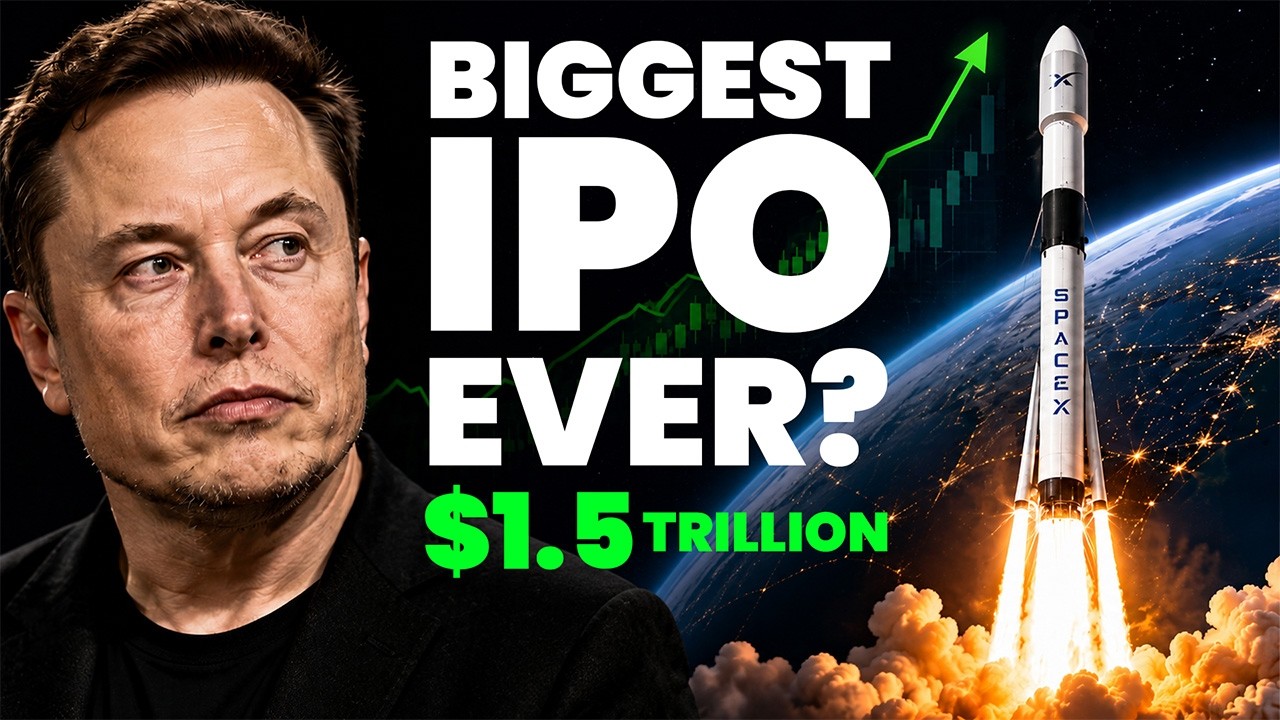
Elon Musk’s SpaceX is blasting onto public markets with a record-smashing $2 trillion IPO, igniting fierce debate over sky-high valuations, AI megaplans, and Musk’s iron-fisted control.
What to know
- SpaceX’s IPO targets a $1.7–2 trillion valuation—making it the world’s seventh largest company—fueled by $11.4 billion Starlink revenue and outlandish AI ambitions.
- Musk keeps a stratospheric 79–85.1% voting grip via dual-class shares, consolidating sprawling ventures under one public roof and leaving retail investors with 30% of shares but little sway.
- Wall Street is split: retail investors are hyped, but institutions are wary of speculative multiples, $50B in expected portfolio shakeups, and a turbocharged Nasdaq inclusion that could turbocharge volatility.
Valuation Built on Ambition
SpaceX’s sky-high IPO price is fueled by Starlink’s profits and Musk’s speculative AI bets, but declining margins and massive losses in new ventures make the $2 trillion valuation a leap of faith.
SpaceX's IPO valuation is historic and unprecedented, targeting between $1.7 trillion and $2 trillion, which would position it as the seventh largest company globally, surpassing Tesla's $1.25 trillion valuation. This valuation is largely driven by Elon Musk's vision, providing a market-based mark-to-market currency that addresses previous criticisms of opaque private valuations, yet it remains a leap of faith given the company's current financials and ambitious growth projections.
Starlink stands as the profitable core underpinning SpaceX's lofty valuation, generating approximately $11.4 billion in revenue with a remarkable 63% EBITDA margin and serving over 10 million subscribers worldwide. Despite this robust performance, Starlink faces challenges such as declining average revenue per user (ARPU), dropping from $99 in 2023 to $66 in early 2026, as Musk pursues aggressive pricing to capture emerging markets, which could pressure margins and complicate sustaining the high revenue multiples investors expect.
The broader SpaceX valuation hinges heavily on speculative future growth in its AI and launch segments, which currently operate at significant losses—AI alone burned $6.4 billion in operating losses with $12.7 billion in capital expenditures in 2025, while the launch segment posted a $657 million loss driven by $3 billion in Starship R&D. These capital-intensive ventures, including a $1.25 billion per month lease deal with Anthropic for AI compute infrastructure, underscore the intertwined AI and space infrastructure strategy but also amplify financial risk and investor skepticism about the sustainability of such high revenue multiples, which range from 50x to 70x forward revenues.
SpaceX's IPO valuation, priced at roughly 94 to 107 times trailing revenue, far exceeds comparable tech giants like Nvidia and Tesla, reflecting an extraordinary premium on future optionality rather than current fundamentals. While Starlink justifies several hundred billion dollars of the valuation, the remaining trillion-plus is a bet on unproven ventures such as Starship operational success, orbital AI data centers, and massive AI infrastructure leasing deals, including the Anthropic contract, which alone could add $15 billion annually. This ambitious valuation narrative has sparked significant investor skepticism, with experts like Aswath Damodaran estimating a more realistic equity value closer to $1.3 trillion, highlighting the tension between Musk's vision and market realities.






Musk’s Ironclad Control
A dual-class share structure and aggressive governance tactics give Musk near-absolute power, locking out public shareholders and ensuring his vision dominates every strategic decision.
Elon Musk’s governance structure for SpaceX’s IPO is meticulously engineered to cement his near-absolute control, with a dual-class share system granting him between 79% and 85.1% of total voting rights. This super-voting arrangement, where Class B shares held by insiders carry ten votes each compared to one vote per public Class A share, effectively renders SpaceX a 'controlled company' exempt from many standard governance safeguards. Musk’s simultaneous roles as CEO, CTO, and Chairman further concentrate authority, allowing him to steer capital allocation and strategic decisions without meaningful board checks or shareholder recourse, even as the company embarks on ambitious, high-risk ventures such as $7.7 billion quarterly AI expenditures and Mars colonization plans. (Insights [4, 14, 15, 21, 25])
Contrary to activist investor trends favoring the unbundling of conglomerates, Musk is consolidating multiple capital-intensive businesses—including Tesla, SpaceX’s satellite internet, AI, and social media arms—under a single public entity. This 'Russian doll' corporate structure, with up to seven layers separating Tesla, obscures transparency and complicates governance oversight, effectively limiting public shareholder influence over the sprawling $1.7–2 trillion valuation enterprise. By bundling these ventures, Musk aims to leverage combined capital efficiency and secure a mark-to-market valuation, countering prior criticisms of opaque internal valuations. (Insights [1, 2, 3, 18, 20])
The IPO’s governance provisions impose significant barriers to shareholder activism, including mandatory arbitration clauses that restrict class actions, high thresholds for director removal, and minimum ownership requirements for legal challenges. Moreover, Musk cannot be removed as CEO without his consent, solidifying his grip on leadership and strategic direction. While retail investors gain unprecedented access through a sizable 30% allocation of IPO shares without lockups—potentially fueling meme stock dynamics—employee and institutional investors face traditional 180-day lockups, creating a dichotomy that may amplify market volatility without enhancing governance influence. (Insights [5, 9, 10, 26, 27, 28, 29])
Despite the massive valuation and public offering, SpaceX’s free float remains extremely limited, with only $45 to $100 billion available for trading, intensifying upward price pressure on incoming capital. This scarcity, combined with Musk’s overwhelming control and the retreat of some institutional investors wary of governance risks, shifts the shareholder base toward retail investors who lack meaningful governance power. Consequently, public shareholders own economic interests but essentially no say in capital allocation or strategic decisions, raising red flags among institutional investment committees about the sustainability of such concentrated authority in a company navigating the volatile space-AI arms race. (Insights [16, 17, 22, 30, 31, 32, 33])
AI and Space: High-Stakes Fusion
SpaceX is pouring billions into merging orbital AI data centers with Starship launches, betting its future on a risky, capital-intensive play that could reshape both tech and geopolitics.
SpaceX’s AI ambitions are inextricably linked with its space infrastructure strategy, as the company plans to deploy orbital AI compute satellite data centers powered by solar energy and cooled by the space environment, targeting initial deployment as early as 2028. This vision relies heavily on the Starship rocket fleet, with thousands of launches annually required to move roughly one million metric tons to orbit, underscoring the interdependence of AI and space businesses. Elon Musk has framed Starship not merely as a launch vehicle but as a critical enabler of this AI-space convergence, warning that any delays could significantly hamper the deployment of next-generation satellites and AI infrastructure, thereby affecting the company’s growth trajectory.
Financial disclosures reveal that SpaceX’s AI segment is a capital-intensive venture, with losses ballooning to $2.47 billion and capital expenditures tripling to $7.72 billion, surpassing those of the satellite and launch businesses combined. The company’s AI infrastructure ambitions are further exemplified by a massive $1.25 billion per month lease deal with Anthropic, translating to $15 billion annually and potentially accounting for 45% of SpaceX’s revenue if it had been active last year. However, this lease is cancellable on 90 days’ notice, injecting significant revenue uncertainty. Additionally, SpaceX’s plans include a $5 billion GPU deal with Anthropic and a $55 billion chip-manufacturing initiative called Terafab, developed in partnership with Tesla and Intel, though the latter currently exists only as a framework agreement without binding commitments.
SpaceX’s strategic pivot toward AI is reflected in its total addressable market (TAM), where AI-related segments constitute approximately $26.5 trillion of the $28.5 trillion TAM, or 93%, with enterprise AI alone comprising 80% of this figure. This shift is evident in capital expenditure patterns, with 76% of Q1 spending dedicated to AI rather than traditional space operations. The company’s AI-space convergence is reshaping competitive dynamics and geopolitical stakes, intensifying the US-China tech rivalry and fueling an unprecedented AI arms race involving key players like Anthropic and OpenAI. Elon Musk’s evolving role as a 'kingmaker' in this intertwined sector underscores SpaceX’s ambition to dominate both AI compute and space infrastructure markets.
Despite the grand vision, SpaceX’s AI and space infrastructure integration represents a high-risk, early-stage venture bet embedded within its IPO valuation, with investor skepticism fueled by the massive capital burn—$12.7 billion dedicated to AI development—and concerns about the sustainability and defensibility of its AI infrastructure business. The core data center rental model, while lucrative, faces valuation challenges due to ease of replication and competition from giants like Microsoft and Nvidia. Musk’s characteristic approach of doubling down on high-stakes bets amplifies both the potential upside and downside, as the company navigates unproven markets amid soaring valuations and geopolitical tensions that tie AI advancements to species-level existential risks through space-based redundancy.






Market Shockwaves and Backlash
Wall Street braces for forced portfolio shakeups, regulatory scrutiny, and volatile trading as SpaceX’s IPO—powered by Musk’s concentrated control—upends market norms and investor trust.
Investor sentiment around SpaceX's historic IPO is sharply divided, with retail enthusiasm fueled by Elon Musk's charismatic vision and a generous 30% retail share allocation contrasting starkly against seasoned investors' skepticism. Experts caution that the sky-high $1.7–2 trillion valuation, based largely on speculative future growth rather than current financial fundamentals, coupled with limited forward-looking disclosures in the S-1, raises significant concerns about governance and valuation realism. As one analyst put it, 'Would you add it to your public book at 300? Probably not,' underscoring the tension between hype and prudent investing.
The IPO's market impact is poised to be seismic, with portfolio managers expected to offload roughly $50 billion in other holdings to accommodate SpaceX's $75 billion raise, intensifying volatility in already turbulent tech and AI sectors. Nasdaq's expedited rule changes allowing SpaceX's rapid inclusion in the Nasdaq-100—reducing the usual waiting period from three months to just 15 days and lowering public float requirements—are likely to trigger forced mechanical buying by ETFs, creating a structural imbalance between supply and demand. This dynamic risks inflating the stock price artificially and amplifying speculative momentum, as BNP Paribas strategist Greg Boutle warns of a potential semiconductor selloff amid the AI rally.
Regulatory scrutiny is intensifying in response to the unprecedented scale and complexity of SpaceX's IPO, particularly Elon Musk's retention of approximately 85% voting control through a dual-class share structure that effectively sidelines public shareholders from governance influence. The SEC and other regulators are closely examining the opaque financial disclosures, including the $1.25 billion monthly lease deal with Anthropic and intertwined AI and space infrastructure ventures, amid fears that such concentrated control and complex corporate structures could undermine market fairness and stability. The Financial Times has even likened the IPO to a form of 'Enshittification of the Stock Market,' highlighting broader concerns about transparency and investor protection in a volatile 2026 tech landscape.
The broader implications of SpaceX's IPO extend beyond the company itself, as its timing alongside the imminent public debuts of AI giants OpenAI and Anthropic threatens to overwhelm market capacity and reshape the Nasdaq landscape amid soaring sector volatility. This confluence of mega-IPOs is forcing investors to rethink traditional valuation models, diversification strategies, and capital allocation in what many describe as an AI and tech-fueled bubble. Retail investors, while captivated by Musk's grand vision and the narrative of SpaceX as a David challenging telecom Goliaths, must navigate a complex mix of excitement and caution, especially given the company's significant losses and the speculative nature of its $28.5 trillion total addressable market claims.