Spectacle over substance: trump’s second term turns governance into a cage match while democracy fights for its life
The gist
Trump’s second term has transformed American governance into a political cage match—where executive overreach, corruption, and spectacle threaten to pin democracy to the mat.
What to know
- By early 2026, more than $50 million in dark money and rampant insider trading have turned elections into auctions, while the Supreme Court’s conservative majority backs sweeping executive power.
- The White House is now a stage for spectacle—from UFC fights on the South Lawn to billion-dollar slush funds for allies—masking the purge of civil servants and militarization of law enforcement.
- Grassroots resistance like No Kings has mobilized thousands nationwide to fight authoritarian overreach, as unchecked power and politicized justice deepen divisions and erode public trust.
Corruption Becomes the Norm
Insider trading, elite impunity, and dark money have transformed elections into auctions and accountability into theater, deepening the crisis of trust in American democracy.
By early 2026, corruption and insider trading among elected officials had deeply eroded public trust in democratic institutions, as highlighted by Mayor Paige Cognetti’s reflection on the difficulty of rebuilding confidence when officials leverage policy votes for personal profit. This decay was exacerbated by the flood of over $50 million in dark money into elections like the Chicago primaries, effectively turning democratic contests into auctions controlled by special interests, underscoring the urgent need for comprehensive ethics reform in Congress.
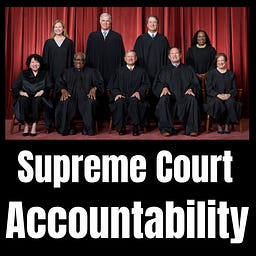
The erosion of the rule of law became starkly visible through executive actions that bypassed legal norms, such as stripping humanitarian protections from 356,000 individuals without due process and unlawfully collecting $175 billion in tariffs. This institutional decay was further entrenched by a conservative 6-3 Supreme Court majority, shaped by the Federalist Society and dark money campaigns, poised to endorse expansive executive power and undermine judicial independence, even as grassroots movements like No Kings strive to rebuild accountability from below.
Elite impunity emerged as a defining feature of institutional decay, with accountability reduced to mere theater that preserves institutional dignity without threatening powerful networks. The Epstein case epitomizes this systemic corruption, where despite overwhelming evidence, enforcement remained narrowly bounded. Similarly, politically connected insider trading flourished under high evidentiary barriers that prevent meaningful prosecution, creating a dangerous epistemic gap between observable corruption and legal acknowledgment that threatens national cohesion.
The Trump administration exemplified the normalization of corruption and institutional decay through blatant conflicts of interest and elite enrichment, as Trump’s net worth surged from $2.3 billion to $6.5 billion in two years, fueled by deals like the Saudi government’s $2 billion investment in Jared Kushner’s fund. This period saw the systematic replacement of career civil servants with political loyalists via Schedule F, mass firings of inspectors general, and the neutering of oversight agencies, enabling unchecked executive actions and retaliatory legal pressures that corroded democratic norms and public trust. The creation of a $1.8 billion taxpayer-backed 'Anti-Weaponization Fund' overseen by Trump allies to compensate January 6 defendants further illustrates this erosion of rule of law and institutional independence.



Unchecked Power, Weaponized Fear
A militarized executive branch, emboldened by a loyalist purge and billion-dollar slush funds, now uses crisis politics and surveillance to suppress dissent and consolidate authoritarian control.
Since Trump’s return to the presidency in early 2026, executive power has expanded dramatically, with fewer institutional constraints and a loyal team aggressively pushing presidential authority. This shift has manifested in the rapid implementation of over half of the Heritage Foundation’s Project 2025 agenda, including reinstating Schedule F to reclassify and purge career civil servants, effectively replacing the apolitical bureaucracy with loyalists and weakening traditional checks on power. The administration’s creation of a $1.776 billion Justice Department fund to compensate political allies—many convicted of seditious conspiracy—further exemplifies the erosion of constitutional norms and the use of taxpayer money to reward loyalty rather than uphold justice.
The administration has normalized fear-based governance through the militarization of immigration enforcement and domestic law enforcement, allocating a historic $170.1 billion under the “One Big Beautiful Bill Act” to ICE, which now conducts military-style raids, deploys National Guard troops to Democratic-led cities, and uses drone surveillance in border regions designated as military zones. This aggressive posture extends to suppressing dissent, with federal prosecutors subpoenaing social media platforms like Reddit and X to unmask anonymous critics, blurring the line between legitimate law enforcement and political retaliation, and signaling a chilling message: dissent will not be tolerated.
Emergency politics and fear-based rhetoric have become tools to consolidate authoritarian control, with the administration framing multilateral institutions as conspiratorial threats to American sovereignty and justifying unilateral military actions such as the January 3rd Venezuela invasion and unauthorized bombing of Iran. This manufactured sense of crisis activates authoritarian predispositions among the public, making citizens more willing to trade civil liberties for security, while sidelining Congress and independent institutions. The resulting feedback loop of anxious citizens, emboldened executives, and weakened checks normalizes coercive governance both at home and abroad.
Beyond overt power grabs, the administration is reshaping culture and institutions through executive funding and ideological enforcement, pressuring public schools, scientific bodies, and media to align with themes of patriotism, anti-corruption, and combating 'indoctrination.' This cultural shift is framed as a moral crusade to 'save the nation,' justifying extraordinary expansions of executive authority that were once unthinkable. As loyalty, retaliation, and ideological conformity become systemic, democratic erosion proceeds quietly through administrative and legalistic means, fostering public resignation to authoritarian norms under the resigned mantra, 'Well…this is just how things are now.'


Spectacle as Statecraft
From UFC cage matches on the South Lawn to cult-of-personality rallies and media intimidation, the White House has become a stage for distraction and dominance, masking the dismantling of democratic norms.
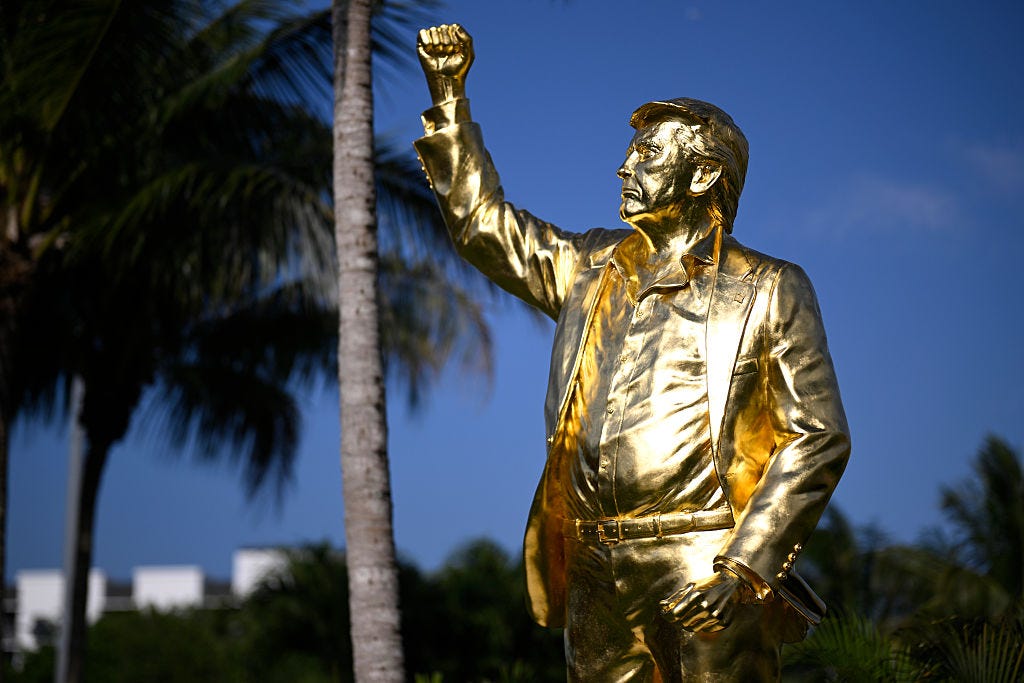
The Trump administration masterfully constructs a dual reality through symbolic spectacles and media manipulation, fostering a split perception among the public that obscures the erosion of democratic institutions. Events like exclusive Republican-only White House breakfasts, the costly painting of the Reflecting Pool, and the erection of oversized monuments serve as vanity projects designed to distract from pressing issues such as the war in Iran and rising gas prices. This performative politics strategy, characterized by aggressive personal attacks—such as Trump calling ABC correspondent Rachel Scott 'a horror show'—and dismissing critical questions as 'stupid,' reinforces a cult of personality that prioritizes spectacle over substantive governance.
Trump’s embrace of high-profile spectacles, epitomized by the UFC fight event on the White House South Lawn, signals a dramatic shift from traditional presidential sportsmanship to combative, entertainment-driven politics. The event, which featured a ninety-two-foot cage known as 'The Claw' and was streamed on Paramount+, was designed to project a tough-guy image amid declining political support, particularly targeting young male voters whose approval dropped from 49% to 28% according to a Harvard/IOP poll. This spectacle also spotlighted political allies like UFC CEO Dana White, intertwining personal alliances with media manipulation, while raising ethical concerns as Trump personally profited by buying stock in UFC’s parent company prior to the event.
The administration’s performative politics extend beyond events to a broader culture of image control and intimidation, enforcing strict appearance standards on military personnel—such as excluding 'short and fat' troops from the UFC event—and favoring telegenic appointees like Pete Hegseth over experienced or ethical candidates. This superficial approach, coupled with tactics like subpoenaing social media platforms to unmask anonymous critics and public shaming of dissenters, exemplifies a strategy that polices masculinity and speech to maintain political dominance through cruelty and spectacle rather than policy. These acts, including the transformation of national celebrations like America 250 into personalized MAGA rallies, echo historical authoritarian pageantry and deepen societal divisions.
Underlying these spectacles is Trump’s unapologetic pursuit of personal enrichment and political survival, using performative distractions to mask institutional neglect and corruption. From urging public purchases benefiting companies like Dell prior to Pentagon contracts, to leveraging public events for fundraising and self-promotion—such as proposing his face on a $250 bill or headlining concerts after others withdrew—Trump’s philosophy is encapsulated by a relentless 'Gimme' mentality. His continual testing of legal and ethical boundaries, exemplified by the Kennedy Center tarp stunt and exploiting loopholes, reveals a political style that prioritizes spectacle and personal gain over democratic norms and substantive policy.




Grassroots Resistance Ignites
Thousands of ordinary citizens, legal advocates, and cultural leaders are forging a nationwide movement that challenges authoritarian blueprints and reclaims public institutions from creeping autocracy.
By early 2026, grassroots activism had crystallized into a powerful force against authoritarianism, with nationwide coalitions like No Kings mobilizing over 2,000 events on March 28 alone to break the climate of fear and assert that democracy belongs to the many, not the few. This resistance goes beyond symbolic rallies, emphasizing sustained community organizing and solidarity to defend public schools, libraries, voting rights, and marginalized communities from authoritarian tactics such as the 6,870 book bans documented by PEN America and 31 restrictive voting laws identified by the Brennan Center. As People Power United declares, the fight demands public courage and visibility, transforming ordinary people into an unstoppable collective force to block authoritarian overreach and resist blueprints like Project 2025 designed to concentrate presidential power.
Legal and institutional resistance to authoritarianism faces hidden challenges, notably the widespread use of forced arbitration—a secretive legal mechanism that shields corporations from accountability while stripping ordinary citizens of recourse, as highlighted by Brendan Ballou and Tim Dickinson. This underscores the necessity for democratic activism that not only confronts overt political power grabs but also exposes and reforms opaque legal systems that perpetuate inequality and impunity. Senator Chris Murphy situates these struggles within a broader cultural critique, arguing that Trump’s authoritarianism is symptomatic of a 'winners take all' American ethos that normalizes political and economic overreach, demanding a comprehensive resistance that addresses systemic power concentration.
The Obama Presidential Center, inaugurated in mid-2026, stands as a vibrant cultural and political beacon of hope and democratic resilience amid authoritarian erosion. CEO Valerie Jarrett and President Obama himself emphasize the Center not as a static monument but as a living community space designed to inspire civic engagement and activism, featuring inclusive design elements like Braille labels and expansive playgrounds to foster accessibility and connection. Artistic installations, such as Idris Khan’s ceiling artwork composed of hand-stamped words from Obama’s Selma speech ascending toward a skylight, symbolize the rising spirit of democratic activism and the enduring promise of justice, echoing Dr. Martin Luther King Jr.’s belief that 'the arc of the moral universe is long, but it bends towards justice.'
Contrasting sharply with the authoritarian spectacle of the Trump regime’s self-aggrandizement and attempts to reshape Washington, DC—such as converting the White House South Lawn into an Ultimate Fighting Championship arena—the Obama Presidential Center embodies a dignified vision of democratic values, civility, and community. Obama’s public statements underscore the survival of democracy as contingent on shared commitments like the military and law enforcement’s allegiance to the Constitution and the peaceful transfer of power. Despite acknowledging the social anxieties and tribalism fueling the current democratic crisis, he highlights grassroots activism and community solidarity, citing examples like Twin Cities residents braving harsh conditions to protect their neighborhoods as evidence of Americans rising to defend democracy.



Divisions Deepen, Trust Frays
Fiat money creation, targeted discrimination, and mass firings under Project 2025 have fractured social cohesion, fueling inequality and eroding the public’s faith in government.
By early 2026, unchecked governmental power, exemplified by the creation of fiat money without public consent, has deepened social divisions by fostering unfair inflation and preferential treatment of certain groups, as noted in the January analysis highlighting how such policies fracture social cohesion. This dynamic is compounded by state-sanctioned discrimination favoring some demographics over others, which not only exacerbates inequality but erodes civic trust, underscoring the argument that absolute nondiscrimination by the state could serve as a crucial constraint on power and a foundation for legal equality.
The political environment surrounding America’s withdrawal from international organizations has reshaped public perceptions of security and patriotism, normalizing fear and anxiety that justify coercive domestic policies and a permanent state of emergency. This atmosphere, fueled by rhetoric targeting 'globalist' enemies, has led citizens to trade civil liberties for promises of protection, while pockets of resistance from state and local governments, journalists, and courts strive to uphold pluralistic norms amid growing authoritarianism.
The aggressive rollout of Project 2025, including the reinstatement of Schedule F and the mass firing of career civil servants, has severely undermined public agency and trust in government institutions, as evidenced by the walkouts of 15,500 employees from agencies like the Forest Service. Concurrently, the rollback of protections in education, health, and civil rights disproportionately harms marginalized communities, deepening social inequality and division. These developments are further aggravated by punitive actions against dissenters and media outlets, fostering a climate of fear and disillusionment that discourages civic engagement and weakens democratic accountability.
The administration’s politicization of justice and public funds, such as the creation of a $1.776 billion slush fund rewarding January 6 rioters—including those who violently attacked police—exemplifies the erosion of civic trust and social cohesion. This support for violent actors, coupled with the normalization of corruption and media complicity, deepens polarization and disillusionment, as ordinary Americans face economic hardship and collapsing living standards while political elites enrich themselves. The decline in press freedom, with the U.S. ranked sixty-fourth globally, further undermines democratic norms and public agency, contributing to a fractured and distrustful society.
The transformation of America’s 250th birthday into a Trump-centric spectacle, described as a 'Trump fascist-fest,' illustrates how political theater centered on exclusionary identities fosters polarization and alienates broad segments of society. The backlash from artists withdrawing from the event signals growing civil society resistance to performative politics that co-opt national symbols for partisan and authoritarian ends, thereby undermining civic trust and public agency.
Contrasting leadership styles between Obama and Trump highlight the erosion of democratic norms and the resulting social polarization and disillusionment. While Obama emphasized shared democratic values, honesty, and compassion, Trump’s rhetoric has savaged these principles, fueling division and cynicism. Nonetheless, grassroots civic actions—such as those in the Twin Cities where ordinary people risk safety to protect neighbors—demonstrate resilience and a reclaiming of social cohesion and public agency amid outrage-driven polarization.