Stablecoins drive $30t payments, spur US-UK pact
The gist
Stablecoins like USDT and USDC now power $30 trillion in annual global payments, driving financial inclusion and sparking a wave of US-UK regulatory breakthroughs.
What to know
- Over a third of Tether’s USDT supply is held in emerging markets such as Argentina and Turkey, giving millions cheap, digital access to stable dollars.
- The 2025 GENIUS Act set strict US stablecoin rules—full Treasury backing and transparency—triggering institutional adoption and Circle’s leap to a national trust bank.
- A 2026 US-UK pact harmonized stablecoin regulation, unlocking near-instant USD-GBP settlements and paving the way for seamless, tokenized cross-border finance.
Stablecoins Fuel Dollar Access
In countries facing runaway inflation and weak banking systems, stablecoins like USDT are providing millions with instant, programmable digital dollars—reshaping financial inclusion and shielding savings from currency collapse.
Stablecoins have emerged as transformative tools for accessing the US dollar in emerging markets, particularly where traditional banking infrastructure is weak or inaccessible. Leveraging blockchain technology, stablecoins like Tether (USDT) enable instantaneous, low-cost, and programmable dollar transactions without the need for a bank account, effectively serving as digital dollar accounts for millions. This innovation has been especially impactful in high-inflation countries such as Argentina, Nigeria, and Kenya, where citizens use stablecoins to hedge against currency devaluation—37% of USDT supply, for example, is held by savers in Argentina and Turkey rather than traders, underscoring their role in financial inclusion and inflation protection.
The rapid growth of stablecoins—surging from a $260 billion market dominated by dollar-backed tokens in 2025 to over $320 billion by mid-2026—reflects their expanding role beyond crypto trading into mainstream financial inclusion and cross-border payments. Stablecoins have become vital for remittances, reducing transaction costs from around 6% to roughly $1 and settlement times from days to minutes, particularly in Africa where remittances now outpace development aid. Their programmability adds further value by enabling automated payments, escrow, and lending functions, which traditional dollars cannot provide, thus broadening financial services access for the 1.4 to 3 billion unbanked globally.
Legislative frameworks like the US Genius Act have bolstered trust in stablecoins by assuring full backing, accelerating their adoption as reliable digital dollar alternatives. Despite this progress, stablecoins face regulatory pushback from institutions such as the IMF and some emerging market governments wary of economic destabilization and unintended dollarization effects. For instance, Kenya's Central Bank imposed stringent capital requirements on stablecoin issuers in 2026 to curb what it perceives as threats to monetary sovereignty, highlighting the tension between innovation-driven financial inclusion and traditional regulatory concerns.
The initial stablecoin pioneers, led by Tether since its 2014 launch, addressed inefficiencies in moving between crypto and fiat currencies, but their utility quickly expanded to serve broader financial inclusion needs. By 2026, stablecoins have become indispensable in emerging markets for dollarized savings, remittances, and cross-border payments, with platforms like Circle and Nium facilitating fast, low-cost access to the dollar even outside traditional banking hours. Coinbase CEO Brian Armstrong encapsulates this shift, noting that stablecoins have 'brought the dollar onchain,' enabling anyone worldwide to hold a low-inflation currency and transact 24/7 for fractions of a cent, fundamentally democratizing access to global finance.


GENIUS Act Ignites Adoption
With the GENIUS Act mandating full Treasury backing and transparency, stablecoins gained unprecedented institutional trust, driving Circle’s leap to a national trust bank and setting a global regulatory benchmark.
The passage of the GENIUS Act in July 2025 marked a watershed moment for stablecoin regulation in the United States by establishing clear legislative frameworks that mandate stablecoins be fully backed by U.S. Treasuries, cash, and overnight repos. This regulatory clarity not only enhanced institutional trust by ensuring stablecoins are 'money good' under U.S. law but also introduced stringent consumer protections and transparency requirements, including public reporting and audits, as emphasized by Circle’s leadership. The Act’s influence extended beyond the U.S., inspiring harmonized regulatory approaches in the EU and UK, thereby fostering a more unified global stablecoin ecosystem.
Institutional adoption accelerated as regulatory milestones unfolded, with companies like Paxos seeking to convert state-level trust charters into national charters under the OCC, signaling broader regulatory acceptance, while Circle achieved historic approval to establish a U.S. national trust bank, positioning USDC as the most regulated and institution-friendly stablecoin. This regulatory endorsement reinforced stablecoins’ reliance on robust custody, reserve management, and oversight rather than market hype, enabling integration into traditional finance and DeFi. Meanwhile, Tether navigated regulatory complexities by launching USA₮ to comply with U.S. frameworks, reflecting the nuanced challenges of domicile and licensing in stablecoin issuance.
By early 2026, U.S. regulators, including the CFTC, took pivotal steps to integrate stablecoins into the regulated financial system by permitting national trust banks to issue stablecoins, even explicitly allowing their use as margin collateral in futures trading. This regulatory evolution lowered barriers for banks to enter stablecoin issuance, fostering deeper partnerships between fintechs, crypto firms, and traditional banks, and accelerating institutional adoption for payments, settlement, and tokenized finance. Such developments underscored a growing acceptance of blockchain-based money within mainstream finance, setting the stage for stablecoins to become foundational in digital dollarization.
Despite these advances, regulatory complexity remains a significant hurdle, especially in the U.S. where differing state regimes—most notably New York’s unique licensing requirements—complicate stablecoin issuance timelines and operational strategies. Industry insiders highlight that navigating regulatory approvals and ensuring regulator comfort with contracts is more challenging than the technological development of stablecoins themselves. Furthermore, ongoing challenges around interoperability and the 'singleness of money' problem persist, as multiple stablecoins issued by different entities compete without a unified clearing mechanism, underscoring the need for continued public-private cooperation to define how digital dollars and AI actors interact within regulatory frameworks.


Building Digital Dollar Rails
Tether and fintech leaders are transforming stablecoins into essential infrastructure for payments, remittances, and even AI-powered services—bridging the gap for billions excluded from traditional finance.
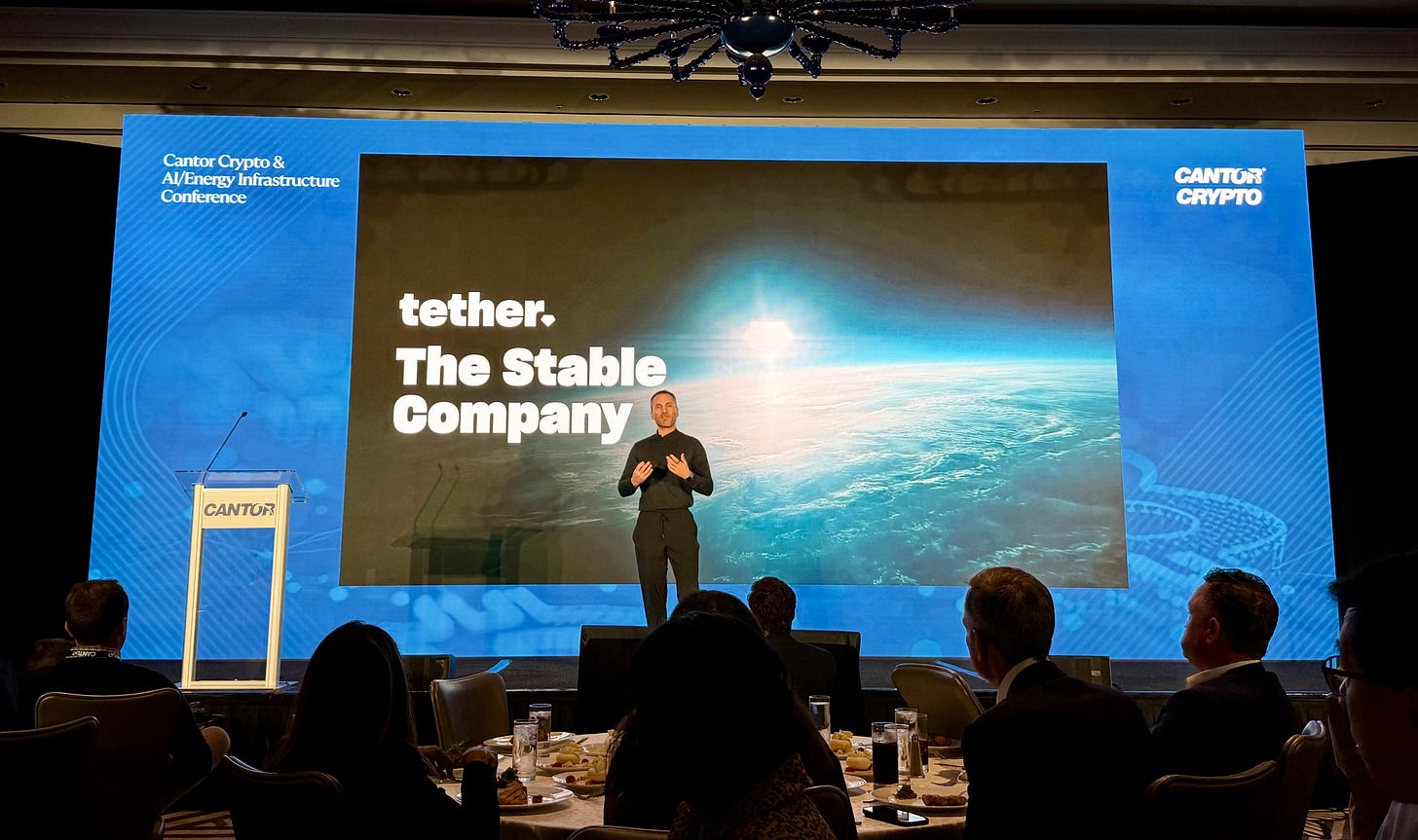
By late 2025, stablecoins had transcended their original role as mere trading instruments to become integral components of a multifaceted global digital infrastructure. Tether, under CEO Paolo Ardoino, exemplified this evolution by building a comprehensive ecosystem that spans finance (USDT, USAT, XAUT), communication (Keet messaging), energy (kiosks powering 150 million Africans), and intelligence (QVAX AI runtime), targeting up to 3 billion unbanked people in emerging markets. This infrastructure not only facilitates monetary distribution but also transports values such as education and information, positioning stablecoins as pillars of societal resilience amid failing traditional financial systems and rampant currency devaluation in countries like Argentina and Turkey.
Stablecoins have become foundational to global payments by enabling instant, low-cost, and borderless transactions that bypass traditional banking intermediaries. Platforms like Jack Dorsey's Cash App integrated stablecoin support for 58 million users and empowered 4 million merchants to accept Bitcoin without holding it, underscoring stablecoins as the default backend for consumer finance. In Africa, stablecoins dramatically reduced remittance costs from 6% to about $1 per $100 sent and cut transfer times from days to minutes, while serving as inflation hedges in over a dozen high-inflation countries. Small and medium enterprises in Egypt, Nigeria, and Ethiopia have emerged as primary users, highlighting stablecoins’ role in business inclusion and financial innovation.
Regulatory advancements in early 2026 catalyzed stablecoins’ integration into mainstream financial infrastructure, with the US Commodity Futures Trading Commission permitting national trust banks to issue stablecoins. This pivotal shift lowered barriers for institutional adoption and fostered deeper partnerships between fintechs, crypto firms, and banks, accelerating stablecoins’ transition from speculative assets to core payment rails. Concurrently, AI-driven payment data management emerged as a critical enabler, normalizing fragmented data across gateways to provide near real-time tracking and anomaly detection, thereby enhancing operational efficiency and trust in stablecoin-based payments.
By mid-2026, stablecoins like Circle’s USDC had cemented their role as foundational infrastructure for programmable finance and global payments, operating across 32 blockchain networks and powering tens of thousands of products worldwide. Circle’s open protocol approach encouraged organic developer adoption, embedding dollar-denominated financial functionality into startups, AI applications, and capital markets without requiring traditional banking infrastructure. This widespread integration fueled a $30 trillion transaction volume in 2025 alone, with stablecoins providing a lower barrier to entry in developing economies plagued by unstable currencies and high inflation, while in developed markets, consumer preference for convenience and liquidity drove direct stablecoin payments. Additionally, corporate treasury teams began leveraging stablecoins internally to streamline cross-entity settlements, signaling a broadening utility beyond retail payments into enterprise financial management.





Dollarization Rewired by Crypto
Stablecoins are accelerating global dollarization, creating new demand for U.S. Treasuries and triggering regulatory battles over monetary sovereignty as emerging markets increasingly rely on digital dollars.
The rapid expansion of dollar-pegged stablecoins, powered by blockchain platforms like Plasma and spearheaded by issuers such as Tether, is fundamentally reshaping global dollarization by enabling individuals in high-inflation countries to circumvent capital controls and preserve their savings digitally. By early 2026, stablecoin supply was projected to surpass $2 trillion well ahead of U.S. Treasury estimates, with 37% of Tether’s USDT held by savers in countries like Argentina and Turkey, highlighting stablecoins’ role as synthetic offshore dollar accounts and critical inflation hedges rather than mere speculative assets.
Stablecoins are reinforcing U.S. dollar dominance on multiple fronts: they create substantial new demand for U.S. Treasury securities, thereby supporting federal debt financing and compressing risk-free yields, while also internalizing seigniorage and net interest margins within U.S. financial institutions when issued onshore under frameworks like the Genius Act. As Scott Besant, U.S. Treasury Secretary, emphasized, stablecoins could 'save the U.S. Government' by expanding demand for government debt, a dynamic underscored by stablecoin issuers ranking as the 17th-largest holders of U.S. government debt by early 2026.
The geopolitical landscape reveals a stark divergence in regulatory approaches that influence monetary sovereignty and dollarization trajectories. While the U.S. aggressively promotes stablecoin innovation to cement dollar hegemony, exemplified by the GENIUS Act and active Treasury involvement, jurisdictions like the UK and Europe adopt cautious, restrictive frameworks—such as the UK's £20,000 per person stablecoin cap—risking ceding digital currency relevance and innovation leadership. This regulatory conservatism, coupled with emerging markets’ growing reliance on dollar stablecoins, is intensifying tensions over monetary control and fueling pushback from governments and international bodies concerned about economic destabilization and loss of sovereignty.
Looking ahead, the intersection of stablecoins with AI-driven machine-to-machine commerce is poised to accelerate digital dollarization by embedding the U.S. dollar as the default currency in a future dominated by instant, programmable micropayments. As 'Crypto Dad' J. Christopher Giancarlo notes, this evolution challenges traditional human-centric payment rails and frames the digital currency space as a geopolitical and privacy battleground, where maintaining dollar dominance must be balanced against preserving democratic values and financial autonomy amid rapid technological and regulatory shifts.


Transatlantic Rules Reshape Finance
The US-UK regulatory pact and evolving UK rules are dismantling cross-border barriers, piloting atomic settlement, and setting new global standards for stablecoin-backed digital finance.
Beginning in late 2025, the UK took a cautious stance on stablecoin regulation, proposing conservative rules that included issuer backing requirements—40% in Bank of England deposits and 60% in short-term UK debt—and individual holding caps of £20,000 for consumers and £10 million for businesses. While these measures aimed to preserve monetary policy control, critics argued that such risk aversion could undermine the UK’s competitiveness in tokenized finance, especially as the US and Japan pursued more aggressive stablecoin strategies. This tension highlighted the UK's challenge of balancing financial innovation with regulatory prudence within its status as a global finance hub.
By mid-2026, transatlantic regulatory harmonization accelerated markedly with the US and UK jointly releasing a 10-point roadmap that effectively exported the US GENIUS Act’s stablecoin reserve standards to London. This roadmap, crafted by the Transatlantic Taskforce for Markets of the Future—comprising regulators like the SEC, CFTC, FCA, and Bank of England—set coordinated rules for tokenized securities, stablecoins, and digital market infrastructure, including a 12-month pilot involving 54 major financial firms to operationalize cross-border tokenized finance. A centerpiece commitment was the Bank of England’s plan to launch atomic settlement technology by 2028, eliminating traditional settlement delays and counterparty risk, thereby fostering seamless cross-border integration.
The UK’s regulatory approach evolved in tandem with this transatlantic alignment, as evidenced by the Bank of England’s removal of individual stablecoin holding caps and the introduction of a £40 billion systemic issuance cap, alongside a reduction in required central bank deposit reserves from 40% to 30%. These adjustments, influenced by industry feedback and the FCA’s Stablecoin Sprint, underscored a pragmatic shift toward supporting market growth and cross-border payments, especially in emerging markets where stablecoins can improve correspondent banking inefficiencies. BoE Governor Andrew Bailey emphasized the necessity of close US-UK coordination to set global standards for dollar-backed stablecoins, reinforcing the bilateral framework’s role in shaping international crypto regulation.
The culmination of these efforts was the July 2026 US-UK joint stablecoin framework, which established a shared rulebook mandating fully backed, one-to-one stablecoin reserves with legal protections granting holders priority claims in insolvency scenarios. This framework facilitates near-instant, 24/7 on-chain USD-GBP settlements, replacing slow correspondent banking with transparent, timestamped transactions, and sets the stage for reciprocal market access pathways. While the roadmap’s recommendations are non-binding, they create a powerful regulatory gravitational field that encourages industry-led pilots and reduces fragmentation, thereby enhancing the competitiveness of both London and New York as leading centers for tokenized finance and cross-border digital asset flows.


Programmable Money Goes Global
Unified digital dollar networks and regulatory harmonization are making stablecoins the backbone of instant, AI-driven payments—unlocking access and efficiency for businesses and the unbanked worldwide.
Stablecoins are rapidly evolving into the backbone of a unified digital dollar ecosystem, exemplified by initiatives like Paxos's Global Dollar Network (USDG), which aims to create a seamless, global stablecoin infrastructure. This shift is not just about replacing traditional payment rails but enabling entirely new use cases, including AI-driven payments and payroll integration, where autonomous agents and robots can transact instantly and programmatically, transforming how value moves in the digital economy.
Regulatory harmonization, marked by milestones such as the passage of the GENIUS Act and Paxos's pursuit of a national trust charter under the OCC, is critical to scaling stablecoins globally. These frameworks establish stringent reserve backing and consumer protections, yet challenges remain—particularly around interoperability and the 'singleness of money' problem, where multiple issuer-backed stablecoins currently compete rather than unify, underscoring the need for coordinated policy and infrastructure solutions.
By early 2026, stablecoins have demonstrated profound impacts on financial inclusion in emerging markets, notably in Africa where they reduce remittance costs from $6 to about $1 per $100 sent and cut transaction times from days to minutes. Serving primarily SMEs in countries like Egypt, Nigeria, and Ethiopia, stablecoins also offer a crucial hedge against rampant inflation exceeding 20%, providing a safe store of value for the 650 million unbanked Africans with smartphones.
Looking ahead, the integration of AI with stablecoins and tokenized real-world assets promises to automate and optimize financial transactions within the digital dollar ecosystem. As Giancarlo envisions, the future digital dollar will cater to autonomous digital agents executing near-zero-cost micropayments—shifting away from human-centric payment models—and major institutions like Citi are already embedding blockchain invisibly into their systems. This evolution unfolds amid geopolitical and privacy tensions as the U.S. seeks to preserve dollar dominance without sacrificing democratic values, signaling that the stablecoin-driven digital dollar is as much a technological revolution as a strategic imperative.