Stablecoins overtake ACH as Wall Street and silicon valley forge a new financial backbone
The gist
Stablecoins have leapfrogged old-school ACH, as Wall Street and Silicon Valley rewrite the backbone of global finance with programmable, instant digital dollars.
What to know
- The 2025 GENIUS Act sparked a stampede of major banks and payment giants—like JPMorgan, Citi, Visa, and Mastercard—into stablecoin adoption and infrastructure upgrades.
- Visa now leads with over 130 stablecoin payment programs across 50+ countries, while Stripe’s Bridge acquisition turbocharged global fintech partnerships and seamless stablecoin settlements.
- Stablecoin transaction volumes smashed $7.5 trillion monthly in 2026, overtaking the U.S. ACH network, as legacy players like Swift and Citi embed blockchain and digital dollars into treasury and cross-border payments.
Regulatory Greenlight Ignites Stablecoins
A permissive U.S. regulatory wave and historic bank-crypto partnerships transformed stablecoins from fringe speculation into the new backbone of institutional finance.
The early institutional and regulatory foundations for stablecoins were catalyzed by the Trump administration’s proactive stance on crypto regulation, which, despite incomplete frameworks, created a permissive environment encouraging major banks and institutions to lean into the space. This regulatory momentum culminated in July 2025 with the signing of the GENIUS Act, establishing the first federal framework for dollar-pegged stablecoins and signaling a structural merger of crypto and traditional banking sectors. As a result, financial giants like JP Morgan, Wells Fargo, Bank of America, and Citi began actively exploring stablecoin issuance and integration, while payment networks such as Visa and Mastercard expanded their stablecoin infrastructure across multiple blockchains and countries, collectively driving the transition from speculative experimentation to mainstream financial utility.
Foundational partnerships between traditional financial institutions and crypto-native firms formed a critical pillar of early stablecoin adoption, exemplified by collaborations such as Citigroup’s pilot with Coinbase, Circle onboarding over 100 partners including BlackRock and HSBC on its Ark blockchain, and PNC Bank’s alliance with Coinbase. These alliances facilitated the integration of stablecoins into existing payment systems, enabling faster, cheaper transactions and enhancing treasury and cross-border payment capabilities. Mastercard’s 2026 Crypto Partner Program, uniting over 85 major crypto and financial players like Binance, PayPal, and Ripple, further institutionalized this ecosystem, marking a decisive shift from crypto skepticism to cooperative infrastructure development.
Regulatory clarity evolved significantly through 2025 and 2026, with agencies like the SEC and CFTC issuing interpretive guidance that delineated stablecoins as non-securities under frameworks like the GENIUS Act, while also addressing gray areas around algorithmic and yield-bearing tokens. This clarity dismantled previous barriers that had left banks in regulatory limbo, enabling them to innovate responsibly within a safer, more predictable environment. The approval of national trust bank charters for digital asset firms such as Stripe’s Bridge platform and ongoing regulatory dialogues across jurisdictions—including Japan’s push for yen-based stablecoins—underscore a global trend toward embedding stablecoins within supervised financial infrastructures.
By mid-2026, the stablecoin landscape matured from competition over issuance to collaboration on settlement infrastructure, with major payment networks Stripe, Visa, and Mastercard joining forces to build unified platforms and leading U.S. banks like JPMorgan and Citi developing shared tokenized deposit rails aimed for 2027 deployment. This phase emphasized owning the payment 'pipes'—the underlying rails enabling instant, efficient transfers—over minting coins themselves. Concurrently, institutional adoption expanded with banks filing patents for stablecoin technology and launching tokenized deposit networks, while turnkey solutions like Moon Institutional addressed the technical barriers for firms entering the space, collectively setting the stage for stablecoins to become core components of global finance and payment systems.






Stripe, Visa Fuel Stablecoin Surge
Stripe’s Bridge acquisition and Visa’s on-chain card dominance compressed a decade of fintech innovation into months, propelling stablecoins into the heart of global payments.
The acquisition of Bridge by Stripe in late 2025 catalyzed a dramatic acceleration in stablecoin adoption, compressing what would typically be a five-year growth trajectory into a single year. This surge attracted large fintechs, banks, and major e-commerce treasury teams, while partnerships with companies like Remit and Ramp underscored the expanding interest in stablecoin settlement infrastructure. Concurrently, the development of interoperable, composable stablecoin platforms capable of routing and rebundling collateral across multiple compliant stablecoins has enabled seamless cross-currency interoperability, laying the groundwork for a more integrated and efficient payment ecosystem.
By early 2026, stablecoin-powered payment cards emerged as a critical frontier, with Visa dominating over 90% of on-chain card volume through early infrastructure partnerships, while full-stack issuers such as Rain and Reap began bypassing traditional banks to capture more transaction economics. These cards, primarily supporting USDC, are poised to enhance user appeal by integrating risk-free yield on stablecoin balances, potentially offering up to 4% yield alongside cashback rewards. Geographically, adoption is strongest in markets like India and Argentina, where stablecoins address unique financial challenges such as crypto-backed credit and inflation hedging, signaling that behind-the-scenes settlement rather than direct merchant acceptance will drive future growth.
Major payment networks are strategically embedding stablecoins into their core infrastructure to maintain relevance amid evolving payment landscapes. Mastercard’s acquisition of BVNK in early 2026 exemplifies this shift, enabling seamless bridging between blockchain-based stablecoins and traditional fiat currencies while positioning Mastercard as an orchestration layer adding trust and compliance to hybrid payment systems. Similarly, Visa expanded its stablecoin settlement pilot to nine blockchains, achieving a $7 billion annualized run rate and supporting over 130 stablecoin-linked card programs across 50+ countries. These moves reflect a broader industry consensus that stablecoin settlement is no longer experimental but a foundational feature of modern payment rails.
The expansion of stablecoin infrastructure is also marked by innovative fintech partnerships and regulatory milestones that facilitate global, frictionless payments. Revolut’s zero-fee stablecoin conversions across multiple blockchains, enabled by its Markets in Crypto-Assets license, aim to eliminate on/off-chain transaction friction and benefit SMEs in volatile economies. Meanwhile, Checkout.com’s relaunch of stablecoin settlement services offers merchants 24/7 immediate settlement options via a single global API, targeting international enterprises. Additionally, Stripe’s Bridge platform secured conditional approval for a national trust bank charter from the U.S. OCC, signaling regulatory validation and paving the way for stablecoins’ deeper integration into mainstream finance, including cross-border initiatives like Zelle’s stablecoin-based international payments.





Legacy Giants Embrace Blockchain
Swift, Citi, and global banks shed crypto skepticism, embedding Ethereum-inspired stablecoin rails and consolidating around interoperable platforms to future-proof cross-border payments.
By late 2025, legacy financial institutions began embracing blockchain and stablecoins as core components of payment infrastructure, exemplified by Swift's partnership with ConsenSys to develop an Ethereum-aligned blockchain prototype for instant interbank cross-border payments involving over 30 major banks including Bank of America and Citi. This institutional pivot marked a significant departure from historical crypto resistance, signaling a broader industry shift toward integrating blockchain technology into traditional finance.
Stablecoin ecosystems rapidly consolidated around a limited set of collateral assets and issuance platforms, fostering interoperability and composability among compliant stablecoins. Economic alignment among major payment providers such as Worldpay, Stripe, and institutional custodians like BNY Mellon facilitated this consolidation, as the market coalesced around 'positive sum' stablecoins supported by multiple key players and integrated into payment processors and banks, setting the stage for dominant stablecoin rails.
Regulatory clarity, notably the GENIUS Act enacted in mid-2025, catalyzed mainstream adoption and institutional launches, with major banks like JPMorgan, Bank of America, and Citi, alongside corporations such as Walmart and Amazon, actively exploring or deploying stablecoin initiatives. Concurrently, payment giants Visa and Mastercard transitioned stablecoin settlement from pilots to scaled infrastructure, with Visa supporting over 130 stablecoin-linked card programs across 50+ countries and Mastercard acquiring BVNK to embed stablecoin payments deeply into its network, illustrating a maturing and consolidating market.
Entering 2026, stablecoins surpassed traditional payment networks in transaction volume, with monthly settlements hitting $7.5 trillion and stablecoin supply exceeding $323 billion, overtaking the U.S. ACH network for the first time. This explosive growth was accompanied by intensified market consolidation as Stripe, Visa, and Mastercard collaborated on unified stablecoin platforms, while major banks prepared tokenized deposit networks, signaling a shift from debating issuance to building shared settlement infrastructure. Early adopters gained substantial cost savings and supplier lock-in, underscoring stablecoins’ transition from speculative assets to indispensable payment rails integrated into global finance.

Stablecoins Power Enterprise Workflows
Major banks and corporates like Citi, Coinbase, and Payoneer are weaving stablecoins into treasury and B2B payments, quietly revolutionizing settlement speed and efficiency worldwide.
By late 2025, major financial institutions like Citi and Coinbase pioneered the operational integration of stablecoins into corporate payment infrastructures, signaling a decisive shift from blockchain skepticism to active adoption. Their partnership, connecting Coinbase’s blockchain infrastructure with Citi’s global payments network across 94 markets, aims to deliver programmable, conditional, and cost-efficient cross-border institutional payments, setting industry standards that could accelerate regulatory clarity and challenge legacy systems such as SWIFT. Similarly, U.S. Bank’s exploration of USD-backed stablecoin issuance on the Stellar network underscores the growing institutional confidence in embedding tokenized money within treasury and payment workflows, reflecting a broader trend of convergence between traditional banking and public blockchains.
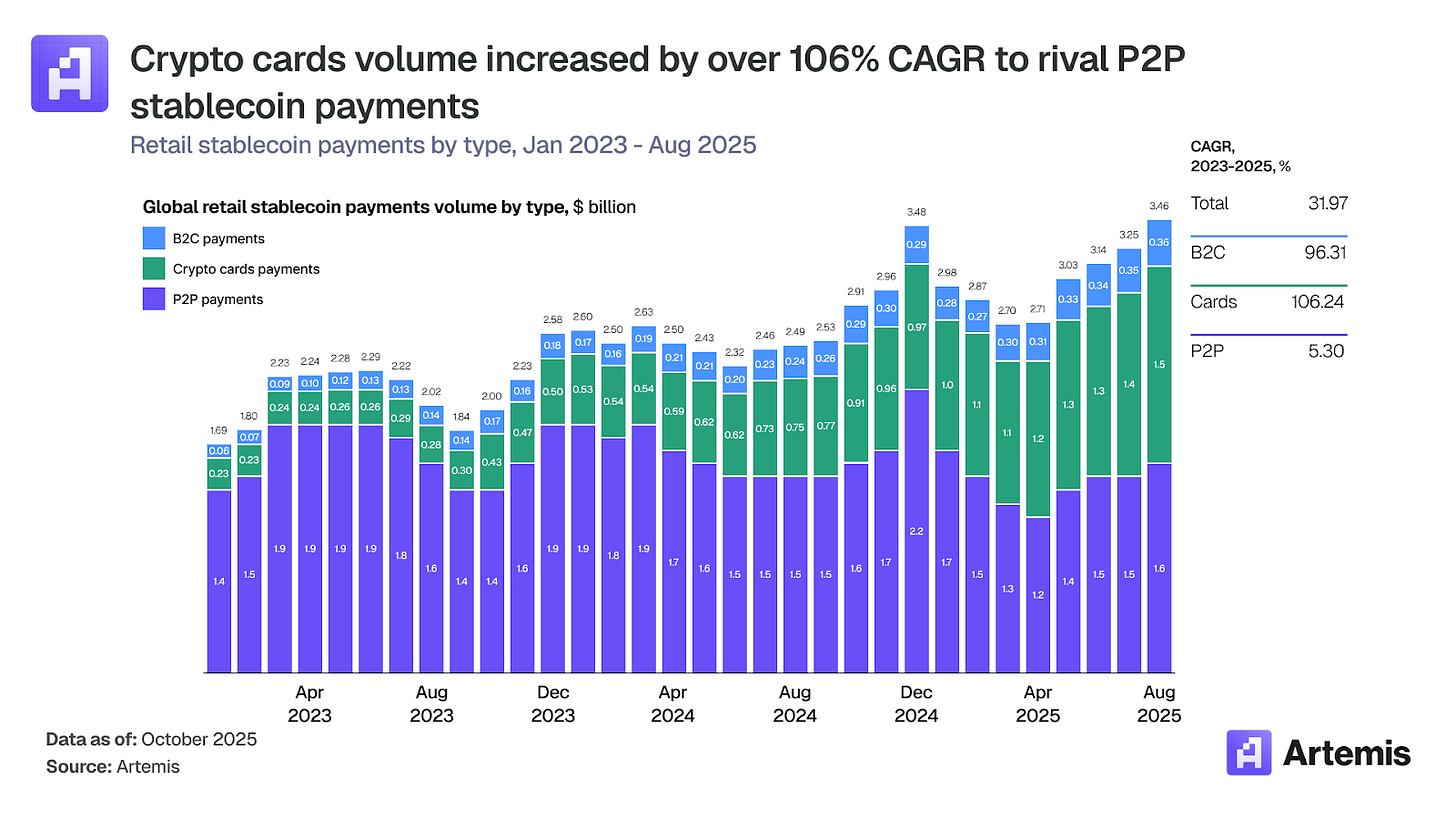
Stablecoins have proven their operational value primarily by enhancing existing financial workflows rather than creating new financial instruments, with integration into established platforms and processes driving scalable adoption. As noted in early 2026 analyses, merchants and enterprises favor stablecoins that seamlessly reduce settlement friction and costs without adding complexity, a principle exemplified by the explosive growth of stablecoin-backed crypto cards—from $100 million monthly volume in early 2023 to over $1.5 billion by late 2025—supported by full-stack issuers like Rain and Reap that bypass traditional issuing banks to capture more transaction economics. Geographic nuances, such as India’s crypto-backed credit cards and Argentina’s inflation-hedging debit cards, highlight tailored enterprise use cases that embed stablecoins behind the scenes, focusing on settlement rather than direct merchant acceptance.
Throughout 2026, stablecoins have increasingly become integral to corporate treasury and cross-border B2B payment operations, with partnerships like Payoneer and Citibank leveraging blockchain-enabled treasury transfers to reduce FX risk and automate fund movements across 190 countries. Visa’s stablecoin settlement pilot reaching a $7 billion annualized run rate and Mastercard’s expansion of stablecoin settlement infrastructure further demonstrate how programmable, 24/7 liquidity and settlement finality are reshaping enterprise payment workflows. Companies like Western Union and startups such as Nuvion are operationalizing stablecoins to address last-mile cash access and cross-border payment inefficiencies, particularly in emerging markets, by integrating stablecoins within existing financial systems and agent networks, thereby overcoming traditional banking hours and liquidity constraints.
The maturation of stablecoin operational integration hinges on sophisticated orchestration layers that preserve trust, legal certainty, and compliance within existing financial ecosystems, enabling enterprises to benefit from programmable settlement without becoming crypto-native operators. Case studies from Circle, Worldpay, and BVNK illustrate models where enterprises access stablecoin liquidity and settlement invisibly through regulated abstraction layers, reducing settlement times from days to minutes and minimizing idle liquidity. However, fragmentation across multiple blockchains and regulatory regimes—especially in complex regions like Asia with 48 distinct jurisdictions—presents ongoing challenges, necessitating dedicated liquidity management, compliance frameworks, and interoperability standards to fully realize stablecoins’ potential in corporate treasury and cross-border payment infrastructures.



Programmable Money Goes Mainstream
Stablecoins are now the internet’s settlement layer, enabling real-time, programmable, multi-chain payments with compliance and liquidity that rival—and often surpass—traditional banking.
By early 2026, stablecoins have evolved beyond mere digital currencies to become a foundational settlement layer for the internet, enabling embedded payments, programmable money, and real-time global settlement without overhauling legacy banking systems. Key players such as Circle with USDC, m0 foundation’s zero-fee issuance, and neobanks like Ether_fi and Plasma are pioneering modular, compliant infrastructures that integrate seamlessly with traditional finance and fintech ecosystems. This layered approach, exemplified by Stripe’s on/offramp integrations and the x402 ecosystem’s native HTTP-level programmable payments, is driving a shift where stablecoins act as ledger upgrades, facilitating bank-grade compliance and liquidity dominance across multiple chains.
Stablecoins are catalyzing a paradigm shift in global payments by enabling 24/7, near-instantaneous, low-cost cross-border transfers that bypass traditional banking hours and intermediaries, much like how shipping containers revolutionized global trade logistics. Visa’s rapid growth to a $7 billion annual stablecoin settlement run rate and Western Union’s USDPT stablecoin on Solana underscore the mainstream adoption of programmable money, which frees up capital and enhances liquidity management. This evolution is further accelerated by AI-driven agentic commerce, where autonomous bots execute sub-second machine-to-machine payments on stablecoin rails, as demonstrated by Coinbase processing over 50 million agent transactions in Q1 2026 and the launch of the OKX-led Agent Payments Protocol backed by Ethereum Foundation and Solana.
The stablecoin ecosystem’s future hinges on multi-chain interoperability and robust regulatory frameworks that reduce trust friction and enable seamless off-chain usability. While projects like Project Agora and SoFi’s issuance of stablecoins on public blockchains showcase scalable on-chain settlement, challenges remain in converting stablecoins to local currencies without introducing friction. Regulatory clarity from initiatives such as Europe’s MiCA and the US’s GENIUS laws, alongside coordinated enforcement efforts like Singapore Police’s blockchain analytics operations, are fostering institutional confidence. Meanwhile, industry giants including Mastercard and Stripe are expanding stablecoin-native payment systems, signaling a maturation from niche crypto tools to integral components of global payment infrastructure.
Investment and innovation at the intersection of stablecoins, AI, and traditional finance are rapidly accelerating, with Andreessen Horowitz’s $2.2 billion crypto fund underscoring the sector’s strategic importance. Stablecoins are increasingly embedded into everyday financial experiences, powering gig economy platforms, creator marketplaces, and payroll services, thereby enhancing payment velocity and value transfer. The rise of AI infrastructure leveraging decentralized physical networks, such as Grass’s 2.5 million-node DePIN for data collection, complements this trend by enabling agentic commerce and data-driven revenue models. This convergence positions stablecoins not only as digital cash that operates 24/7 without banking cutoffs but also as foundational rails for the next global economy driven by billions of machine-to-machine interactions.