Stablecoins surge, banks dive in, but crypto’s regulatory maze deepens
The gist
Major banks and payment giants are diving into stablecoins as the crypto market explodes in institutional adoption—but a tangled web of new rules and rising crime keeps the industry on its toes.
What to know
- Stablecoin supply skyrocketed to $313 billion by early 2026, with annual payment volumes doubling to $390 billion after the 2025 GENIUS Act delivered regulatory clarity.
- Big names like US Bank, PNC, BNY Mellon, BlackRock, and Visa have jumped in, launching crypto custody, investing in blockchain, and expanding global stablecoin payments.
- Despite a historic SEC-CFTC deal on token classifications, stalled legislation and a rise in AI-driven fraud and stablecoin abuse highlight crypto’s ongoing regulatory and security headaches.
Banks Break Crypto Barriers
Wall Street institutions surged into crypto after pivotal regulatory rollbacks and landmark investments, signaling a new era of mainstream adoption and institutional-grade infrastructure.
The repeal of SAB 121 in early 2025 marked a pivotal regulatory turning point, removing prohibitive capital requirements that had previously discouraged banks from offering crypto custody services. This foundational shift unlocked the floodgates for major traditional financial institutions such as US Bank, PNC Bank, BNY Mellon, Citi, and State Street to either launch or plan crypto custody and trading services, signaling a cautious yet clear embrace of mainstream institutional adoption.
By early 2026, institutional interest in crypto infrastructure was underscored by BlackRock’s discreet $100 million investment in Canton, a move that quietly signaled confidence in blockchain platforms. This period also saw BitGo’s landmark $2 billion IPO, highlighting the maturation and growing demand for institutional-grade crypto custody solutions. Concurrently, regulatory frameworks advanced with the Senate Agriculture Committee pushing forward the first-ever crypto market structure bill to grant the CFTC authority over digital asset spot markets, while the SEC clarified that tokenized securities remain firmly under U.S. securities laws, reflecting a tightening yet clarifying regulatory environment.
The launch of 'Project Crypto' by the SEC and CFTC epitomized a collaborative regulatory approach aimed at harmonizing digital asset oversight, fostering a clearer compliance landscape for institutions. Meanwhile, traditional finance players, particularly asset managers like Apollo, Fidelity, and BlackRock, accelerated their adoption of DeFi innovations, capitalizing on emerging on-chain distribution and yield opportunities. In contrast, banks progressed more cautiously due to stricter regulations, though European banks such as Soc Gen demonstrated forward-thinking leadership by pioneering stablecoin initiatives and migrating loan books on-chain, signaling a nuanced but growing institutional engagement with crypto finance.



Stablecoins Find Real Utility
Stablecoins transformed from speculative tools to compliant engines of mainstream finance, powering explosive B2B growth and enabling dollars to earn yield in regulated DeFi environments.
By late 2025, Uphold exemplified the fusion of traditional finance and DeFi through its partnership with USBC and Vast Bank, enabling a dollar that seamlessly operates across both traditional payment rails and on-chain DeFi protocols. This innovation not only enhances everyday financial activities—such as paying bills with a digital dollar—but also allows that same dollar to 'work harder' by entering compliant DeFi environments. Uphold’s commitment to fully KYCed and compliant DeFi solutions distinguishes it from the largely experimental and anonymous DeFi space, signaling a maturation toward mainstream adoption.
Stablecoins reached a pivotal moment by early 2026, solidifying their status as the first blockchain use case with genuine product-market fit beyond speculation. Despite a 50% drop in overall crypto market cap, stablecoin supply surged to $313 billion, with payment volumes doubling to an annualized $390 billion in 2025 and B2B payments skyrocketing 733% year-over-year. This explosive growth was underpinned by the 2025 GENIUS Act, which provided a clear regulatory framework for stablecoin issuers in the US, fostering institutional confidence and adoption within DeFi ecosystems.
The rise of yield-bearing stablecoins such as Sky’s sUSDS, Ondo’s USDY, and Ethena’s sUSDe, which grew 80% in 2025, alongside composable DeFi protocols like Aave and Morpho, has catalyzed a new era of productive liquidity and institutional yield solutions. Aave’s facilitation of over $1 trillion in loans and Morpho’s partnership with Apollo Global to create risk-isolated lending vaults demonstrate how these innovations attract institutional capital by offering sophisticated, compliant financial products that generate real yield.
Neobanks have leveraged the open-source nature of stablecoin-based DeFi protocols to rapidly deploy diverse financial products without the friction of contractual negotiations, enabling agile innovation in digital banking. Complementing this trend, Blueprint Finance has emerged as a key player in 2026 by delivering fully integrated DeFi infrastructure tailored for institutional investors, including accounting, compliance, and debt management tools. Its June 2023 partnership with BitGo—an established custodian with over $100 billion in assets and a charter banking license—exemplifies how compliant yield products can safely mobilize idle digital assets within qualified custodian frameworks, addressing regulatory and security concerns critical to institutional adoption.



Regulators Narrow the Gray Zone
Historic SEC-CFTC cooperation clarified token classifications, but legislative gridlock and only temporary DeFi relief leave the industry in a precarious regulatory limbo.
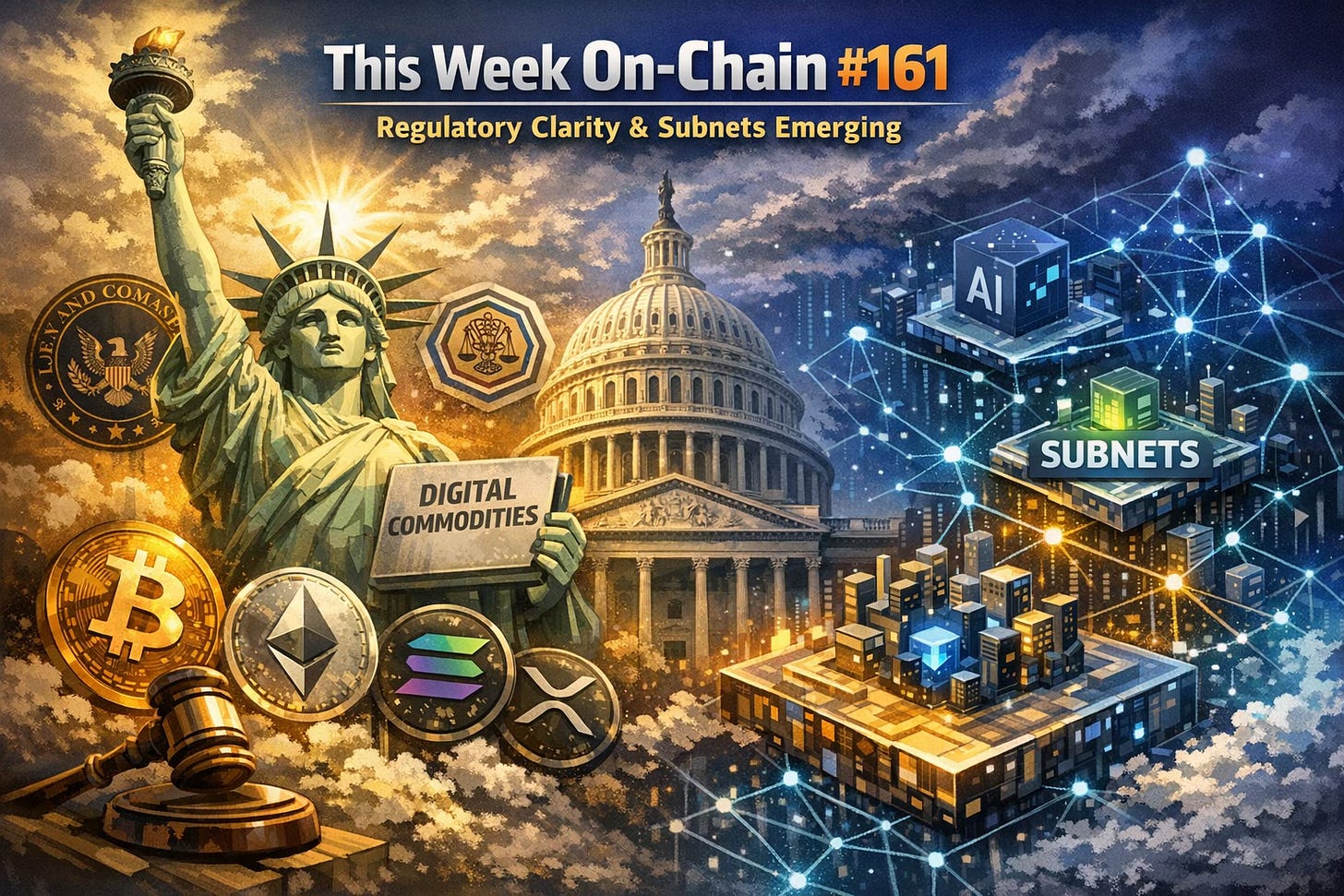
By early 2026, the U.S. regulatory landscape for crypto finance was marked by significant strides toward clarity, notably with the Senate Agriculture Committee advancing the first-ever crypto market structure bill granting the CFTC authority over digital asset spot markets, a move complemented by the SEC and CFTC's launch of 'Project Crypto' to harmonize their regulatory approaches. This collaboration culminated in a historic 68-page joint interpretation on token classifications, the first in their combined 183-year history, which established a nuanced token taxonomy distinguishing digital commodities, collectibles, tools, and payment stablecoins from securities, thereby reducing compliance ambiguity for major cryptocurrencies like Bitcoin, Ethereum, and XRP and fostering greater institutional confidence.
Despite these regulatory advances, the crypto industry continues to grapple with unresolved legal ambiguities, chiefly the stalled CLARITY Act, which aims to codify a comprehensive federal framework delineating SEC and CFTC roles and addressing decentralized market structures without traditional intermediaries. Although the Act passed the House in mid-2025 and the Senate Banking Committee in May 2026, its full enactment faces a precarious future amid bipartisan disputes over ethics provisions restricting officials' crypto interests and opposition from banking sectors, with the critical legislative window narrowing to a four-week Senate session before the August recess and electoral calendar pressures, leaving the industry's regulatory certainty hanging in the balance.
In parallel, regulatory bodies have taken interim steps to manage compliance challenges in decentralized finance (DeFi), exemplified by the SEC's 2026 staff statement permitting certain decentralized exchanges (DEXs) to operate without broker-dealer registration until 2031, a temporary reprieve that nonetheless leaves unresolved AML/KYC responsibilities and order processing liabilities. Forward-thinking DEXs like Orca are proactively integrating institutional-grade compliance tools and real-time on-chain screening within their smart contract layers, pioneering autonomous regulatory compliance models that could set future legislative standards, reflecting an industry adapting to regulatory uncertainty while preparing for permanent frameworks.
Stablecoin regulation remains a contentious frontier, with the GENIUS Act establishing the first federal framework and the CLARITY Act proposing strict prohibitions on issuers paying interest or yields to holders to protect legacy banks, though allowing third-party platforms like lending protocols to generate yields. This delicate balancing act, underscored by ongoing negotiations and political pressures, highlights the regulatory intent to safeguard traditional financial institutions while cautiously enabling innovation, as Senator Tim Scott noted the search for compromises that permit yield generation without risking bank deposit migration.



Crypto’s Real-World Reckoning
As crypto weaves into global finance and industry, mounting compliance risks, AI-driven fraud, and diverging regulations threaten both stability and the sector’s hard-won legitimacy.
By mid-2026, the crypto market has evolved well beyond its early DeFi and crypto-native roots, increasingly serving as foundational financial infrastructure for capital-intensive sectors like AI, robotics, and energy. Framework Ventures' $400 million fund and BlackRock's investment in tokenization firm Securitize—set to go public via SPAC merger—illustrate institutional confidence, while traditional giants like Vanguard and Morgan Stanley launch Bitcoin ETFs and explore stablecoins, signaling a maturing ecosystem underpinned by regulatory frameworks such as the pending US Clarity Act. As Michael Anderson observes, this technology is no longer just for crypto insiders but is embedding itself into real-world markets and financial systems.
Despite this maturation, compliance risks are mounting, particularly around stablecoins, which the FATF flagged in July 2026 as increasingly exploited by criminal groups—including those developing proprietary stablecoins to circumvent freezing or seizure. The FATF’s call for accelerated AML enforcement underscores vulnerabilities as dollar-pegged stablecoins dominate onchain illicit activity. Compounding these challenges, AI-driven tools like deepfakes and synthetic identities are being weaponized for fraud and money laundering, while enforcement gaps persist globally, especially with offshore VASPs and DeFi platforms, threatening to undermine the integrity of the expanding crypto-financial nexus.
Simultaneously, the stablecoin market shows signs of cooling retail enthusiasm, with a 54% drop in Google searches and a 2.5% decline in aggregate market cap, even as payment giants Visa and Stripe expand institutional integrations worldwide. Regulatory approaches vary, as seen in the UK’s Bank of England capping GBP stablecoins at £40 billion while removing holding limits to balance innovation with systemic protection. Meanwhile, the US digital currency landscape heats up with private stablecoins and bank networks advancing amid a Fed CBDC freeze, intensifying competition in the digital dollar arena and reflecting a complex interplay of innovation, regulation, and market dynamics.
Security remains a critical concern amid this evolution, highlighted by incidents like the $2.4 million Cardano wallet exploit affecting 374 addresses, with rapid recovery efforts underway. Such breaches underscore the ongoing risks as crypto infrastructure integrates deeper into mainstream finance, demanding robust safeguards alongside regulatory clarity to sustain trust and stability in this increasingly interconnected ecosystem.