Startup valuations deflate as founders, investors, and employees rethink the equity game
The gist
Startup valuations are deflating fast, forcing founders, investors, and employees to rethink how equity is split, valued, and protected in a newly cautious market.
What to know
- Sky-high valuations left employees holding risky, often worthless equity, while investors stayed insulated from the fallout.
- By 2026, top VCs like Charles Hudson now rank founder quality at 70% of early-stage decisions, with character trumping market or product.
- Models like Faire’s $12B-to-$5B valuation reset, paired with employee liquidity, are restoring trust and making equity discipline the new startup gold standard.
The Equity Mirage
Startup employees are lured by inflated equity numbers, only to find their shares often become worthless as valuations crash and financial reality sets in.
The relentless pursuit of ever-higher startup valuations has created a dangerous illusion for employees, who are often dazzled by the nominal dollar value of their equity packages without understanding the underlying risks. As one founder bluntly put it, 'All they care about is the dollar value of the equity package I’m offering... $10m is much easier to offer if my valuation is $3b than if it was $500m.' This dynamic forces founders into a cycle of raising at increasingly inflated valuations to stay competitive in the talent market, even as the real upside for employees becomes more precarious and disconnected from business fundamentals.
The risks of valuation inflation are most acute for employees, who frequently find themselves holding equity that is underwater when companies fail to meet aggressive growth targets. When stock options are granted at lofty strike prices, even a modest correction can render them worthless—prompting waves of employee departures and eroding morale. This pattern has repeated through cycles from the dot-com bust to the post-2021 tech correction, with employees often left holding the bag while investors, diversified across dozens of bets, weather the storm with far less personal exposure.
The complexity of modern equity structures and the proliferation of misleading valuation metrics—such as calling transactional revenue 'ARR' to justify software-like multiples—further obscure the true value of employee equity. In 2025, companies routinely reported 'ARR' at 200-500x revenue, with tiered funding rounds engineered to produce eye-catching headlines that diverged sharply from economic reality. Employees, lacking transparency and financial sophistication, often misinterpret these signals, assuming their equity is far more valuable and liquid than it actually is.
By early 2026, the practice of raising capital at multiple price points within a single round—primarily to signal a billion-dollar valuation for PR purposes—had become commonplace, with investors complicit in the charade. While this signaling may attract talent and suggest market leadership, it distorts incentives and exposes employees to outsized risk, as the headline numbers rarely reflect the company's actual performance or prospects. As one observer warned, 'When people start playing games like this with the numbers, it makes me fearful... you should just be comfortable enough with the product and the value proposition alone to not need to worry about this.'
A notable exception to this cycle emerged with Faire’s decision in March 2026 to proactively reset its internal valuation from $12 billion to $5 billion, providing much-needed clarity and restoring trust among employees and investors. By coupling this reset with a structured tender offer to provide employee liquidity and a deliberate focus on attracting quality investors like WCM, Faire demonstrated that transparency and hard choices can realign incentives and mitigate the risks that opaque valuation games create for rank-and-file workers.




Founder DNA Over Metrics
Investors now bet on founders’ character and grit, sidelining product and market data in early-stage decisions as trust in traditional metrics erodes.
By early 2026, early-stage investing has undergone a decisive shift toward founder-first philosophies, with investors like Charles Hudson of Precursor Ventures now allocating as much as 70% of their decision weight to founder quality and only 30% to market considerations. As Hudson puts it, 'Most of the companies we invest in don't have a product, so product is just set to zero,' underscoring the conviction that at the pre-seed stage, the founder’s character, vision, and potential far outweigh traditional metrics such as product readiness or market validation.

Complement or Collapse
Elite startups are assembling teams for complementary strengths and adaptability, using psychometric tools and unconventional hiring to build resilience and outpace rivals.
The modern startup playbook for team assembly has shifted decisively from seeking consensus hires or shared visions to a deliberate pursuit of complementary strengths and real-world collaboration. Brian Halligan, co-founder of HubSpot, likens the ideal team to the 2004 Red Sox—assembled for their 'spicy' uniqueness rather than uniformity—while recent best practices emphasize that choosing the right cofounder is less about philosophical alignment and more about rigorously testing how people work together, clarify roles, and navigate conflict and equity splits. This approach recognizes that resilience and high performance stem from diversity in perspective and skill, not just agreement on mission.
The science of complementary talent has become increasingly data-driven, with psychometric tools like the Founder DNA Profile and trait-based assessments now central to both hiring and self-knowledge. By 2026, leading investors and founders—from EQT Ventures to Antler—prioritize psychological traits such as grit, discipline, and self-belief over credentials or technical prowess, using structured assessments to identify strengths and gaps across six core dimensions. This forensic approach not only helps founders build teams that fill their blind spots, but also enables more intentional decisions around equity, culture, and investor fit—often surfacing issues before they become existential threats.
Hiring philosophies at elite startups like Zipline, Sierra, and Mercado Libre now prioritize adaptability, agency, and cultural fit over traditional markers like experience or academic pedigree. Zipline, for example, routinely hires teenagers over PhDs, seeking 'heat-seeking missiles for pain'—individuals who relentlessly pursue solutions and thrive amid shifting roles and uncertainty. Similarly, Sierra blends senior enterprise talent with high-agency young engineers, while Mercado Libre’s Stelleo Tolda screens for comfort with ambiguity and scrappiness, especially in resource-constrained environments. This evolution reflects a recognition that startup roles morph rapidly, and the ability to learn, iterate, and connect emotionally is far more predictive of success than a polished CV.
Leadership in high-growth startups is increasingly defined by outcome orientation, emotional intelligence, and the humility to recognize one’s own limitations. Founders like Kaz Nejatian and Alex Karp reject traditional executive posturing in favor of authenticity and direct accountability, hiring around their weaknesses and valuing process experts who complement their own skills. Emotional intelligence training—such as Sunrise’s emotion-naming exercises—has become a core part of founder development, equipping leaders to navigate the emotional rollercoaster of entrepreneurship and connect more deeply with teams and stakeholders. This shift underscores that the best founders are not all-rounders, but self-aware orchestrators of complementary talent.





Cap Table Discipline Wins
Survival now hinges on transparent, strategically managed equity structures—where even giants like Faire thrive by confronting hard resets and prioritizing trust.
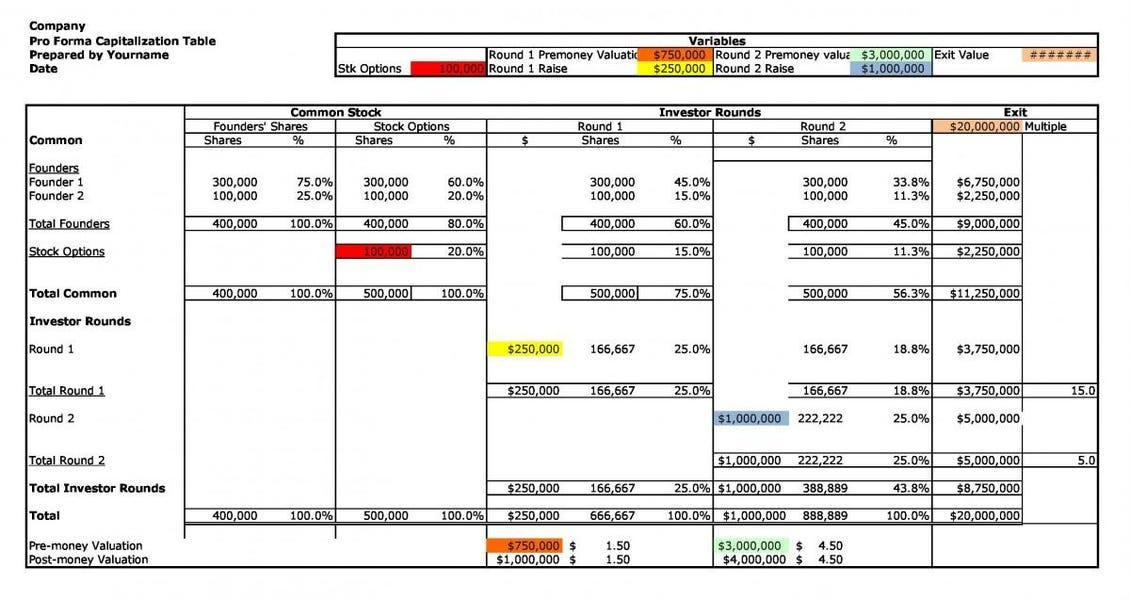
By early 2026, the paradigm for startup value creation has shifted from growth-at-all-costs to a rigorous focus on equity efficiency and alignment of incentives. Investors, especially at the Series B stage, are no longer swayed by hypothetical upside; instead, they scrutinize how much equity has been spent to achieve current traction, whether founder incentives remain intact after previous rounds, and if future dilution could threaten hiring or governance. As a result, the structure of the cap table—once an afterthought for many founders—has become a central determinant of both funding prospects and the preservation of founder control, with investors laser-focused on transparent, strategically managed ownership structures that support sustainable, outcome-driven growth.
The earliest decisions around founding teams, equity splits, and governance structures now carry outsized weight, often making the difference between building a world-changing monopoly and a startup doomed by misalignment. As Yuri Sagalov of General Catalyst underscores, getting these fundamentals right from day one—through thoughtful cap table design and supportive, aligned investors—lays the groundwork for long-term resilience. Top VCs echo this sentiment, prioritizing founder integrity, clean cap tables, and clear exit paths before committing capital, signaling that transparency and trust are non-negotiable prerequisites for partnership in today’s venture landscape.
Faire’s journey through a dramatic valuation reset—from $12 billion to $5 billion—offers a playbook for startups navigating turbulent waters: embrace hard choices, reduce organizational complexity, and align structure with business objectives. By proactively restructuring both its valuation and internal layers, Faire restored trust among employees and investors, provided liquidity through a carefully executed tender offer, and deliberately selected long-term partners like WCM to reinforce credibility. This willingness to confront complexity and make tough calls, rather than kicking the can down the road, has become a strategic superpower for companies aiming to build sustainable value.
Beyond the numbers, investors are increasingly attuned to the human dynamics that underpin value creation—specifically, whether founders understand and address the concentration of output described by Price’s Law. As teams scale, the risk that top performers—the 'square root' who drive most results—will leave becomes acute, threatening to trigger a downward spiral that is nearly impossible to reverse. Founders who proactively identify, protect, and incentivize these key contributors demonstrate a nuanced grasp of structural risk, reassuring investors that the company’s most valuable assets are both recognized and retained.
Inefficient use of equity capital in early rounds can severely constrain a startup’s future, underscoring the necessity of transparent and strategic cap table management from the outset. As equity is itself a form of capital, burning through it too quickly or carelessly not only limits future fundraising options but can also undermine long-term value creation and founder leverage. This reality has prompted both founders and investors to treat equity allocation with the same discipline as cash, ensuring that every share spent is an investment in sustainable growth rather than a short-term fix.