Starwood’s sustainable debt play fails to sway skeptics as dividend doubts linger
The gist
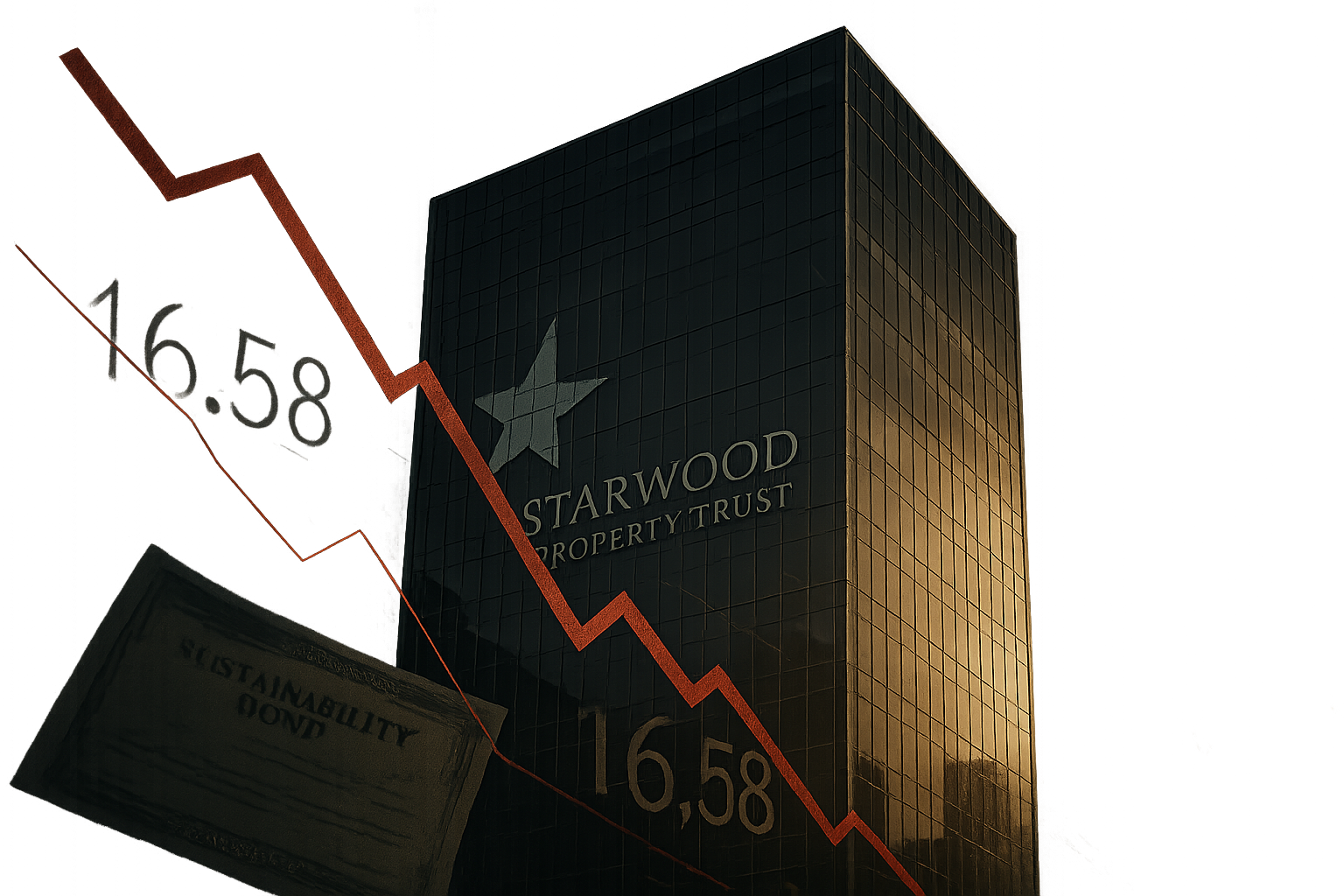
Starwood’s $500M sustainable debt play buys time but fails to silence market jitters over whether its hefty dividend can survive rising credit costs and sector headwinds.
What to know
- Starwood issued $500 million in sustainable senior notes at 6.125% to refinance maturing debt and fund green projects, aiming to boost financial flexibility.
- Despite the move, shares dropped over 4% in one month and trade at a steep 45% discount to some analyst targets, reflecting deep investor skepticism.
- A sky-high payout ratio and reliance on external capital have analysts questioning if Starwood’s income-focused strategy can weather elevated credit risks.
Dividend Stability Under Fire
Starwood’s stretched payout ratio and thin dividend coverage amplify fears that rising credit costs could swiftly erode its prized income stream.
Starwood Property Trust's recent $600 million issuance of unsecured senior notes at a 6.125% coupon has intensified scrutiny over its dividend sustainability, as the company's already high payout ratio leaves little room to absorb elevated credit costs and earnings volatility. This large payout relative to earnings raises concerns about the comfort with which future dividends can be maintained, especially given the stretched dividend coverage amid sector-wide refinancing pressures. Investors are increasingly cautious, recognizing that any sustained rise in credit expenses could quickly undermine the income-focused investment narrative that Starwood has long championed.
The sustainability of Starwood’s dividend hinges critically on the interplay between portfolio performance, financing terms, and trends in non-performing loans, factors that have become even more pivotal as the company navigates a challenging commercial real estate environment marked by higher-for-longer U.S. interest rates. Analysts emphasize that managing these variables effectively is essential to preserving both dividend payouts and balance-sheet resilience, particularly as the sector faces refinancing cliffs and valuation uncertainties. For income-focused shareholders, this balancing act between maintaining an attractive dividend yield and safeguarding financial flexibility remains the defining theme in evaluating Starwood’s long-term income profile.
Debt Moves, Risks Remain
Refinancing with sustainable notes buys Starwood time but leaves its core credit vulnerabilities and reliance on external capital unresolved.
Starwood Property Trust's recent issuance of $500 million in unsecured senior notes due 2029 primarily serves to refinance its $500 million 4.375% senior notes maturing in 2027 and to repay borrowings under repurchase facilities. This strategic move extends the company's debt maturity profile and reduces its reliance on secured, short-term funding, thereby enhancing balance sheet flexibility and providing a more stable capital structure amid market uncertainties.
By framing this issuance as a sustainable debt offering tied to eligible green and social projects, Starwood Property Trust is not only diversifying its funding sources but also appealing to a broader fixed income investor base focused on environmental, social, and governance (ESG) criteria. This dual-purpose approach aligns the company’s balance sheet management with its sustainability commitments, potentially improving its project mix and supporting long-term financial resilience through income-generating assets that complement its core portfolio.
While the new $500 million sustainable senior notes provide Starwood Property Trust with near-term refinancing relief and increased funding flexibility, they do not fundamentally alter the company’s underlying credit risk profile or its dependence on external capital markets. The issuance addresses immediate maturity pressures but leaves the core challenges related to credit performance on problem loans and external funding reliance intact, underscoring the importance of ongoing portfolio and risk management.
Skeptics Drive Valuation Gap
Despite deep discounts to analyst targets, Starwood’s elevated P/E and persistent credit worries reflect a market unconvinced by its income promise.
Starwood Property Trust's recent $500 million sustainable senior notes issuance has elicited a cautious and somewhat muted market response, reflecting persistent investor concerns about credit risks and the company's reliance on external capital markets. While the offering provides necessary refinancing flexibility and funds green and social projects, it does not fundamentally alleviate worries over problem loans or credit performance, as evidenced by a 1-month share price decline of 4.10% and a year-to-date drop exceeding 11%. This tempered reaction underscores the market's wariness amid ongoing sector challenges despite the strategic intent behind the sustainable debt issuance.
Despite the share price languishing around $16.38 to $16.45—representing a steep discount of over 45% to some analyst price targets such as $29.99 from discounted cash flow models—Starwood is widely viewed as materially undervalued if execution risks are managed effectively. The divergence in valuation estimates, ranging from $20.25 to nearly $28, highlights mixed investor sentiment and uncertainty, with some community members seeing up to 20% upside from current levels. This valuation gap suggests that while the market remains skeptical, there is significant potential upside contingent on improved credit conditions and capital market access.
Investor sentiment towards Starwood balances the appeal of mortgage REITs as income-generating vehicles, especially amid growing demand from an aging population, against the sector’s inherent credit risks and dependence on capital markets. Notably, Starwood’s current price-to-earnings ratio of 17.9x exceeds the mortgage REIT industry average of 11.6x and a fair ratio benchmark of 14.1x, signaling limited valuation cushion and heightened vulnerability should market sentiment deteriorate further. This elevated multiple underscores the delicate tightrope Starwood walks between being an attractive income play and facing potential valuation pressure amid sector headwinds.