States, businesses clash with trump over sweeping tariffs
The gist
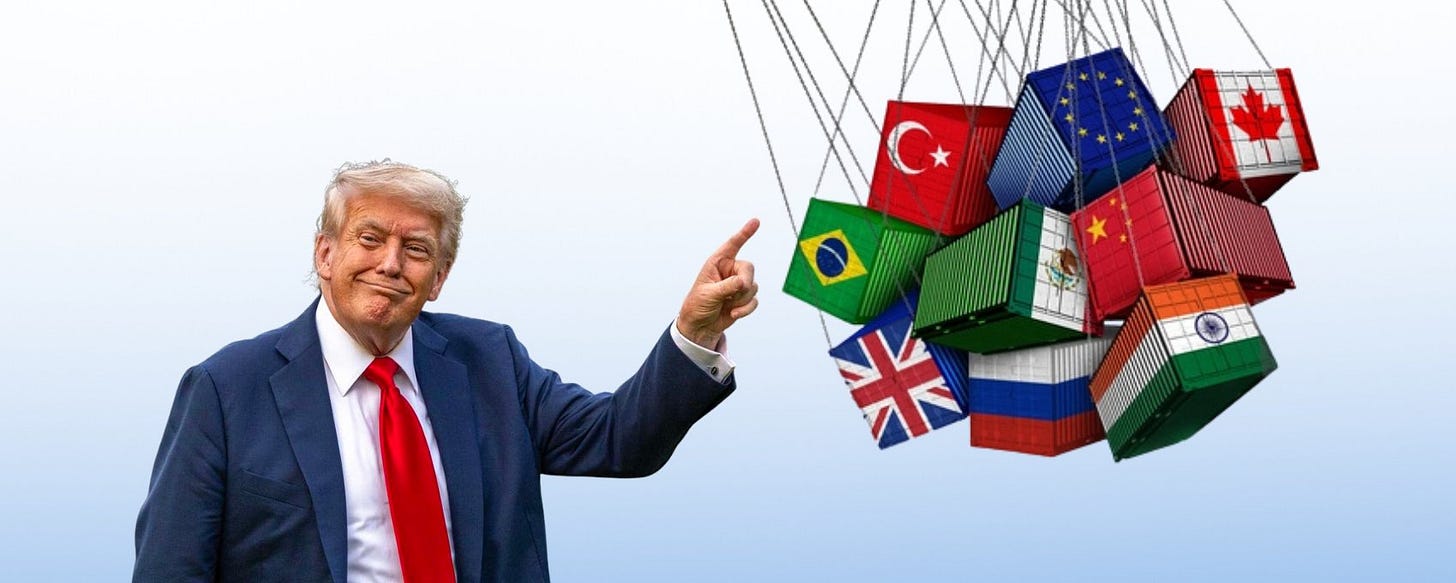
A 25-state coalition and U.S. businesses are battling the Trump administration’s sweeping Section 301 tariffs, igniting a high-stakes legal showdown over who really controls America’s trade war playbook.
What to know
- The Supreme Court axed over $130 billion in Trump-era IEEPA tariffs, forcing a shift to Section 301 and Section 338 authorities with stricter rules and ongoing lawsuits from 25 states led by New York AG Letitia James.
- Importers face fiscal chaos as refund rules remain murky, Treasury decries payouts as 'corporate welfare,' and some businesses are skipping claims to avoid legal headaches.
- The administration’s new approach targets 60 countries—including key allies—with tougher enforcement, higher compliance costs, and a permanent-feeling trade war that’s upending supply chains.
States Mount Legal Barrage
A 25-state coalition led by New York is challenging the constitutionality and rushed process of Section 301 tariffs, spotlighting deep rifts over executive power and due process in trade policy.
A coalition of 25 states led by New York Attorney General Letitia James has intensified legal challenges against the Trump administration's sweeping Section 301 tariffs, which cover nearly 99% of U.S. imports. These lawsuits, emerging after a significant Supreme Court defeat, focus on constitutional and procedural legitimacy, questioning whether the executive branch exceeded its delegated authority by imposing broad tariffs on goods from around 60 economies simultaneously under the pretext of forced labor violations. The states argue that the U.S. Trade Representative rushed its investigation timeline—completing a review in just two and a half months compared to over eight months in prior cases—thereby undermining due process and overstretching tariff powers beyond Congressional intent.
The Supreme Court’s 6-3 ruling in cases such as Learning Resources, Inc. v. Trump decisively curtailed presidential tariff authority under the International Emergency Economic Powers Act (IEEPA), finding that the statute does not authorize the president to impose tariffs without Congressional approval. This landmark decision invalidated broad reciprocal tariffs and those targeting fentanyl-related imports, forcing the Trump administration to pivot to Section 122 and Section 301 of the Trade Act of 1974 for imposing tariffs. However, these alternatives come with their own procedural constraints, such as the 150-day limit under Section 122 without Congressional consent, and have sparked ongoing constitutional debates about the limits of executive power and the necessity of legislative oversight.
Legal experts and plaintiffs have refined their strategies in challenging Section 301 tariffs by emphasizing concrete economic harm to establish standing, a shift prompted by earlier dismissals of generalized complaints. As Augustine Lo notes, courts like the Court of International Trade increasingly require specific, traceable damages rather than broad allegations, a standard reinforced by the Supreme Court’s restriction on universal injunctions in Trump v. CASA Inc. This evolving jurisprudence complicates states’ and small businesses’ ability to contest tariffs on behalf of their citizens, underscoring the nuanced statutory requirements and procedural hurdles that shape the ongoing litigation landscape.
Beyond questions of authority, plaintiffs challenge the procedural timing and sequencing of tariff impositions, highlighting that new Section 301 duties took effect immediately after the expiration of Section 122 tariffs, which themselves followed the Supreme Court’s invalidation of IEEPA tariffs. Retail companies contend that Section 301 tariffs exceed Congressional authorization by applying broad, non-country-specific taxes that replicate the previously invalidated IEEPA regime, thereby stretching delegated tariff powers and raising constitutional concerns about the executive branch’s unilateral imposition of substantial trade taxes without clear legislative mandate.



Refund Chaos and Compliance Risks
Importers are trapped in fiscal limbo as unclear refund rules, ambiguous exemptions, and mounting compliance costs fuel business uncertainty and threaten supply chain stability.
The Supreme Court's invalidation of most Trump-era tariffs under IEEPA, which had generated over $130 billion in import duties, has plunged businesses into fiscal uncertainty, as the court deferred decisions on refund procedures to lower courts. Importers face a complex and untested process for reclaiming tariffs paid, with a 180-day protest window after liquidation that remains ambiguous, prompting some companies to forgo refunds due to cost-benefit calculations or missed deadlines. Treasury Secretary Scott Besant criticized potential payouts as 'the ultimate corporate welfare,' highlighting the contentious fiscal implications amid ongoing litigation.
Legal ambiguity persists regarding tariff exemptions, such as the de minimis threshold, since the Supreme Court did not clarify whether executive orders can remove these exemptions, suggesting that formal regulations may be required instead. This unresolved question complicates compliance strategies for importers navigating the Trump administration’s new Section 301 tariff framework, which targets imports from 60 economies and differs legally from prior regimes. Businesses must grapple with evolving enforcement tools and limited Customs and Border Protection resources, heightening the risk and complexity of tariff compliance amid a shifting legal landscape.
The unpredictable tariff environment, marked by ongoing litigation and frequent policy shifts, disrupts global supply chains by increasing import costs and forcing companies to hold excess inventory or diversify sourcing to mitigate risk. This volatility inflates compliance expenses and ultimately burdens consumers with higher prices, as firms struggle to forecast tariff rates and adjust shipment processes accordingly. Industry experts advise importers to proactively review logistics and build resilience to navigate this uncertain trade terrain effectively.

Sharper, Targeted Tariff Tactics
The administration’s pivot to Section 338 and expanded Section 301 tariffs enables legally robust, precision enforcement—targeting specific countries and industries while embedding forced labor and digital policy into trade actions.
In response to the Supreme Court's rejection of the Trump administration's use of the broad and contested International Emergency Economic Powers Act (IEEPA) for tariffs, the administration pivoted to more narrowly defined statutory authorities, notably Section 338 of the Tariff Act of 1930. This statute, part of the infamous Smoot-Hawley Act, offers explicit and constitutionally sound tariff authority with features such as a 50% duty cap, a defined factual trigger based on foreign discrimination, a mandatory 30-day waiting period, and a public interest finding, thereby strengthening the legal robustness and precision of tariff enforcement. As noted in analyses, this shift is not merely a workaround but an improvement, granting the administration enhanced capabilities including targeting specific foreign subdivisions and even goods produced in third countries benefiting from discriminatory practices, thus enabling a more focused and flexible tariff regime.
Despite ongoing legal challenges from 25 U.S. states and the Supreme Court's curtailment of emergency-powers tariffs, Section 301 tariffs have evolved from a China-specific measure into a broad-based and seemingly permanent platform for imposing tariffs on imports from around 60 countries, including major trading partners and allies. This expansion includes levies of 10 to 12.5 percent even on goods covered under existing trade agreements like the USMCA, reflecting a more aggressive and unilateral enforcement approach. Customs and Border Protection (CBP) has adopted a zero-tolerance policy with reduced opportunities for penalty mitigation, signaling a tougher enforcement climate that demands rigorous compliance governance from importers to avoid allegations of tariff evasion, as emphasized by customs broker Rennie Alston.
The administration's tariff strategy has also strategically incorporated issues such as forced labor compliance, exemplified by the imposition of a 10 percent Section 301 tariff on Bangladesh that raises cumulative import duties to roughly 25 percent. This focus extends to a broader Section 301 investigation targeting most major trading partners on concerns including industrial excess capacity, pharmaceutical pricing, discrimination against U.S. technology companies, digital goods and services, and digital service taxes. While the Supreme Court ruling limits the scope of broad emergency tariffs, it has prompted a pivot toward more narrowly based but expansive tariff enforcement mechanisms that, although procedurally slower, are legally more defensible and politically calibrated to minimize economic disruption by exempting critical sectors like minerals, agriculture, pharmaceuticals, semiconductors, automobiles, and USMCA-compliant goods.
Amid these evolving enforcement tactics, businesses are urged to reassess their sourcing strategies and supplier contracts to account for the expanded and enduring nature of Section 301 tariffs, focusing on total landed costs rather than manufacturing prices alone. This includes recalculating landing costs, incorporating exit clauses for U.S. government actions, and considering factors such as transit times, supplier reliability, and inventory costs. The administration’s persistent commitment to aggressive trade enforcement is further evidenced by legislative moves like the Senate's passage of a bill broadening executive tariff authority to target Russia and China, signaling that tariffs will remain a fixture of U.S. trade policy for the foreseeable future.