Strait of hormuz showdown: oil shock, AI-powered logistics, and a global supply chain squeeze as US-Iran conflict escalates
The gist
The US-Iran showdown at the Strait of Hormuz has unleashed the biggest oil supply shock in history, skyrocketing prices and forcing a global scramble to reroute and reinvent supply chains.
What to know
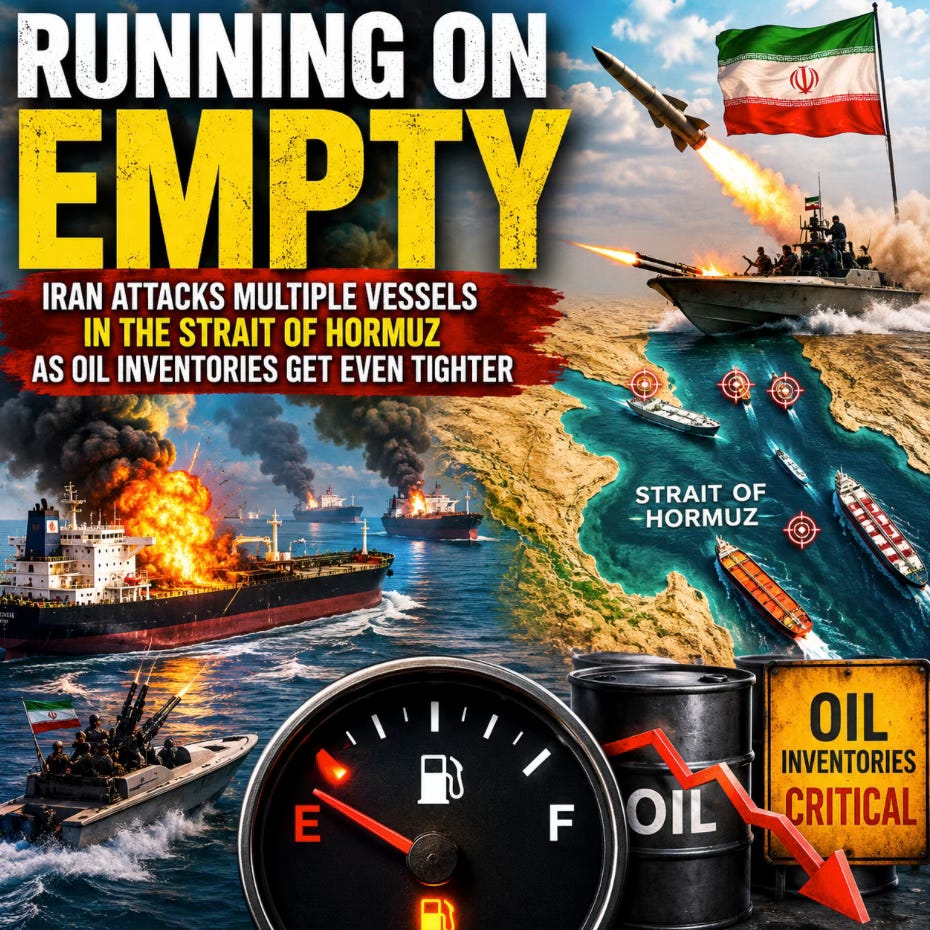
- Iran's mining and blockade of the Strait of Hormuz, combined with US naval actions, has crippled a chokepoint for nearly 20% of global oil trade and forced tankers onto longer, riskier routes.
- Brent crude prices have soared nearly 50% in a month—with forecasts up to $200 per barrel—while US stockpiles dwindle and volatility is set to persist through at least 2028.
- AI-driven logistics are now mission-critical as the UAE ditches OPEC, insurance and freight costs explode, and global supply chains scramble to adapt to cascading delays and disruptions.
Strait Control Becomes Currency
Iran’s transformation into the Strait’s ‘toll master’ and US countermeasures have weaponized maritime transit, turning oil passage into a high-stakes tool of economic and geopolitical leverage.
The Strait of Hormuz has become a critical flashpoint in the escalating US-Iran conflict, with Iran effectively asserting control as a 'toll master,' extracting fees from tankers and enforcing strict transit rules, including attacks on multiple commercial vessels in Omani waters. Despite a memorandum of understanding aimed at easing tensions, ongoing mining of the middle shipping lane and Iran’s blockade efforts have forced ships to navigate more precarious routes, complicating demining and safe passage efforts. This persistent disruption has prompted the US to reinstate a naval blockade on Iranian ports and impose tolls for securing passage, signaling a strategic shift toward formalizing control over this vital maritime chokepoint amid faltering ceasefire attempts and heightened military engagements, including retaliatory airstrikes targeting Iranian infrastructure and counterstrikes on US bases in the region.
The US administration appears willing to endure short-term economic pain, including soaring oil prices potentially spiking to $140–$200 per barrel, to pressure Iran toward regime change or significant concessions, reflecting a complex war aim that has evolved from unclear objectives to a focused effort on reopening the Strait. However, this confrontation extends beyond kinetic military actions into monetary and supply chain battles, with shifts in currency alternatives like the yuan and regional politics in Riyadh and Abu Dhabi influencing the strategic balance. The conflict’s outcome will determine control over the Strait, a chokepoint critical for nearly one-fifth of global oil trade, with broad macroeconomic implications affecting inflation, growth, and US-China strategic relations.
The intensification of military conflict, marked by Iran’s formal closure of the Strait to commercial shipping and subsequent US CENTCOM retaliatory strikes on approximately 80 Iranian military sites, has expanded the conflict’s geographic footprint and severely disrupted global energy supply chains. The US strategy focuses on degrading Iran’s maritime interdiction capabilities—targeting air defenses, missile launch sites, and fast-attack boats—rather than eliminating them, aiming to restore conditions under which commercial operators can reasonably assess transit risk. Given the Strait’s narrow 33-kilometer width and irreplaceable daily volume of energy flow, no short-term alternatives exist, making this chokepoint uniquely vulnerable and underscoring the critical need for strategic early warning systems amid unprecedented supply chain risks.
Diplomatic efforts to stabilize the region, notably led by the UAE, have faltered amid escalating tensions and failed ceasefire attempts, with political opposition from Israel and parts of the US Congress threatening the fragile agreements. The collapse of a 60-day negotiation window has renewed fears of a prolonged blockade and direct conflict, forcing markets to reprice supply-side security risks and heightening concerns about further infrastructure damage or export restrictions. While reports of potential progress in regional ceasefire talks have temporarily eased the 'war premium' in oil prices, the persistent volatility and Iran’s tightening grip on the Strait continue to drive global trade and energy disruptions, compelling the US to pressure Europe and Asia to shoulder more military and economic burdens.


Inflation’s New Frontline
Historic supply disruptions and forced tanker reroutes have permanently embedded risk premiums into global energy markets, redrawing the map of commodity pricing and inflation expectations.
The US-Iran conflict over the Strait of Hormuz has triggered the largest global oil supply disruption in history, affecting about 16% of the world's oil supply and shutting in a fifth of global LNG volumes, surpassing even the 1970s oil shock and the 2022 Russian gas crisis. This disruption has forced vessels to reroute around the Cape of Good Hope, adding up to 14 days and 3,000 miles to journeys, while mine-clearance and security risks keep shipping volumes well below pre-conflict levels, as Amanda Rastovic highlights the compounded inflation risks from rising transportation costs and commodity price pressures. These logistical challenges, combined with Iran’s effective control of the strait and its extraction of “million dollar tolls” from tankers, have embedded a permanent risk premium into global energy markets, reshaping pricing and risk assessments worldwide.
Oil prices have surged dramatically amid these tensions, with Brent crude rising nearly 50% over a month and forecasts ranging from $70 to as high as $200 per barrel, reflecting the heightened geopolitical risk premium. This price spike has been most pronounced in spot markets, signaling immediate supply fears, while futures markets anticipate elevated prices to persist but moderate over time. The price disparity between Brent and West Texas Intermediate underscores regional risk premiums, with Europe and Asia bearing the brunt of the inflationary pressures. As Goldman Sachs warns, these supply shocks are expected to persist through 2028, fueling inflation concerns and complicating the Federal Reserve’s policy outlook in early 2026.
Despite a nominal reopening of the Strait of Hormuz and a temporary glut from Middle East production surges, the global oil market remains precariously tight due to critically low US oil stockpiles—the lowest in 20 years—and ongoing Iranian disruptions. This fragile equilibrium is marked by volatile diesel and jet fuel prices that are increasingly decoupling from crude oil trends, driven by widening refining margins and supply chain precision challenges. Market complacency persists even as tanker route reversals and renewed military exchanges underscore the persistent threat to energy supply chains, sustaining elevated risk premiums and structural repricing in energy markets.
The prolonged geopolitical instability around the Strait of Hormuz is not only driving historic price volatility but also prompting a structural shift in global energy security perceptions. Countries are increasingly viewing interconnection as a risk rather than an asset, leading to demand curtailment measures across Asia such as fuel rationing and school closures. This evolving landscape compels a durable energy security strategy focused on reducing oil dependency, as traditional responses to oil shocks prove less effective amid geopolitical fragmentation. Meanwhile, strategic stock releases and alternative supply routes provide only temporary relief, with market participants warned against over-optimism about supply normalization.



Logistics Under Siege
Mined lanes, rerouted tankers, and capacity crunches are cascading through global supply chains, driving up costs for everything from oil to food and threatening economic and political stability.
The Strait of Hormuz remains a perilous chokepoint for global shipping, with ongoing security risks such as mined middle lanes forcing tankers to adopt more precarious routes, primarily from the U.S. side, significantly delaying transit times. Amanda Rastovic highlights that simultaneous disruptions in the Strait and the Red Sea could compel vessels to reroute around the Cape of Good Hope, adding up to 14 days and 3,000 miles to journeys, thereby escalating transportation costs and exacerbating supply chain delays. These navigational challenges have already manifested in real-time, with tankers reversing course amid heightened tensions, underscoring the fragile state of maritime logistics in this critical corridor.
The compounded effects of rising insurance premiums, freight rate hikes, and capacity crunches—exacerbated by geopolitical fuel shocks linked to the Strait of Hormuz tensions—are driving double-digit increases in transportation costs that ripple through global supply chains. Q1 2026 freight data reveals a sharp capacity squeeze, while tariff uncertainties and soaring diesel prices further strain logistics operations, shaking economic growth outlooks and fueling inflationary pressures. This multifaceted disruption particularly threatens commodities like oil, natural gas, fertilizers, and food staples, whose transport vulnerabilities cascade into broader economic and political instability, including farmer bankruptcies and shifting consumer budgets.
Amid these escalating logistical challenges, the Middle East—especially the UAE—is rapidly transforming into a logistics powerhouse by fast-tracking pipeline diversification and deploying AI-driven operational management to navigate the Strait of Hormuz chaos. AI technologies are now central to tanker navigation and supply chain innovation, enabling real-time scenario evaluation and strategic maneuvering through geopolitical brinkmanship and faltering ceasefires. This technological pivot not only mitigates Iran’s tightening grip on the shipping lanes but also reflects a broader shift in logistics strategy, where precision KPI tracking and sustainable supply chain practices are becoming essential to managing persistent disruptions and soaring operational costs.
Despite some easing in diesel prices, trucking spot rates remain stubbornly high due to ongoing supply-demand imbalances and strategic volatility in oil markets, illustrating that cost pressures in freight logistics persist even amid tentative geopolitical de-escalation. Innovations like Breakthrough’s real-time fuel surcharge data are enhancing transportation cost transparency, helping logistics operators cut through market volatility and better manage fluctuating expenses in this turbulent environment. Meanwhile, the UAE’s dramatic exit from OPEC signals a strategic regional pivot that complicates long-term logistics and market planning, underscoring the enduring complexity of supply chain resilience in the face of Iran’s continued disruption of the Strait of Hormuz.
AI: The New Supply Chain Arsenal
AI-driven logistics, strategic stockpile recalibration, and a battle for technological dominance are redefining how nations and companies defend against—and capitalize on—sustained supply chain shocks.
The intensifying US-Iran geopolitical tensions have accelerated the adoption of AI-driven logistics innovations across global supply chains, particularly in freight transportation and tanker navigation. Companies like Breakthrough are leveraging granular real-time data to revolutionize fuel budgeting and operational management, enhancing transparency amid soaring oil prices and volatile diesel costs. This technological pivot is critical as the Middle East transforms into a logistics powerhouse, with AI-driven cybersecurity becoming essential to safeguard increasingly complex trade infrastructures against the heightened risks posed by geopolitical conflicts and market volatility.
Strategic stockpile management has become a frontline response to the critical drops in U.S. oil reserves triggered by Iran’s tightening grip on the Strait of Hormuz, prompting energy stakeholders to recalibrate supply risk mitigation. Meanwhile, the UAE’s dramatic exit from OPEC signals a broader regional realignment, underscoring how geopolitical pressures are reshaping energy policies and market dynamics. These shifts compel freight and logistics leaders to double down on precision KPI tracking and sustainable supply chain strategies, as flagged by Goldman Sachs, to navigate the persistent shocks in energy markets through 2027.
Beyond physical supply chains, the battle over AI governance—exemplified by the public dispute between Elon Musk and Sam Altman over control of core AI stacks—reflects a parallel technological front in the geopolitical arena. Control over AI safety, distribution, and regulatory frameworks is increasingly consequential, influencing not only market stability but also the capacity to manage economic transitions amid automation-driven industry reshaping. This underscores that modern conflicts are no longer purely kinetic but also hinge on technological dominance and monetary influence.
The ripple effects of US-Iran tensions extend into financial markets, where Bitcoin’s price volatility within the $59K-$69K range highlights the cryptocurrency’s sensitivity to geopolitical shocks. This volatility mirrors broader market jitters affecting both crypto and traditional equities, reinforcing the need for adaptive financial strategies that incorporate AI-driven risk assessment tools to bolster resilience against unpredictable geopolitical and energy market disruptions.