Strait showdown: US-Iran ceasefire shatters, oil markets rattle as gulf becomes flashpoint
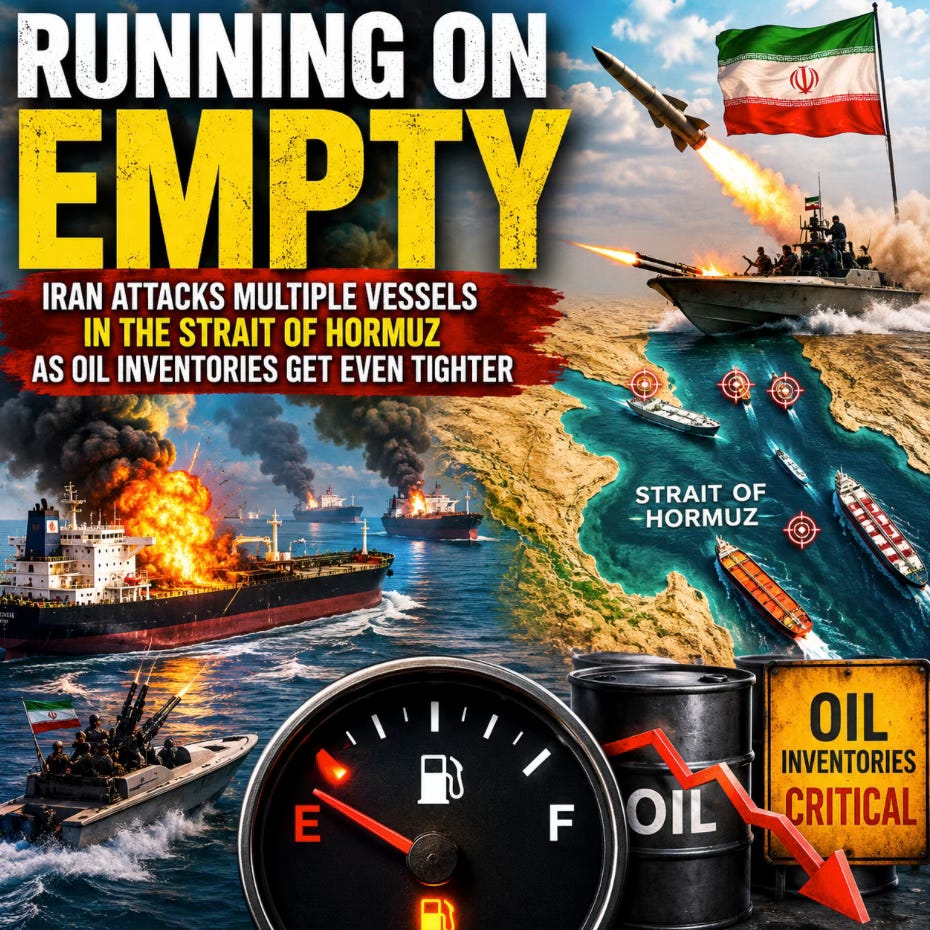
The gist
The US-Iran ceasefire has spectacularly collapsed, turning the Strait of Hormuz into a militarized flashpoint and sending shockwaves through global oil markets and political arenas alike.
What to know
- Iranian attacks on commercial vessels triggered over 170 US airstrikes and a formal closure of the Strait, paralyzing a critical oil route.
- Brent crude prices have surged from $72 to nearly $85 per barrel amid shipping chaos, sanctions, and a depleted US strategic reserve.
- Domestic and regional politics are in turmoil, with Trump’s rhetoric flipping and Gulf states scrambling to recalibrate alliances as missile strikes rattle the region.
Strait Turns Warzone
The Strait of Hormuz has become a militarized chokepoint as US and Iranian forces trade strikes, casualties mount, and Iran leverages its control to threaten new economic measures despite ongoing oil shipments.
The US-Iran ceasefire abruptly collapsed following a series of Iranian attacks on commercial vessels in the Strait of Hormuz, prompting the US to launch over 170 airstrikes targeting Iranian military sites aimed at degrading Tehran's maritime interdiction capabilities rather than annihilating them. President Donald Trump declared the ceasefire 'over' at a NATO summit, signaling a readiness for further strikes as Iran's Islamic Revolutionary Guard Corps (IRGC) escalated by formally declaring the Strait closed to commercial shipping, effectively imposing a blockade amid ongoing hostilities. This breakdown transformed the strategic waterway into a militarized chokepoint with both sides intensifying military actions to assert control.
Iran retaliated to US airstrikes with missile attacks on US military installations across Bahrain, Kuwait, Qatar, and beyond, including the interception of missiles by Jordanian air defenses, thereby expanding the conflict's geographic scope and involving key Gulf allies. These tit-for-tat strikes have resulted in casualties on both sides, including 14 US service members killed, and have intensified multi-front military engagements that have effectively eliminated prospects for short-term diplomatic resolutions. The targeting of symbolic sites, such as bridges on the Ayatollah’s procession route in Mashhad, may inadvertently bolster Iranian hardliners through martyrdom narratives, complicating internal Iranian politics where hardline factions undermine ceasefire efforts while peace-favoring groups seek continued talks.
Despite the ongoing conflict and Iran's formal closure of the Strait of Hormuz, oil continues to flow, with the US Department of Energy reporting 8.5 million barrels transiting in a recent 24-hour period; however, the fragile security environment has shipping companies actively exploring alternative routes and new port projects in the UAE to bypass the strait. Forecasts suggest a 64% probability that Iran will begin charging fees for ships passing through the Strait starting January 1, 2027, signaling a strategic move to assert economic control over this vital maritime chokepoint amid the militarized standoff.




Oil Markets on Edge
Skyrocketing insurance costs, depleted US reserves, and a spike in Brent crude reflect how military escalation and sanctions have injected lasting volatility and risk into global energy markets.
The collapse of the US-Iran ceasefire and subsequent military escalations around the Strait of Hormuz have severely disrupted one of the world's most critical oil transit routes, which handles nearly 20% of global seaborne oil shipments. Iran's attacks on commercial vessels, combined with the US revocation of the Treasury's General License X and reimposition of sanctions, have heightened shipping risks and insurance costs, forcing the Joint Maritime Information Center to elevate the threat level to 'severe.' This volatile environment has injected a substantial geopolitical premium into oil prices, driving Brent crude from $72 to peaks near $85 per barrel and causing significant market volatility as investors grapple with the prospect of prolonged supply disruptions and infrastructure damage.
The strategic petroleum reserve in the United States has plummeted to its lowest level since 1983, underscoring the fragility of energy security amid ongoing Middle East hostilities. With global oil output still below pre-war levels and limited spare capacity, the market remains highly vulnerable to further shocks. Analysts like Alpine Macro's Dan Alamariu warn that Iran's control over the Strait of Hormuz negates US incentives to de-escalate, especially ahead of the midterms, while external factors such as increased Chinese oil purchases or Gulf hurricanes could trigger immediate spikes in gasoline and diesel prices, which have already surged by nearly $2 per gallon over recent months.
The US strategy of imposing a 20% toll on cargo transiting the Strait of Hormuz, effectively a blockade, has escalated tensions without delivering leverage over Iran, which views such moves as breaches of the interim peace agreement. This has increased the likelihood of retaliatory drone attacks on commercial vessels, perpetuating a cycle of instability that previously pushed Brent crude above $100. While ongoing negotiations temper oil prices from spiking even higher, the market remains jittery, with volatility indices like the VIX rising above 18 and the CNN Fear & Greed Index shifting into 'Fear,' reflecting investor anxiety over the uncertain trajectory of the conflict and its economic fallout.
The enduring conflict around the Strait of Hormuz has transformed what was once a theoretical geopolitical risk into a tangible and persistent threat to global energy markets. Experts emphasize that even temporary closures or prolonged disruptions introduce a lasting political premium to crude oil prices, a factor that contradicts bearish market narratives. As Dr. Trita Parsi notes, the collapse of diplomacy and deepening mistrust between the US and Iran complicate prospects for timely negotiations, raising the specter of a broader regional conflict that could permanently displace Middle Eastern oil production and exacerbate inflationary pressures worldwide.



Politics and Alliances Fracture
Trump’s shifting rhetoric and Gulf states’ scramble for new partners reveal how the conflict is fracturing US politics and forcing the region’s power brokers to rethink their security strategies.
The collapse of the US-Iran ceasefire has sharply fractured the GOP and deepened domestic political divisions, with former President Trump dramatically shifting his rhetoric from earlier praise of Iran’s leadership to harsh condemnations, calling them “scum” and “sick people.” This inconsistency complicates diplomatic efforts and fuels an atmosphere of unpredictability, as Trump’s public declaration that the ceasefire is dead signals a hardening US stance that reverberates through both political debates and international negotiations. Meanwhile, global markets remain jittery, with oil prices surging past $77 per barrel amid fears of prolonged instability in the Gulf.
Regionally, the war has upended fragile alliances and normalization efforts, as Iran’s attacks on neighbors and hostile rhetoric—such as Mojtaba Khamenei’s vow to avenge martyrs and public chants of “Kill Trump”—have intensified tensions across the Middle East. Gulf states, despite being targets themselves, have taken on active mediation roles, emphasizing the critical need for a diplomatic resolution to avoid further economic harm and instability. However, their longstanding concerns about the unpredictability of US commitment have driven them to diversify defense partnerships and bolster their own capabilities, reflecting a strategic recalibration in response to Washington’s erratic policies.
Trump’s recent positioning of the US as the ‘guardian’ of the Strait of Hormuz, including proposing a controversial 20% toll on cargo, exemplifies a strategy of economic pressure that risks escalating conflict and complicating regional alliances. This move, coupled with threats of missile strikes and comparisons of the conflict to Vietnam, underscores a domestic political landscape marked by tough rhetoric and a resigned security establishment anticipating a protracted, low-casualty ‘forever war.’ Such dynamics hinder diplomatic mediation, even as regional mediators like Pakistan and Turkish President Erdogan rush to salvage the ceasefire amid rising oil price risks.
The ongoing instability around the Strait of Hormuz has created a ‘new normal’ of intermittent flare-ups and contested control, with Iran steering shipping closer to its shores and the US encouraging routes near Oman, leading to kinetic responses and fractured Gulf alliances. The involvement of actors like senior Houthi leaders further complicates the geopolitical fallout, expanding the conflict’s reach across the region. This precarious balance, combined with the US’s shifting policies and messaging, leaves diplomatic efforts in a fragile state, as neither side fully abandons negotiations but both aggressively seek to redefine leverage amid a volatile and interconnected Middle Eastern landscape.