Super el niño unleashes climate chaos: droughts, food shocks, and hurricane wild cards collide in 2026
The gist
The 2026 Super El Niño is shattering climate norms, driving historic droughts, food shocks, and wild weather extremes that could make 2027 Earth’s hottest year yet.
What to know
- A record-strength Super El Niño is forecast with a 25% chance, pushing Pacific sea surface temperatures over 4°C above normal and fueling global weather chaos.
- The U.S. faces a historic megadrought impacting 63% of the country, slashing Oklahoma’s wheat crop by half and sending Chicago wheat futures soaring 30%.
- Despite fewer Atlantic hurricanes expected, the risk of rapid storm intensification and catastrophic megafloods—especially in California—remains dangerously high.
El Niño’s Unprecedented Power
A record-breaking surge of Pacific ocean heat is set to trigger a global climate regime shift, threatening to push average temperatures beyond the 1.5°C threshold and destabilize weather patterns for years.
By spring 2026, NOAA and multiple international agencies converged on a forecast indicating a 61% chance of an El Niño event and a striking 25% probability of a record-strong 'super' El Niño emerging by fall. This event is driven by an unprecedented eastward surge of tropical Pacific ocean heat from the Western Pacific Warm Pool, producing sea surface temperature anomalies forecasted to exceed 4°C above normal—surpassing even the catastrophic 1877-1878 El Niño. Such extreme ocean warming, with the oceans currently storing about 11 million terawatt hours of excess heat—equivalent to 500 years of human energy consumption—sets the stage for profound atmospheric interactions and global climate disruptions.
The physical dynamics of the 2026 Super El Niño extend beyond ocean heat, fundamentally altering atmospheric patterns worldwide. The massive release of oceanic heat energy disrupts trade winds and boosts atmospheric moisture, triggering extreme weather phenomena such as atmospheric rivers that threaten California with megastorms and megafloods, while northern US and Canada brace for prolonged heatwaves and southern South America faces record-breaking temperatures. This potent coupling of ocean and atmosphere is expected to push global average temperatures beyond the critical 1.5°C warming threshold, potentially making 2027 the hottest year on record.
Beyond immediate weather extremes, the 2026 Super El Niño is poised to act as a climate regime shift, with abrupt and lasting impacts that persist well after tropical Pacific waters cool. Historical parallels to the 1877-1878 event reveal complex interactions involving not only the Pacific but also the Indian and Atlantic Oceans, which amplified droughts across the tropics and subtropics over multiple years. Today’s warmer baseline ocean temperatures intensify these dynamics, raising the stakes for prolonged drought, monsoon failures in India threatening 150 million farmers and 1.5 billion people dependent on their crops, and cascading effects on global food security and markets.




Hurricane Risks Defy Forecasts
Despite fewer predicted storms, abnormally warm Atlantic waters keep the threat of explosive hurricane intensification and costly landfalls dangerously high.
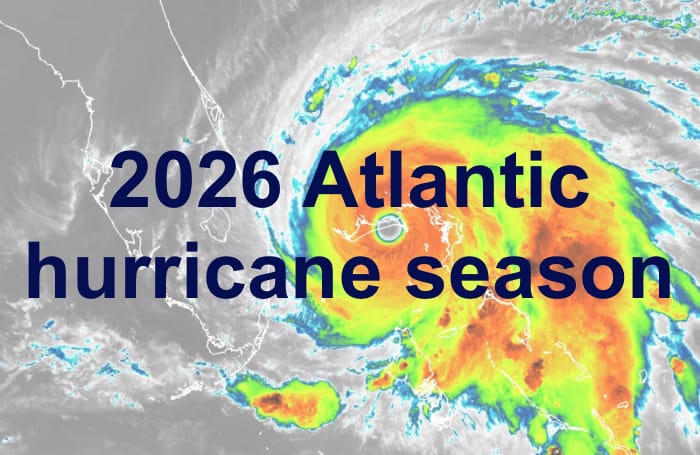
By early 2026, forecasts from Accuweather and Colorado State University (CSU) converge on a somewhat below-average Atlantic hurricane season driven by a strengthening El Niño, which is expected to suppress storm formation through increased vertical wind shear. Accuweather projects 11 to 16 named storms with 4 to 7 hurricanes, while CSU predicts 13 named storms and 6 hurricanes, both figures falling short of the 1991-2020 averages. Despite this reduction, the exceptionally warm and deep Atlantic waters maintain a high risk of rapid intensification, underscoring that even a single major hurricane can inflict severe human and economic damage, a caution echoed by experts referencing the costly 2025 season.
The anticipated 'super El Niño' event is poised to sharply curtail late-season hurricane activity, with forecasts from TSR further lowering expectations to 12 named storms, 5 hurricanes, and only 1 major hurricane, alongside a significant drop in the ACE index to 66—approximately 40% below climatological norms. This El Niño-driven suppression also translates into reduced probabilities of major hurricane landfalls along the U.S. coastline, with CSU estimating a 32% chance for a Category 3 or stronger strike, well below the historical average of 43%, and TSR predicting just one hurricane landfall. However, forecasters emphasize that these reduced odds do not eliminate the threat of impactful storms, highlighting persistent uncertainties and the potential for a single intense hurricane to disrupt insurance markets and cause substantial damage.


Megafloods and Droughts Collide
California faces a trillion-dollar megaflood risk while vast U.S. regions endure the driest start in over a century, signaling a new era of simultaneous climate extremes.
The 2026 Super El Niño is poised to unleash a cascade of extreme weather events globally, from historic droughts and megaflood risks to unprecedented heatwaves, fundamentally altering climate regimes and ecosystems. NOAA forecasts a roughly 4% chance of a catastrophic megaflood in California alone, with potential damages approaching $1 trillion—equivalent to 4% of the US GDP—underscoring how rising global temperatures are amplifying these risks. This event is expected to drive temperatures above the critical 1.5°C threshold, potentially pushing the planet into irreversible environmental shifts that disrupt rainfall, drought patterns, and heat extremes worldwide.
The southwestern United States is already grappling with the worst multi-year drought in at least 1,200 years, with the first quarter of 2026 marking the driest start to a year in 131 years of records. Approximately 63% of the continental US faces drought conditions, severely impacting agriculture—particularly winter wheat in the Southern Plains, where Oklahoma’s 2026 wheat production is projected to halve, driving Chicago wheat futures up by 30%. Farmers like Gary Millershaski in southwest Kansas describe the situation as dire, with precipitation as low as a quarter of an inch since last fall, making crop yields highly uncertain and threatening food security.
The uneven regional impacts of the Super El Niño will exacerbate existing vulnerabilities, with some areas facing intensified rainstorms and flooding—such as California and the US Gulf Coast—while others endure severe drought, heatwaves, and wildfires, as seen historically during the 2015 event and the devastating 1877-1878 Super El Niño that caused famines killing over 50 million people globally. This duality of extremes threatens ecosystems like coral reefs and forests, disrupts agriculture in key export regions including Brazil, India, and Australia, and could make 2027 the hottest year on record, compounding the challenges for human and natural systems alike.
The human toll of these extreme weather events could be staggering, with forecasters estimating a 2% chance that 2026’s disasters might cause at least 10,000 deaths in the US alone—far surpassing typical annual fatalities from such events. The looming threat of a California megastorm and megaflood recalls historical catastrophes like the 1900 Galveston hurricane, which claimed between 6,000 and 12,000 lives, highlighting the deadly potential of the Super El Niño’s temperature anomalies. As these climate extremes unfold, the intersection of intensified natural disasters and vulnerable populations will pose unprecedented challenges for disaster preparedness and response.

Global Food Supply on Edge
Drought-driven crop failures and commodity price spikes threaten food security from Oklahoma to India, with the Super El Niño poised to spark social unrest and market shocks worldwide.
By early 2026, the U.S. agricultural sector is grappling with an unprecedented megadrought that has devastated winter wheat production and livestock sustainability, particularly in the Southern Plains where over 81% faces drought conditions. Oklahoma's winter wheat output is projected to plunge to less than half of 2025 levels, with only 30% of U.S. winter wheat rated good or excellent compared to 49% the previous year. This severe drought has fueled a roughly 30% surge in Chicago wheat futures, reflecting heightened commodity market volatility as ranchers, such as those in New Mexico, are forced to liquidate cattle herds they can no longer sustain, compounding food supply chain stresses.
The looming 2026 Super El Niño threatens to exacerbate global agricultural disruptions on a scale reminiscent of the catastrophic 1877-1878 event, which triggered famines responsible for over 50 million deaths worldwide. This climate phenomenon is expected to induce extreme temperature spikes—potentially returning 40°C heat to Britain—and create uneven precipitation patterns that simultaneously cause droughts and flooding across different regions. Such volatility imperils staple crops like coffee and sugar, driving up tropical commodity prices and unsettling global food supply chains.
Critical agricultural exporters including Brazil, India, and Australia face severe crop failures due to the Super El Niño, threatening both local food security and international markets. In India, the high probability of monsoon failure jeopardizes the livelihoods of 150 million farmers and the food supply for 1.5 billion people, while Australia's wheat exports, vital to countries like Indonesia and the Philippines, are at risk. These disruptions are poised to trigger widespread commodity price spikes and food shortages, potentially igniting social unrest in vulnerable nations such as India, the Philippines, and Vietnam.
Economic and Human Toll Mounts
Farmers and ranchers face financial ruin as wheat yields collapse and disaster risks soar, with experts warning of a rare chance for U.S. weather-related deaths to spike into the tens of thousands.
The 2026 megadrought in the U.S. has precipitated a severe economic crisis in agriculture, with Oklahoma's winter wheat crop projected to plummet from 101.1 million bushels in 2025 to just 48.9 million in 2026, while only 30% of U.S. winter wheat remains in good or excellent condition. This drastic reduction has driven Chicago wheat futures up by approximately 30%, reflecting acute supply shortages and financial strain on farmers and ranchers, such as those in New Mexico forced to sell cattle they can no longer afford to feed amid rapidly depleting reservoirs along the Colorado River system. Southwest Kansas farmer Gary Millershaski encapsulates the desperation, noting, 'For us to get a 30-bushel crop, you’ve really got to be optimistic and believe in prayer,' underscoring the dire challenges to both economic stability and disaster preparedness in the region.
The 2026 Super El Niño threatens to escalate human and societal risks dramatically, with forecasters estimating a 2% chance that extreme weather fatalities in the U.S. could reach or exceed 10,000—far above typical annual figures in the hundreds. Particularly alarming is the heightened risk of a California megastorm and megaflood, which experts warn could cause widespread fatalities and societal disruption, echoing the catastrophic 1877-1878 Super El Niño event that claimed over 50 million lives through drought and famine. This looming crisis presents formidable challenges to disaster preparedness and social stability across vulnerable regions.
Beyond the U.S., the 2026 Super El Niño is poised to trigger global economic turmoil, with surging energy prices and commodity spikes straining electricity grids—especially in the American Southwest—and threatening social unrest in vulnerable countries such as India, the Philippines, and Vietnam. India faces a particularly acute crisis, where the high probability of monsoon failure jeopardizes the livelihoods of 150 million farmers and the food security of 1.5 billion people dependent on monsoon-fed agriculture. These interconnected economic shocks and human risks underscore the potential for widespread social instability if critical food and energy supplies falter.
Cascading Global Disruptions
The Super El Niño’s ripple effects are set to destabilize energy markets, overwhelm power grids, and ignite social crises in countries already on the brink.
The Super El Niño’s ripple effects are set to destabilize energy markets, overwhelm power grids, and ignite social crises in countries already on the brink.