Supreme court ruling triggers fears of 'imperial presidency'
The gist
A blockbuster Supreme Court ruling just handed the President sweeping power to fire independent agency leaders at will, shaking the guardrails of American democracy.
What to know
- The 6-3 Trump v. Slaughter decision overturned a 91-year-old precedent, giving presidents unfettered removal power over heads of agencies like the FTC, FCC, and SEC.
- Critics warn the ruling enables presidents to purge regulators and install loyalists, igniting fears of an 'imperial presidency' and volatile, partisan regulatory swings.
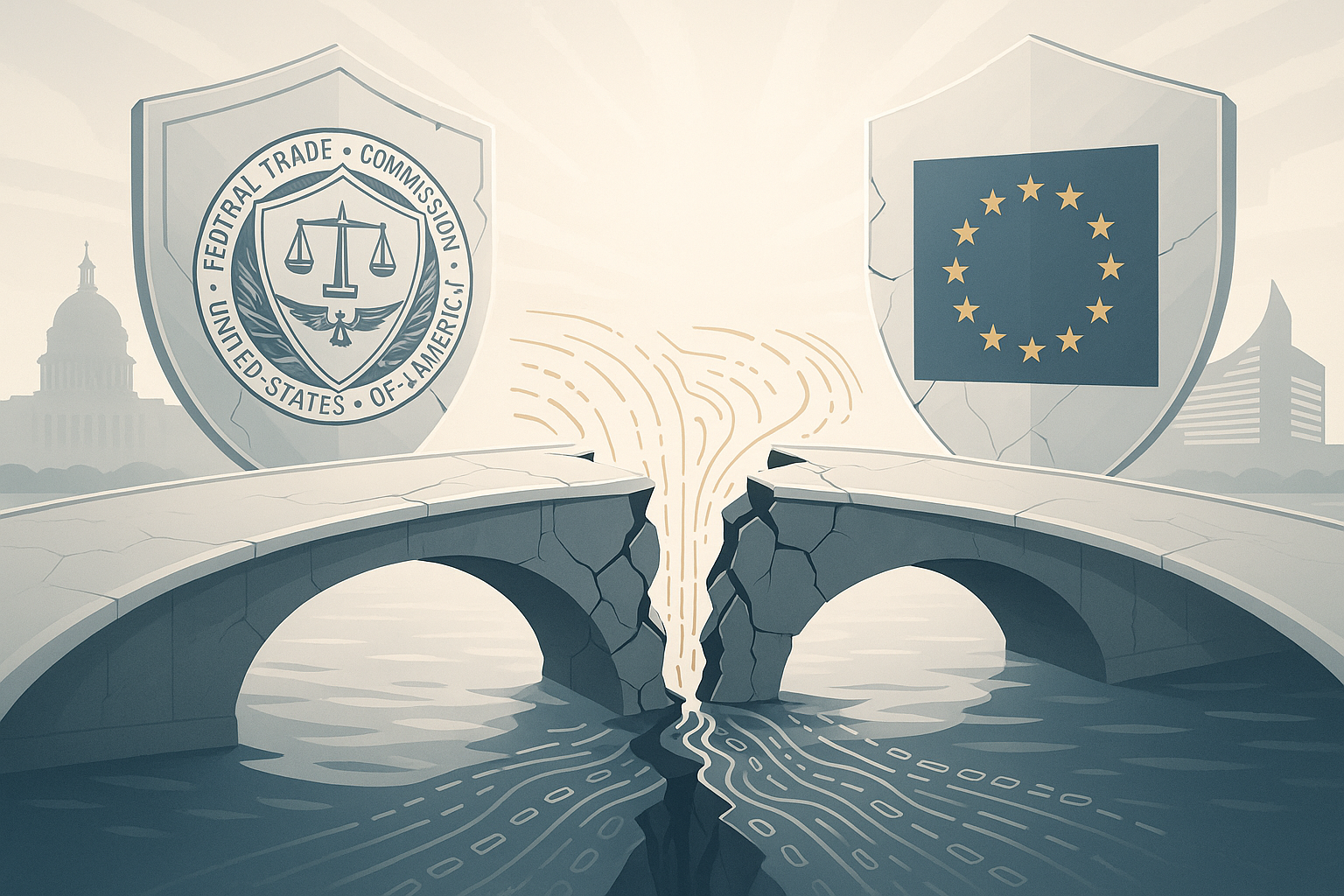
- The decision threatens international agreements—like the EU-US data sharing pact—and leaves industries scrambling to keep up with shifting enforcement priorities.
Precedent Shattered, Power Shifted
By overturning a century-old safeguard, the Supreme Court has handed presidents sweeping authority to fire agency heads at will—except for the Federal Reserve, whose unique carve-out underscores the ruling’s seismic impact on regulatory independence.
The Supreme Court's ruling in Trump v. Slaughter decisively overturned the 91-year-old Humphrey’s Executor precedent, which had protected independent federal agency leaders from removal except for cause. By a 6-3 vote, the Court embraced a textualist and originalist interpretation of the Constitution, emphasizing that executive power is vested solely in the President, who must therefore have unfettered authority to remove subordinates exercising executive functions. Chief Justice Roberts notably dismissed the prior precedent as “a result in search of a rationale,” underscoring the Court’s view that any congressional limits on presidential removal violate the separation of powers.
This landmark decision fundamentally reshapes agency independence by stripping statutory protections that insulated roughly two dozen federal agencies—including the Federal Trade Commission, FCC, Nuclear Regulatory Commission, and Equal Employment Opportunity Commission—from partisan influence. As James Plunkett observed, the ruling accelerates the President’s ability to install loyalists, aligning agency priorities more closely with the administration’s agenda and eroding the institutional autonomy that once allowed these bodies to regulate elections, markets, and safety without fear of retaliation. The ruling also forecloses legal recourse for officials dismissed without cause, as seen in ongoing cases like Robert Primus’s at the Surface Transportation Board.
While the Court broadly expanded presidential removal power, it carved out a notable exception for the Federal Reserve Board, preserving its constitutional independence due to pragmatic concerns over economic stability and market confidence. Analysts suggest this exception reflects a cautious recognition of the Fed’s unique role, with fears that direct presidential control—such as demands to cut interest rates—could inject volatility into financial markets. This nuanced approach highlights the Court’s balancing act between restoring executive control and safeguarding critical institutional functions.
The ruling’s embrace of the unitary executive theory signals a constitutional limit on Congress’s ability to insulate agencies from presidential politics, effectively ending the era of independent commissions shielded from partisan turnover. This legal shift portends increased regulatory volatility, as agency leadership and enforcement priorities can now pivot dramatically with each administration change, a dynamic already evident in sensitive sectors like cryptocurrency. As one expert noted, “Crypto of all industries has seen how powerful the change in leadership of an agency can be,” underscoring the broader political and operational ramifications of the Court’s decision.





Regulatory Whiplash Ahead
With agency leaders now vulnerable to presidential whims, industries face unpredictable rule changes and compliance chaos as global data deals and financial oversight hang in the balance.
The Supreme Court ruling dramatically undermines the independence of key regulatory agencies such as the FTC, SEC, and CFTC by stripping away for-cause removal protections, thereby subjecting them to direct presidential control. This shift threatens critical international frameworks like the EU-US data sharing agreement, which depends on the FTC's independent enforcement of privacy protections; as one analyst warned, if commissioners can be fired at will, it could create a chilling effect that jeopardizes trust and complicates cross-border data flows. Moreover, the ruling's impact extends beyond the FTC to bodies like the Privacy and Civil Liberties Oversight Board, where President Trump’s prior firing of nearly all members exemplifies how agency independence can be swiftly eroded under expanded executive authority.
This newfound presidential leverage over agencies like the SEC and CFTC enables rapid and sweeping shifts in regulatory policy, especially in volatile sectors such as cryptocurrency. Experts like Jessi Brooks highlight that agency leadership changes now have an outsized influence on enforcement priorities and rulemaking, with policies potentially swinging dramatically with each election cycle. As Vy Le notes, this dynamic cuts both ways for crypto—ushering in either aggressive crackdowns or deregulation depending on the administration—while vacancies on commissions further amplify the president’s ability to reshape agency agendas swiftly.
The ruling introduces significant regulatory volatility across financial and compliance sectors, forcing institutions to navigate a 'whipsaw effect' where enforcement priorities and supervisory guidance shift unpredictably with changing administrations. Elaine Duffus warns that firms can no longer rely on stable regulatory frameworks and must invest heavily in compliance infrastructure—employing disciplined horizon scanning, obligation mapping, and evidence-based decision-making—to manage this uncertainty. Concurrently, research from Wolters Kluwer reveals an 83% drop in federal monetary penalties in late 2025, signaling a strategic retreat toward selective federal oversight paired with increased state-level regulation and private litigation.
Beyond operational upheaval, the ruling risks transforming independent agencies into politically aligned echo chambers, diminishing stakeholder engagement and institutional consistency. As Mike Silver of Spencer Fane cautions, agencies may lose incentives to engage diverse viewpoints, leading to enforcement agendas that mirror the prevailing administration’s priorities rather than balanced regulatory oversight. This politicization not only complicates compliance for regulated entities but also raises constitutional questions about the durability of statutory protections across the federal administrative state.


Rise of the Imperial Presidency
The ruling’s assault on agency autonomy stokes bipartisan fears of a destabilized administrative state, with critics warning that nonpartisan governance and democratic norms are at risk of being swept away by unchecked executive power.
The Supreme Court's June 29 ruling in Trump v. Slaughter, which overturned the 91-year-old Humphrey’s Executor precedent, dramatically expands presidential removal power over independent federal agencies, sparking widespread alarm about the erosion of agency independence that has long served as a democratic safeguard. Critics, including former Federal Trade Commissioner Rebecca Kelly Slaughter, warn that this decision enables presidents to purge regulators who resist their agendas and replace them with loyalists, effectively collapsing the institutional independence vital for policing elections, markets, and public safety. Slaughter herself emphasized the personal and democratic risks of such executive overreach, urging institutions like Yale to 'stand on principle' against abuses of power that threaten the balance between Congress, the presidency, and the people.
The ruling has intensified fears of an 'imperial presidency,' as it fulfills a conservative goal dating back to the Reagan era to increase executive control over independent agencies, thereby undermining the historical norms that protect nonpartisan administration. Analysts highlight that while the decision is politically symmetric—potentially empowering both parties to unilaterally reshape agency leadership—it risks destabilizing good governance amid heightened partisan polarization. Moreover, concerns extend beyond agency heads to the potential politicization of administrative law judges and career civil servants, who traditionally uphold professional, nonpartisan operations, signaling a broader threat to the administrative state's integrity.
The Supreme Court's decision also casts a shadow over the independence of critical institutions like the Federal Reserve, now described as an 'endangered species' in the wake of the ruling. The Court’s fractured stance—with only Justices Kavanaugh and Roberts supporting a narrow carve-out for the Fed—reveals deep divisions and an unstable equilibrium that hinges precariously on the current Court composition. This delegitimization of agency independence fuels broader democratic risks by eroding longstanding norms that have insulated agencies from partisan control, thereby amplifying concerns about unchecked executive power and the rise of an imperial presidency.
