Tesla taps samsung’s texas fab for AI5 superchip as chip giants scramble for supply chain edge
The gist
Tesla is splitting production of its next-gen AI5 superchip between Samsung's new Texas fab and industry titan TSMC, reshaping the global chip supply chain as tech giants scramble for AI muscle.
What to know
- Tesla's AI5 chip, boasting a 40x performance boost, just taped out on Samsung's 2nm Taylor fab with mass production set for 2027.
- TSMC’s advanced chipmaking and packaging lines are fully booked through 2026, driving Tesla, Nvidia, and Google to diversify with Samsung to avoid supply bottlenecks and price hikes.
- Despite the multi-sourcing scramble, Nvidia’s AI accelerator dominance keeps tech firms balancing custom chip ambitions with continued reliance on its GPUs.
Tesla’s Dual-Foundry Playbook
Tesla is leveraging both Samsung and TSMC for its AI5 chip, combining advanced engineering partnerships and geographic diversification to secure one of the industry’s largest AI chip production runs.
Tesla's recent tape-out of the AI5 chip on Samsung's cutting-edge 2nm process at the Taylor fab marks a pivotal advancement in its AI and robotics ambitions, with volume production targeted for 2027. This chip delivers a remarkable 40x performance improvement over its predecessor, enabling sophisticated applications such as the Optimus humanoid robot and Cybercab autonomous vehicle, while benefiting from enhanced power efficiency and transistor density that maintain vehicle energy consumption levels.
In response to TSMC's capacity constraints and the broader industry's supply chain challenges, Tesla has adopted a strategic multi-sourcing approach for its AI5 chip, splitting manufacturing between Samsung's Texas facility and TSMC. This dual-sourcing not only mitigates risks associated with single-source dependency but also strengthens Tesla's pricing leverage and geographic diversification, positioning it to support one of the highest volume AI chip productions in the sector.
Tesla's collaboration with Samsung extends beyond mere fabrication; close cooperation between Tesla's hardware teams and Samsung's process engineers is critical to optimize manufacturability, address thermal management, and improve yield at scale. This partnership ensures that the AI5 chip is finely tuned to the specific manufacturing nuances of the Taylor fab, underscoring Tesla's evolving supply chain sophistication amid the competitive foundry landscape.


Samsung’s Foundry Breakthrough
Samsung is rapidly emerging as the go-to alternative for advanced AI chip manufacturing, attracting top tech and automotive clients as TSMC’s capacity maxes out and supply chain risks escalate.
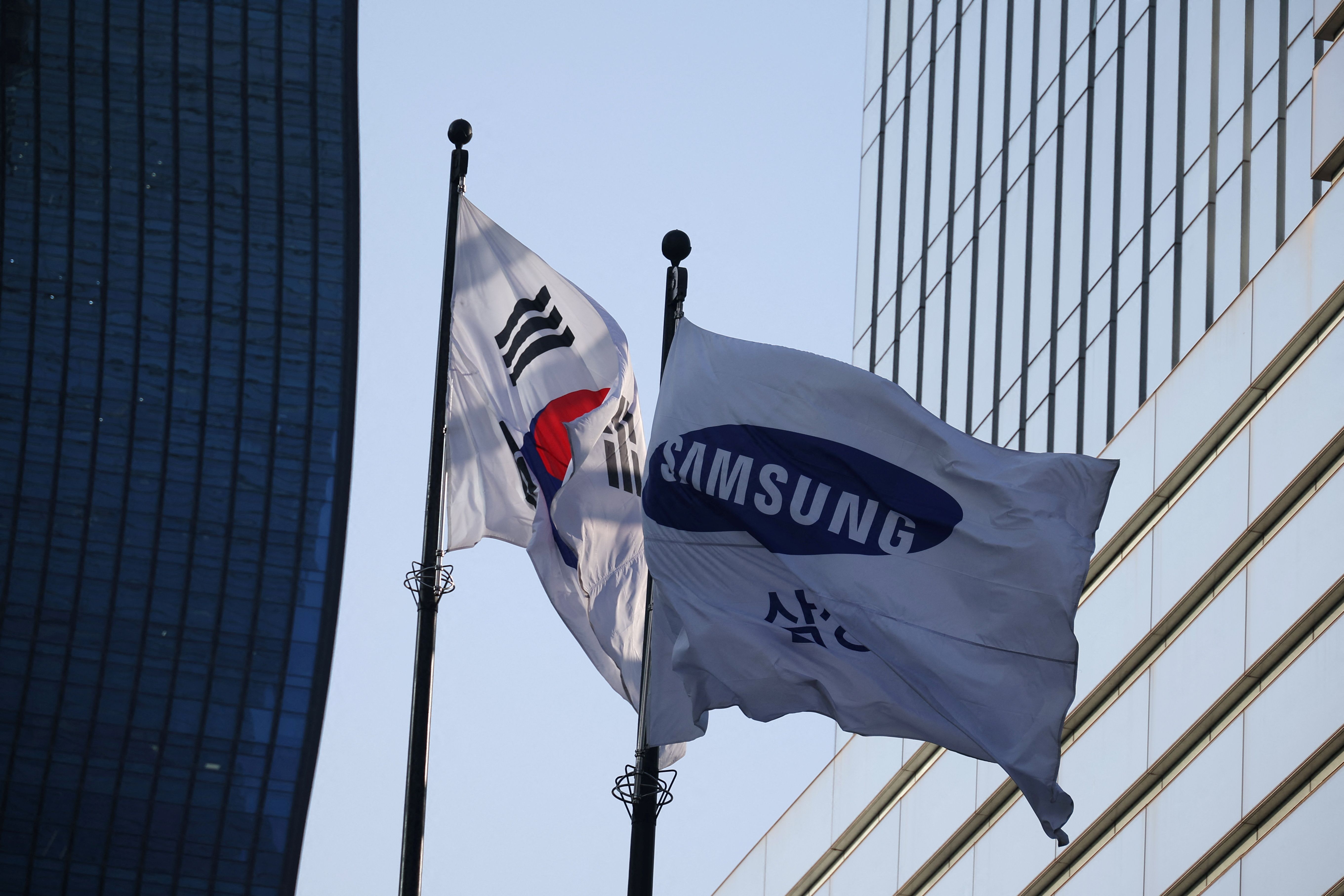
Samsung Foundry is rapidly expanding its advanced semiconductor manufacturing footprint by capitalizing on TSMC's fully booked capacity for cutting-edge nodes. Major tech and automotive players such as Tesla, Nvidia, Google, AMD, and BYD are increasingly turning to Samsung to diversify their supply chains, reflecting a broader industry trend toward multi-foundry strategies to hedge against supply risks. This shift is not a reflection of TSMC's technological leadership, which remains unrivaled, but rather a logistical necessity as Samsung's Taylor fab in Texas emerges as a vital hub for next-generation 2nm AI-optimized chip production, including Tesla's upcoming A16 and AI5 chips.
Samsung's Taylor fab is at the forefront of manufacturing advanced 2nm process node chips that deliver significant improvements in power efficiency and transistor density, enabling more powerful AI inference for applications like Tesla's autonomous driving systems without increasing energy consumption. The recent tape-out of Tesla's AI5 chip at this facility underscores Samsung's growing expertise in automotive-grade, high-volume production, facilitated by close collaboration between Samsung process engineers and Tesla hardware teams to optimize manufacturability and yield. This partnership not only accelerates Samsung Foundry's revenue growth but also solidifies its competitive position alongside TSMC in the AI chip market.
Beyond marquee clients like Tesla and Nvidia, Samsung is broadening its foundry clientele to include emerging AI and automotive innovators such as Neuralink and Groq, who are entrusting Samsung with manufacturing next-generation brain implant chips and AI inference processors on advanced nodes like 4nm. This diversification further cements Samsung's role as a key alternative foundry amid escalating demand and capacity constraints at TSMC, even as Samsung's manufacturing quality still trails TSMC's. Market realities, however, compel leading companies to increasingly rely on Samsung's foundry capabilities to meet their ambitious production targets.

Packaging: The New Bottleneck
With advanced chip packaging now the industry’s critical chokepoint, semiconductor giants are racing to expand capacity and adopt new materials, while clients diversify suppliers to sidestep TSMC’s price hikes and shortages.
The semiconductor industry is grappling with acute capacity bottlenecks, particularly in advanced packaging technologies like TSMC's CoWoS, which is fully booked through 2026, forcing major clients such as Tesla, Google, and BYD to diversify their supply chains by engaging alternative foundries like Samsung. Despite TSMC's record earnings and aggressive capital expenditures—up to $56 billion in 2026 aimed at expanding advanced nodes and packaging—the supply-demand imbalance persists, underscoring packaging as the new critical chokepoint beyond wafer fabrication. This bottleneck has intensified pricing pressures, with TSMC implementing up to 15% price hikes on 3nm wafers and planning further increases, reflecting the industry's broader challenge of scaling infrastructure to meet surging AI-driven demand.
In response to TSMC's capacity constraints and pricing power, leading AI and tech companies are adopting multi-fab sourcing strategies to build geographic and supplier redundancy, rather than abandoning TSMC outright. Firms like Google, AMD, BYD, Tesla, and Anthropic are expanding partnerships with Samsung Foundry, leveraging its advanced 2nm process and integrated packaging capabilities at the Taylor fab to optimize power efficiency and performance. This diversification not only mitigates risks from geopolitical tensions and supply shortages but also reflects a strategic shift toward custom AI chip development aimed at reducing dependence on Nvidia's dominant ecosystem, which still commands over 70% of the AI accelerator market.
TSMC's aggressive multi-fab ramp-up, including simultaneous N2 production across five facilities and the 'One Team' collaboration program, exemplifies efforts to enhance supply chain resilience and accelerate yield learning amid unprecedented AI-driven demand. However, physical miniaturization limits and rising complexity are driving the industry toward innovations in new materials like gallium nitride and advanced packaging solutions such as Emift and glass-based heat insulators. Intel, while trailing in wafer process leadership, leverages its strengths in advanced packaging technologies and U.S.-based supply assurance to carve out a niche, highlighting the evolving competitive dynamics where system-level capacity—including packaging, memory integration, and geographic considerations—becomes paramount in semiconductor purchasing decisions.
The semiconductor ecosystem is undergoing a fundamental transformation as AI companies vertically integrate their compute stacks, controlling silicon design, software, and cloud infrastructure to accelerate innovation and reduce operational costs. Yet, despite the surge in custom AI chip initiatives, the complexity and slow turnaround times—often up to three years from design to silicon—pose significant challenges. Meanwhile, Nvidia's comprehensive hardware, networking, and software ecosystem remains difficult to replicate, compelling many firms to continue purchasing Nvidia GPUs for certain workloads even as they develop bespoke solutions, illustrating the nuanced interplay between supply chain diversification and entrenched market leadership.