Tesla’s robotaxi ambitions hit the brakes: hundreds of cybercabs idle as software struggles stall rollout
The gist
Tesla’s steering-wheel-less robotaxi fleet is built and waiting in the wings, but stalled software and regulatory hurdles have left hundreds of Cybercabs idling instead of driving the future.
What to know
- Over 100 Cybercabs have rolled off Tesla’s Texas Gigafactory line, but most remain parked as Full Self-Driving software needs a major rewrite—pushing true autonomy out to late 2026 or beyond.
- Tesla’s camera-only approach is under fire, with Austin’s unsupervised fleet shrinking from 25 to just 14 active units as the tech struggles with complex city streets.
- Regulators haven’t signed off yet: NHTSA may drop the brake pedal rule, but full approval for driverless rides isn’t expected before late 2026—leaving Tesla’s bold Miami launch without safety monitors squarely in the hot seat.
Cybercabs Stuck in Limbo
Tesla’s bet on camera-only Cybercabs has left over 100 vehicles idle as software and regulatory setbacks delay true autonomy and revenue until at least 2027.
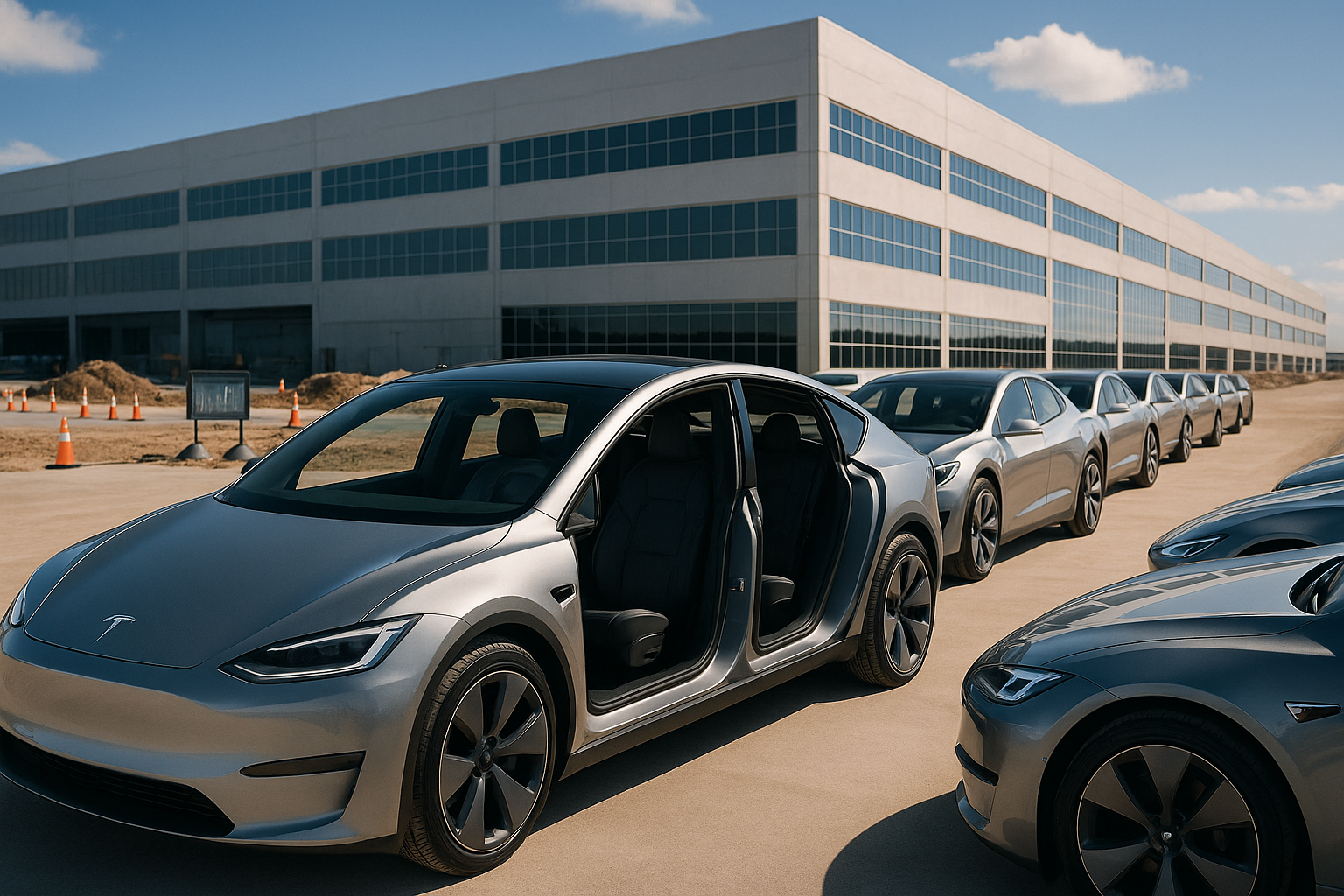
Tesla has aggressively ramped up production of its steering-wheel-less Cybercab robotaxi at the Texas Gigafactory, with over 100 units already manufactured by mid-2026. Despite this impressive scale-up, these vehicles cannot yet be sold or operated autonomously due to the immaturity of Tesla's Full Self-Driving (FSD) software, which requires a fundamental rewrite targeted for late 2026 or early 2027. CEO Elon Musk describes the production ramp as a 'stretched out S-curve,' anticipating exponential growth later in the year, yet the current fleet largely remains idle or confined to limited geofenced zones pending software and regulatory readiness.
Tesla’s commitment to a camera-only sensor suite for the Cybercab sets it apart from competitors like Waymo and Zoox, who employ radar and LiDAR to enhance perception. However, this vision-only approach has faced tangible challenges, as evidenced by the shrinking unsupervised fleet in Austin—from about 25 cumulative vehicles down to roughly 14 active units—despite expanded operational geofences. This contraction underscores the difficulties Tesla faces in achieving reliable autonomous operation in complex urban environments using solely cameras, highlighting the software’s ongoing struggles to interpret edge cases and dynamic scenarios.
The absence of manual controls in the Cybercab further complicates Tesla’s path to commercialization, as the vehicles cannot be sold as conventional cars or driven by private owners. Until the FSD software matures and passes rigorous safety validations, these units serve primarily as test platforms or occupy parking lots, with Tesla conceding that meaningful robotaxi revenue is unlikely before 2027. While public road testing in Austin marks progress beyond closed-course trials, the gap between early validation and scalable, unsupervised deployment remains constrained by regulatory hurdles and the need for comprehensive safety reporting.
Regulatory Gamble Intensifies
Tesla’s removal of manual controls and launch of unsupervised rides in Miami heighten scrutiny, as federal regulators and public safety concerns slow the path to full approval.
Tesla's push toward fully driverless Cybercab operations is closely intertwined with evolving regulatory landscapes, notably the National Highway Traffic Safety Administration's (NHTSA) potential removal of the brake pedal mandate. This regulatory shift is pivotal, enabling Tesla to design vehicles without traditional manual controls, a move that aligns with federal trends gradually accommodating such innovations. However, despite these favorable regulatory winds, Tesla still faces significant safety validation hurdles, with full approval for truly driverless operation not expected before late 2026 or early 2027, underscoring the cautious pace of regulatory acceptance amid technological ambition.
Tesla's strategic removal of manual controls like brake pedals and steering stalks has sparked controversy, illustrating the risks inherent in pushing regulatory and customer boundaries prematurely. The company initially eliminated steering stalks on certain models only to reinstate them following customer backlash, highlighting the delicate balance between innovation and user acceptance. This design philosophy, which entrusts safety primarily to Full Self-Driving software and remote operator oversight without onboard human intervention, places enormous pressure on Tesla’s software reliability and regulatory compliance to ensure passenger safety.
In a bold departure from prior rollout strategies, Tesla launched its Miami Cybercab service without safety monitors or chase cars, marking a significant leap toward fully unsupervised robotaxi operation from day one. This contrasts sharply with the Austin launch, where over 300 test drivers served both as software testers and emergency safety monitors equipped with emergency stop buttons. Tesla’s reduction in pre-launch testing scale and elimination of onboard safety oversight in Miami reflects Elon Musk’s confidence in the software’s autonomous capabilities, even as it raises questions about risk management and regulatory scrutiny.
Tesla’s approach to safety validation is increasingly data-driven and iterative, leveraging over-the-air software updates to quietly expand the operational design domain (ODD) based on real-world performance metrics. This method allows the robotaxi service area to grow conservatively as validation data confirms readiness, exemplified by an overnight expansion of roughly three blocks in Miami without public announcement. Additionally, Tesla’s recent Full Self-Driving updates have improved emergency vehicle response behaviors—such as pulling over for ambulances—which align with regulatory demands and demonstrate the company’s ongoing commitment to meeting safety standards amid the evolving robotaxi market.

Robotaxi Race Heats Up
Tesla’s high-risk, monitor-free rollout strategy collides with Waymo and Zoox’s cautious, regulator-friendly expansions, setting the stage for a fierce battle over the future of autonomous mobility.
Tesla's aggressive entry into the robotaxi market with its camera-only Cybercab service in Miami and expansion into Austin, Dallas, and Houston underscores its bold strategy to achieve fully unsupervised autonomous rides without in-vehicle safety monitors. This contrasts sharply with competitors like Waymo and Zoox, who maintain more cautious approaches involving safety drivers or phased employee-rider programs during expansion. Tesla’s approach reflects Elon Musk’s ambitious vision to pivot from car sales to AI mobility, betting its $1.4 trillion valuation on rapidly scaling unsupervised robotaxi operations despite past missed timelines and ongoing software maturity challenges.
Waymo leads the industry with a methodical and regulatory-savvy expansion, delivering approximately 500,000 paid rides weekly across 10 U.S. cities and preparing for international growth into London and Tokyo. Its strategy involves establishing early footholds in mid-tier markets like Tampa and Denver through employee-rider phases, which help build strong relationships with local emergency services and regulators, effectively creating a 'regulatory moat' that protects its market position. Additionally, Waymo’s deployment pattern of situating large depots near international airports further solidifies its operational and logistical advantages over rivals.
Zoox is intensifying competition by accelerating its rollout and expanding its robotaxi testing program into new cities such as Dallas and Phoenix, signaling a push to commercial deployment that directly challenges Tesla’s rapid scaling efforts. While Tesla focuses on immediate unsupervised rides, Zoox’s incremental expansion reflects a strategic balance between growth and regulatory compliance, contributing to an increasingly dynamic and contested robotaxi landscape in 2026.

Houston Hub Signals Scale
Tesla’s massive robotaxi hub in Houston and rapid Miami launch showcase aggressive geographic expansion, but software validation hurdles still loom over nationwide deployment.
Tesla has embarked on an assertive geographic expansion of its camera-only Cybercab robotaxi service, launching unsupervised operations in Miami as its third state after Texas and California. This rapid deployment includes multiple launch points and dozens of vehicles actively staged and operating, with rides reported as confident and smooth, suggesting an advanced iteration of Tesla’s Full Self-Driving software is in use. Elon Musk, however, has acknowledged safety validation delays that temper broader FSD v15 rollout ambitions, indicating that while Tesla pushes aggressively into new markets, software maturity remains a critical gating factor.
In Texas, Tesla is scaling its robotaxi presence not only in Austin with public testing signaling progress toward a 2026 commercial launch but also in Houston, where roughly 90 Cybercabs have been spotted at a dedicated Robotaxi hub. This concentration marks the largest publicly documented fleet staging to date and reflects a deliberate strategy to leverage Houston’s favorable terrain, wide roads, and regulatory environment. The hub’s operational readiness—including charging, cleaning, dispatch, and maintenance infrastructure—signals a transition from pilot testing to near-commercial deployment, underscoring Tesla’s phased approach that first validates software on retrofitted Model Ys before introducing purpose-built Cybercabs.