Tesla’s steering-free cybercab sparks investor doubts ahead of launch
The gist
Tesla’s bold leap into a steering-free, fleet-only Cybercab is shaking up the robotaxi race—but investors aren’t convinced the future is hands-off or profitable.
What to know
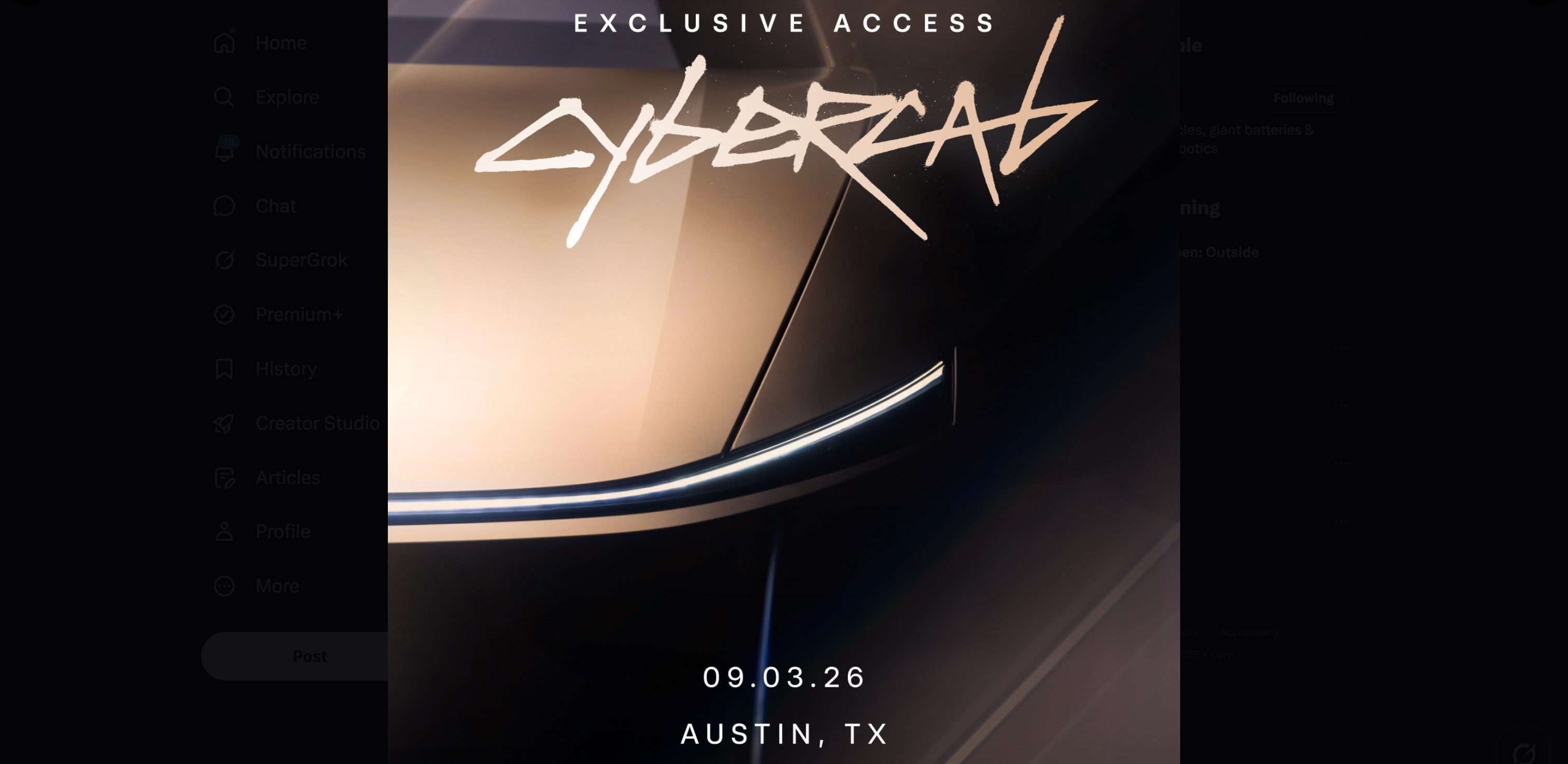
- The steering-wheel-free Cybercab launches September 3, 2026 in Austin, with exclusive employee rides and a livestreamed invite-only debut.
- Tesla’s pivot to a dedicated robotaxi fleet aims to slash ride costs to $0.30 per mile—less than half the price of Model Y robotaxi runs and a fraction of regular ride-hailing.
- Despite Full Self-Driving upgrades and Texas expansion, Tesla’s stock is down 25% this year as Wall Street questions its tech lead, capital spending, and robotaxi scale.
Cybercab’s Cautious Debut
Tesla’s steering-free Cybercab will launch through a tightly controlled, employee-first rollout and exclusive event, signaling a deliberate, phased approach to full autonomy rather than an immediate public release.
Tesla is set to unveil its steering-wheel-free Cybercab in Austin with a carefully staged rollout beginning in August 2026, when initial rides will be limited to employees. This controlled introduction culminates in an exclusive, invite-only launch event on September 3, 2026, at Tesla’s Austin headquarters, where select Robotaxi riders and sweepstakes winners will experience the vehicle firsthand, while the broader public can observe via livestream. The event underscores Tesla’s strategic approach to debuting the Cybercab as a fleet-only autonomous vehicle rather than a consumer product.
The Cybercab will integrate seamlessly into Tesla’s existing Robotaxi network in Austin, accessible through the current Robotaxi app alongside or replacing the driverless Model Ys already operating in the city. Notably, the Cybercab employs the same Full Self-Driving software stack as the Model Y fleet, indicating that Tesla’s launch focuses on introducing a new vehicle form factor without altering the underlying autonomous technology or expanding fleet scale, which remains modest with roughly 20 to 30 active unsupervised vehicles across markets.
The Cybercab’s debut without a steering wheel or pedals highlights Tesla’s minimalist design ethos and signals a new phase in autonomous vehicle deployment, emphasizing a fully driverless experience. While Elon Musk has suggested the Cybercab would launch before 2027, the exact timing reflects a cautious, phased rollout strategy that prioritizes controlled initial use by employees and select riders before broader public availability, aligning with Tesla’s incremental approach to scaling its Robotaxi service.
Fleet-First Robotaxi Strategy
Tesla is abandoning consumer sales for autonomous vehicles in favor of a purpose-built, ultra-efficient Cybercab fleet designed to slash ride costs and optimize robotaxi economics at scale.
Tesla is decisively pivoting from selling autonomous-capable vehicles like the Model Y to consumers toward deploying a purpose-built, fleet-only robotaxi network centered on the Cybercab platform. This strategic shift reflects Tesla’s recognition that retrofitting consumer vehicles for robotaxi service is less efficient and scalable than operating a dedicated autonomous fleet, with the Cybercab designed specifically to optimize unit economics and operational efficiency for ride-hailing services.
The Cybercab’s design—featuring two seats, no steering wheel, and no pedals—embodies Tesla’s focus on autonomous operation and fleet efficiency, enabling a significant reduction in total cost of ownership per mile. Tesla aims to lower this cost to roughly $0.30 per mile, a dramatic improvement over the $0.60 to $0.70 per mile for Model Y vehicles at typical personal-use levels and far below existing ride-hailing costs of $2.50 to $3.00 per mile, positioning the Cybercab as a transformative platform for scalable robotaxi deployment.
By limiting additional Model Y deployments to its robotaxi fleet, Tesla preserves consumer vehicle inventory for retail sales while concentrating resources on scaling the Cybercab platform, which leadership believes can ramp production and deployment more efficiently in the near term. This phased approach leverages the Model Y as a testing and initial deployment vehicle but clearly signals a long-term commitment to the Cybercab as the backbone of Tesla’s autonomous mobility network.
Supporting this business model shift is Tesla’s Full Self-Driving (FSD) software version 15, which represents a critical step-change in autonomous driving performance necessary for unsupervised robotaxi operations. Early Cybercab deployments will operate within a controlled environment to collect operational data, refine autonomous systems, and address challenges such as software reliability and regulatory compliance, underscoring Tesla’s methodical transition toward a fully integrated, fleet-only robotaxi service.
Wall Street’s Robotaxi Doubts
Investors remain skeptical as Tesla’s robotaxi mileage and scale lag far behind rivals like Waymo, raising concerns about commercial viability, capital burn, and whether the Cybercab can deliver on its disruptive promise.
Tesla's stock performance reflects deep investor skepticism amid uncertainty over the commercial viability of its Cybercab and broader robotaxi ambitions, with shares down 25% year-to-date and trading near $362 despite a brief 5% surge following Nevada's authorization for 5,000 robo-taxis. Market participants remain wary as Tesla's robotaxi mileage—around 380,000 driverless miles—lags dramatically behind industry leader Waymo's 220 million rider-only miles, while competition intensifies from Amazon’s Zoox and other emerging players, raising doubts about Tesla's ability to scale safe, reliable autonomous operations without human intervention.
Financial concerns compound market skepticism, as Tesla's heavy capital expenditures—expected to exceed $25 billion in 2026—and negative free cash flow driven by investments in autonomy and AI weigh on investor confidence. Analysts remain divided, with TD Cowen maintaining a Buy rating citing Tesla’s operational strengths, while GLJ Research highlights a razor-thin 1.4% operating margin and $1.1 billion negative free cash flow, underscoring the challenging path to profitability and fueling cautious sentiment reflected in downward revisions to EPS estimates and a high forward price-to-sales ratio of 11.72.
Despite the long-term transformative potential of Tesla’s robotaxi network, market sentiment remains lukewarm and even indifferent ahead of the Cybercab launch, with traders assigning only a 17% chance of sales in 2026. Regulatory hurdles, such as the UK's Automated Vehicles Act, and Elon Musk’s admitted optimism on timelines further dampen enthusiasm, while stiff competition from established players like Waymo, the Uber-Rivian partnership, and startups like Verne intensifies doubts about Tesla’s competitive positioning and near-term commercial success.
Amid prevailing skepticism, some investment analysts urge patience, emphasizing Tesla’s potential for rapid revenue growth over the next three years alongside SpaceX and Palantir. This cautious optimism reflects a belief that while current market apathy and valuation concerns persist, Tesla’s long-term prospects in autonomous mobility and AI-driven fleet operations could eventually justify investor faith and unlock substantial shareholder value.

AI and Hardware Power Play
Tesla’s latest FSD software, advanced AI-driven fleet management, and next-gen hardware are converging to drive down robotaxi costs and enable rapid expansion of the Cybercab network in Texas and beyond.
Tesla's Full Self-Driving (FSD) version 15 marks a pivotal leap in autonomous technology, integrating seven core innovations with about 40% already operational within the Austin robotaxi fleet. This software upgrade, described by Tesla as a 'step-change' comparable to prior major releases, is supported by the current Hardware 4 (AI4) computer capable of unsupervised driving, while the forthcoming AI4.5 chip promises a 10% boost in compute power and double the memory, ensuring the Cybercab fleet's hardware foundation is both robust and future-proof.
Beyond driving autonomy, Tesla is revolutionizing fleet operations through AI-driven vehicle distribution and routing enhancements that leverage neural network prediction systems akin to those powering FSD. These upgrades, developed by Tesla’s AI and fleet software group, proactively position idle vehicles based on demand forecasting, significantly reducing rider wait times and underpinning the seamless integration and scaling of the Cybercab fleet within the existing Robotaxi network shortly after its September 2026 launch.
Tesla’s innovative 'unboxed' manufacturing process, which assembles large sub-components independently before final integration, complements its AI-driven operational strategies by targeting a long-run cost of approximately $0.30 per mile. This cost efficiency, combined with Texas’s regulatory flexibility allowing rapid iteration from supervised to fully driverless rides, enables Tesla to confidently prioritize scaling the purpose-built Cybercab over Model Y conversions, optimizing for high utilization and superior unit economics in its robotaxi fleet expansion.
The rapid geographic expansion of Tesla’s driverless fleet into Dallas and Houston, with around 30 vehicles deployed recently, serves as a real-world testbed for the AI-driven operational systems that manage vehicle distribution and fleet logistics across diverse urban environments. This strategic rollout not only validates Tesla’s vision-only approach—eschewing costly lidar and detailed maps in favor of neural networks trained on billions of miles of camera data—but also lays critical groundwork for the scalable integration of the Cybercab fleet into Texas’s burgeoning robotaxi market.