Tokenized assets hit prime time on Wall Street
The gist
Wall Street has gone 24/7 as institutional titans, armed with regulatory green lights, are unleashing a multi-trillion dollar boom in tokenized assets—blurring the lines between traditional finance and blockchain.
What to know
- By late 2025, Figure issued $12B in on-chain private credit and BlackRock managed nearly $3B in tokenized funds, riding a wave of regulatory breakthroughs like NASDAQ’s SEC filing.
- Mainstream adoption exploded in early 2026 as NYSE and Nasdaq raced to launch 24/7 on-chain equity trading, with Ethereum and Solana supporting $10B in tokenized Treasuries and $1B+ in equities.
- The global market is on track to hit $2–10T in tokenized assets by 2035, with major players from Dubai Insurance to CME and the UK Treasury all building toward an $88T real-world asset opportunity.
Institutional Tokenization Breakthroughs
Major financial players like Figure and BlackRock slashed costs and settlement times by moving billions in assets on-chain, transforming tokenization from theory into a core market infrastructure.
By late 2025, institutional tokenization had moved decisively from concept to tangible market infrastructure, with pioneers like Figure demonstrating operational breakthroughs by issuing $12 billion in on-chain private credit assets and reducing loan processing times from 40 to 10 days at a fraction of traditional costs. BlackRock’s public embrace of tokenization, exemplified by its BUIDL fund managing nearly $3 billion and surpassing $1 billion in tokenized treasuries on Ethereum, underscored growing institutional confidence. This momentum was further catalyzed by NASDAQ’s SEC filing to list tokenized securities, signaling regulatory progress and mainstream market integration.
The evolution of tokenized securities and stablecoins in 2025 reflected a foundational shift where stablecoins served as the essential rails for crypto markets, while tokenized securities became the primary vehicles unlocking deep pools of institutional capital. This transition was supported by major blockchain protocols such as Ethereum, Solana, and Algorand, which underpinned token issuance and trading, enabling new use cases like 24/7 trading, precise risk definition, and novel collateral opportunities. Projects like Coinbase’s compliant Token Launches and DBS-J.P. Morgan’s Kinexys cross-bank framework exemplified the push toward compliant token sales and seamless integration of regulated bank money with blockchain infrastructure.
Institutional tokenization efforts in late 2025 were marked by a convergence of regulatory clarity and technological innovation, with frameworks such as the US GENIUS Act and the EU’s MiCA providing stringent regimes for stablecoins and crypto service providers. This regulatory foundation empowered financial giants like Franklin Templeton and BlackRock to offer liquid, regulated tokenized products with real-time settlement and low minimum investments, democratizing access to traditional assets. Meanwhile, infrastructure shifts saw JPMorgan’s Onyx network processing billions daily in tokenized transfers, reflecting a broader industry move from pilots to production-scale blockchain applications.
Figure’s vertically integrated blockchain platform epitomized early institutional-grade tokenization by combining loan origination, securitization, and blockchain-native asset registries to achieve substantial cost savings and efficiency gains. By late 2025, Figure’s on-chain loan disbursements had grown sevenfold to over $860 million monthly, supported by a broad partner network including top mortgage companies, and innovations like the first SEC-registered yield-bearing stablecoin ($YLDS) and blockchain-native equity issuance. Despite market headwinds, Figure’s accelerating fundamentals highlighted the practical realization of tokenizing real-world assets such as home equity lines of credit, a previously untapped and inefficient market segment.




Regulatory Green Light Ignites Growth
Sweeping regulatory clarity and new infrastructure unlocked compliant tokenization at scale, making yield-bearing digital assets and multi-token ETFs a mainstream reality for institutions.
By late 2025, regulatory clarity crystallized through pivotal measures like the GENIUS Act and SEC no-action letters, dramatically reducing legal uncertainties surrounding tokenized assets. This regulatory evolution empowered major institutional players such as BlackRock, which leveraged its $1 trillion in liquidity funds to pioneer tokenized money market funds and align them with stablecoin reserve requirements, signaling a strategic embrace of compliant digital finance. Concurrently, the SEC’s endorsement of DTCC’s tokenization of U.S. Treasuries on the Canton blockchain marked a watershed moment, facilitating native on-chain holding and enabling fully backed stablecoins, thereby enhancing transparency and operational efficiency in institutional markets.
Infrastructure providers like Securitize, Canton, and Tzero capitalized on this regulatory momentum by developing interoperable, compliant platforms that address institutional demands for confidentiality, seamless asset transfer, and multi-chain support. Securitize emerged as the trusted transfer agent for giants like BlackRock and KKR, ensuring tokenized securities precisely mirror underlying rights without counterparty risk, while Canton’s use of the Daml protocol enabled privacy-preserving cross-market activities, capturing nearly 30% of daily U.S. Treasury repo volume. Tzero’s chain-agnostic approach further exemplifies the industry’s push toward breaking down silos, creating a unified ecosystem accessible to both retail and institutional investors.
This convergence of regulatory clarity and infrastructure expansion catalyzed a broader institutional shift from experimental stablecoins to yield-bearing tokenized assets, with market leaders forecasting a $2-10 trillion tokenization opportunity over the next decade. The transition is framed not as a threat but as an upgrade to traditional finance, where tokenized ownership of real companies generating cash flow competes favorably against pure crypto assets. Moreover, the introduction of generic ETF listing standards and multi-token products in late 2025 further diversified institutional offerings, signaling maturation beyond speculative price action toward operational finance frameworks involving DTCC, NASDAQ, and NYSE.


24/7 Equities Hit the Blockchain
NYSE and Nasdaq are racing to launch always-on, programmable equity markets on Ethereum and Solana, with instant settlement and fractional ownership set to redefine global trading.
By early to mid 2026, mainstream institutional adoption of tokenized securities has surged, with major exchanges like the New York Stock Exchange (NYSE) and Nasdaq actively developing platforms for on-chain trading and settlement of tokenized US equities and ETFs. The NYSE, under Intercontinental Exchange (ICE), is pioneering a 24/7 trading platform that promises fractional shares and near-instant settlement, while Nasdaq partners with Kraken’s xStocks framework to bridge regulated market infrastructure with programmable digital assets, targeting a 2027 launch. This institutional momentum is bolstered by regulatory clarity, such as the SEC’s no-action relief to DTCC and the anticipated passage of the Clarity Act, which collectively enable tokenized equities to preserve shareholder rights and integrate with existing broker-dealer systems, signaling a transformative shift in capital markets.
Ethereum, Solana, and EVM-compatible Layer 2 solutions have solidified their roles as foundational blockchains underpinning the institutional tokenization wave, supporting a broad spectrum of real-world assets from equities to US Treasuries. BlackRock’s endorsement of Ethereum for its security and regulatory resilience, alongside Solana’s maturation—evidenced by over $1 billion in tokenized US Treasuries and equities and initiatives like Project Open engaging the SEC—illustrate the competitive and complementary blockchain landscape. Meanwhile, platforms like Centrifuge and Ondo Finance have expanded multi-chain tokenized stock offerings, with Ondo launching 200+ tokenized US stocks and ETFs on Solana, demonstrating scalable distribution beyond Ethereum’s dominance and highlighting the growing importance of interoperability and composability in institutional blockchain adoption.
Institutional integration extends beyond trading to custody and infrastructure, as banks and asset managers grapple with the technical and regulatory complexities of digital asset custody, which now demands a shift from legal custody models to accountable technical disciplines. Collaboration with stablecoin issuers like Circle and Coinbase, and initiatives such as a European consortium developing a euro-pegged private stablecoin, underscore the growing sophistication of custody solutions tailored to distinct asset classes including stablecoins, tokenized equities, and cryptocurrencies. Additionally, Kraken’s historic acquisition of a Federal Reserve master account and partnerships with regional banks to build tokenized deposit networks exemplify the deepening institutional infrastructure that supports secure, compliant, and scalable custody and settlement services.
The institutional embrace of tokenized real-world assets is driving a paradigm shift toward continuous, programmable, and interoperable capital markets, with tokenized US Treasuries reaching approximately $10 billion in value and tokenized equities surpassing $1 billion in market capitalization. BlackRock’s $2.2 billion tokenized treasury fund tradable on Uniswap and Kraken’s xStocks platform achieving $20 billion in tokenized equity volume highlight the convergence of traditional finance and DeFi ecosystems. However, this growth unfolds amid tightening regulatory frameworks, including KYC enforcement by banks and the SEC, which shape a permissioned yet innovative environment where tokenized assets serve as universal collateral, enabling 24/7 trading, instant settlement, and enhanced liquidity across institutional and retail participants.




Tokenization Fuels Real Revenue
The crypto market’s value is shifting from hype to real-world utility as platforms like Solana and Ondo drive billions in revenue and trading volume across tokenized stocks and commodities.
By mid-2026, the crypto market has decisively moved beyond scalability constraints, with product development, regulatory hurdles, and integration challenges now posing the main bottlenecks to broader adoption. This evolution has catalyzed a fundamental shift from speculative, narrative-driven valuations toward revenue and usage-based models, as exemplified by Solana’s impressive milestone of generating over $1.4 billion in real economic value in 2025—surpassing Ethereum in revenue at times—while transaction costs continue to decline, supporting sustainable business models.
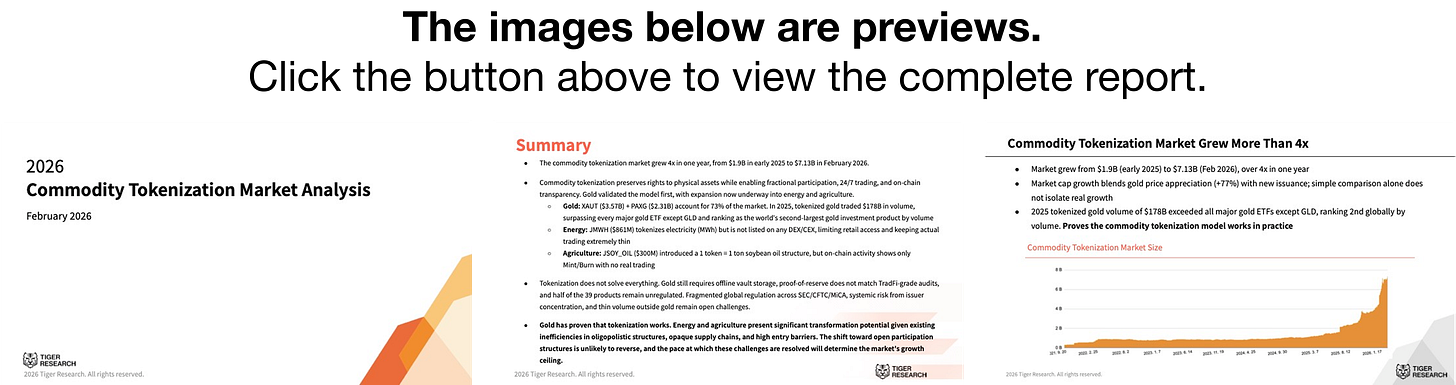
The market is fragmenting into distinct crypto asset classes, notably with explosive growth in tokenized stocks and commodities. Tokenized gold alone surged to $7.13 billion by early 2026, accounting for 73% of the commodity tokenization market and surpassing nearly all major gold ETFs in trading volume, while tokenized stocks hit record monthly transfer volumes of $2.94 billion, led by infrastructure providers like Ondo Finance and issuers such as Circle and Tesla. This diversification signals maturation toward sustainable ecosystems supported by institutional-grade blockchain platforms like Solana, which handles over 96% of tokenized equity trading and integrates projects enabling two-way utility between on-chain and traditional finance.
Institutional participation is increasingly driving the market’s maturation, with major players like BlackRock and Apollo integrating tokenized real-world assets into DeFi despite regulatory and operational constraints that currently limit broader market impact. The emergence of sustainable business models is evident as institutional-grade platforms foster developer ecosystems backed by infrastructure reliability—highlighted by Solana’s zero outages in 2025—and governance upgrades enhancing transparency. However, market reactions remain muted and algorithm-driven rather than investor-led, underscoring that while institutional adoption is real, it remains nascent and focused more on long-term control and auditable revenue streams than on speculative price action.
This maturation phase is marked by a clear bifurcation in the crypto market between quality assets with real users and revenue, such as Hyperliquid and privacy-focused projects, and a long tail of promise-only tokens facing repricing toward zero. Investors and venture capitalists increasingly prioritize fundamentals like revenue growth, user adoption, and developer retention over speculative narratives, reflecting a shift toward Tokenomics 2.0 where value accrues through fee-sharing, buybacks, and usage-linked economics. As Ki Young Ju of CryptoQuant observes, 'the days of making money from tokens backed only by hype and narratives are largely over,' signaling a new era where sustainable business models underpin valuation.




Global Finance Goes On-Chain
From Dubai Insurance’s crypto wallets to CME and ICE’s tokenized platforms, financial giants worldwide are building interoperable, regulated digital ecosystems that blur the lines between traditional and blockchain finance.
By mid-2026, institutional tokenization initiatives have surged globally, exemplified by Dubai Insurance’s launch of a crypto-enabled digital wallet built on Zodiac Custody infrastructure, enabling premium payments and claim settlements within UAE regulatory frameworks. Simultaneously, CME Group is exploring proprietary tokens on decentralized networks and collaborating with Google on tokenized cash solutions, signaling a strategic push by major financial players to integrate tokenization into mainstream financial services.
The evolution toward a mature, multi-chain digital asset ecosystem is underscored by Wisdom Tree’s expansion of tokenized funds onto Solana and the launch of Strium by SBI Holdings and Star Tail, a layer one blockchain designed for institutional FX, tokenized equities, and real-world asset trading. This multi-chain approach, championed by players like Canton who emphasize privacy-preserving wrapped asset trading, reflects a nuanced continuum beyond the public-private blockchain dichotomy, aiming to solve real business problems and sustain economic value.
Institutional collaborations are accelerating cross-border integration and infrastructure development, as seen in ICE’s plan to enable OKX users to trade tokenized NYSE-listed stocks on-chain by H2 2026 and the formation of 'Cari,' a shared tokenized deposit network by five US regional banks targeting Q4 2026 launch. Kraken’s historic receipt of a Federal Reserve master account further cements the blending of traditional finance with crypto institutions, highlighting a strategic convergence toward regulated, interoperable tokenized financial ecosystems.
The UK Treasury’s mid-2026 launch of a financial market tokenization task force, involving 54 major institutions including BlackRock, Goldman Sachs, and JPMorgan, marks a pivotal step in global institutional acceptance of tokenization. Focused initially on tokenized repurchase agreements to enhance settlement speed, reduce counterparty risk, and increase transparency, this initiative aligns with the UK’s broader ambition—post-2023 regulatory reforms—to become a global hub for digital asset innovation. Boston Consulting Group’s projection of an $88 trillion global tokenized real-world asset market by 2035 underscores the profound economic impact driving these strategic collaborations.
