Trump 2.0 turns U.S. agencies into loyalty machines, sparking bipartisan alarm over 'anti-weaponization' slush fund
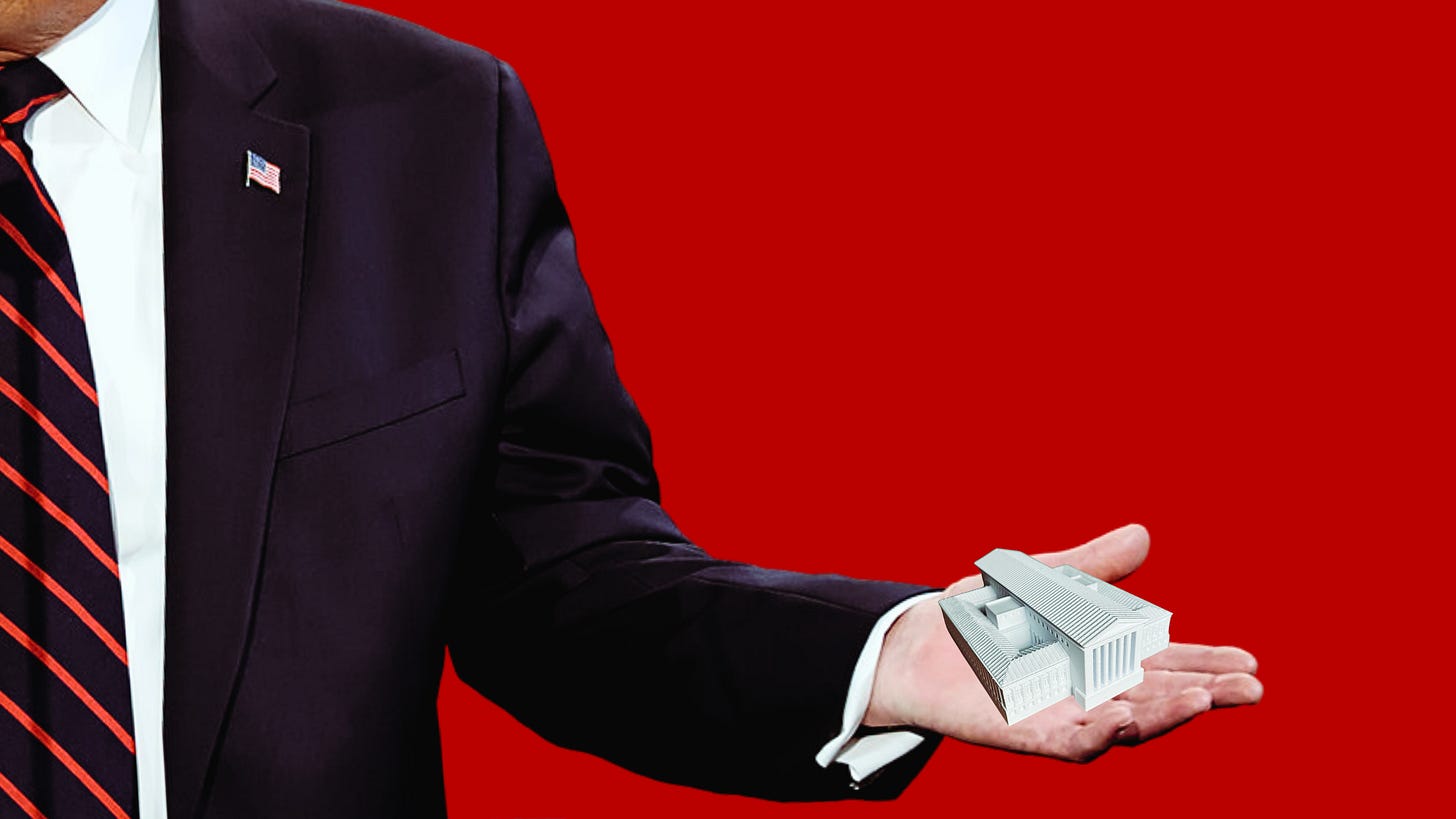
The gist
Trump’s second term has turbocharged the politicization of federal agencies, unleashing a $1.776 billion 'Anti-Weaponization Fund' and bipartisan alarm over brazen corruption, election interference, and the dismantling of democratic guardrails.
What to know
- Federal agencies like the DOJ, IRS, and FBI are now loyalty machines, handing out taxpayer cash to Trump allies and shielding his family from audits.
- A Supreme Court ruling under Chief Justice Roberts has granted Trump sweeping criminal immunity, empowering him to target opponents and block investigations into himself.
- Election interference has gone mainstream, with FBI raids on Democratic strongholds and aggressive voter roll purges eroding trust ahead of the 2026 midterms.
Loyalty Over Law
Trump’s $1.776 billion 'Anti-Weaponization Fund' and handpicked agency heads have transformed federal institutions into engines of personal reward and retribution, fueling bipartisan outrage over state-sanctioned corruption.
By mid-2026, federal agencies including the DOJ, IRS, FBI, and intelligence community had been systematically politicized and weaponized under Trump’s second term to serve personal and partisan interests. The creation of a $1.776 billion 'Anti-Weaponization Fund'—administered by a commission appointed by Acting Attorney General Todd Blanche, a former Trump personal lawyer—exemplifies this shift, as it channels taxpayer money to compensate Trump allies and January 6 rioters while granting Trump and his family immunity from IRS audits. Critics like Jamie Raskin and Sen. Ron Wyden condemned the fund as "one of the single most corrupt acts in American history" and "brazen theft," highlighting how federal resources were repurposed to reward loyalty and neutralize investigations, effectively turning grievance into state-sanctioned claims.
The Trump administration’s weaponization extended beyond financial settlements to aggressive legal and investigative tactics aimed at political opponents and civil society. Federal prosecutors served subpoenas demanding personal data of thousands of election workers in Georgia, and retaliatory prosecutions targeted critics such as E. Jean Carroll, with investigations timed to send political messages rather than seek justice. The DOJ reversed longstanding privacy policies to facilitate partisan demands, and performative prosecutions against figures like James Comey and Letitia James underscored a shift from legal credibility to political theater, eroding the independence and integrity of federal law enforcement.
Leadership appointments within federal agencies further entrenched politicization, as seen with Bill Pulte’s controversial elevation to acting Director of National Intelligence despite lacking any intelligence or military experience. Pulte, previously FHFA director and a known Trump loyalist, used his prior role to investigate political enemies and was poised to transform intelligence work into a partisan tool by selectively declassifying information and recasting dissent as national security threats. Bipartisan criticism highlighted how such appointments undermine decades of reforms designed to prevent intelligence agencies from being weaponized against political opponents, risking damage to national security and allied intelligence-sharing relationships.
The Trump administration’s reinstatement of Schedule F enabled the mass firing of career civil servants, neutering watchdog functions through the dismissal of inspectors general and defunding of oversight offices, which facilitated unchecked agency actions and retaliatory prosecutions. This systemic capture of federal agencies created an environment where political loyalty trumped institutional integrity, with mass walkouts at agencies like the Forest Service signaling deep internal dissent. The resignation of Treasury General Counsel Brian Morrissey amid the establishment of the anti-weaponization fund further suggests discomfort within federal ranks over the overt politicization and weaponization of government resources.






Justice System, Weaponized
Federal law enforcement has become a tool for political vendettas, with Supreme Court-backed criminal immunity enabling Trump to pursue and punish opponents while shielding himself from accountability.
By early 2026, the Trump administration's legal tactics revealed a deliberate weaponization of federal law enforcement to undermine democratic processes and accountability. The FBI raid on Fulton County's elections office, executed over five years after alleged irregularities and coinciding with DOJ efforts to validate 2020 election fraud claims, exemplifies this trend, especially as intelligence officials like DNI Tulsi Gabbard were conspicuously involved despite lacking jurisdiction, fueling conspiracy theories. Meanwhile, Trump’s public rhetoric advocating for canceling elections and alleging widespread voter fraud further destabilized electoral legitimacy, pressuring local officials to invalidate votes and politicizing justice institutions to wrest control from Democratic counties to pro-Trump state boards.
A landmark Supreme Court ruling under Chief Justice John Roberts dramatically expanded Trump’s control over the Department of Justice, effectively granting him criminal immunity and enabling him to dictate prosecutorial priorities. This unprecedented empowerment allowed Trump and his loyalists, including Acting Attorney General Todd Blanche, to pursue politically motivated investigations against opponents while dismissing prosecutors engaged in lawful inquiries into Trump himself, thereby eroding long-standing legal guardrails such as the Hatch Act and undermining the DOJ’s independence and accountability.
The creation of a $1.7 to $1.8 billion 'Anti-Weaponization Fund' as part of a settlement over Trump’s IRS tax return leaks epitomizes the erosion of rule of law through politicized legal settlements. Administered by the DOJ with Trump retaining the power to remove fund administrators, this fund compensates primarily Trump allies—including roughly 1,500 individuals pardoned for the January 6 Capitol insurrection—effectively institutionalizing a grievance narrative and reframing prosecuted individuals as victims. Critics, including Representative Jamie Raskin and bipartisan former judges, decry this as a blatant corruption and self-pardon mechanism that funnels taxpayer money to political loyalists while undermining justice and constitutional norms.
Legal maneuvers under Trump 2.0 have systematically shielded the former president and his associates from accountability, as seen in the DOJ’s unprecedented declaration barring IRS audits of Trump and his family 'forever,' a move widely regarded as unauthorized and legally dubious. This immunity, coupled with the reluctance of DOJ and IRS to pursue investigations during Trump’s tenure, has fostered a culture of impunity, enabling corruption and unethical behavior to flourish unchecked. However, federal courts and judges have begun pushing back, halting disbursements from the slush fund, reopening investigations into deceptive settlements, and reaffirming that no individual, including a former president, is above the law.
The DOJ under Trump 2.0 has increasingly engaged in performative prosecutions targeting critics and political opponents to signal loyalty and intimidate dissent, exemplified by baseless charges against figures like James Comey and the criminal investigation into E. Jean Carroll, a sexual assault survivor who won civil verdicts against Trump. Led by Trump-appointed U.S. Attorney Andrew Boutros and defended by Acting AG Todd Blanche—who openly expressed personal political ambitions—these prosecutions undermine the justice system’s credibility and reflect a dangerous departure from constitutional principles designed to prevent tyranny.

Authoritarian Playbook in Action
Project 2025’s rapid rollout and the purging of watchdogs have entrenched loyalty as the new currency of government, erasing merit and checks on executive power.
By early 2026, Trump’s return to the presidency with fewer institutional guardrails and a more loyalist team has accelerated the normalization of authoritarian governance, as evidenced by the rapid implementation of Project 2025’s agenda which includes reinstating Schedule F to politicize the civil service and centralize executive power. This shift reflects a broader erosion of democratic norms, pushing the U.S. toward an imperial presidency where loyalty enforcement replaces meritocracy within federal institutions.
Institutional decay has become starkly visible through the systematic neutering of watchdog bodies: batches of inspectors general have been fired, the State Department’s Bureau of Democracy, Human Rights and Labor defunded, and the Global Criminal Justice Office abolished. These moves have effectively removed checks on executive power, enabling retaliatory actions against perceived political enemies and creating an environment where, as one analyst put it, 'when the cops who watch the cops get fired…the remaining cops do whatever they want.'
The Trump 2.0 administration’s use of retaliation and loyalty enforcement has extended beyond government officials to target law firms, universities like Harvard and Columbia, and media outlets such as ABC, which pulled Jimmy Kimmel under pressure. This normalization of punitive politics signals a dangerous ecosystem where opposition carries tangible costs, embedding authoritarian practices deeply into political culture and institutional behavior.
Democratic erosion under Trump 2.0 unfolds not through dramatic upheavals but via slow, bureaucratic, and legalistic changes that gradually recalibrate institutions toward authoritarianism. This insidious normalization phase—when citizens begin to accept authoritarian governance as 'just how things are now'—is particularly perilous, especially amid massive executive power, a dysfunctional Congress, reliance on fragile norms, and intense polarization that together weaken collective resistance.
Efforts to undermine constitutional election safeguards, such as Trump election-security czar Kurt Olsen’s months-long campaign to ban Dominion Voting Systems machines based on thoroughly debunked conspiracy theories, exemplify the administration’s pattern of institutional overreach and misinformation. By pressuring at least eight states for confidential election data and attempting to reopen dismissed fraud cases, the administration not only eroded democratic checks and balances but also normalized the manipulation of governance structures through false national security claims.

Election Interference, Normalized
Aggressive raids, partisan purges, and conspiracy-driven crackdowns in Democratic strongholds have made election interference a routine lever of power, threatening the foundation of U.S. democracy.
By early 2026, the Trump administration escalated election interference through aggressive raids and disinformation campaigns targeting key Democratic strongholds. The FBI's raid on Fulton County's election office, a heavily Black and Democratic area, involved seizing hundreds of boxes of ballots and voter data under the guise of investigating 2020 fraud claims. This move, criticized by local officials like Rob Pitts as an attempt to wrest control of elections, was accompanied by Trump’s revival of debunked conspiracy theories on Truth Social implicating foreign and intelligence agencies, further eroding public trust in electoral integrity.
Election interference tactics have become increasingly normalized within certain political ecosystems, exemplified by figures like Chad Bianco, a Republican sheriff and Trump 2024 endorser with ties to the Oath Keepers. Bianco’s progression from disputing minor vote discrepancies to physically seizing ballots illustrates how distrust in election outcomes is cultivated over time, making extreme measures feel justified. This strategic shift treats election losses not as final but as triggers for escalating interference, setting a procedural precedent that risks spreading voter suppression methods nationwide.
The Trump Department of Justice has orchestrated a sweeping nationwide purge of voter rolls, demanding detailed voter information from states and pressuring them to remove voters flagged by partisan criteria within tight deadlines. This effort echoes the infamous 2000 Florida purge that disproportionately disenfranchised Black and Hispanic voters, a tactic now facilitated by the Supreme Court’s weakening of the Voting Rights Act through 'phony, cooked numbers' as noted in the rulings by Chief Justice John Roberts and Justice Sam Alito. Several GOP-run states, including Texas, Ohio, and South Carolina, have already complied, handing over intimate voter data on tens of millions, setting the stage for mass disenfranchisement ahead of the 2026 elections.
Beyond purges, the Trump administration has weaponized federal investigative powers to intimidate election workers and civil society groups, exemplified by grand jury subpoenas demanding personal data of thousands of Fulton County election personnel. This 'deceive, disrupt, deny' strategy involves coordinated efforts across the DOJ, FBI, FCC, and Pentagon to undermine democratic participation before votes are cast. Attempts to ban Dominion Voting Systems machines nationwide on baseless national security grounds further reveal a deliberate campaign to manipulate electoral processes, despite expert warnings that proposed hand-counted paper ballots could increase chaos and fraud vulnerability.

Corruption and Resistance Collide
Trump’s institutionalized corruption has fractured the GOP and sparked a groundswell of resistance from courts, civil rights groups, and local leaders fighting back against authoritarian overreach.
By mid-2026, the Republican Party was deeply fractured, with intra-party divisions surfacing over controversial spending tied to Trump, such as the $1 billion taxpayer-funded White House ballroom project. Senators like Rand Paul and Speaker Mike Johnson publicly questioned the funding, while GOP Rep. Nick LaLota acknowledged broad skepticism among constituents facing high gas prices. This fissure was further exposed when Senate parliamentarian Elizabeth MacDonough blocked the ballroom funding provision, prompting Trump to demand her firing—a request Senate Republicans refused, underscoring the limits of his control within his own party.
Corruption under Trump 2.0 has become not only normalized but institutionalized, justified by fierce partisan loyalty that overrides traditional norms of accountability. The Department of Justice’s unprecedented move to permanently bar IRS audits of Trump and his affiliates, signed by acting Attorney General Todd Blanche, epitomizes this erosion of impartial governance. This immunity was exchanged for a $1.8 billion 'Anti-Weaponization Fund' benefiting Trump’s allies, while Treasury general counsel Brian Morrissey resigned in protest, highlighting internal discomfort even among Trump appointees. Meanwhile, the creation of a $1.776 billion slush fund to reward January 6 rioters, managed entirely by Trump loyalists, further entrenched corruption as a partisan tool.
Resistance movements have grown increasingly robust and multifaceted, pushing back against authoritarian overreach and political abuses across judicial, state, and civil society arenas. Judicial resistance remains a critical bulwark, with over 10,000 court rulings—90% against ICE’s harsh deportation policies—and judges like Fred Biery denouncing Trump-era enforcement as 'ill-conceived.' Civil rights groups and officials, such as Rep. Bennie Thompson and the NAACP’s 'Out of Bounds' campaign, actively combat voter suppression and gerrymandering efforts labeled as 'Jim Crow 2.0.' Grassroots activism is further energized by electoral victories like Keisha Lance Bottoms’ decisive Democratic primary win in Georgia and public demonstrations opposing authoritarian tactics.
The Trump administration’s weaponization of federal legal mechanisms to target political opponents has deepened intra-party factionalism and normalized performative prosecutions as tools of partisan loyalty. High-profile cases against figures like E. Jean Carroll, James Comey, Letitia James, and John Brennan illustrate a pattern of legal harassment aimed more at political retribution than justice, with courts frequently dismissing charges amid accusations of prosecutorial misconduct. This strategy, openly acknowledged by critics such as Norm Eisen and highlighted by the DOJ’s attempts to intimidate major donors like Reid Hoffman, has eroded public trust and galvanized resistance from journalists, former Capitol Police officers, and bipartisan lawmakers demanding accountability.

Democratic Erosion Goes Global
Trump’s unchecked expansion of executive power, dismantling of oversight, and disregard for constitutional norms have not only destabilized U.S. democracy but also triggered alarm and loss of trust worldwide.
Trump 2.0’s administration has accelerated a profound erosion of American democratic norms and institutions, marked by an unprecedented expansion of presidential power with minimal checks. By early 2026, the administration had implemented over half of Project 2025’s authoritarian agenda, including the politicization of the federal bureaucracy through Schedule F, widespread firings of inspectors general, and the dismantling of key oversight bodies such as the State Department’s Bureau of Democracy, Human Rights and Labor. This systematic undermining of institutional safeguards, coupled with the establishment of a $1.776 billion 'Anti-Weaponization Fund' controlled by partisan appointees to compensate January 6 rioters and political allies, exemplifies a brazen disregard for the rule of law and constitutional limits, normalizing corruption and weakening public trust in governance.
The Trump 2.0 era has not only destabilized domestic democratic structures but also significantly diminished U.S. global leadership and credibility. Trump's transformation from an anti-globalist firebrand to a guest of honor at Davos symbolizes a broader unraveling of the post–World War II diplomatic order, fueling international anxiety over authoritarianism. His administration’s sidelining of intelligence officials like DNI Tulsi Gabbard, public disclosures of sensitive military plans on social media, and aggressive military actions such as unauthorized strikes on Iran have strained alliances and undermined strategic stability. As Brian Karem observed, foreign observers now fear American governance more than regimes in Turkey, reflecting a dramatic decline in U.S. soft power and global influence.
The administration’s manipulation of electoral rules and the erosion of free and fair elections pose a direct threat to the foundational principles of American democracy. Trump’s executive order to eliminate mail voting for the 2026 midterms, highlighted by the Brennan Center’s warnings, raises serious concerns about electoral integrity. This, combined with the normalization of pardons for political allies and the administration’s open defiance of constitutional constraints—such as bypassing Congress on military actions—exemplifies a governance style that flouts democratic accountability and encourages authoritarian consolidation. The resulting political and civic fractures are underscored by a surge in nostalgic longing for 2016 as the 'last normal year,' revealing deep societal anxieties about the country’s democratic trajectory.
The alarming trajectory toward authoritarian consolidation under Trump 2.0 demands urgent bipartisan political and civic resistance to restore constitutional order and democratic governance. Commentators like Mary Trump and Rep. Jamie Raskin have condemned the secretive $1.8 billion fund as 'pure fraud' and 'brazen theft,' while Brian Karem warns of institutional capitulation, including media fealty, that enables this erosion. The construction of a fortified White House compound with military-grade defenses further symbolizes a president preparing to entrench power. This situation mirrors the democratic decay seen in Orbán’s Hungary, signaling a critical juncture for American democracy that requires collective action to counteract the normalization of corruption, lawlessness, and authoritarianism.