Trump era turns state violence into livestream spectacle
The gist
Trump’s second term is turning state violence into must-see TV, using public spectacle to normalize authoritarian rule and erode democratic guardrails.
What to know
- A secretive $1.776 billion Justice Department fund is compensating Trump allies, including Jan. 6 rioters, while shielding recipients’ identities.
- On December 3, 2026, the U.S. will livestream Nidal Hasan’s firing-squad execution, transforming punishment into political propaganda.
- Broadcasting executions is designed to desensitize viewers, mobilize Trump’s polarized base, and further weaken democratic accountability.
Unchecked Power, Hidden Rewards
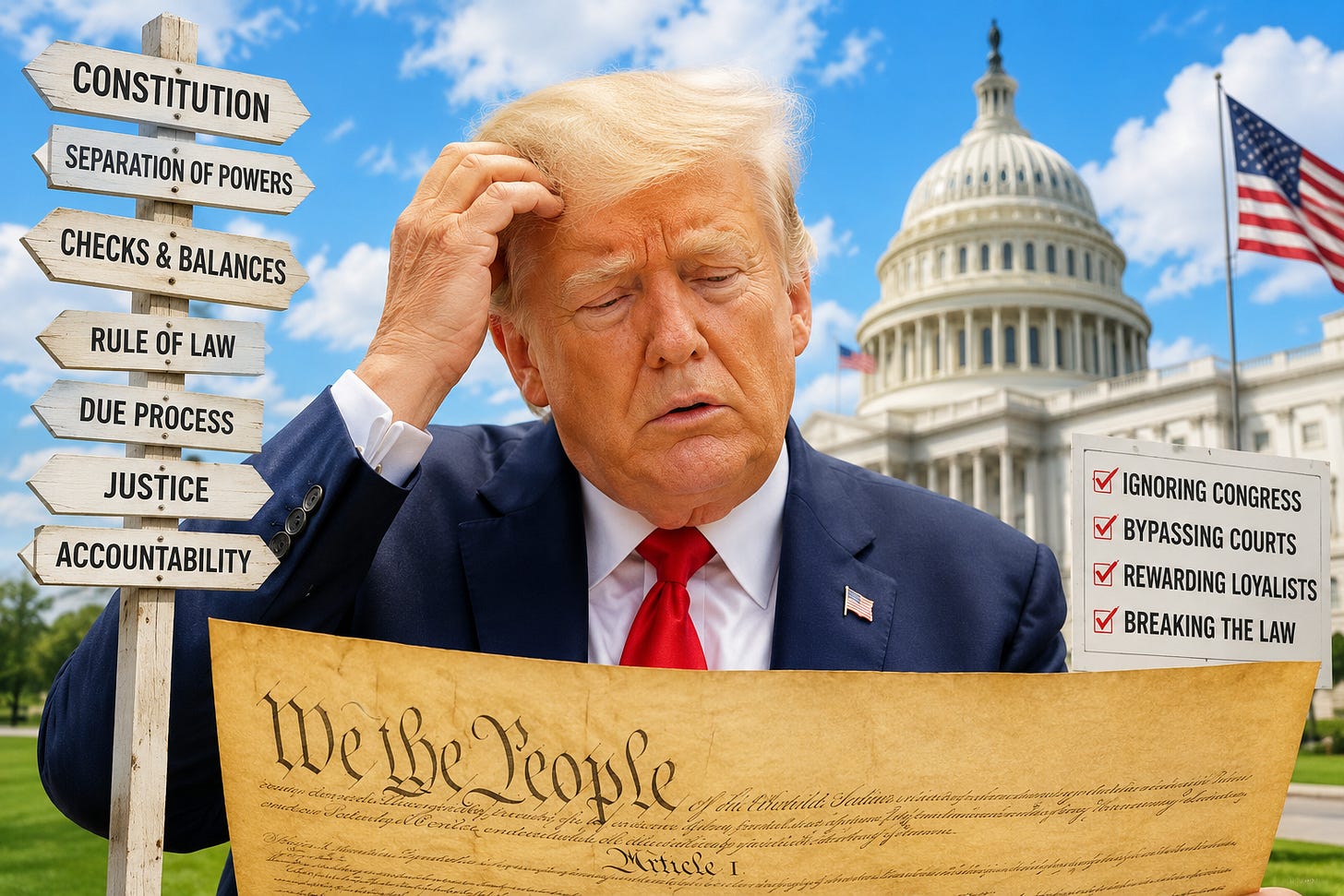
With weakened institutional barriers, the Trump administration is quietly consolidating authority by secretly funneling billions to loyalists and sidelining oversight, signaling a shift toward normalized authoritarianism.
Before October, the pattern was already visible: according to The Prof G Pod with Scott Galloway, “It’s officially been one year of Trump 2.0… Trump is back in the Oval Office with fewer guardrails, a more loyal team, and a far greater willingness to push presidential power than ever before.” That matters because authoritarian normalization rarely arrives as a single rupture; it advances through an “open assault on truth and democratic norms,” narrative control like the online “wave of 2016 nostalgia” recasting the past as “the last normal year,” and a presidency operating with “so few constraints” that talk of an “imperial presidency” no longer sounds fringe.
The same mechanism appeared in institutional form when the Justice Department announced “a $1.776 billion fund” to compensate Trump allies through what The Hartmann Report called “an unprecedented mechanism” letting the president reward supporters “out of a government agency he controls,” including 6 rioters and other MAGA loyalists, even though Capitol stormers “engaged in exactly the kind of insurrection that language was written to address.” Raw America reported that Treasury’s top lawyer, Brian Morrissey, resigned “hours after the Trump administration announced a $1.776 billion slush fund,” whose Jan. 6-linked recipients “will be kept secret from the public,” while the administration also claimed power to wage war after “sixty days” without Congress.


Cruelty as Public Theater
Livestreaming executions marks a historic transformation of state violence into mass spectacle, conditioning viewers to accept brutality as political messaging and blurring the line between justice and propaganda.
What makes the execution plan politically consequential is not only the punishment itself but the decision to convert it into a mass-mediated state performance. The Long Memo underscores the break with prior practice by noting that “Lawson was executed on June 15, 1994, without a television audience,” whereas now “The United States Department of Defense” and Pete Hegseth have announced plans to livestream Nidal Hasan’s firing-squad execution on December 3, 2026—a shift from administering violence to staging it, and from law’s opacity to propaganda’s choreography.
That distinction matters because spectacle changes what punishment does to a public: it trains viewers, not just subjects, by making cruelty visible, shareable, and politically usable. The Long Memo recalls that Phil Donahue once petitioned the Supreme Court to show an execution so citizens could understand what government does in their name, but Ruth Ben-Ghiat argues this plan seeks the opposite effect—desensitizing people and making them complicit as if violence were entertainment—while the John Batchelor Show’s reminder that “for the first 20 years after World War II, Churchill was not merely lionized, he was practically worshiped,” before later historians “show him in a very different light,” illustrates how dominant narratives can suppress accountability in the moment.