Trump’s ballot crackdown hits supreme court Wall
The gist
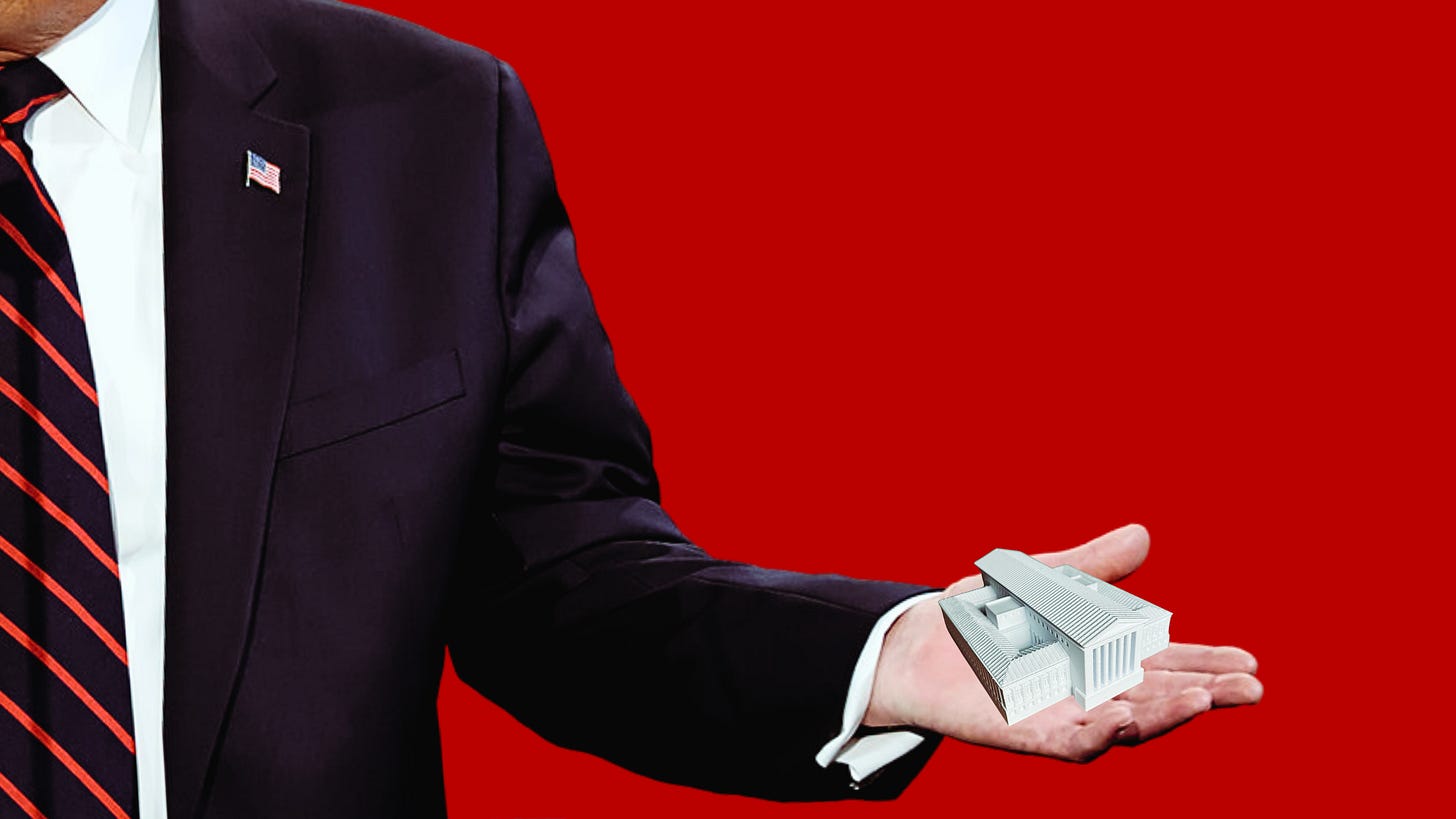
A bipartisan coalition of 23 states is battling Trump’s executive power plays in the Supreme Court, blocking unprecedented efforts to seize federal control of U.S. elections ahead of the 2026 midterms.
What to know
- Trump’s 2026 executive orders tried to federalize voter rolls and restrict mail-in ballots, targeting vulnerable voters and sparking nationwide uproar.
- California AG Rob Bonta and GOP officials like Pennsylvania’s Al Schmidt led a 23-state legal challenge, with the Supreme Court repeatedly striking down Trump’s election overreaches.
- With ICE threats at polling sites and rising militia tensions, experts warn of voter intimidation and a looming constitutional crisis—but the courts and local officials remain a resilient firewall.
Federal Power vs. State Rights
Trump's executive orders and new voter ID laws mark an unprecedented federal incursion into state-run elections, risking mass disenfranchisement of vulnerable groups through bureaucratic barriers and documentation demands.
By early 2026, Donald Trump intensified his campaign to centralize control over U.S. elections through a series of executive orders that tighten mail voting rules and mandate the creation of a federal eligible-voter list. This administrative push, exemplified by an order requiring absentee ballots only be sent to voters on approved lists with secure, trackable envelopes, leverages federal agencies such as DHS, Social Security, and the Postal Service—an unprecedented federal intrusion into what has traditionally been a state-managed process. Critics immediately condemned these moves as unconstitutional voter suppression, arguing that they represent an extension of a broader documentation and purge strategy already underway in Congress and state legislatures ahead of the midterms.
The tightening of mail voting protocols and imposition of a federally controlled citizenship list disproportionately burden vulnerable populations, including older adults, disabled individuals, low-income citizens, and Black voters who often face challenges obtaining consistent documentation or rely heavily on absentee ballots. This shift threatens to reduce voter participation among these groups by introducing new bureaucratic hurdles and exacerbating existing inequalities in access to the ballot box.
Complementing executive actions, legislative efforts like the Save America Act aim to further centralize election authority by imposing stringent voter ID requirements—such as passports or birth certificates—that could disenfranchise millions. Advocates like former DHS Secretary Kristi Noem and Trump himself have openly framed these measures as tools to 'guarantee the midterms' and 'nationalize the voting,' revealing a strategic intent to override state election control and influence outcomes by restricting who can vote. This power grab has drawn sharp criticism from figures like Senator Jack Reed, who warns it undermines constitutional provisions safeguarding state-run elections.
Underlying these policy maneuvers is a coordinated effort to embed election deniers within federal agencies, signaling an institutional campaign to propagate election conspiracy theories and potentially intimidate voters. Proposals as extreme as deploying ICE agents to polling sites underscore the administration's aggressive posture toward controlling election administration, raising profound concerns about the concentration of federal power in a domain historically decentralized to protect electoral integrity.



Bipartisan Legal Resistance
A 23-state coalition and the Supreme Court have repeatedly blocked Trump’s election overreach, exposing deep constitutional rifts and raising alarms about the politicization of federal justice.
By early 2026, a formidable coalition of 23 states, led by figures such as California Attorney General Rob Bonta, mounted legal challenges against Trump's executive orders aimed at federalizing control over voter rolls and mail-in voting. This bipartisan opposition, including Republican officials like Pennsylvania Secretary of State Al Schmidt who labeled the orders 'almost certainly unconstitutional,' underscores widespread judicial and political resistance to what many view as an overreach threatening democratic norms and election integrity.
The Supreme Court, under Chief Justice John Roberts, has played a pivotal yet controversial role in delineating the boundaries of presidential power, notably issuing rulings that both shield Trump from criminal prosecution and curtail his executive authority over elections. While some emergency rulings momentarily favored Trump, the Court has repeatedly struck down his election-related executive orders, emphasizing that the president cannot unilaterally redefine statutes or override state election control, thereby reaffirming constitutional checks on executive overreach.
Legal experts warn that Trump's aggressive use of executive orders not only conflicts with established Department of Justice norms—such as the Hatch Act's prohibition on federal interference in elections—but may also inadvertently undermine ongoing DOJ litigation efforts by contradicting their legal strategies. Acting Attorney General Todd Blanche's defense of Trump's directives to influence prosecutions against political opponents further highlights ethical concerns and the erosion of prosecutorial independence, raising alarms about the politicization of justice.
The judiciary's persistent rejection of executive overreach in election administration reflects a broader constitutional experiment over the past century, wherein power has shifted increasingly toward the executive branch. Trump's attempts to 'turn the amp up to 11' on this trend have largely failed, with courts emphasizing the necessity of legislative involvement and warning against governance by executive fiat. As legal analysts note, such executive orders are inherently unstable—subject to judicial invalidation or reversal by succeeding administrations—underscoring the judiciary's critical role in preserving the balance of federal and state election authority and safeguarding election integrity.




Grassroots Defenses Hold Strong
America’s radically decentralized election system—backed by vigilant local officials, civil society, and citizen monitors—forms a robust, multi-layered shield against centralized manipulation and authoritarian tactics.
The decentralized structure of U.S. elections, administered by over 3,000 counties and roughly 175,000 precincts rather than the federal government, forms a formidable barrier against centralized manipulation. This radical decentralization empowers thousands of local officials, both Republican and Democrat, who uphold the law and resist executive pressure to compromise election integrity. Judges, civil society organizations, and litigators further reinforce this defense by swiftly addressing abuses, while engaged citizens stand ready to protest infringements on their democratic rights, creating a multi-layered safeguard that sustains electoral resilience.
Drawing lessons from Hungary’s experience, where opposition parties deployed 50,000 election monitors and established real-time fraud-reporting systems, U.S. civic groups and political actors emphasize transparency and public engagement as crucial to countering electoral manipulation. Transparency International Hungary’s regional collaboration on best practices and the strategic unification of opposition candidates to overcome systemic disadvantages illustrate how coordinated vigilance and infrastructure-building can effectively defend democracy. As analysts urge, the United States must similarly name threats, build resilient institutions, and mobilize citizens to safeguard the 2024 and 2026 elections against authoritarian tactics.

Militarization and Election Threats
Escalating rhetoric, potential federal deployments, and militia mobilization threaten to turn the 2026 midterms into a flashpoint for voter intimidation and constitutional crisis far beyond the courtroom battles.
Donald Trump's incendiary rhetoric, including his consideration of military action against Iran and calls to 'vanquish' protesters by any force necessary, underscores a dangerous militarization of political conflict that threatens constitutional stability and risks exploiting emergency powers to influence the 2026 midterms. Stephen Miller's push for aggressive DHS responses and the fatal shooting of Alex Pretti, labeled an 'assassin' by Miller on social media, exemplify how forceful tactics are being normalized within the administration, raising alarms about the erosion of democratic norms and civil-military relations.
The integrity of the 2026 midterm elections faces multifaceted threats from legal and extra-legal maneuvers, as evidenced by the lawsuit from 23 states challenging Trump's executive order blocking mail-in voting—a method historically leveraged by Trump and his family. Beyond the courts, the constitutional provision allowing Congress to refuse seating legislators could be weaponized to alter the balance of power, while local officials, judges, and even mobs may independently engage in election interference, amplifying vulnerabilities that do not rely solely on direct presidential orders.
Potential voter intimidation looms large with federal agencies like ICE and the National Guard possibly deployed at polling places in key swing districts, despite prior DHS assurances to the contrary. Coupled with the specter of white supremacist militias—pardoned by Trump after the January 6 Capitol riot—mobilizing again, these dynamics threaten to suppress voter turnout and skew results, particularly in the 18 toss-up districts critical to determining control of Congress.
Amid escalating tensions between an increasingly assertive presidency and an independent Supreme Court, experts warn of a looming constitutional crisis rooted in the collision of executive ambition and judicial oversight. While debates over Supreme Court reforms, such as term limits, risk undermining its independence, historical resilience—surviving challenges from presidents like Lincoln and FDR—offers cautious optimism that the institution can endure current pressures if its role as a counter-majoritarian guardian of constitutional rights is preserved.