Trump’s generic drug tariffs spark supply chain turmoil
The gist
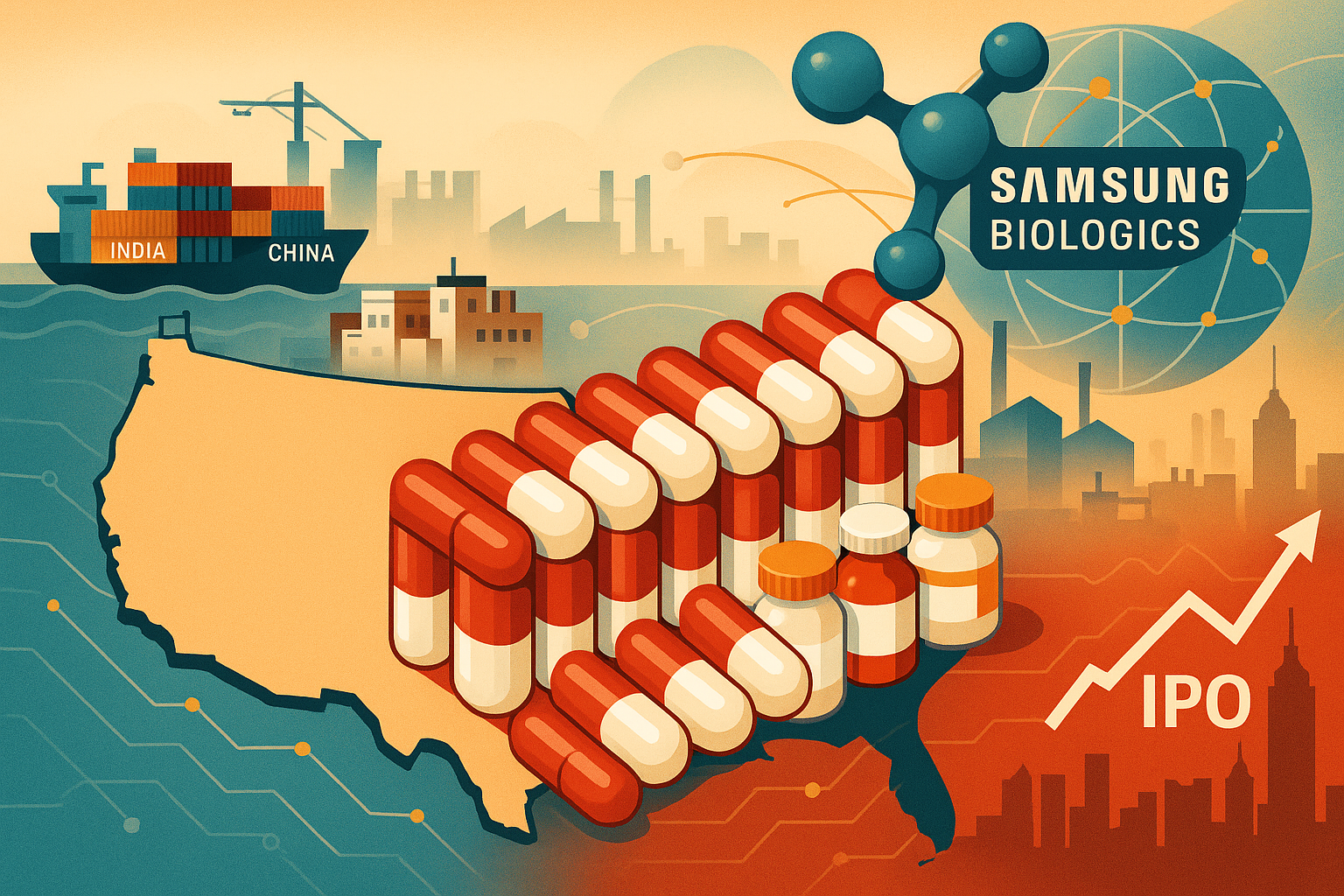
Trump’s plan to slap up to 200% tariffs on imported generics is set to jolt the global drug supply chain, threatening shortages, price hikes, and a high-stakes manufacturing scramble.
What to know
- The Trump administration will phase in 100% tariffs on imported generics after two years, doubling to 200% by 2028 if drugmakers don’t move production to the US.
- Indian pharma giants like Aurobindo, Dr. Reddy’s, Cipla, Lupin, and Zydus are leveraging their US plants to weather the tariff storm, but smaller exporters face steep risks and high reshoring costs.
- Industry experts warn that building new US pharma infrastructure in time is a pipe dream—expect price spikes, supply disruptions, and a pharma power struggle as the deadline looms.
Tariffs as Leverage
Trump’s escalating tariffs are a calculated move to force pharma giants to build US factories, reshaping global drug supply chains with a deadline-driven ultimatum.
The Trump administration has enacted a phased tariff policy on imported generic drugs, initiating with a two-year tariff-free transition period followed by a 100% tariff in the third year and escalating to 200% thereafter. This staggered schedule is strategically designed to compel pharmaceutical companies to relocate manufacturing and related infrastructure to the United States, aligning with the broader 'America First' manufacturing agenda and pricing reforms aimed at reducing dependence on foreign drug supply chains. President Trump emphasized the tariff escalation as a penalty to incentivize domestic production within the transition window, signaling a clear governmental push to reshape the pharmaceutical manufacturing landscape.
Indian pharmaceutical companies, which currently supply nearly half of all generic medicines consumed in the US and generate approximately 35% of their revenues from the American market—amounting to nearly $11 billion in sales for leading firms—face significant pressure under this tariff regime. Firms like Aurobindo Pharma, Dr. Reddy’s Laboratories, Lupin, Cipla, and Zydus Lifesciences, which maintain existing US manufacturing operations, are comparatively better positioned to mitigate tariff impacts. However, many Indian producers reliant on exports confront the dual challenges of negotiating tariff exemptions or undertaking costly reshoring efforts, threatening India's status as the 'pharmacy of the world' and potentially squeezing investment capital while raising freight costs.
Despite the administration’s intent, the practical feasibility of reshoring generic drug manufacturing by the 2028 deadline remains highly questionable due to significant infrastructure and production capacity constraints. Industry experts caution that building the necessary facilities within this timeframe is unrealistic, and the tariff policy functions partly as a negotiation tactic rather than an immediate mandate, with uncertainty persisting around the final tariff rates and timelines. This uncertainty threatens to disrupt the sophisticated US pharmaceutical supply chain and the dominant distribution networks controlling tens of billions of dollars in medicines annually, potentially leading to drug shortages, price hikes, and product discontinuations given the razor-thin margins in the generics market.
The economic viability of domestic generic drug production under the tariff regime is deeply uncertain, as US labor and manufacturing costs far exceed those in established hubs like India, where generics can be produced for mere cents per unit. There is skepticism that Indian manufacturers might simply raise prices to offset the tariffs, which could negate the intended effect of reducing foreign dependence and instead lead to higher drug prices and limited patient access. This dynamic underscores the complex balance between incentivizing reshoring and maintaining affordable access to essential medicines in the US market.


Indian Pharma's Strategic Pivot
Major Indian drugmakers are racing to localize US production while smaller exporters face existential threats and scramble to diversify as tariffs loom.
Indian pharmaceutical companies are leveraging the two-year tariff-free window to strategically evaluate and expand their manufacturing presence within the United States, aiming to circumvent the impending 100-200% tariffs on imports. Firms like Aurobindo Pharma, Dr. Reddy’s Laboratories, Cipla, Lupin, and Zydus Lifesciences, which have already established US manufacturing operations through acquisitions and greenfield investments, are better positioned to absorb tariff shocks compared to exporters solely reliant on Indian production. This transition marks a critical pivot from traditional export-driven models toward localized production to maintain competitiveness once tariffs take effect.
While expanding US manufacturing capacity offers a partial hedge, Indian drugmakers face significant economic challenges due to the low-margin nature of generics and the high costs associated with reshoring production. Companies such as Cipla, which produces 35-40% of its goods domestically in the US, and Dr. Reddy’s, exploring technology transfers to US partners, illustrate attempts to mitigate costs, but full reshoring remains financially unviable for many. Consequently, firms like Sun Pharmaceutical are aggressively diversifying revenue streams by acquiring entities like Organon to deepen their footprint in emerging markets, including China and over ten other regions, thereby reducing overreliance on the US market.
The tariff threat disproportionately impacts smaller Indian exporters heavily dependent on the US market, as they lack immediate alternative revenue sources or the capital to invest in US manufacturing. This uneven vulnerability within the sector underscores a broader strategic imperative for innovation and market diversification to sustain profit margins amid rising costs. Indian pharma executives anticipate passing increased tariff-related expenses onto US buyers but remain cautiously optimistic about potential negotiated solutions, reflecting ongoing uncertainty and the need for adaptive business models.

Reshoring Faces Reality Check
US manufacturing can't match India’s scale or costs, and even a 200% tariff may not bridge the gap, leaving experts skeptical about a domestic generics revival.
Despite the Trump administration’s phased tariff schedule designed to incentivize reshoring, Indian pharmaceutical companies face daunting practical hurdles in relocating manufacturing to the U.S. The two-year tariff-free window offers temporary relief but also imposes a strategic countdown, as rapidly scaling U.S. production is hampered by significant infrastructure gaps and high costs compared to established overseas bases. As Inventiva’s 2026 analysis highlights, companies with existing U.S. footprints, built through acquisitions and greenfield investments, hold a competitive edge, yet those reliant on imports from India confront steep investments and logistical challenges to meet looming tariff deadlines.
Building new pharmaceutical manufacturing infrastructure in the U.S. is a slow, complex process unlikely to meet the aggressive tariff timelines. Industry experts cited in multiple 2026 analyses emphasize that the current U.S. ecosystem lacks the technical know-how, facilities, and trained workforce that India’s mature pharma sector offers. Tinglong Dai underscores labor shortages and regulatory burdens as critical barriers, noting that domestic facilities must navigate surprise FDA inspections and higher compliance costs, which inflate production expenses and erode competitiveness against India and China’s low-cost operations.
The economic feasibility of reshoring generic drug manufacturing remains questionable despite tariffs potentially reaching 200%. With production costs abroad as low as five cents per unit, industry voices question whether U.S. manufacturing can economically compete even after factoring in steep tariffs. As one analyst put it, 'If you're making it for 5 cents and then you put a 200% tariff on it, can you still make it for less than that domestically?' This cost disadvantage, coupled with the phased tariff approach viewed largely as a negotiation tactic, suggests prolonged supply chain disruptions rather than swift reshoring.
Successful reshoring demands far more than tariff incentives; it requires detailed, cross-functional collaboration and strategic partnerships with domestic producers. Ryan Last from PharmExec stresses that the era of conceptual discussions is over, urging companies to develop data-driven proposals involving criticality assessments, import-dependency mapping, and realistic capacity timelines. Despite commitments exceeding $500 billion in U.S. investments and ongoing facility constructions, shifting entrenched supply chains remains a long-term endeavor, complicated by resource demands and regulatory complexities that cannot be overcome overnight.
Supply Chains Under Siege
Tariff threats, global crises, and price hikes are pushing pharma companies to prioritize resilient, multi-country supply networks over lean, cost-cutting models.
The Trump administration's phased tariffs of up to 200% on imported generic drugs threaten to severely disrupt the intricate US pharmaceutical supply chains and distribution networks, which handle tens of billions of dollars in medicines annually and are dominated by three major distributors. This uncertainty has already sparked speculation that Indian pharmaceutical companies might simply raise prices to offset tariffs, exacerbating risks of drug shortages and price hikes in a market where generics operate on razor-thin margins. As one analyst noted, "Is India going to say, 'Hey, forget it, we're the pharmacy of the world... we'll just raise the price to overcome your tariff?'" Such dynamics could destabilize supply chains and increase costs for patients and healthcare systems alike.
While reshoring pharmaceutical manufacturing to the US could eventually bolster domestic manufacturing, warehousing, and transportation sectors, experts remain skeptical about the feasibility of rapid transition given the scale and complexity involved. Building new factories and supply networks is a multi-year endeavor, with one executive emphasizing, "It's not possible to build factories to build this stuff by 2028," underscoring that reshoring is more a long-term negotiation tactic than an immediate solution. Consequently, near- to medium-term supply chain disruptions and price volatility appear inevitable as companies and distributors adjust to the phased tariff implementation expected around 2026.
The broader geopolitical landscape—including tensions like the Iran war and repeated crises in critical trade routes such as the Strait of Hormuz—is compelling pharmaceutical companies to fundamentally rethink supply chain resilience over mere cost-cutting. Firms with diversified manufacturing and inventory spread across multiple countries have shown greater preparedness for shocks, highlighting the strategic value of geographic diversification amid tariff-induced disruptions. As one industry observer put it, "A leaner supply chain is not necessarily a stronger one... the extra cost quickly pays for itself" when it preserves product flow during trade fractures, signaling a shift toward prioritizing supply chain robustness even at higher costs.
Underlying these disruptions is the US pharmaceutical supply chain's heavy dependence on China and India for active pharmaceutical ingredients (APIs) and key starting materials (KSMs), with China alone controlling up to 94% of raw materials for drugs like amoxicillin. This concentration, reinforced by China's aggressive pricing and state subsidies, creates vulnerabilities that tariffs and geopolitical tensions only deepen. Given that API manufacturing costs are 30-40% lower in China and India compared to the US, reshoring remains economically challenging, suggesting that supply chain fragility and drug shortages may persist absent strategic shifts. Analysts warn that without significant investment in redundancy and resilience, the US will continue to face national security risks tied to this dependence.