Trump’s midterm playbook shifts from complaints to control
The gist
**Trump’s midterm strategy has shifted from complaining about election results to trying to control the rules, the ballot access, and even the story before voters cast a single vote.**
What to know
- He’s pushing voter ID, mail-voting limits, and proof-of-citizenship rules — and has posted more than 30 election falsehoods on Truth Social since Jan. 19.
- The administration is using federal leverage on the states, tying election funding to new restrictions, but courts have already blocked key parts as unconstitutional.
- DOJ and FBI actions, including ballot seizures in Fulton County and Arizona, are reopening settled 2020 disputes and fueling a bigger legitimacy crisis for 2026.
Preemptive Ballot War
Trump’s election message has shifted from complaining about fraud to conditioning voters to distrust the outcome before a single ballot is cast.
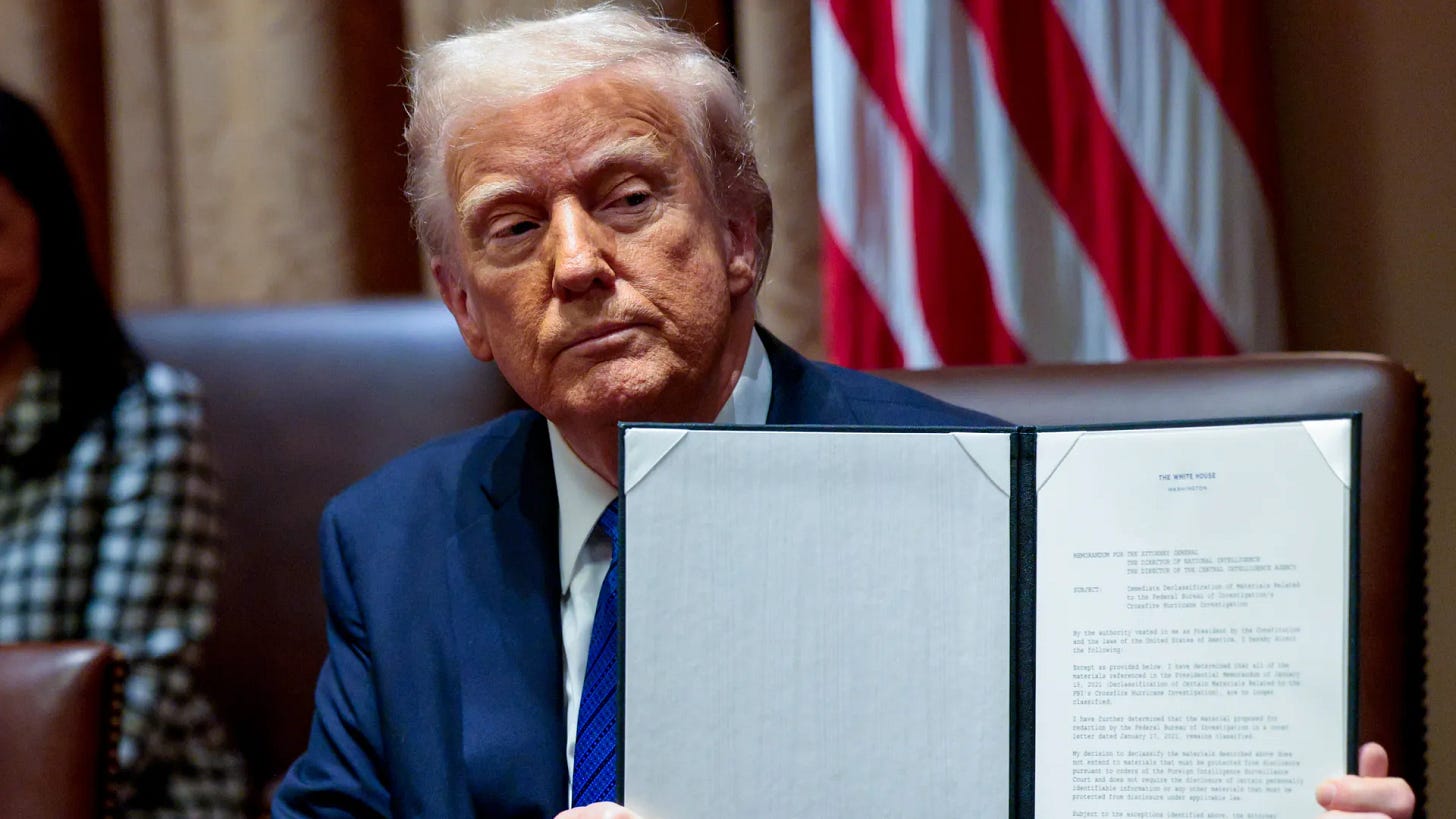
By early 2026, Trump’s election message had clearly moved from isolated fraud complaints to a sustained campaign to shape the terrain before anyone cast a ballot. Analysts described it as a "preemptive" effort that was happening "much earlier, much more persistently, much more specifically than Trump's previous efforts," with voter ID serving both as a policy demand and a narrative weapon: Trump declared on Truth Social that "there will be voter ID for the midterm elections, whether approved by Congress or not," while also pushing to make mail voting "illegal" and to mandate ID nationwide. The point was not just to change rules, but to condition voters to see any outcome as suspect if it didn’t match his preferred script.
That strategy was already being paired with concrete election-administration moves that could feed future claims of irregularity. The analysis pointed to the FBI raid on the Fulton County election hub in Georgia and the seizure of 2020 ballots, alongside the Trump administration’s demand for voter rolls nationwide, as examples of how the machinery of election oversight itself could become part of the political narrative. Susan Glasser captured the broader logic bluntly: at minimum, the goal is to "undermine the confidence" in the election, but Trump has also tried to "change the rules" and even "rewrite the maps across the country" to make the playing field more favorable.
By March, the uncertainty had spilled into prediction markets, where the 2026 midterms were no longer being modeled as a simple partisan contest but as a fairness crisis in waiting. Markets still gave Democrats an 80% chance of winning the House and a 20% to 40% shot at the Senate, yet that baseline was complicated by Republican efforts to change voting law, the SAVE Act’s House passage and Senate filibuster fight, and rumors of an executive order that could declare a "national emergency" and impose "extreme measures" like banning voting machines, restricting vote-by-mail, and forcing voters to re-register. Even with Trump denying the reports, the mere possibility of such a move — plus the prospect of court fights, operational chaos, and delayed certification — was enough to make election fairness itself part of the midterm battlefield.

Chokepoints, Not Just Rules
The real fight is moving to registration, mail voting, and federal funding leverage, where small administrative changes can quietly shrink access state by state.
By late March 2026, Trump’s voting agenda had moved from rhetoric to the administrative choke points that decide who gets on the rolls and who gets a ballot in the mailbox. He was pushing to sharply restrict mail voting to overseas service members, the ill, and travelers, while backing the SAVE Act’s proof-of-citizenship requirements for registration and, potentially, for voting and mail ballots. That matters because the Supreme Court’s expected ruling on Mississippi’s mail-voting deadline could already make mail voting harder in 14 states, but the SAVE Act would go further, turning routine registration into a documentation hurdle and narrowing ballot access before Election Day even arrives.
The administration’s broader strategy, however, was not just to tighten rules but to use federal power to force the states to do it for him. Trump’s March 2025 Executive Order 14248, “Preserving and Protecting the Integrity of American Elections,” tied federal election funding to state adoption of proof-of-citizenship rules and mail-ballot restrictions, while a 17-page draft emergency order circulated by pro-Trump activists would have gone even further by banning most mail voting and forcing voters to re-register with citizenship documentation. That funding leverage would leave resistant states facing the loss of election-administration money, creating a patchwork system where access depends less on citizenship and more on whether local officials are willing to comply.
The legal and practical consequences are already visible: courts have blocked the proof-of-citizenship provisions, and experts say the policy solves a problem that is essentially nonexistent while imposing real burdens on millions of eligible voters. On October 31, 2025, Judge Colleen Kollar-Kotelly permanently blocked the citizenship-document requirement as “contrary to the manifest will of Congress,” even as the Brennan Center noted that noncitizen voting is “almost nonexistent” under existing law. The people most likely to pay the price are low-income voters, elderly Americans, rural communities, naturalized citizens, and communities of color—exactly the groups most likely to be slowed down, knocked off the rolls, or discouraged from voting at all.
That same logic extends to the mail-ballot fight now moving through the courts, where the Trump-backed RNC is trying to turn ballot-receipt deadlines into a turnout trap. In Watson v. Republican National Committee, the argument that ballots must be received by Election Day—not merely cast—would invalidate more than 750,000 validly mailed votes from 2024, including 127,000 ballots in Washington state alone, and it is being described as a judicial end-run around the stalled SAVE Act. Add in warnings that emergency-driven election changes could throw the midterms into chaos and that 54 percent of adults, including 55 percent of independents, oppose federalizing election administration, and the picture is clear: the campaign’s administrative core is designed to narrow participation while making election officials absorb the political blowback.

Constitutional Collision Course
Courts are drawing a hard line that election rules belong to Congress and the states, not a president trying to govern by executive order and emergency power.
By early 2026, the legal consensus around Trump’s election directives had hardened into a basic constitutional rebuke: the president cannot simply rewrite nationwide voting rules by fiat. The Brennan Center’s formulation is blunt — Congress, not the president, controls the “time, place, and manner” of federal elections, and courts have echoed that view, with one district judge in LULAC v. Executive Office of the President saying the Constitution entrusts election regulation to “Congress and the States — not the President.”
That abstract separation-of-powers fight became concrete in March 2025, when Trump signed Executive Order 14248, “Preserving and Protecting the Integrity of American Elections,” and tried to use federal leverage to push states toward proof-of-citizenship rules and tighter limits on mail-in voting. The order’s grant-conditioning scheme turned election administration into a pressure campaign: states that resisted risked losing federal funding, putting local officials between Washington’s demands and state law.
The bigger worry, though, was that the March order was only the opening move. Almost simultaneously, pro-Trump activists circulated a 17-page draft executive order envisioning a national emergency to seize control of the 2026 midterms, a step critics called a “manufactured emergency” that would normalize emergency power as an electoral weapon for future presidents of either party.
Courts have already shown they are willing to stop these efforts rather than merely trim them. On October 31, 2025, Judge Colleen Kollar-Kotelly permanently blocked the proof-of-citizenship provisions, finding them “contrary to the manifest will of Congress,” a ruling that signaled the judiciary would treat election-rule rewrites as an unconstitutional grab, even as the fight over voting rules continued to spill into other arenas like the Supreme Court’s Watson case, which could erase grace periods in 29 states and the District of Columbia.

Flooding the Zone
More than 30 election falsehood posts since Jan. 19 show a deliberate effort to turn repetition into suspicion and suspicion into a ready-made excuse.
By early 2026, Trump was not just repeating the 2020 fraud script — he was reloading it in bulk. Since Jan. 19, he had posted more than 30 times about election falsehoods on Truth Social, cycling through the same familiar claims about mail ballots, rigged machines, ballot harvesting, double-counted ballots, and even foreign meddling by an Italian spy agency plus the Iranian and Venezuelan governments. The effect is less a series of isolated accusations than a deliberate atmosphere of suspicion, one that makes any unfavorable result easier to cast as pre-fraud before a single vote is counted.
That old playbook is also being widened into a more comprehensive narrative about who supposedly gets to vote at all. Trump has twice amplified posts claiming Democrats are letting undocumented immigrants “flood the country” and then vote, a Great Replacement-style trope that folds racial panic into election denial even though noncitizen voting is exceedingly rare; DHS, reviewing nearly 50 million voter-registration records, found just 10,000 instances of noncitizens being registered. In other words, the claim is not evidence-based so much as politically useful: it turns demographic anxiety into a ready-made explanation for any election outcome he dislikes.
The repetition is not happening in a vacuum; it is being paired with institutional pressure that could turn propaganda into procedure. Trump’s posts have tracked with Justice Department lawsuits against dozens of states seeking voter lists and with a reported directive to prove 2020 fraud claims, suggesting the goal is not merely to complain but to build a paper trail for future disputes. Even his language about “nationalize the voting” — which he later tied to “15 places” and counties, not just states — points to a strategy of shifting control toward partisan leverage while keeping the rhetoric vague enough to be weaponized later.
He is also reviving specific, localized hoaxes that can be dusted off in the next fight. On Jan. 23, Trump shared a link to a 2021 Epoch Times report falsely claiming votes were switched from Trump to Biden in 15 Pennsylvania counties, echoing an earlier X post alleging “direct switches of votes from one candidate to another.” That kind of geographic specificity matters: it gives the conspiracy a map, a county, and a storyline — exactly the ingredients needed to seed doubt before, during, and after future counts.

Law Enforcement as Weapon
The DOJ and FBI are being used to reopen settled 2020 disputes, turning old ballots into fresh federal evidence and keeping the grievance machine alive.
By early 2026, Trump’s election denial had stopped sounding like a slogan and started looking like a law-enforcement program. After returning to office, his administration stocked the Justice Department with loyalists like Attorney General Pam Bondi and used the DOJ and FBI to reopen claims that had already been investigated, audited, litigated, and rejected—turning old grievances into fresh federal business. The result was a striking inversion of normal democratic closure: five years after 2020, the government was still treating settled ballots as if they were evidence waiting to be found.
That shift became visible in the raids themselves. In January, FBI agents seized ballots and election materials from a Fulton County, Georgia facility, then widened the inquiry to Arizona and took election records tied to the Maricopa County audit; on January 28, agents descended on a Fulton County elections warehouse and removed hundreds of boxes of ballots and voter information. The timing mattered as much as the optics: Trump had just told Reuters, “When you think of it, we shouldn’t even have an election [in November],” and then, two weeks later, federal force was being used to reopen a dispute from 2020 while signaling what could happen to 2026 administrators who resist.
The Fulton County operation also showed how official power can be used less to prove fraud than to intimidate the people running elections. Fulton, a heavily Black, Democratic county in a swing state, became “ground zero” for Trump’s stolen-election mythology, and local officials warned the raid looked like an effort to wrest control from county hands and into the orbit of a pro-Trump state elections board. Chairman Rob Pitts put it bluntly: “There has to be something much bigger than just an FBI raid coming to Fulton County...I think this is about an effort to take over our state elections.”
What makes the pattern so corrosive is how quickly a disputed record becomes a warrant, then a seizure, then a political message. In Riverside County, California, Sheriff Chad Bianco—also a candidate—used handwritten intake logs that were never part of the official count to justify seizing roughly half a million ballots from a special election his side lost by more than 80,000 votes, a move critics described as “theater with legal force behind it.” The warning is that once losing becomes the start of the next coercive move, election administration itself gets criminalized, participation gets chilled, and every defeat can be recast as a reason to send in law enforcement.



Doubt Becomes Doctrine
The new precedent is that proof is optional: enough suspicion, raids, and record seizures can keep an election in limbo long after the votes are counted.
By early 2026, election denial had stopped being a one-off postmortem on 2020 and become a standing theory of governance: Trump was still calling the race “rigged,” “corrupt,” and “stolen,” while his return to the White House put the Justice Department back in his hands. With Pam Bondi and other loyalists in place, the administration could keep reopening a settled defeat years after ballots were counted, certified, audited, litigated, appealed, and relitigated—turning federal power into a machine for revisiting loss instead of accepting it.
That shift matters because the machinery of state is no longer just being used to investigate alleged fraud; it is being used to keep suspicion alive. FBI agents seized ballots and election materials in Fulton County, Georgia, then widened the inquiry to Arizona, where records tied to a Republican-led audit in Maricopa County were taken as well, signaling that a defeated candidate can now drag an election back into the legal system long after the public has moved on.
The newer, more dangerous precedent is that you do not need proof to keep the contest going—you only need enough doubt to justify the next intervention. In Riverside County, California, sheriff-turned-gubernatorial candidate Chad Bianco reportedly seized roughly half a million ballots from a November special election his side lost, based on handwritten intake logs and temporary notes rather than credible evidence of fraud; as the piece puts it, “He didn’t win. He didn’t prove fraud.” That is how a dispute becomes a legitimacy crisis, and how election workers end up burdened by raids, records seizures, and the expectation that every close result may be reopened on demand.
The democratic cost is a system where losing is no longer the end of the story but the trigger for renewed intervention. If outcomes are permanently contested, voters are easier to intimidate, election officials are easier to exhaust, and legitimacy becomes conditional on whether the winner is willing to accept defeat; as the article warns, “a system that can’t produce trusted outcomes…can’t function.”