Trump’s tariff gambit backfires as greenland rare earths hype collides with global market chaos
The gist
Trump’s tariff-fueled bid to break China’s grip on rare earths has triggered global market chaos, leaving US manufacturing reeling and Greenland’s mineral hype stuck in neutral.
What to know
- Oil markets are on edge as US-China tensions and Middle East flashpoints spark fears of $100+ per barrel price shocks.
- Despite Greenland’s rare earth riches, logistical snarls and legal headaches mean Western dependence on China isn’t ending anytime soon.
- Trump-era tariffs have backfired, with US consumers absorbing two-thirds of the costs and global supply chains more exposed than ever.
Oil Markets on a Knife-Edge
Geopolitical deadlines and Trump’s binary deal-making have turned commodity markets into a high-stakes casino, with traders bracing for chaos from black swan shocks.
Throughout late 2025, intensifying US-China competition and escalating Middle East tensions have injected acute volatility into global markets, particularly commodities like oil. The Trump administration’s 'Deal-Maker' approach has introduced binary outcome risks that markets find nearly impossible to price, while looming deadlines—such as Israel’s December 7 ultimatum for Hezbollah disarmament and ongoing concerns over Iran’s nuclear ambitions—have traders bracing for 'black swan' events. This climate has seen oil market participants aggressively bidding up out-of-the-money call options, with the prospect of sudden price spikes above $100 per barrel hanging over the market like a Sword of Damocles.

Greenland: Flashpoint for Rare Earths
As Arctic ice recedes, Greenland’s mineral bounty is becoming a geopolitical battleground, drawing intense U.S. intervention and investor frenzy despite daunting extraction hurdles.
Greenland has emerged as a focal point in the global race for critical minerals, with its vast reserves of rare earth elements—25 out of 30 on the EU's critical list—becoming increasingly accessible as climate change melts Arctic ice. These minerals are indispensable to modern technology, powering everything from electric vehicles and wind turbines to smartphones and advanced military hardware. As the ice recedes, the strategic and economic value of Greenland's mineral wealth is drawing intense geopolitical interest, positioning the island as a potential linchpin in the remaking of global supply chains.
The United States, under the Trump administration, has made resource nationalism a cornerstone of its strategy to counter China's near-monopoly on rare earth minerals, which accounts for 99% of heavy rare earth processing capabilities. This has spurred a renewed push for control over Greenland's mineral resources, with the White House actively discussing acquisition or joint governance and ordering allies to establish alternative supply chains within 180 days. Companies like Critical Metals Corp and Amaroq are engaging with U.S. officials, while investor interest has soared—Critical Metals Corp's stock jumped 116% in early 2026—as the U.S. seeks to secure minerals vital for defense, AI, and advanced manufacturing.
Globally, resource nationalism is intensifying as countries impose export restrictions on critical minerals, shifting the battleground from finished goods to essential inputs. Indonesia has tightened tin exports, Chile has clamped down on lithium, and China has enacted bans on gallium and germanium—metals crucial for AI chips and defense—driving up prices for metals like copper, silver, and tin. This 'conflict inflation' for metals stands in stark contrast to the weakened oil market, where increased supply from Venezuela and Iran has eroded pricing power, underscoring how mineral supply chains have become the new front line in global economic competition.
Despite the strategic urgency, Greenland's mineral riches remain largely untapped due to significant logistical and jurisdictional hurdles, including minimal infrastructure and complex mining regulations. Experts like Tracy Hughes of the Critical Minerals Institute caution that, while investor and political enthusiasm is high, Greenland's rare earths are still in early exploration stages and unlikely to materially reduce Western dependence on China within the next decade. Thus, while the scramble for Greenland's resources is reshaping U.S. foreign policy and attracting tech sector investment, the road from discovery to deployment remains long and uncertain.






Tariffs Deepen Economic Strains
Trump’s tariffs have delivered a double blow—sapping U.S. manufacturing while shifting the economic pain to consumers and fueling legal chaos that leaves global supply chains on edge.
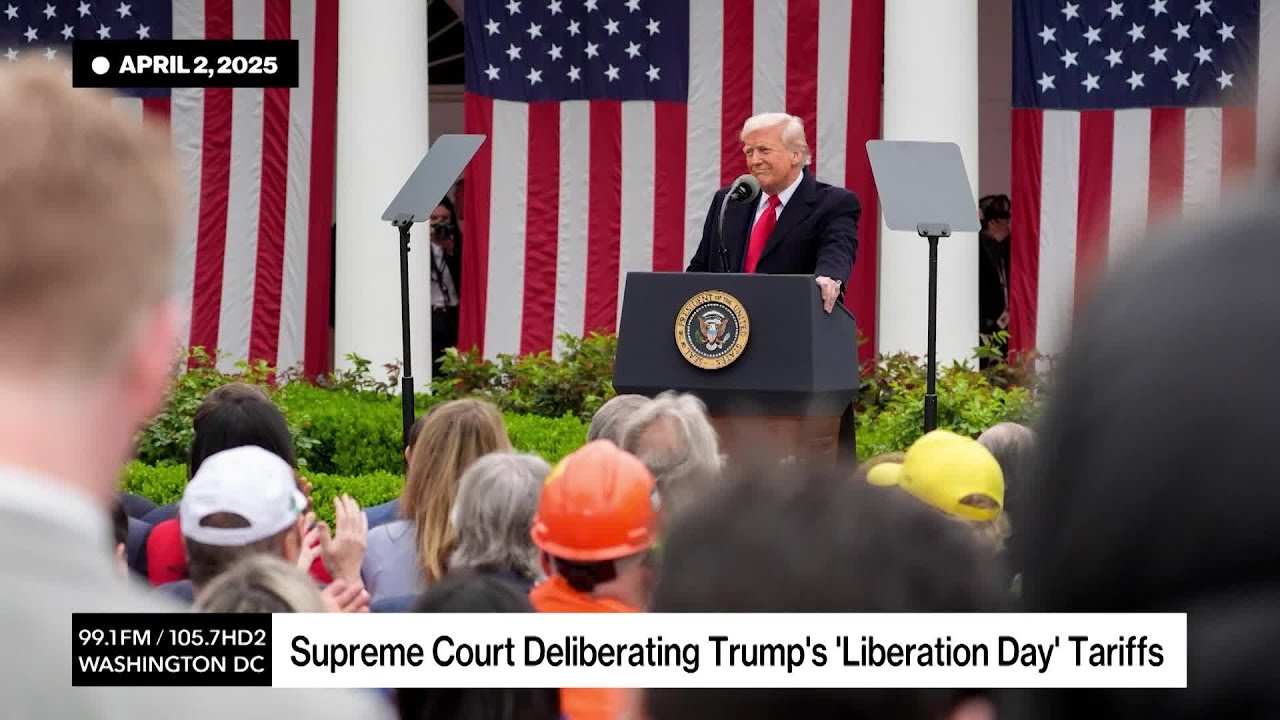
Since the introduction of Trump’s 'Liberation Day' tariffs, the US manufacturing sector has faced a pronounced downturn, with employment in goods-producing industries falling and consumer sentiment plummeting in tandem with tariff announcements. While these tariffs were intended to bolster domestic industry, the reality has been that US consumers have shouldered approximately two-thirds of the tariff burden, amplifying economic strain beyond the factory floor and highlighting the unintended consequences of protectionist trade policy.
Legal uncertainty has become a defining feature of US trade policy, as the Supreme Court scrutinizes the legality of Trump-era tariffs and delays its ruling, leaving businesses and global partners in limbo. With the government collecting $139 billion annually from these tariffs and the Biden administration preparing alternative legal strategies—including leveraging Section 122 for temporary tariffs—policy volatility is likely to persist regardless of the Court’s decision, underscoring the high economic and political stakes involved.
Despite the headline-grabbing statutory tariff rates, the actual economic impact has been muted by a patchwork of carve-outs, exemptions, and trade agreements like USMCA, which allow many importers to sidestep the full brunt of tariffs. As a result, the effective tariff burden has amounted to roughly a 2% tax increase on the US economy, helping explain why overall growth and employment have remained resilient, even as manufacturing and supply chains have felt the pinch.
The US’s increasingly confrontational trade posture—exemplified by new tariff threats against eight European countries and aggressive moves to counter China’s critical mineral dominance—has injected fresh volatility into global markets and strained alliances. These tariffs are often wielded as strategic bargaining chips rather than permanent policy, with timing and threats designed to maximize leverage, but they have also provoked political backlash at home and retaliation abroad, as seen in France’s call for the EU’s 'anti-coercion instrument,' further muddying the legal and economic waters of international trade.
While US tariffs and export controls have aimed to curb China’s manufacturing and technological ascent, China’s export juggernaut has proven remarkably resilient, with its manufacturing trade surplus reaching $1.08 trillion by late 2025. This ongoing imbalance is crowding out high-tech manufacturing in the US, Europe, and Japan, challenging the assumption that tariffs alone can rebalance global trade, especially as state-backed Chinese firms—unconstrained by profit motives—undermine foreign competitors’ ability to invest in innovation.




Supply Chains Show Their Weakness
US industry is squeezed by tariffs, labor shortages, and lopsided R&D priorities, leaving America exposed as China tightens its grip on critical materials and mid-tech sectors erode.
The fragility of U.S. supply chains is being laid bare by a confluence of policy-driven shocks and structural labor constraints, with tariffs and funding shifts amplifying vulnerabilities across manufacturing and related sectors. The Trump administration’s renewed tariffs have not only driven up costs—two-thirds of which are borne by consumers—but also triggered a broad-based decline in employment, hitting not just factories but also construction and transportation, which had previously flourished under Biden. Meanwhile, U.S. dependence on China for critical industrial materials remains a glaring Achilles’ heel; as Carl Weinberg warns, 'China dominates nearly every critical industrial material,' and any disruption could pose a 'direct and severe threat to U.S. growth and industrial capacity.'
Amid these disruptions, the U.S. faces a strategic dilemma: while high-tech R&D dominates—with 85% of business R&D spending funneled into advanced sectors—mid-tech industries like automobiles and parts are left behind, creating a 'mid-tech gap' that undermines industrial resilience. This stands in stark contrast to China’s aggressive industrial policy, where subsidies amounting to 4-5% of GDP fuel overproduction and relentless competition, especially in semiconductors. As the U.S. manufacturing base erodes, the lack of balanced investment leaves the nation less equipped to weather global shocks or compete with regions like the EU and Japan, where mid-tech sectors receive far greater support.
In response to labor shortages and the relentless pressure of global competition, U.S. manufacturers are increasingly turning to artificial intelligence—not to win the global AI arms race, but to integrate cutting-edge models into core operations and boost productivity. As one analysis puts it, 'While America can’t stop global AI model competition, what we can do is lead the race for AI implementation,' with sectors from healthcare to manufacturing leveraging AI to make decisions in seconds rather than days. However, even as recent productivity gains have temporarily propped up growth, experts like Weinberg caution that these advances may not be enough to offset deep-seated labor supply constraints, leaving supply chains exposed to ongoing fragility.
The inflationary aftershocks of tariffs are beginning to ripple through the economy, raising the specter of Federal Reserve intervention as 2026 unfolds. As tariffs feed into higher prices, Carl Weinberg notes that 'inflation risks are rising,' increasing the likelihood that the Fed will pause or even tighten policy, which could further strain economic resilience. This policy feedback loop underscores how supply chain fragility is now intertwined with macroeconomic management, making the path to industrial stability more precarious than ever.

Geopolitics Redraws Market Risks
Aggressive deal-making and resource nationalism are fragmenting global trade, weaponizing economic tools, and pushing market volatility to levels unseen in a generation.
The collision of geopolitical brinkmanship and resource competition is fundamentally reshaping the risks and opportunities facing global markets and alliances. The Trump administration’s high-stakes, transactional approach—exemplified by aggressive deal-making over Ukraine and Greenland—has injected unprecedented volatility and binary outcome risks into market pricing, as seen in the whipsawing of oil and commodity prices amid peace talks and military escalations. This environment, marked by persistent flashpoints in Ukraine and the Middle East, leaves markets struggling to price in sudden event risks, with traders hedging against scenarios like an Israeli strike on Iran that could send oil prices soaring above $100 per barrel overnight.
Resource nationalism and the scramble for critical minerals are redrawing the map of global trade, driving both fragmentation and new alliances. China’s near-monopoly on rare earths and its manufacturing trade surplus—now exceeding $1 trillion—have spurred the US and EU to pursue alternative sources, such as Greenland, whose untapped deposits have attracted both investor buzz and strategic maneuvering. However, the complexities of extraction, infrastructure, and legal jurisdiction in places like Greenland mean that while these moves offer long-term opportunities for supply chain diversification, they also introduce new bottlenecks and legal uncertainties, as highlighted by tech investors and mining executives who caution that 'rare earths in Greenland won't materially move markets in the next decade.'
The weaponization of economic tools—tariffs, sanctions, and supply chain constraints—is accelerating economic decoupling and destabilizing traditional alliances, with direct consequences for businesses and markets. The US’s imposition of escalating tariffs on European countries over Greenland, coupled with threats of retaliatory measures like the EU’s 'anti-coercion instrument,' signals a new era of geoeconomic confrontation that the World Economic Forum now ranks as the top business risk. This climate of legal and policy uncertainty is fueling market volatility, sector rotations, and a shift of capital toward hard assets, while also raising the specter of episodic shocks and the need for adaptive strategies as the global economic order becomes increasingly fragmented.
Amid these intersecting risks, the future structure and stability of global trade will hinge on the resilience and adaptability of alliances—both formal and ad hoc. The EU’s push to reduce reliance on Russian energy and Chinese minerals, the emergence of 'coalitions of the willing' to address security and supply chain vulnerabilities, and the ongoing need for accurate geopolitical intelligence all underscore the premium on collaborative, flexible responses. Yet, as domestic political stability in the US and unresolved regional conflicts remain wildcards, the global economic order faces a future defined less by rules-based predictability and more by shifting power blocs, resource-driven realignments, and the constant threat of poly-crises—from extreme weather to technological disruption.