Trust issues and broken handoffs: why AI-powered customer service still needs a human touch
The gist
Despite rapid AI adoption in customer service, consumers still crave the human touch—because trust breaks down when chatbots botch the handoff and leave customers repeating themselves.
What to know
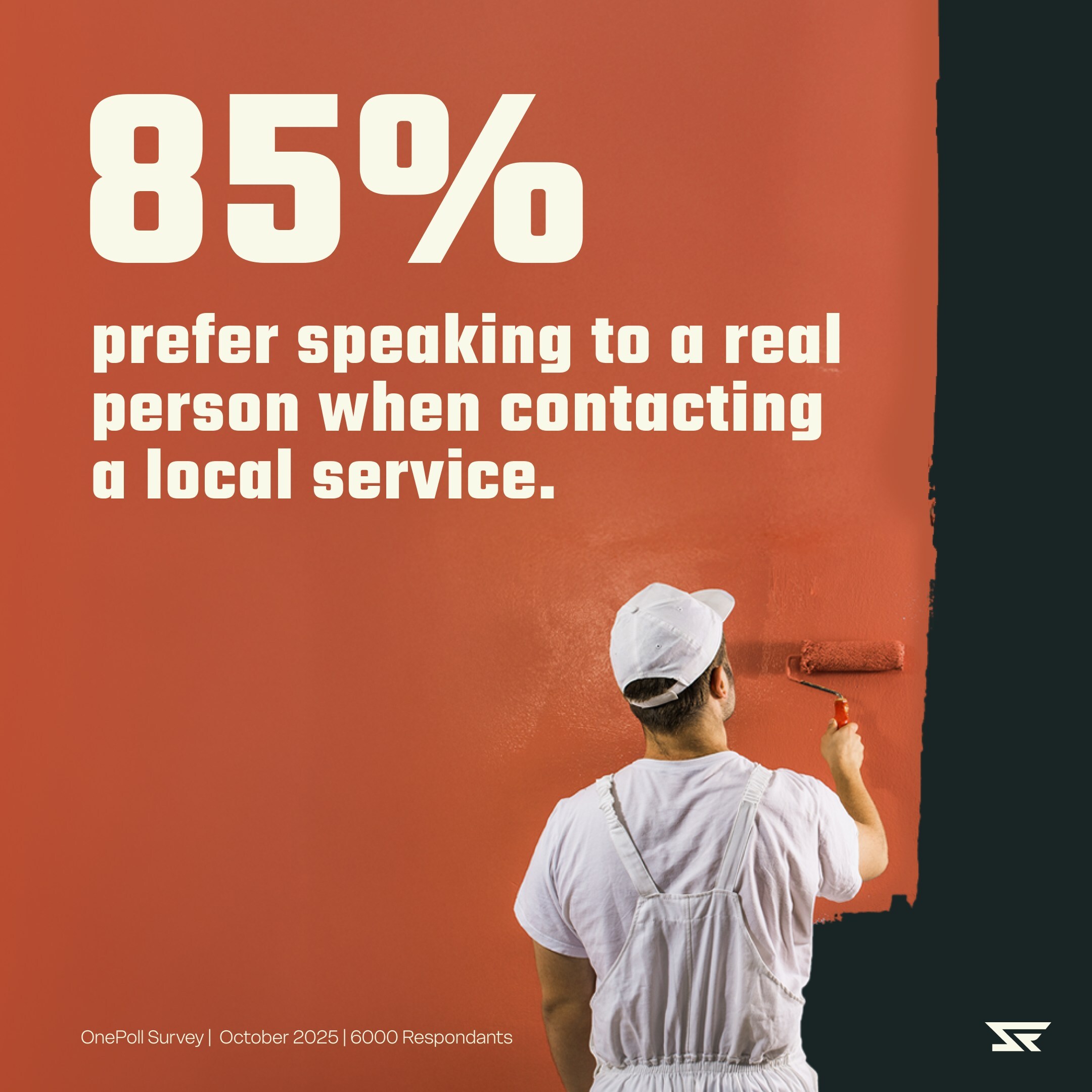
- By early 2026, only 14% of consumers trust AI shopping recommendations enough to buy based on them, while 85% prefer humans for local service.
- A whopping 83% of people report having to repeat themselves after being transferred from AI to a human agent—proof that seamless handoffs are still a major fail.
- Contact centers are becoming AI-powered intelligence hubs, with platforms like CallSight and Amazon Connect analyzing 100% of interactions and slashing handling times by up to 15%—but transparency and good governance are now non-negotiable.
Human Touch Still Reigns
Customer trust in AI remains fragile because of poor transparency and clumsy handoffs, forcing companies to clarify when AI leads and when humans step in.
By early 2026, consumer trust in AI-driven customer service remained notably low despite widespread adoption, with only 14% trusting AI shopping recommendations enough to purchase solely based on them and a striking 85% preferring human interaction when contacting local service providers. This skepticism is rooted not in the AI technology itself but in poor implementation and a perceived lack of transparency, accountability, and clear escalation paths, leading customers to feel companies are 'hiding behind automation' rather than innovating. As highlighted by ServiceForge's report and Intercom’s 2026 Customer Service Transformation Report, customers demand clear role definitions between AI and human agents, with seamless handoffs and outcome clarity essential to maintaining trust and preventing frustration.
Effective management of consumer expectations requires businesses to deploy AI tactically—handling routine, low-stakes tasks like status updates and scheduling—while reserving human agents for complex, emotional, or high-stakes interactions. This 'use AI where it earns the right' philosophy, advocated by CX leaders and exemplified by platforms like Wonderful and Zendesk, emphasizes transparency, auditability, and real-time monitoring to ensure AI operates within clear guardrails and escalates promptly when uncertain or when customer frustration is detected. Such a hybrid approach not only preserves trust but also leverages AI as a 'sous chef' supporting human 'head chefs,' enhancing overall service quality and customer satisfaction.
Seamless AI-to-human handoffs are critical trust junctures that require complete context transfer, smart timing based on sentiment and repeated queries, and well-prepared human agents who acknowledge prior AI interactions to avoid customer frustration and repetition. Despite organizational claims of preserving context, 83% of consumers report having to repeat themselves after transfer, underscoring a persistent gap in execution. Leading CX frameworks now treat AI and humans as collaborators rather than separate entities, focusing on clear escalation triggers, continuous improvement loops, and transparent workflows to manage expectations and foster loyalty.
The evolving landscape of AI-powered customer service demands that trust be designed as a core feature, not a slogan, especially amid rising online risks like deepfakes and increased consumer AI literacy. Organizations must prioritize transparency by providing clear explanations for AI decisions—95% of consumers expect this—and maintain robust governance including data quality, identity verification, audit trails, and fallback options. As noted by Five9 research and recent analyses, the future of CX hinges on integrating AI with human support through accountable, observable workflows that deliver reliable outcomes and preserve customer confidence in an increasingly automated world.


AI-Human Synergy in Action
True operational gains come when AI handles routine tasks and humans shift to quality control, coaching, and complex problem-solving—redefining agent roles for the hybrid era.
By early 2026, industry leaders like Cresta CEO Ping Wu and analysts emphasized that the operational deployment of AI in customer support must navigate the triad of conversation complexity, legacy infrastructure, and customer demographics. While simple e-commerce interactions—such as password resets or shipment tracking—can approach full automation, sectors like airlines and healthcare continue to demand significant human involvement due to the nuanced, high-emotion nature of their conversations. Wu’s approach with clients like United Airlines and Porsche illustrates that sustainable scaling hinges on tightly integrating AI and human intelligence within existing workflows, rather than viewing automation as a silver bullet.
The seamless orchestration of AI and human agents emerges as a critical operational challenge, where smooth AI-to-human handoffs define customer loyalty and trust. Analysts like Declan Ivory highlight that once AI alleviates queue pressures by handling repetitive tasks, human agents shift focus to system quality aspects such as tone, proactive outreach, and consistent channel experiences. However, research from Five9 reveals a persistent gap: despite organizations’ claims of preserving context during transfers, 83% of consumers still report having to repeat themselves, underscoring the need for complete context transfer, smart timing, and well-prepared human agents to avoid frustration and inefficiency.
Operational success in hybrid AI-human ecosystems requires redefining human roles from frontline responders to AI trainers, insight generators, and proactive problem solvers. As Matt Price notes, humans are no longer just a safety net but integral to continuous AI improvement loops, coaching AI with real-time feedback and personalized training. Companies like Zoom and Dialpad demonstrate that integrating AI into quality management frameworks and workforce systems—covering both virtual and human agents with unified scorecards and intraday staffing adjustments—enhances synergy, agent experience, and business outcomes, moving beyond mere cost-cutting toward a coordinated, outcome-driven model.
Despite rapid AI adoption—92% of CX organizations in 2026—human agents remain indispensable for complex, emotional, or sensitive interactions, especially in relationship-driven sectors like financial services and refunds management. AI functions best as a 'sous chef,' handling routine, time-sensitive tasks with consistency, while human agents act as the 'head chef,' managing creative problem-solving and empathy. This balance is crucial as customers overwhelmingly prefer human support for nuanced issues, with 66.6% willing to wait longer for effective human resolution over faster but less accurate automation. The future lies in flexible, integrated AI-human workflows that respect these preferences and operational realities.


Accountability Through AI Metrics
AI's impact is now measured in concrete, outcome-based units, pushing organizations to adopt strict governance and rapid error detection to protect customer trust.
By early 2026, the emergence of Agentic Work Units (AWUs), pioneered by Salesforce, marked a pivotal shift in AI governance metrics from vague interaction counts to discrete, outcome-focused tasks completed by AI agents. This reframing treats AI labor as quantifiable work, fostering operational maturity through debates on work definitions, quality standards, and accountability, transforming AI from a nebulous project into a measurable, tradable operational line item.
Robust governance frameworks have become indispensable as agentic AI scales rapidly in customer service, with 78% of organizations expecting AI to handle half of interactions within 18 months, yet only a minority possessing adequate measurement systems. Experts emphasize assigning clear ownership of AI quality metrics focused on true resolution, not mere containment, alongside bi-weekly reviews during initial deployments to prevent cascading errors and protect customer trust, echoing Hans van Dam’s warning that automation scales mistakes as much as execution.
Leading platforms like Wonderful, IBM’s Enterprise Advantage, and Talkdesk’s CXA Operations Center exemplify the next frontier of governed autonomy by embedding real-time monitoring, audit logging, role-based access, and control rooms that treat AI agents as integral workforce members. These systems provide continuous observability into resolution rates, latency, and user sentiment, enabling rapid intervention and recovery, which is critical given AI’s ability to update live systems and the high stakes of operational failures.
AI-powered quality assurance tools such as Clarity’s AI Agent QA and Solidroad’s platform revolutionize governance by evaluating 100% of customer interactions across channels in near real-time, drastically reducing manual QA hours by up to 75% and accelerating agent ramp-up by 30-40%. However, these advances demand clear governance to define quality standards upfront and audit QA flows comprehensively to catch policy drift and failure patterns early, as KPMG highlights the risk of poor AI adoption without cross-functional training despite heavy investments in technology.

Voice AI’s Delicate Balance
Next-gen voice agents manage full conversations and context handoffs but must tread carefully—one misstep in an emotional moment can erode brand reputation.
By early 2026, agentic AI technologies had evolved significantly from simple chatbots to sophisticated voice AI agents capable of managing entire live phone calls with seamless context handoffs to human agents, as demonstrated by Zendesk and Ringover AIRO. These voice agents not only handle routine inquiries end-to-end but also enhance customer experience by providing natural, human-like interactions and ensuring that when escalation is necessary, human agents receive comprehensive call transcripts and summaries to avoid repetition and frustration. However, this advancement requires a delicate balance between speed and transparency, as 95% of consumers expect clear explanations for AI decisions, and any AI errors during emotionally charged phone calls risk damaging the company’s reputation more than the AI itself.
Unified AI platforms integrating multiple customer service functions have emerged as the strategic backbone for modern contact centers, replacing siloed chatbots with seamless systems that handle everything from real-time analytics to natural language processing. Companies like Medallia and Boomi exemplify this trend by deploying agentic AI solutions that analyze 100% of customer interactions continuously, enabling teams to detect emerging issues swiftly and act proactively, which translates into measurable operational improvements such as 12–15% reductions in average handling time and 15% gains in first-call resolution. This architectural transformation moves beyond mere cloud migration to embedding AI deeply into workflows, empowering agents with contextual data and real-time coaching to focus on high-value tasks rather than manual audits or administrative work.
Despite the rapid adoption of AI capabilities in contact centers, including AI agents, copilots, and automated summarization, full end-to-end autonomous AI resolution remains limited, with only about 11% of organizations reporting significant AI handling of interactions. Instead, the prevailing model emphasizes AI augmenting human agents by managing routine, structured queries—such as password resets or order status—and providing real-time assistance and suggested actions to accelerate resolution and recalibrate emotionally charged situations. This qualified success is reflected in the aggressive integration of agentic AI by leading vendors and the growing recognition that human-in-the-loop orchestration and increased oversight are critical to maintaining trust and quality in AI-driven customer service ecosystems.
Governance and trust remain foundational to effective AI deployment in customer service, necessitating clear 'stop rules' for sensitive issues like payments and identity verification, rigorous quality tracking of AI-human handoffs, and vigilant management of bias to prevent reputational risks. As security threats such as voice scams and deepfakes escalate, embedding trust as a design feature—with transparent verification processes and accessible human fallback options—has become a top executive priority. This focus ensures that while AI accelerates service delivery and operational efficiency, it does so without compromising the fragile customer trust that underpins long-term loyalty and compliance.



Contact Centers Become Intelligence Hubs
AI-powered analytics have transformed contact centers into proactive coaching and insight engines, slashing manual work and driving measurable gains in customer satisfaction.
By early 2026, contact centers have undergone a strategic transformation from mere transactional service points into intelligence hubs, largely driven by AI-powered analytics platforms like CallSight. These platforms analyze 100% of customer interactions continuously, shifting quality assurance from a compliance checkbox to a proactive tool for coaching and service improvement, thereby enabling human agents to focus on interpreting structured insights and escalating critical issues rather than manual auditing.
This AI-driven evolution has delivered tangible operational benefits, including a 12–15% reduction in average handling time, a 15% increase in first-call resolution, and a similar drop in post-call administrative work, which collectively reduce customer effort, shorten queues, and enhance perceptions of responsiveness. These improvements not only boost efficiency but also directly impact key customer outcomes such as satisfaction, retention, and regulatory compliance, especially in regulated sectors like financial services.
Contact centers are increasingly integrating AI and human agents on unified knowledge bases and quality assurance frameworks, creating synergy that ensures consistent service quality and seamless handoffs. Beyond frontline interactions, organizations like United Airlines employ AI-powered deep research agents to analyze omni-channel data, extracting operational insights that drive continuous performance improvement and innovation across departments.
Leading organizations now view contact centers as powerful real-time listening systems that fuel strategic decision-making and organizational adaptation by leveraging daily customer interaction data rather than treating contacts as isolated transactions. This shift reveals root causes of customer friction—such as a consumer products company identifying and redesigning a faulty childproof cap that accounted for 11% of contacts—while AI handles simpler queries, leaving human agents to manage complex, urgent, and emotionally charged issues, thus elevating the role of contact centers as intelligence hubs.
Modern contact centers, exemplified by Traeger's deployment of Amazon Connect and associated cloud data tools, harness AI-powered cloud solutions to provide agents with real-time customer data and operational insights, enabling faster, more effective service. By integrating data warehousing with visualization tools like Amazon Redshift and QuickSight, Traeger transformed opaque vendor metrics into actionable intelligence—discovering a 33% first-contact resolution rate and 60% customer satisfaction—thus facilitating targeted coaching and continuous improvement while reducing manual tasks through sentiment analysis and automated call summaries.
