Trust on the rocks: strategic ambiguity, gold rush, and the great flight from institutions
The gist
Global trust is crumbling as zero-sum power plays, economic nationalism, and runaway debt spark a gold rush and mass flight from traditional institutions.
What to know
- The U.S., China, and Russia are ditching old alliances for strategic ambiguity, leaving the UN and WTO paralyzed and world order fractured.
- Geopolitical showdowns over Ukraine, Venezuela, and critical minerals are driving market chaos—oil prices could rocket past $100 on the next conflict.
- With global debt topping $314 trillion and faith in fiat money evaporating, investors are piling into gold, cryptocurrencies, and hard assets as the dollar loses its safe-haven shine.
Alliances in Freefall
Strategic ambiguity and zero-sum logic are dissolving old alliances, leaving global institutions paralyzed and ushering in a fractured, unpredictable world order.
The erosion of the post-war international order is being driven by the breakdown of traditional alliances and the rise of multipolarity, as both the United States and its rivals increasingly embrace zero-sum logic and strategic ambiguity. The U.S. National Security Strategy now openly acknowledges a world of spheres of influence, while Europe fears becoming a battleground between Russia and the U.S., and the Pope has criticized American efforts to fracture the transatlantic alliance. This normalization of distrust and unpredictability is further exacerbated by the dysfunction of institutions like the WTO and UN, which are paralyzed by Russian and Chinese vetoes, and by the assertive, unlimited aims of Moscow and Beijing—Putin seeking to arbitrate European politics and Xi aiming to supplant the U.S. as the foundational power in the global system.
Strategic ambiguity is not just a diplomatic tool but now a defining feature of global economic and security policy, fueling volatility and undermining trust in established frameworks. The Federal Reserve’s recent pivot to ambiguous signaling—such as Chair Powell’s risk-management rationale for rate cuts and the simultaneous end of Quantitative Tightening—has triggered immediate and sharp reactions in Treasury markets, with yields spiking as investors recalibrate expectations. This complex and opaque policy environment, compounded by political maneuvering to control the Fed and the threat of orchestrated dollar devaluation, has made alliance coordination more difficult and contributed to a broader sense of institutional decay.
The normalization of zero-sum logic is manifesting in both foreign and domestic policy, as the U.S. under Trump shifts from promoting democracy and multilateral cooperation to prioritizing resource acquisition, military power, and transactional relationships. The direct removal of Venezuela’s Maduro, justified on resource and security grounds, signals a willingness to break with international norms and pursue unilateral action, prompting China and other powers to reassess their own thresholds for force. This approach, mirrored in China’s push for 'strategic autonomy' among U.S. allies and in Europe’s growing reliance on credible threats and deterrence, is accelerating the fragmentation of alliances and the emergence of a more unpredictable, survival-driven global order.
As institutional trust erodes and strategic ambiguity becomes the norm, markets and publics are responding with heightened pessimism and a flight to alternative stores of value. The fracturing of the global order is reflected in the rising appeal of gold, cryptocurrencies, and hard assets, as investors lose faith in fiat currencies and the independence of central banks like the Federal Reserve comes under political assault. While the U.S. dollar remains dominant for now, central banks are quietly diversifying reserves, and the cyclical nature of global reserve currencies suggests that a major reset—possibly toward gold or digital money—may be on the horizon if current trends persist.




Resource Wars Reshape Markets
Geopolitical brinkmanship and resource grabs—from Ukraine to Venezuela—are driving protectionism, market volatility, and a scramble for critical minerals.
The intensification of geopolitical rivalry since late 2025, particularly around the Ukraine conflict and escalating Middle East tensions, has driven states into high-stakes deal-making and brinkmanship, fundamentally reshaping alliances and creating volatile market conditions. The Trump administration’s 'Deal-Maker' approach, characterized by bold, transactional agreements and binary risks, has left markets struggling to price in the outcomes, while regional flashpoints—such as Israel’s ultimatum to Hezbollah and Iran’s nuclear ambitions—have led to protectionist hedging in commodity markets. Traders, for example, have been bidding up crude oil call options as insurance against sudden escalations, with the specter of oil prices spiking above $100 per barrel if conflict erupts, underscoring how resource-driven policies and geopolitical rivalries are now inseparable forces shaping global economic behavior.
Resource-driven policies are increasingly shaped by the intersection of geopolitical conflict and pragmatic power politics, as seen in the Trump administration’s leaked Ukraine peace plan and the U.S. military intervention in Venezuela. The Ukraine plan, which calls for territorial concessions and sanctions relief for Russia, threatens to flood global oil markets and realign economic alliances, while the extraction of President Maduro in early 2026 signals a willingness to use military force to secure critical energy resources. These moves not only disrupt existing supply chains—such as the nullification of Venezuela’s oil-for-loans agreements with China, forcing Beijing into the spot market—but also raise sovereign risk premiums across Latin America, accelerating the global shift toward economic nationalism and protectionism.
By 2026, the global scramble for strategic resources and technological supremacy has accelerated economic nationalism and protectionism, with states prioritizing control over critical supply chains and raw materials. The U.S. has moved to leverage its energy independence as a geopolitical weapon, with analysts noting, 'If you were able to basically sequester China from supplies of energy, they'd be out of business in about six to eight weeks.' Meanwhile, countries like Indonesia, Chile, and China are tightening control over vital minerals—tin, lithium, gallium, and germanium—while Europe and China race to secure AI and semiconductor capabilities, reflecting a broader shift away from globalism toward resource hoarding and the pursuit of sovereign technological advantage.
Geopolitical rivalry is also reshaping alliance structures and diplomatic strategies, as major powers and middle states seek leverage in an increasingly fragmented global order. China is actively courting U.S. allies like Canada and the UK, promoting 'strategic autonomy' to weaken Washington’s influence, while Europe, facing internal fragmentation and slow decision-making, is being pushed toward more assertive economic nationalism and protectionist measures—targeting American tech giants and seeking sovereign AI capabilities. The resulting environment is one of tactical engagement and shifting allegiances, with new trade deals such as the historic India-EU agreement emerging as countries seek to diversify partnerships and secure access to critical resources amid U.S. unpredictability and escalating U.S.-China competition.



Debt Spiral and Dollar Doubts
Surging global debt and political meddling in central banks are eroding trust in fiat currencies, fueling fears of market instability and currency debasement.
The global surge in debt, with total obligations ballooning from $16 trillion in 1980 to $314 trillion in 2024, and U.S. federal debt alone rising to $37 trillion, has stoked mounting anxiety over fiscal sustainability and the stability of major currencies. As these persistent deficits force ever-larger debt issuance, concerns have grown that both domestic and foreign buyers may eventually balk at absorbing the flood of U.S. Treasuries, threatening marketability and undermining investor confidence. This dynamic, first flashing warning signs in the 2019-2020 funding market disruptions, now looms as a structural risk to the financial system.
The era of monetary orthodoxy—where central banks like the Federal Reserve would raise rates to combat inflation and defend currency value—has given way to interventionist policies driven by political pressures and fiscal dominance. Since at least 2019, policymakers have been forced to maintain negative real rates and resort to gradual money printing to manage debt burdens, with even modest rate hikes now seen as potentially catastrophic for asset and housing markets. As investors and officials move from denial to reluctant acceptance of this 'debasement trade,' real wealth measured in gold or bitcoin has stagnated, exposing the fragility of currency stability and eroding faith in traditional stores of value.
Political interference in central banking, particularly the Federal Reserve, has become increasingly overt, with President Trump's public efforts to influence Fed leadership and policy direction fueling market uncertainty and fears of diminished institutional independence. The prospect of appointing loyalists or 'yes men' to the Fed, as well as populist economic measures like capping credit card rates and large-scale asset purchases, signals a decisive shift away from technocratic monetary management toward direct political control. While some market participants remain complacent, safe-haven assets like gold and bitcoin have rallied in response, reflecting deepening concerns about inflation, currency debasement, and the long-term credibility of U.S. monetary policy.
Despite the U.S. dollar's enduring reserve currency status and the absence of mass foreign liquidation of U.S. assets, the underlying risks from persistent fiscal deficits, political meddling, and interventionist policy are accumulating. While investor flows show resilience for now—foreigners still hold roughly $20 trillion in U.S. stocks and $15 trillion in debt—market experts warn that the true test will come if confidence erodes and large holders begin to exit. As Ken Griffin and others note, the U.S. may not face a sudden tipping point, but a gradual build-up of risk premia and bond market volatility, reminiscent of recent shocks in Japan and the UK, could ultimately force a painful reckoning if fiscal discipline is not restored.


Flight to Hard Assets
Investors are abandoning tech stocks and fiat safe havens for gold, commodities, and cryptocurrencies as policy uncertainty and stagflation shake traditional strategies.
The new era of market volatility has seen investors rapidly rotate out of high-flying tech and growth stocks—such as Meta, Tesla, Amazon, and Palantir, which suffered notable declines—into more resilient sectors like financials, with JP Morgan, Charles Schwab, and Goldman Sachs posting gains even amid government shutdown-induced uncertainty. This sectoral churn is mirrored in the resilience of alternative assets: while cryptocurrencies like Bitcoin and commodities such as crude oil remain volatile, their ability to weather stagflationary pressures and supply shocks has made them increasingly attractive as part of a diversified strategy, reflecting a broader shift in investor playbooks as traditional growth narratives falter.
As economic and political uncertainty intensified through late 2025 and into 2026, hard assets like gold and silver surged to record highs—gold breaking above $3,900 an ounce and silver approaching $50—driven by both safe-haven demand and industrial use cases, particularly in green energy. This flight to tangible stores of value is amplified by central bank and sovereign buying, as well as retail speculation, with gold consistently outperforming the S&P 500 over the long term. The appeal of these assets is further reinforced by a weakening US dollar and a growing distrust of fiat currencies, prompting investors to hedge against both inflation and systemic instability.
The Federal Reserve's evolving policy stance—oscillating between dovish rate cuts, strategic ambiguity, and the end of quantitative tightening—has injected both liquidity and confusion into global markets, prompting sharp repricing in fixed income and risk assets. While initial rate cuts and liquidity injections, such as the Fed’s $13.5 billion move in December 2025, buoyed equities and real estate, persistent uncertainty around Fed leadership, political interference, and the durability of easing cycles have left investors wary, with many adopting barbell strategies that balance core positions, rate-sensitive assets, and inflation hedges like commodities and precious metals.
Geopolitical shocks—from the US military intervention in Venezuela to tariff escalations and Middle East flashpoints—have injected binary risks into commodities and currency markets, driving up implied volatility and prompting traders to hedge with options and hard assets. These disruptions have not only tightened global crude markets and pressured emerging market currencies but also accelerated sector rotations toward defensive plays like energy, defense, and sovereign-grade collateral, while high-beta tech and consumer discretionary stocks face renewed headwinds from rising Treasury yields and shifting global trade flows.
By early 2026, the investment landscape is defined by strategic ambiguity, rapid sector rotations, and a reevaluation of what constitutes a 'safe asset,' as traditional havens like bonds and the dollar underperform or behave unpredictably. Investors are increasingly questioning the constraints of the monetary system and diversifying into hard assets, alternative stores of value, and productive sectors like AI, energy, and infrastructure, while remaining vigilant for liquidity shocks and policy-driven volatility that can upend correlations and portfolio construction overnight.



Crisis of Public Trust
Rising social unrest, economic pessimism, and politicized institutions are driving a public exodus from traditional authorities toward alternative assets and new sources of legitimacy.
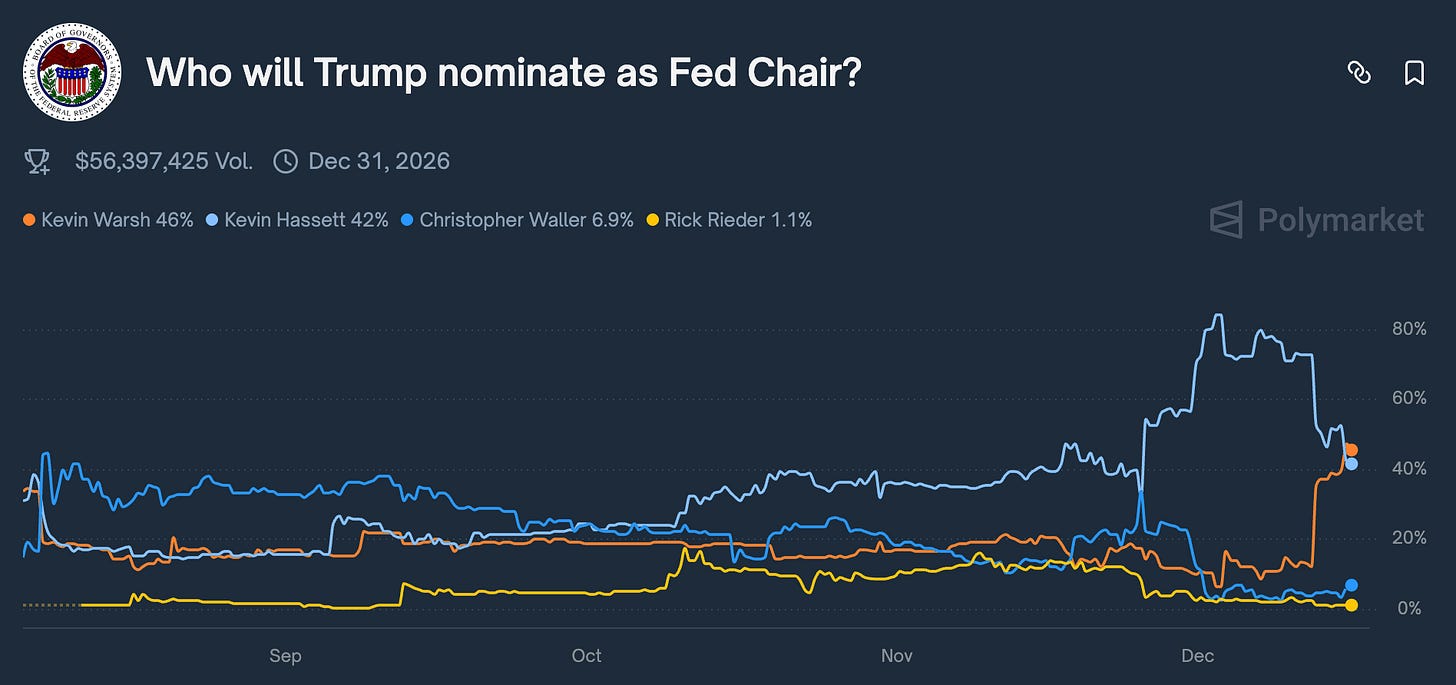
Rising public pessimism and distrust in institutions have become defining features of the new era of global power competition, fueled by a convergence of economic, political, and social crises. Incidents such as the politically motivated shooting at Brown University and the foiled New Year’s Eve terror plot in late 2025 have heightened societal anxiety, while economic indicators like a rising unemployment rate (4.6% in November 2025) and stagnant job growth have deepened uncertainty about the future. This pervasive unease is compounded by the politicization of key institutional appointments—most notably the Federal Reserve chair—where the contest between figures like Kevin Warsh and the Trump administration has become a flashpoint for debates over regulatory frameworks and institutional trust, reflecting a society increasingly fractured along political and economic lines.
By early 2026, public sentiment has grown markedly pessimistic, with widespread belief that the political system serves only elites and that economic growth fails to reach lower-income groups. The FGS Global '2026 Radar Report' underscores this disconnect, revealing overwhelming demand for stricter regulation and higher taxes on AI companies, as well as a notable shift in trust dynamics: confidence in mainstream media and politicians has plummeted, while trust in AI engines has relatively increased. This erosion of faith in traditional institutions is mirrored by the growing appeal of alternative frameworks and authorities, as the public seeks new sources of stability and accountability amid economic polarization and technological disruption.
The crisis of institutional trust is perhaps most acute in the ongoing battle over the Federal Reserve, where allegations of corruption, political interference, and lack of accountability have sparked public outrage and market volatility. As President Trump wages a high-profile campaign against what he calls an 'unelected financial caste,' and Fed Chair Powell frames investigations as retaliatory, the perception that major economic institutions are 'beyond scrutiny' has only deepened societal skepticism. This environment has driven a surge in demand for alternative stores of value—such as hard assets and cryptocurrencies—as people increasingly question the impartiality and effectiveness of traditional monetary authorities.
Societal fractures are further exacerbated by global and domestic policy chaos, as well as a breakdown in trust between major powers like the US and Europe. While headline economic growth figures—such as the IMF’s projected 3.3% global growth for 2026—may suggest resilience, underlying instability is masked by fiscal spending and AI-driven investment, according to Gita Gopinath. The cumulative effect of these fractures is a world where the old rules-based order has eroded, negative economic impacts are expected to mount, and the very fabric of society is stretched by persistent uncertainty and the absence of clear, trusted frameworks.