UK’s under-16 social media ban faces backlash over privacy, evasion, and effectiveness
The gist
The UK’s bold move to ban under-16s from social media by 2027 is sparking fierce debate over privacy, effectiveness, and who really controls kids’ online lives.
What to know
- Ministers want platforms like TikTok, Instagram, and even gaming services to block under-16s from risky features—think livestreaming and chatting with strangers—using strict age checks by spring 2027.
- Australia’s similar crackdown flopped, with over 85% of teens still finding their way onto banned apps using fake accounts and digital workarounds.
- Critics warn the UK plan could backfire, risking privacy and free speech while handing Big Tech more surveillance power—all without clear proof that banning social media actually helps kids’ mental health.
Targeting Features, Not Platforms
UK ministers are shifting focus from banning entire platforms to disabling risky features like livestreaming and stranger chats, signaling a new strategy to disrupt harmful digital habits across social media, gaming, and AI tools.
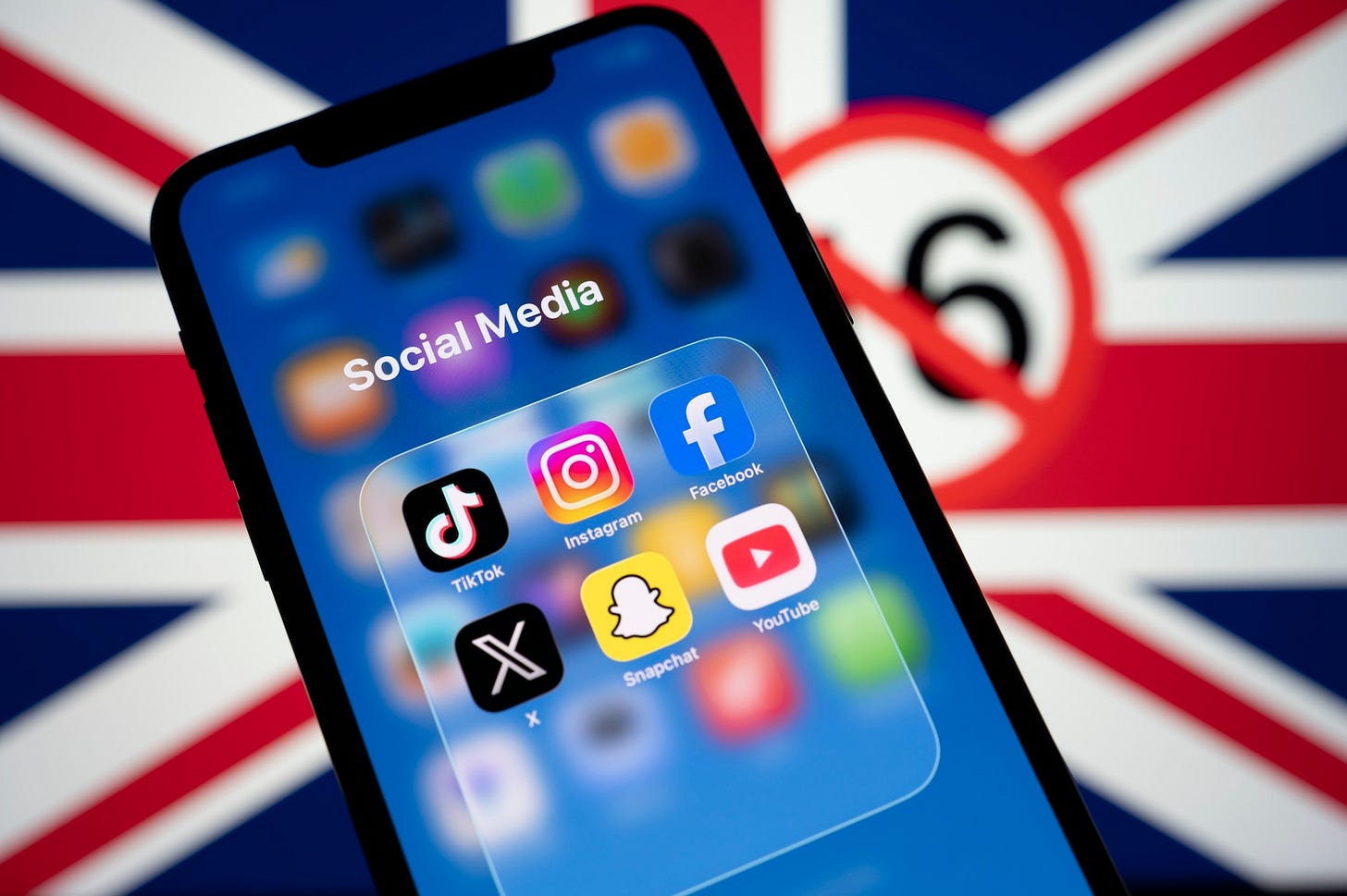
The UK government's planned social media ban for under-16s represents a nuanced shift from blanket platform prohibitions to targeting specific harmful features that facilitate risk, such as livestreaming, infinite scrolling, stranger communication, and sexually explicit AI interactions. This approach extends beyond traditional social media platforms like TikTok, Instagram, Snapchat, Facebook, X, and YouTube to encompass gaming services and AI tools, reflecting ministers' recognition that children face dangers across a broad digital ecosystem. By focusing on the functionalities that enable harm rather than entire platforms, the policy aims to dismantle the mechanisms that normalize exposure to inappropriate content and addictive behaviors.
Central to enforcing these restrictions is a robust age verification framework spearheaded by Ofcom, which is tasked with evaluating 'highly effective age assurance' technologies including facial age estimation, identity checks, and third-party verification systems. Acknowledging the technical savvy of under-16s and potential circumvention methods like virtual private networks, the government is investing in research to ensure that age verification is accurate, reliable, fair, and difficult to evade. These measures will be codified through secondary legislation under the Children’s Wellbeing and Schools Act, with regulations expected by the end of 2026 and implementation slated for spring 2027, placing direct duties on platforms for eligibility, service design, and documentation.
Beyond access restrictions, the policy introduces additional safeguards such as overnight digital curfews and mandatory breaks from infinite scrolling for under-18s, aiming to curb addictive usage patterns and nighttime exposure. Moreover, the ban extends certain feature restrictions—like disabling livestreaming and stranger communication—by default to 16- and 17-year-olds to avoid a sharp 'cliff edge' at age 16, signaling a graduated approach to digital safety. This comprehensive scope reflects a cultural shift away from normalizing children's exposure to harmful online interactions toward proactive prevention.
The UK’s policy places clear responsibility on tech companies to enforce these age-based restrictions, with significant penalties including fines and business disruptions for non-compliance. While the term 'ban' may oversimplify the complex regulatory architecture, the government’s insistence that 'tech companies themselves will be fined, will be stopped, will have business disruption and responsibilities' underscores a robust enforcement regime designed to hold platforms accountable for protecting children online.



Australia’s Enforcement Breakdown
Despite strict laws, most Australian teens still access banned apps by exploiting weak age checks and loopholes, exposing the limits of current verification technology and the need for tougher, smarter systems.
Australia’s experience with under-16 social media restrictions reveals profound enforcement challenges, as over 85% of adolescents continue using banned platforms like TikTok, Instagram, and Snapchat despite the law. Studies from the University of Newcastle, including findings by Courtney Barnes, show that most teens access these platforms via their own accounts, underscoring the limited immediate impact of the legislation and suggesting the policy aims more for a long-term generational shift than quick compliance.
The predominant reliance on self-declared age verification and simple selfie uploads has proven largely ineffective, with 24% to 39% of teens lying about their age and 13% to 27% using selfies to bypass checks. Additional circumvention tactics such as fake accounts (15%–19%), accessing others’ accounts (9%–29%), and private browsers (up to 11%) further complicate enforcement, highlighting the technological limitations of current age assurance methods.
Experts like Dr. Amrit Kaur Purba emphasize that legislating restrictions without robust enforcement mechanisms is insufficient, noting that widespread circumvention and low compliance obscure the true effectiveness of such policies. She warns that countries like the UK must implement reliable age assurance systems from the outset rather than retrofitting them after circumvention becomes entrenched, a lesson drawn directly from Australia’s faltering enforcement.
The persistent motivation among youths to access social media, despite restrictions, suggests that enforcement efforts may inadvertently foster digital savvy skills aimed at bypassing controls. Commentators like Harper Reed caution that age bans risk teaching children to become adept at hacking around regulations, raising critical questions about the practical efficacy and unintended consequences of current regulatory and technological approaches.





Rights, Privacy, and Unintended Harm
Critics warn the UK’s plan could erode privacy and free speech for all users, while evidence for mental health benefits remains weak and bans may further isolate vulnerable youth.
Digital rights organizations such as the Open Rights Group have vocally opposed the UK government's under-16 social media ban, launching campaigns like Stop Killing the Internet to highlight the threat it poses to the open internet's foundational principles. Critics argue that the proposed strict age verification measures, which often require intrusive identity checks, risk undermining adult anonymity and free speech, extending the impact far beyond teenagers. This concern is amplified by fears that such regulations could bolster Big Tech's dominance by handing them unprecedented surveillance capabilities, thereby eroding online privacy and anonymity for all users.
The evidence underpinning the ban's justification remains tenuous, with government and academic reports acknowledging only a modest correlation between social media use and adolescent mental health issues, without establishing causality. Experts like child psychologist Candice Odgers caution that focusing solely on social media oversimplifies complex mental health challenges influenced by broader societal factors such as demographic shifts and adult mental health trends. Furthermore, there is concern that banning access may inadvertently isolate vulnerable youth, including LGBTQ+ teenagers who rely on online communities for critical support, thereby exacerbating rather than alleviating mental health struggles.
The ban has ignited a robust debate over balancing child safety with fundamental rights to free expression and access to information. Commentators like Jonathan Haidt warn that excluding teens from social media punishes victims instead of holding tech companies accountable for harmful environments, potentially pushing young users into less regulated and riskier online spaces. Meanwhile, the government's consultation process has faced criticism for self-selection bias, calling into question the representativeness of public support cited for the ban and highlighting the political ease of targeting children who lack voting power or advocacy platforms.
Proponents of the ban, including commentators like Andrew MacDougall, argue that requiring adults to verify their age online is a reasonable and minimal sacrifice akin to existing offline age restrictions, and that privacy concerns can be mitigated through private-sector age verification solutions that do not involve government tracking. This perspective frames the measure as a necessary step to protect children while maintaining adult freedoms, emphasizing that the government’s role would be limited to setting and enforcing rules rather than direct surveillance, thus attempting to balance safety with civil liberties.





Big Tech’s Growing Power Play
Mandating tech companies to police under-16s hands them sweeping surveillance authority, while the rise of kidfluencers and commercial exploitation exposes deeper cultural and regulatory failures in protecting children online.
The UK's proposed social media ban for under-16s marks a significant shift in responsibility from parents to tech companies, legally mandating platforms to actively prevent minors from accessing harmful content. As highlighted in multiple analyses, companies face fines and operational disruptions if they fail to comply, underscoring a move away from relying solely on parental control. However, this shift also risks granting Big Tech unprecedented surveillance powers under the guise of strict age verification, raising concerns about privacy and market dominance amid global economic tensions.
A pervasive cultural normalization of harmful online experiences complicates regulatory efforts, as children have grown accustomed to exposure to pornography, self-harm content, and predatory advertising, effectively embedding these risks as everyday realities. Experts warn that this acceptance, described as a 'cultural norm,' necessitates interventions like the UK ban to set clearer boundaries and disrupt exploitative digital environments, even if such measures are seen as 'crude' or complex in implementation.
The rise of 'kidfluencers' and the commercial exploitation of children on social media platforms add another layer of complexity to youth digital safety, with countries like the Netherlands proposing bans on under-16s appearing in revenue-generating content to combat child labor concerns. This global trend, mirrored by Australia and the UK, highlights regulatory gaps around privacy, consent, and fair compensation, while raising alarms about the long-term impact on children's self-image and the normalization of exploitative practices driven by commercial pressures.
Emerging technologies such as AI chatbots represent a new frontier in protecting children online, requiring regulatory frameworks to evolve continuously to address novel risks. Given the asymmetry of power between individual children and well-resourced Silicon Valley companies employing behavioral psychology and lobbying, government intervention remains crucial to balance this dynamic and ensure that protections keep pace with technological advancements.