US nuclear umbrella frays as allies eye their own deterrents
The gist
**America’s nuclear umbrella is showing cracks as Asian allies hedge their bets and adversaries seize the moment.**
What to know
- With the New START treaty expiring in 2026 and U.S. nuclear forces lagging behind Russia and China’s modernization, South Korea and Japan are openly weighing their own nuclear options.
- President Trump’s rollback of joint U.S.-South Korea drills and public alliance spats have fueled Seoul’s push for strategic autonomy—think nuclear submarines, wartime command, and a record 80% public backing for homegrown nukes.
- North Korea is exporting missiles to Russia for use in Ukraine, China is exploiting U.S. naval redeployments, and erratic U.S. diplomacy is leaving allies—and the world—questioning whether Washington can still be trusted.
US Deterrence in Doubt
Decades of stalled American nuclear modernization and failed diplomacy have left allies questioning if Washington’s nuclear shield can still be trusted.
The expiration of the New START treaty between the US and Russia in mid-2026 has exposed critical vulnerabilities in the US nuclear umbrella, raising alarms about a potential renewed arms race reminiscent of Cold War tensions. Experts like Peter Huessy highlight that while Russia and China are aggressively modernizing their nuclear arsenals, the US deterrent has remained largely stagnant for 40 years, rendering it increasingly fragile and less credible in the eyes of allies. This erosion of confidence is particularly acute in East Asia, where the growing missile capabilities of China and the tripolar nuclear threat have intensified regional security anxieties.
Compounding these strategic challenges, US failures in nuclear diplomacy—especially in negotiations with North Korea—have undermined global non-proliferation efforts and shaken allied trust in Washington's security commitments. Joel Wit, a veteran of nuclear talks with North Korea and the Soviet Union, underscores how these diplomatic missteps have fueled skepticism about the reliability of the US nuclear umbrella. As a result, key Asian allies such as South Korea and Japan are increasingly contemplating the development of their own independent nuclear deterrents, signaling a significant shift towards regional autonomy in security policy.


Alliance Friction Grows
Trump’s rollback of joint drills and public disputes have pushed Seoul to seek greater military autonomy, exposing deep cracks in US–South Korea relations.
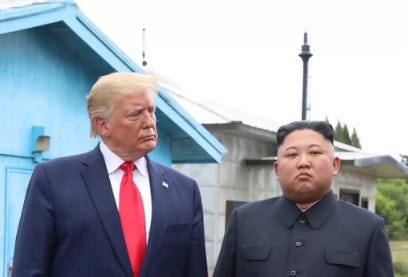
President Trump's decision to substantially reduce joint U.S.-South Korean military exercises, justified by his personal rapport with Kim Jong Un and public criticisms of Seoul's support in the Iran war, has significantly undermined alliance trust and military readiness. By scaling back these longstanding deterrence pillars, Trump not only signaled a diminished U.S. commitment to East Asian security but also emboldened North Korea to escalate its military provocations, as U.S. military officials warned that North Korean forces have gained combat experience in Ukraine that necessitates robust joint training. This approach, emphasizing personal diplomacy over alliance cohesion, sharply contrasts with traditional U.S. defense strategies and has raised alarms about the reliability of American security guarantees in the region.
The public airing of frustrations by President Trump regarding South Korea's financial contributions and reluctance to support U.S. positions, particularly in the Iran conflict, has further strained the alliance, complicating military and diplomatic cooperation. South Korean President Lee Jae Myung's moves toward greater strategic autonomy—including seeking wartime command transfer back to Seoul and accelerating nuclear-powered submarine development—reflect a growing distancing from Washington, fueled by disputes over trade, defense burden sharing, and divergent regional priorities. This evolving dynamic signals a fracturing of traditional alliance cohesion, as Seoul recalibrates its security posture amid perceived U.S. wavering commitment.
Senior U.S. officials, like Jake Sullivan, have warned that Trump's policies not only jeopardize military deterrence but also threaten economic and technological cooperation critical to countering China’s regional ambitions. South Korea’s pivotal role in semiconductor manufacturing and investments in U.S. industries underscores the multifaceted nature of alliance strength, which extends beyond military exercises to encompass economic and technological dimensions. Meanwhile, China views the perceived weakening of U.S. alliances under Trump as an opportunity to advance its strategic objectives, with Xi Jinping emboldened by the apparent fissures in U.S.-South Korea relations.
The redeployment of key U.S. naval assets, such as the USS George Washington from Japan to the Middle East amid the Iran conflict, has further diminished the American military presence in East Asia, exacerbating concerns about the reliability of U.S. commitment to regional security. This strategic shift, combined with the reduction of joint military exercises and diplomatic tensions, has created a security vacuum that North Korea actively probes through missile tests and provocations, testing the resilience of the US-South Korea alliance and emboldening adversaries in the Indo-Pacific.





Seoul’s Nuclear Balancing Act
South Korea is simultaneously deepening its US alliance and building independent defense capabilities, reflecting record public support for homegrown nuclear arms.
By mid-2026, South Korea under President Lee Jae Myung is navigating a delicate balancing act between reinforcing its historic alliance with the United States and asserting greater strategic autonomy amid growing regional uncertainties. While 97 percent of Koreans support the U.S.-ROK alliance and 82 percent favor maintaining U.S. forces on the peninsula, there is simultaneously a record 80 percent backing for an indigenous nuclear arsenal, reflecting public appetite for independent defense capabilities including accelerated development of nuclear-powered submarines and calls for wartime operational control (OPCON) to return to Seoul. This dual approach underscores Seoul’s intent to strengthen the alliance while reducing vulnerabilities to unilateral U.S. decisions, especially as tensions over military exercises, financial contributions, and ideological differences strain the partnership.
South Korea’s pursuit of strategic autonomy is not a retreat from its alliance with Washington but a nuanced strategy to enhance resilience and hedging within a complex regional security environment. President Lee’s outreach to Pyongyang and conciliatory stance toward North Korea complicate alliance dynamics, even as Seoul deepens commercial ties with China and expands its military capabilities, including sovereign AI and increased shipbuilding capacity. This multifaceted posture aims to make South Korea 'more capable, more economically indispensable, and more deeply integrated with American power,' while simultaneously mitigating risks associated with overdependence on U.S. decisions or sensitive Chinese suppliers, which Washington views with concern due to potential impacts on alliance cohesion and nonproliferation norms.
The evolving U.S.-South Korea alliance is becoming increasingly interdependent yet more complex, requiring careful coordination to ensure that Seoul’s drive for strategic autonomy enhances rather than undermines allied interoperability. Both countries face the challenge of managing South Korea’s resilience-building efforts—such as higher defense spending, Korean command of combined forces, and indigenous technological advancements—in ways that bolster collective capacity without fracturing the alliance’s operational unity. As analysts emphasize, the critical task ahead is to ensure that Korea’s strategic hedging translates into 'more allied capacity, not less interoperability,' preserving the alliance’s strength in the face of shifting geopolitical realities.

North Korea’s Global Reach
Pyongyang’s missile exports to Russia and Iran, alongside its expanding ICBM arsenal, are turning North Korea into a global proliferation threat that complicates US-led deterrence.
By mid-2026, North Korea has escalated its missile provocations not only as a regional threat but as a global actor by supplying ballistic missiles to Russia for use in Ukraine, exemplified by a KN23 missile strike that killed civilians in a Ukrainian village. This military support underscores Pyongyang's expanding influence and complicates alliance deterrence strategies, especially as it exploits perceived fissures within the US-South Korea alliance, probing for weaknesses amid South Korean President Lee Jae Myung's overtures for dialogue.
North Korea's growing nuclear arsenal, including intercontinental ballistic missiles capable of striking the continental United States, elevates its threat beyond East Asia to global security. The proliferation of North Korean missile technology, such as the Hwasong 15 ICBM now in Iran's arsenal with an 8,100-mile range, demonstrates Pyongyang's role as a critical node in missile technology diffusion, intensifying concerns among regional neighbors like Japan and the Philippines, and challenging the strategic calculus of US-led deterrence.
In any potential East Asian conflict, North Korea's likely alignment with China would imperil the 28,500 US troops stationed in South Korea and exacerbate risks for regional allies including Japan. This strategic partnership would significantly complicate US-led deterrence efforts, as the combined military threat from China and North Korea would stretch alliance capabilities and heighten the stakes of any confrontation in the region.
China Exploits US Distraction
Beijing is leveraging alliance strains and US naval redeployments to expand its influence in East Asia, while backing North Korea’s provocations.
China is strategically capitalizing on the strains within the US-South Korea alliance, particularly under President Lee Jae Myung's leadership, who has taken steps that undermine traditional partnership frameworks on trade, defense, and burden sharing. By aligning closely with North Korea, which is actively escalating regional tensions through ballistic missile provocations and exports to Iran and Russia, China positions itself as a pivotal power ready to support Pyongyang in any East Asian conflict. This dual approach allows Beijing to exploit fissures in US alliances and project influence ahead of critical leadership summits.
The redeployment of key US naval assets, such as the USS George Washington and USS Abraham Lincoln, from the Indo-Pacific to the Middle East amid the Iran conflict has significantly diluted American military presence in East Asia. With carrier deployments in the Middle East reaching unprecedented durations—over 260 days for the Abraham Lincoln and 326 days for the Gerald R. Ford—China is keenly observing these operational strains. This diversion not only hampers US strategic focus on China as the 'pacing challenge' but also provides Beijing with tangible leverage to enhance its regional influence by demonstrating the limits of Washington's military reach.
Diplomacy Undermined by Chaos
Erratic US presidential behavior and transactional diplomacy have eroded allied trust, weakening America’s global leadership and credibility.
By mid-2026, US diplomatic coherence has been severely compromised by erratic and contradictory presidential behavior, exemplified by threats to bomb Oman—a crucial diplomatic intermediary with Tehran—while simultaneously scaling back military cooperation with South Korea over unrelated disputes. As James O’Brien highlights, this transactional approach to diplomacy, where cooperation is equated with loyalty and dissent with betrayal, rapidly depletes the long-term relationship capital essential for managing alliances effectively.
This erosion of institutional knowledge and strategic consistency has led allies and observers like Phillips O’Brien to question the reliability of American commitments, bluntly stating, 'The United States is not trustworthy now.' Such skepticism is compounded by the degradation of presidential signaling power, as erratic threats become background noise that allies learn to filter out, thereby diminishing US global influence and undermining its ability to project power effectively on the world stage.