US races to secure supply chains as China tightens grip
The gist
As China tightens its grip on shipbuilding and digital infrastructure, the U.S. is scrambling to patch strategic vulnerabilities before supply chains become battlegrounds.
What to know
- China now commands 53% of global shipbuilding and is racing to field nine aircraft carriers by 2035, while the U.S. Navy shrinks and relies on foreign-built vessels.
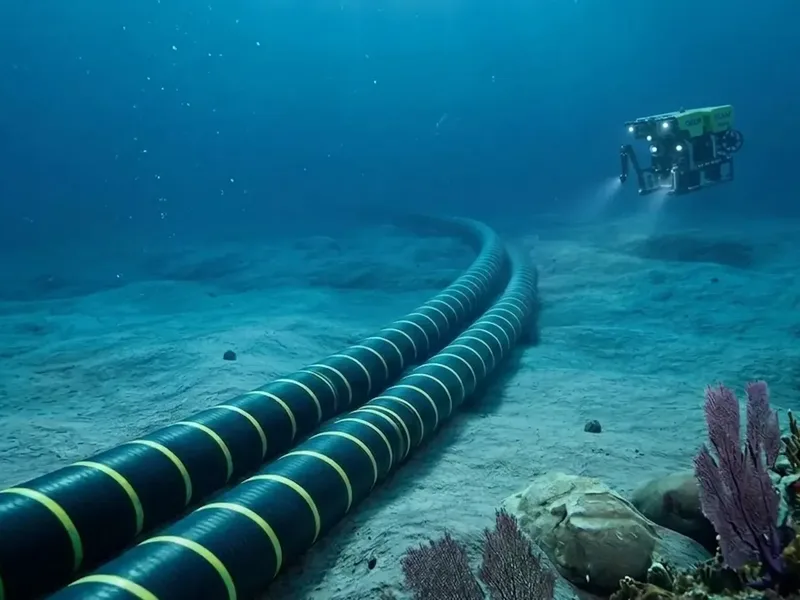
- Subsea cables—carrying 99% of internet traffic and $10 trillion daily—have become espionage hotspots, with Chinese surveillance near Pacific networks drawing U.S. and Taiwanese scrutiny.
- The U.S. has launched a $175.8 million initiative to replace risky undersea cables in the Caribbean and Central America, while tightening export controls to keep Chinese tech out of critical infrastructure.
Supply Chains Become Weapons
Global supply chains have shifted from engines of growth to tools of geopolitical leverage, forcing companies to trade efficiency for resilience amid rising risks.
By early 2026, global supply chains had evolved from mere engines of economic growth into pivotal instruments of foreign and security policy, reflecting a profound shift in geopolitical priorities. This transformation unfolded amid a turbulent transition in the global order, aptly captured by the Antonio Gramsci quote, 'the old world is dying the new world is struggling to be born so now is the time for monsters,' underscoring the uncertainty and volatility that now define supply chain geopolitics.
The deep specialization fostered by globalization concentrated manufacturing powerhouses in China and Southeast Asia, turning the region into the 'factory of the world' but simultaneously creating critical vulnerabilities and leverage points in global supply chains. This concentration has become a double-edged sword, as geopolitical tensions expose the fragility of these networks and incentivize nations to rethink dependencies that once prioritized cost-efficiency over strategic resilience.
Responding to the weaponization of supply chains, companies have shifted away from lean, cost-optimized models toward strategies that prioritize security and resilience, even at the expense of capital efficiency. Factors such as reshoring initiatives, tariffs, and component shortages have compelled firms to increase inventory holdings and accept less efficient capital use, signaling a fundamental recalibration of supply chain management in the face of geopolitical risks.
Geopolitical conflicts, particularly in volatile regions like the Middle East, have starkly illustrated the vulnerability of critical infrastructure tied to supply chains, with attacks on data centers and energy facilities prompting urgent calls for enhanced defense measures. The targeting of at least three or four data centers in recent conflicts has accelerated a strategic reassessment focused on hardening defenses around essential infrastructure to safeguard supply chain continuity amid escalating geopolitical tensions.


China’s Shipyards Outpace U.S.
China’s dual-use shipbuilding juggernaut is enabling rapid naval expansion while U.S. fleets shrink, exposing deep vulnerabilities in American maritime power.
China's dominance in global shipbuilding is staggering, controlling 53% of the market in 2024 and producing more commercial vessels by tonnage in a single year than the United States has since World War II. This overwhelming capacity extends beyond commercial ships to dual-use infrastructure, where Chinese shipyards fluidly shift labor and technology between commercial and military production, building vessels with hardened decks and amphibious capabilities. Such integration enables China to rapidly expand its navy, currently the world's largest by hull count with over 370 battle-force platforms and plans for nine aircraft carriers by 2035, creating a strategic imbalance that the U.S. struggles to counter.
Meanwhile, the U.S. naval fleet is shrinking and technologically challenged, with a 20% shortfall in minimum operational capacity and a net loss of 13 ships last year due to decommissioning outpacing construction. This decline is compounded by decades of shipyard closures and limited industrial capacity, exemplified by Huntington Ingalls Industries’ $56.9 billion backlog that restricts rapid production increases even if funding were tripled. The U.S. currently holds only 0.1% of the global commercial shipbuilding market, forcing reliance on foreign-built vessels—including critical military support ships from China—posing reckless strategic risks given geopolitical tensions.
The strategic stakes of maritime dominance are immense, as nearly half of global container shipping transits chokepoints like the Taiwan Strait, where a conflict could trigger a $10 trillion economic shock. Recognizing this, U.S. experts emphasize the urgent need not only to rebuild domestic shipbuilding infrastructure, which may take decades, but also to procure warships from allies such as Japan and Korea in the short term. Additionally, the rise of asymmetric threats—like low-cost drones capable of damaging high-value naval assets—underscores vulnerabilities in current defense strategies and the necessity of integrating innovative autonomous maritime technologies to maintain naval superiority and reduce risk to personnel.
China’s demographic and economic pressures may drive it toward more aggressive maritime expansion, making rapid U.S. naval revitalization critical to deterrence. Unlike past eras when the U.S. commanded 30% of global manufacturing enabling swift naval build-up, today’s diminished industrial base and political inertia threaten to delay meaningful rebuilding efforts until 2055 or beyond. This stark contrast highlights the urgent imperative for America to modernize its legacy-dependent maritime sector and achieve not just parity but a strategic reserve capable of sustaining simultaneous forward operations and absorbing losses in a contested global environment.






Subsea Cables: New Frontline
Control over undersea cables has become a high-stakes battleground, with U.S. and Chinese maneuvers escalating the risk of surveillance and sabotage in global data flows.
Subsea telecommunications cables are the backbone of global connectivity, carrying between 95 to 99% of all internet and telecom traffic, including nearly $10 trillion in daily financial transactions. This critical infrastructure has attracted increasing attention from the U.S. government, which under the Trump administration pledged over $175 million to replace vulnerable cables in the Caribbean and Central America. This initiative, part of a broader strategy to counter China’s expanding influence in regional communications, aims to install secure, trusted alternatives in countries like El Salvador, Guatemala, Honduras, and Haiti, reflecting the high stakes of geopolitical competition over control of these vital networks.
The strategic importance of subsea cables extends beyond their sheer volume of data transmission to their vulnerability as targets for surveillance and sabotage, particularly by Chinese actors. In early August 2026, a Chinese-flagged research vessel was observed loitering near the Pacific Light Cable Network connecting Taiwan, the Philippines, and the U.S., engaging in slow, intelligence-gathering maneuvers that prompted intervention by Taiwan’s Coast Guard. Such incidents underscore the urgent need for vigilant monitoring and protective measures in contested geopolitical hotspots, where subsea cables serve as both critical infrastructure and potential espionage targets.
The evolving landscape of subsea cable ownership and operation is marked by the rise of hyperscalers like AWS, Microsoft, Google, and Meta, who now dominate financing and management, shifting control away from traditional consortia. This commercial shift converges with national security concerns, as governments seek partnerships with private tech giants to fund cable projects in less commercially viable regions, ensuring both network reliability and security. However, this intertwining of commercial and strategic interests also raises questions about the risks of foreign equipment—particularly from China or Russia—being embedded within critical networks, potentially enabling decryption or tapping.
Insurance and resilience strategies for subsea cables have become increasingly complex as these networks experience unprecedented growth driven by AI, cloud computing, and green energy demands. Experts like Simone Nava of Generali highlight that integrating optical fibers into power cables enables rapid fault detection, reducing repair times and supporting business continuity. Physical protections, such as burying cables in trenches, mitigate common hazards like anchors and fishing gear, influencing insurance premiums. Yet, the specter of sabotage and terrorism demands specialized underwriting expertise, as these severe but less frequent risks pose significant challenges to maintaining the integrity of these vital global arteries.


Digital Sovereignty in Flux
Nations are racing to reclaim control over digital infrastructure, pushing back against Chinese tech dominance with strategic investments and exclusion of untrusted vendors.
China's Digital Silk Road strategy has deeply embedded Chinese technology into Latin America's critical infrastructure, including telecommunications, surveillance, and cloud services, sparking significant concerns over digital sovereignty and cybersecurity. Countries like Costa Rica and Panama have responded by excluding Huawei from 5G development and replacing Chinese equipment at strategic sites to mitigate risks of technological dependence and potential surveillance, reflecting a regional shift from mere technology adoption to control over data, software, and digital platforms that underpin essential government functions.
In Southeast Asia and the Caribbean, the U.S. is actively countering China's influence by promoting trusted digital infrastructure through initiatives that provide legal, technical, and financial support to exclude untrusted vendors and modernize networks securely. For example, the Philippines is advancing a US$500 million nationwide submarine cable system with eased customs rules to facilitate cable-laying and repairs, while Singapore partners with India on semiconductor projects to safeguard supply chains, illustrating a strategic push to secure resilient, trusted connectivity in the region.
Kenya is enhancing its digital infrastructure resilience by planning two major subsea cable landings before 2027, including a 4,108-kilometre system connecting Oman to Mombasa through a Meta and Safaricom partnership and the 10,000-kilometre Africa-1 cable linking France to the Middle East. However, true resilience hinges not only on cable quantity but also on robust landing infrastructure, competitive access, and reliable inland networks to avoid single points of failure. This strategic positioning also aims to deepen Safaricom's role in enterprise connectivity and cloud services, potentially attracting further local digital investment.
Taiwan exemplifies proactive digital sovereignty efforts by conducting internet blackout drills simulating coordinated attacks on its vulnerable undersea cable network, a critical lifeline threatened by deliberate damage from Chinese or China-linked vessels. Complementing these exercises, Taiwan is developing alternative communication methods using open-source platforms with long-range, low-power radio signals and pursuing legislative measures to enable satellite internet services like Starlink, despite geopolitical complexities, thus building multi-layered backup systems to maintain connectivity and safeguard national digital infrastructure.


U.S. Tightens Tech Defenses
Washington is escalating from tariffs to targeted bans and massive infrastructure investments, but faces painful trade-offs as it tries to cut Chinese tech out of critical supply chains.
Beginning in mid-2026, the U.S. government launched a multifaceted strategic initiative to counter China's growing influence over critical global infrastructure, particularly in telecommunications. The Trump administration committed $175.8 million to replace vulnerable undersea cables in the Caribbean and Central America, targeting countries like El Salvador and Haiti with secure, trusted alternatives. This investment is part of a broader plan contemplating nearly half a billion dollars more across multiple regions, signaling a sustained effort to blunt China's economic and technological leverage through infrastructure modernization and trusted vendor policies.
Concurrently, U.S. policy shifted from broad tariffs to more precise export controls and exclusion lists to secure supply chains in critical technology sectors. Agencies like the FCC expanded their 'Covered Entity' lists to ban foreign-made communications equipment containing components from Chinese firms such as Alibaba and Baidu, while the Department of Defense added 65 entities to its Section 1260H list, mandating their removal from Pentagon supply chains by mid-2027. This legal and regulatory tightening reflects a strategic pivot to tools that are more legally robust and politically viable than tariffs, which face bipartisan resistance and Supreme Court rebuffs.
However, the U.S. faces significant challenges in decoupling from Chinese technology suppliers, particularly in high-bandwidth optical transceivers where Chinese manufacturers like Zhangji and Eoptolink dominate roughly half the global market. Analysts warn that bans on these components could create severe bottlenecks and cost spikes for AI infrastructure providers such as Amazon, Microsoft, and Meta, with Western manufacturers lacking the capacity to scale production quickly. These sanctions function more as strategic bargaining chips than immediately feasible security measures, underscoring the complexity of securing supply chains without stalling critical data center expansions.
Domestically, experts emphasize that America must improve its own infrastructure delivery by pairing high standards of security, transparency, and accountability with competitive financing and efficient execution. This comprehensive approach spans design, construction, operation, and maintenance, with agencies like CISA playing a central role in safeguarding federal networks. Investments in energy infrastructure are also critical to meet the surging demands of AI, advanced manufacturing, and defense, with success at home enhancing U.S. global competitiveness by enabling American firms to export their capabilities and standards internationally.