Valve’s steam machine launches at $1,049—sticker shock and single-stick RAM spark gamer backlash
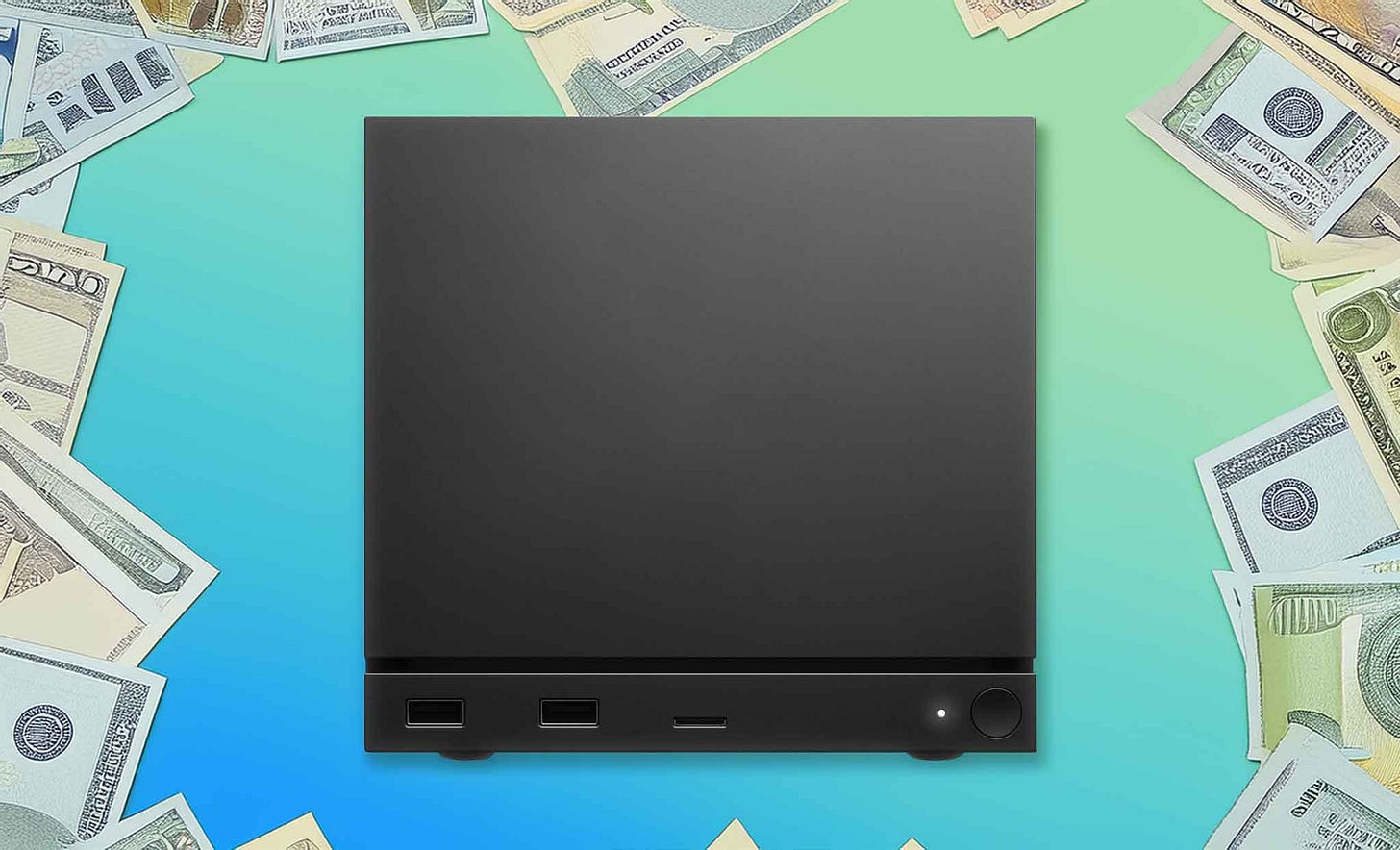
The gist
Valve’s Steam Machine launches with a jaw-dropping $1,049 price tag, sparking gamer outrage over premium pricing and a controversial single-stick RAM setup.
What to know
- Skyrocketing DDR5 RAM and SSD costs pushed the Steam Machine’s bill of materials to $850, forcing Valve to price the 512GB model at $1,049 and the 2TB version at $1,349.
- Valve’s strict no-subsidy policy means the Steam Machine is sold at cost, breaking with console tradition and putting it head-to-head with far cheaper PS5 and Xbox Series X rivals.
- A single 16GB RAM stick (not dual-channel) due to supply shortages has ignited performance concerns, while Valve’s invite-only pre-order system aims to foil scalpers amid high demand.
Design Ambitions Drive Costs
Valve’s push for premium aesthetics and custom hardware features—like a cube chassis and LED accents—made it impossible to hit the gaming PC price targets analysts hoped for.
From the outset, Valve faced mounting pressures as rising prices for critical components like DRAM and SSDs, compounded by potential tariffs, threatened to push the Steam Machine's retail price well beyond initial expectations. Valve aimed to price the device comparably to similarly specced gaming PCs, with analysts cautiously optimistic about a $500 base model by leveraging supplier deals akin to those used for the Steam Deck. However, the Steam Machine's unique cube-like design, featuring a customizable LED light bar and a substantial heat sink, inherently added to hardware costs, complicating efforts to maintain affordability.
By late 2025 and into 2026, supply chain disruptions and soaring demand for AI applications intensified component scarcity, particularly for DDR5 RAM and SSDs, inflating the Steam Machine's bill of materials to approximately $850 and forcing Valve to contemplate pricing between $800 and $900. This escalation placed the Steam Machine in direct competition with premium consoles like the PlayStation 5 Pro, raising concerns about market demand and affordability. Valve's decision against subsidizing the hardware underscored the challenge, as fluctuating component prices and supply shortages delayed the launch beyond the initially planned first half of 2026.
The ongoing AI-driven RAM shortage further complicated Valve's launch timeline and pricing strategy, with experts in mid-2026 predicting a starting price around $1,200—far above early projections. Valve engineers revealed the brutal reality of negotiating with a handful of suppliers like Samsung, Micron, and SK Hynix, facing take-it-or-leave-it pricing that forced a reevaluation of initial plans. Consequently, Valve settled on pricing the Steam Machine at $1,049 for the 512GB model and $1,349 for the 2TB version, excluding controllers, effectively selling the hardware at cost amid these inflated component expenses.
Adding to the cost complexity, the Steam Machine's compact and quiet six-inch cube design is not replicable with off-the-shelf parts, necessitating specialized hardware that further strains supply chains and inflates costs. This bespoke engineering, coupled with premium components like 16GB of DDR5 RAM and up to 2TB of storage, underscores why Valve's retail price reflects the true expense of building such a device rather than profit-driven markups. As a result, the Steam Machine stands as a high-cost, niche product shaped by both innovative design and the brutal realities of 2026's hardware market.



No Subsidy, No Compromise
By refusing to sell at a loss, Valve locks the Steam Machine into a luxury price tier, betting on enthusiasts over mass adoption.
Valve’s steadfast no-subsidy pricing philosophy for the Steam Machine marks a significant departure from traditional console strategies that often rely on hardware subsidies to lower retail prices. Confirmed by a Valve engineer in late 2025, this approach results in a premium price point—initially anticipated around $800 but ultimately debuting at $1,049 for the 512GB model—reflecting the full cost of components rather than absorbing losses to gain market share. Unlike consoles such as the PS5, which launched at $400 and were sold below manufacturing cost to build an install base, Valve positions the Steam Machine to compete directly with similarly priced gaming PCs, emphasizing performance parity over aggressive pricing.
Valve attempts to justify the Steam Machine’s high price by highlighting its unique value propositions, including a compact and quiet form factor, robust Bluetooth connectivity, HDMI CEC integration, and a seamless living room gaming experience. This strategy targets early adopters willing to pay a premium for novel hardware and a distinct ecosystem, rather than mass-market consumers seeking budget-friendly consoles. As one analyst noted, the Steam Machine appeals to those who 'want to have the thing that nobody else is going to have,' embracing a beta-like experience despite the steep cost.
Rising component costs, particularly for memory, have exacerbated Valve’s pricing challenges, with 2026’s brutal RAM negotiations forcing the company to reconsider initial pricing plans. The scarcity of key components from limited vendors like Samsung, Micron, and SK Hynix has led to 'take-it-or-leave-it' pricing, effectively eliminating Valve’s ability to subsidize hardware costs without incurring significant losses. This supply-side pressure, combined with Valve’s no-subsidy stance, has pushed the Steam Machine’s price well beyond that of the Steam Deck OLED and traditional consoles, with some variants rumored to exceed $999.
By mid-2026, internal discussions at Valve revealed a potential shift in pricing strategy, with the company contemplating subsidizing hardware costs to enhance competitiveness—a notable departure from its original philosophy. This internal debate underscores the tension between maintaining a no-subsidy, cost-reflective pricing model and the market realities of competing against subsidized consoles and more affordable gaming devices. However, as of the Steam Machine’s launch, Valve remained committed to selling hardware at cost, prioritizing transparency and performance alignment over aggressive pricing tactics.


PC Power, Console Price Gap
Despite PC-grade specs, the Steam Machine’s high cost and uneven performance versus the PS5 leave its value proposition in doubt for mainstream gamers.
Valve’s Steam Machine positions itself as a compact PC alternative with mid-range hardware, including a semi-custom AMD Zen 4 CPU and RDNA 3 GPU paired with 16GB of DDR5 RAM, which collectively deliver performance roughly comparable to the PS5. However, this PC-like configuration, combined with unique design elements such as a cube form factor and customizable LED light bar, drives its price well above traditional consoles, starting at $1,049 for the 512GB model and reaching upwards of $1,349 for higher storage options. While Valve insists it is selling the Steam Machine 'basically at cost,' rising component costs—especially for DDR5 DRAM and SSDs—along with tariffs have inflated the bill of materials to around $850, forcing retail prices into a range that challenges its value proposition against consoles like the PS5 and Xbox Series X, which retail for roughly $600 and $650 respectively.
Despite featuring technically newer CPU and GPU architectures than the PS5, the Steam Machine’s limited 8GB GDDR6 VRAM and reliance on upscaling techniques for 4K output mean it does not consistently outperform Sony’s console in visual fidelity. Games like Cyberpunk 2077 look better on the PS5, which employs advanced rendering methods such as checkerboard rendering, while titles like Returnal may favor the Steam Machine’s hardware. This nuanced performance trade-off, coupled with the Steam Machine’s significantly higher price—nearly double the PS5 Digital Edition’s $600 price—raises questions about its appeal beyond a niche enthusiast market seeking a PC-like gaming experience in a console form factor.
Initial speculation around the Steam Machine’s pricing ranged from an optimistic $400 to a more realistic $500, as noted by industry insiders like Linus Sebastian, but Valve’s muted response to these figures hinted at even higher costs. By early 2026, component inflation and launch delays had pushed estimates well beyond these early guesses, with retail prices settling near $800 to $1,049 depending on configuration. This wide price range complicates Valve’s ability to disrupt the traditional console market, as the Steam Machine risks being perceived as both outdated in performance and overpriced upon release, limiting its mass-market competitiveness despite its innovative design and PC-like flexibility.
Niche Appeal, Not for All
With a premium price and invite-only preorders, Valve targets die-hard PC fans while making clear this is no $600 console for the masses.
Valve has positioned the Steam Machine as a premium, compact PC alternative rather than a mass-market console competitor, reflected in its starting price of $1,049 for the 512GB model—significantly higher than the PS5's $599.99 and Xbox Series X's $649.99. This pricing strategy, driven by surging component costs and an AI-driven RAM shortage, narrows its appeal to a niche segment of gamers seeking a versatile, high-performance device. Valve’s offering of multiple configurations, including 2TB models and bundled Steam Controllers at an extra $79, attempts to add value and cater to diverse consumer preferences within this specialized market.
To address the high consumer demand and prevent scalping that plagued previous hardware launches like the Steam Controller, Valve is implementing a reservation and randomized queue system requiring registration and email invitations. This system restricts reservations to accounts with prior purchases before April 27, ensuring that genuine gamers—not scalpers—gain fair access amid limited supply and soaring component costs. By early June 2026, Valve’s strategy aimed to balance demand and supply effectively, mitigating rapid sellouts and maintaining controlled distribution despite intense market interest.
RAM Choices Fuel Outrage
Valve’s single-stick RAM configuration, forced by supply woes, sparks performance concerns and buyer hesitation as gamers weigh waiting for a better version.
Valve's decision to equip all Steam Machines with a single 16GB RAM stick, rather than the dual 8GB modules that enable dual-channel memory, has stirred significant controversy among gamers. While dual-channel configurations can offer a tangible performance boost by allowing memory sticks to work in parallel, Valve's choice was driven by supply chain constraints, as engineers Pierre-Loup Griffais and Yazan Aldehayyat explained it was 'quite literally impossible to buy 8GB [sticks]' in the necessary quantities due to market demand for higher-capacity modules. This hardware compromise, although understandable from a production standpoint, has led to concerns about performance perception and pushed some potential buyers toward building their own PCs instead of opting for the Steam Machine.
The ambiguity surrounding the RAM configuration further complicated consumer confidence, as early communications suggested the possibility of dual 8GB sticks, but Valve later clarified to Gamers Nexus that all units would come with a single 16GB stick. This reversal left gamers 'miffed' and uncertain about whether they would receive the coveted dual-channel memory performance boost, fueling hesitation to commit to a purchase. Moreover, Valve's admission that it 'may switch to dual sticks in the future' has created an additional layer of buyer indecision, as consumers weigh whether to buy now or wait for potential hardware improvements that could enhance the Steam Machine's appeal.
A New Era of Scarcity
Global RAM shortages and skyrocketing hardware costs have forced delays and price hikes across the gaming industry, with the Steam Machine as the latest casualty.
The Steam Machine's pricing and supply challenges are emblematic of a larger industry-wide escalation in gaming hardware costs, driven primarily by a global shortage of critical components like RAM. This scarcity has not only inflated prices across the board but also disrupted release schedules, as seen when Valve delayed the Steam Machine's launch in February 2026 specifically due to the memory crisis. Such supply chain constraints highlight how the gaming sector is grappling with a new normal where both availability and affordability of cutting-edge devices are increasingly compromised.