Vertical AI SaaS surges as procurement goes autonomous
The gist
Vertical AI SaaS is shattering procurement norms, with industry-specific AI agents driving 50-80% productivity gains and ushering in a trillion-dollar migration away from generic platforms.
What to know
- By late 2025, tools like Harvey AI and Abridge delivered up to 80% productivity boosts by embedding deeply into vertical workflows.
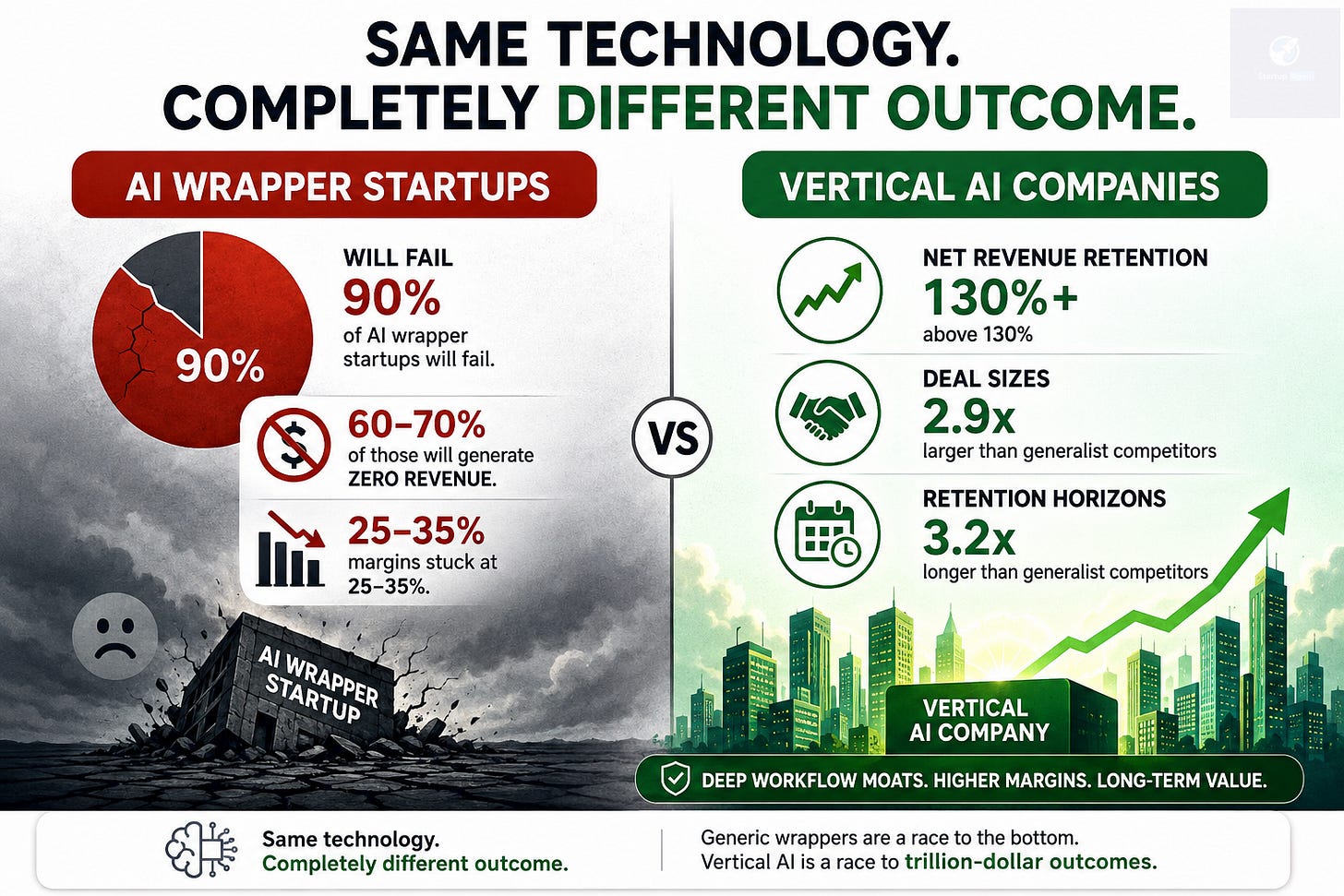
- Procurement platforms are morphing from passive data vaults to AI-powered systems of action, creating sticky moats with proprietary context graphs and net revenue retention above 130%.
- Despite the hype, leaders are piloting cautiously—balancing automation with human oversight and governance—as platforms like Omnea and Oracle’s Fusion triple procurement ROI and savings by mid-2026.
Vertical AI Breaks Barriers
Industry-specific AI tools like Harvey AI and Abridge are shattering adoption hurdles by embedding deep domain knowledge into workflows, outpacing generic AI with rapid, high-impact results.
By late 2025, industry-specific generative AI tools emerged as critical wedge products that shattered decades-old adoption barriers in vertical SaaS, delivering immediate, domain-aware value that generic horizontal AI simply could not match. These vertical AI solutions, exemplified by companies like Harvey AI and Abridge, achieved productivity gains of 50-80% in targeted workflows—far surpassing the 10-20% improvements typical of generic tools—by deeply understanding complex industry contexts such as legal case law or clinical documentation and integrating selectively with existing systems without requiring full replacements.
This wedge product approach follows a phased evolution: starting with high-pain workflow AI tools that rapidly reduce time-to-value from months to minutes, then leveraging captured workflow data to expand use cases, and eventually broadening into platform and fintech features over two to three years. By mid-2026, this model was validated as over half of enterprises had AI agents running in production, signaling that vertical AI was not just a feature but a foundational workflow enabler deeply embedded in industry operations.
Despite the proliferation of generic AI platforms like ChatGPT and Claude, the market strongly favors specialized vertical AI products that solve specific industry problems, with 90% of users preferring to purchase ready-made vertical solutions rather than build their own. This preference fuels a significant unbundling of horizontal AI platforms into vertical-specific agents that act as active workflow participants rather than passive insight generators, creating durable moats—such as an AI system uniquely mastering solar permit workflows across all 50 states—that generic models cannot replicate.
The emergence of vertical AI wedges is not only transforming workflows but also driving substantial commercial advantages, including median deal sizes nearly three times larger ($14,200 vs. $4,800) and retention rates over three times higher than horizontal AI SaaS competitors. This shift underscores how vertical AI’s deep workflow integration and domain specificity translate into superior enterprise value and market differentiation, marking a trillion-dollar opportunity that founders and investors cannot ignore.


Systems of Action Emerge
Procurement platforms are abandoning passive data storage in favor of AI-driven systems that automate decisions, leveraging proprietary context graphs to build new, defensible moats.
By early 2026, vertical SaaS and procurement platforms are undergoing a strategic pivot from traditional systems of record—long focused on storing historical data—to AI-powered systems of action that actively govern workflows and automate complex decision-making processes. This evolution is exemplified by companies like Omnea, whose CEO Ben Freeman highlights a trajectory from mere record-keeping to full automation of procurement tasks such as intake, approval, risk review, and renewals. Scott Hoke of AQL Growth encapsulates this transformation: “A system of record stores what happened. A system of action decides what happens next—and then does it,” underscoring the shift toward autonomous, multi-step workflows that transcend simple notifications to deliver transformative operational efficiency.
This transition challenges the once formidable moats of incumbent systems of record, whose dominance was historically secured by data stickiness and high switching costs. However, AI-enabled data harmonization and migration—illustrated by Nic’s experience of effortlessly switching internal platforms—have eroded these barriers, forcing vendors to innovate new defensibility layers. The emerging moat centers on proprietary 'context graphs' or 'decision layers' that capture not just what happened but why decisions were made within vertical workflows, creating a rich, unique dataset that trains AI models and significantly raises switching costs. As Nic explains, this combination of actions taken and resulting data forms a sticky ecosystem far more resilient than traditional CRM data.
While incumbent systems of record like Qualia initially enjoy a 12-18 month advantage to build AI-native features, their legacy technical debt and entrenched integration commitments increasingly act as a double-edged sword—transforming their once-protective moats into prisons that stifle agility. As one analysis warns, “All that technical debt, all those integration commitments, all those enterprise contracts with feature-freeze clauses... now they might make you irrelevant.” In contrast, AI-first vertical SaaS startups are adopting a leaner playbook: launching with targeted point solutions that solve specific pain points, rapidly validating market fit, and then selectively building only the essential 20% of ERP functionality necessary to support AI-driven workflows, thereby accelerating time-to-revenue and adaptability in a fiercely competitive landscape.

Agentic AI Rewrites Workflows
AI agents are automating complex procurement and legal processes end-to-end, driving a decisive shift from generic platforms to sticky, vertical SaaS solutions with superior retention and ROI.
By early 2026, agentic AI has evolved from simple AI interfaces to deeply integrated systems that automate specialized procurement and legal workflows, replacing labor-intensive manual processes with intelligent orchestration. Startups like Lio have pioneered automating end-to-end procurement tasks—triaging requests, negotiating, onboarding vendors, and executing purchases across multiple platforms—following detailed 'Agent Operating Procedures' that mimic expert buyers, addressing a $180 billion annual inefficiency in procurement talent spend. Similarly, legal tech innovators such as Advocacy and CoCounsel have moved beyond one-off AI tasks to develop 'case memory' workspaces and agentic systems embedded with authoritative legal content, enabling complex case management and legal work automation with rigorous safeguards against hallucination and bias.
The maturation of domain-specific agentic AI is driving a clear market preference for vertical SaaS solutions tailored to specialized workflows over generic AI platforms. Despite the widespread availability of general AI tools like ChatGPT, 90% of enterprises prefer to purchase specialized software that embeds proprietary workflow knowledge, creating defensible moats that foundation models cannot easily replicate. This trend is reflected in striking metrics: vertical AI companies report net revenue retention above 130%, deal sizes nearly three times larger, and retention horizons over three times longer than generalist competitors, underscoring the superior value and stickiness of agentic AI in procurement and legal tech.
The ecosystem of agentic AI startups is rapidly expanding and diversifying across legal, healthcare, and finance sectors, with companies like Harvey and Evisort in legal tech, Accordance and Bridge in healthcare, and Hebia and Rogo in finance leading the charge. These firms have spent years refining their offerings from high-level AI interfaces to agent-first workflows that orchestrate domain-specific knowledge and automate complex analyses, assisting human decision-making in areas such as legal discovery, contract management, and healthcare data processing. By mid-2026, over half of enterprises have deployed AI agents in production, with many scaling up, signaling widespread adoption of these specialized vertical AI solutions.




Pilots Prevail, Caution Reigns
Procurement leaders are scaling AI through tightly scoped pilots, prioritizing measurable value and human oversight as they navigate legacy complexity and the limits of automation.
By mid-2026, procurement leaders like John Eustis of Toray Industries and Dan Bartel of American Airlines championed incremental AI adoption through carefully scoped pilots to manage costs and validate business cases before scaling. This cautious approach reflects the complexity of integrating AI into procurement workflows, with organizations emphasizing clear objectives and dedicated resources—such as Eustis’s team hiring data analysts and allocating specific budgets—to ensure pilots deliver measurable value without overextending investments.
Despite enthusiasm, realizing ROI from AI in procurement remains challenging due to fragmented legacy systems, integration hurdles, and the complexity of automating cross-functional workflows spanning sales, operations, and marketing. Industry voices highlight a stark gap—often a 10x difference—between contracted pilot revenues and booked deals, underscoring stalled commitments as enterprises struggle to move beyond isolated AI use cases toward cohesive, end-to-end automation that truly accelerates procurement value.
Human judgment continues to be indispensable in procurement AI adoption, particularly in negotiation and strategic decision-making where subjective factors like risk assessment, trust-building, and supplier relationship management prevail. Experts such as José Gabriel Tovar Taracena and Hannah Salvage stress that AI excels at automating routine tasks—flagging clause deviations or screening suppliers—but cannot replace nuanced human expertise, which remains critical for interpreting complex commercial trade-offs and maintaining accountability in supplier engagements.
Governance in AI procurement is evolving from reactive manual controls to proactive, data-driven orchestration that integrates AI as a strategic enabler rather than a standalone fix. Leaders like David Feaveryear emphasize blending technology with human expertise to maximize impact, while governance frameworks prioritize optimizing existing tech stacks and cultural alignment with technology partners to future-proof AI adoption. Nonetheless, concerns around data security—especially in regulated sectors—and significant organizational skills gaps remain critical barriers that procurement functions must address to fully harness AI’s transformative potential.

AI-Native Platforms Reshape Economics
Seamless integration of procurement data with leading AI environments is compressing decision cycles and forcing vendors to adopt outcome-driven, risk-sharing commercial models.
By mid-2026, AI-native platforms like Omnea have pioneered a transformative shift in procurement economics by embedding procurement data directly into leading AI environments such as Claude, ChatGPT, and Microsoft Copilot through innovations like the MCP Server. This integration not only streamlines access and natural language querying of supplier, financial, and legal data but also advances agentic AI capabilities toward autonomous procurement, enabling enterprises to orchestrate cross-system intelligence and make faster, more informed decisions.
The competitive landscape is rapidly evolving as suppliers respond to AI-empowered buyers who can now compress complex evaluations from weeks to hours, forcing vendors to innovate commercial models focused on reducing buyer risk and accelerating decision-making. Leaders like Oii.ai adopt co-investment Proof of Value approaches that shift risk to vendors, while companies such as Pactum AI and LightSource emphasize faster value delivery and agentic AI that acts autonomously, reflecting a market-wide pivot from traditional per-seat licensing to outcome-driven, transparent, and trust-based engagements.
Oracle’s mid-2026 launch of Fusion Agentic Applications marks a significant vendor innovation milestone by embedding autonomous AI agents directly into supply chain and procurement workflows, automating routine tasks like inventory optimization and supplier qualification while enhancing resilience and cost control. This strategy, which ties AI capabilities to cloud application contracts, exemplifies how leading vendors are reshaping procurement economics by converting infrastructure investments into higher-value software relationships amid fierce competition from SAP, Microsoft, and multi-cloud AI providers.
Enterprises are actively embracing AI-driven procurement transformation through orchestration layers and integrated AI operating systems that unify best-of-breed tools and foster close vendor collaboration. Case studies from ORO Labs and Omnea demonstrate how dynamic, scalable orchestration models not only simplify user experience but also deliver strong financial outcomes—such as Omnea’s tripling of revenue within twelve months and exceeding customer savings targets by 65%—highlighting a broader market shift toward agentic AI platforms that enhance procurement efficiency, transparency, and strategic value.




Procurement Value Redefined
AI-driven process redesign is slashing costs and headcount while elevating procurement’s strategic role, with executives anticipating a fundamental transformation within five years.
By mid-2026, The Hackett Group's establishment of AI World Class Procurement benchmarks has crystallized the transformative potential of AI in procurement, demonstrating up to an 80% reduction in purchase-to-pay costs and an 81% decrease in staffing needs. This evolution marks a decisive shift from mere task automation to the comprehensive redesign of end-to-end procurement processes, enabling organizations to achieve 3.7 times greater procurement ROI and triple the savings impact. As procurement teams offload transactional duties to AI, they are empowered to deepen supplier relationships and sharpen sourcing strategies, unlocking higher-value commercial opportunities and strategic decision-making.
The maturation of AI ecosystems in procurement is increasingly defined by strategic value creation rather than technology deployment alone. Tim Yoo of The Hackett Group emphasizes that the greatest returns arise when AI is embedded as a core enabler in process redesign, facilitating superior decisions that generate value across the procurement lifecycle. This strategic imperative is echoed by Jeff Gilkerson, who highlights that procurement delivers maximal enterprise value before orders are placed, and AI’s capacity to shift focus from administrative tasks to supplier and commercial decision-making significantly strengthens overall performance.
Looking ahead, the widespread expectation among procurement executives underscores AI’s imminent and profound impact on procurement operations. A 2025 Hackett Group study revealed that 64% of procurement leaders anticipate generative AI will fundamentally transform their teams within five years, signaling a critical juncture for founders and enterprises to embed AI deeply within vertical SaaS ecosystems. Scaling agentic AI platforms will be essential not only to optimize procurement efficiency but also to capture competitive advantage through enhanced strategic capacity in supplier strategy and sourcing optimization.