Virtual power plants surge as home batteries hit grid milestone
The gist
Home batteries and virtual power plants are shaking up the U.S. power grid, turning everyday rooftops and garages into a $25 billion distributed energy juggernaut.
What to know
- Distributed solar and battery storage in the U.S. soared 30% year-over-year to 57 GWh by early 2026, with leasing models like Sunrun’s letting customers pay less than their utility bills.
- Virtual power plants have gone mainstream—Sunrun’s enrollments jumped 400% to 106,000 customers, Texas is piloting 1 GW VPPs, and Tesla’s Cybertruck V2G is turning EVs into grid assets.
- Major players like Lunar Energy and Distributed Sun are attracting nine-figure investments by using AI and hardware-software integration to slash project timelines and boost investor returns.
New Models, New Power
Leasing and aggregation partnerships are transforming home batteries into lucrative, multi-use grid assets, with flexible ownership and revenue frameworks enabling rapid expansion and wholesale market participation.
By early 2026, the distributed solar and battery market demonstrated robust growth despite trade and policy challenges, with U.S. battery storage installations rising 30% year-over-year to over 57 GWh and forecasts projecting $25 billion in investment. This expansion reflects a strategic shift as batteries move beyond utility-scale transmission roles into distribution circuits, becoming the most cost-effective method to augment grid capacity, though ownership and revenue frameworks remain in flux as stakeholders explore new models to harness these assets' versatility.
Leasing models have emerged as the dominant business framework for distributed solar and battery adoption, exemplified by Sunrun’s report that 99% of its sales are leases with monthly payments typically lower than utility bills, allowing providers to retain ownership and aggregate assets into virtual power plants (VPPs). This approach not only lowers upfront costs for customers but also enables innovative multi-use contracting, such as hyperscale data centers funding residential systems to create grid capacity, thereby accelerating interconnection and creating mutually beneficial revenue streams.
Strategic partnerships and aggregation platforms are redefining ownership and revenue models, with Sunrun collaborating with Tesla and Renew Home to integrate hundreds of thousands of home solar and battery systems into the largest distributed power plant in the U.S., capable of delivering over 16 GW. This coalition leverages high battery attachment rates—Sunrun boasts 73%—and flexible contract structures supported by federal incentives, enabling a shift from mere solar installation to sophisticated grid services participation, including bidding into wholesale markets enabled by FERC Order 2222.
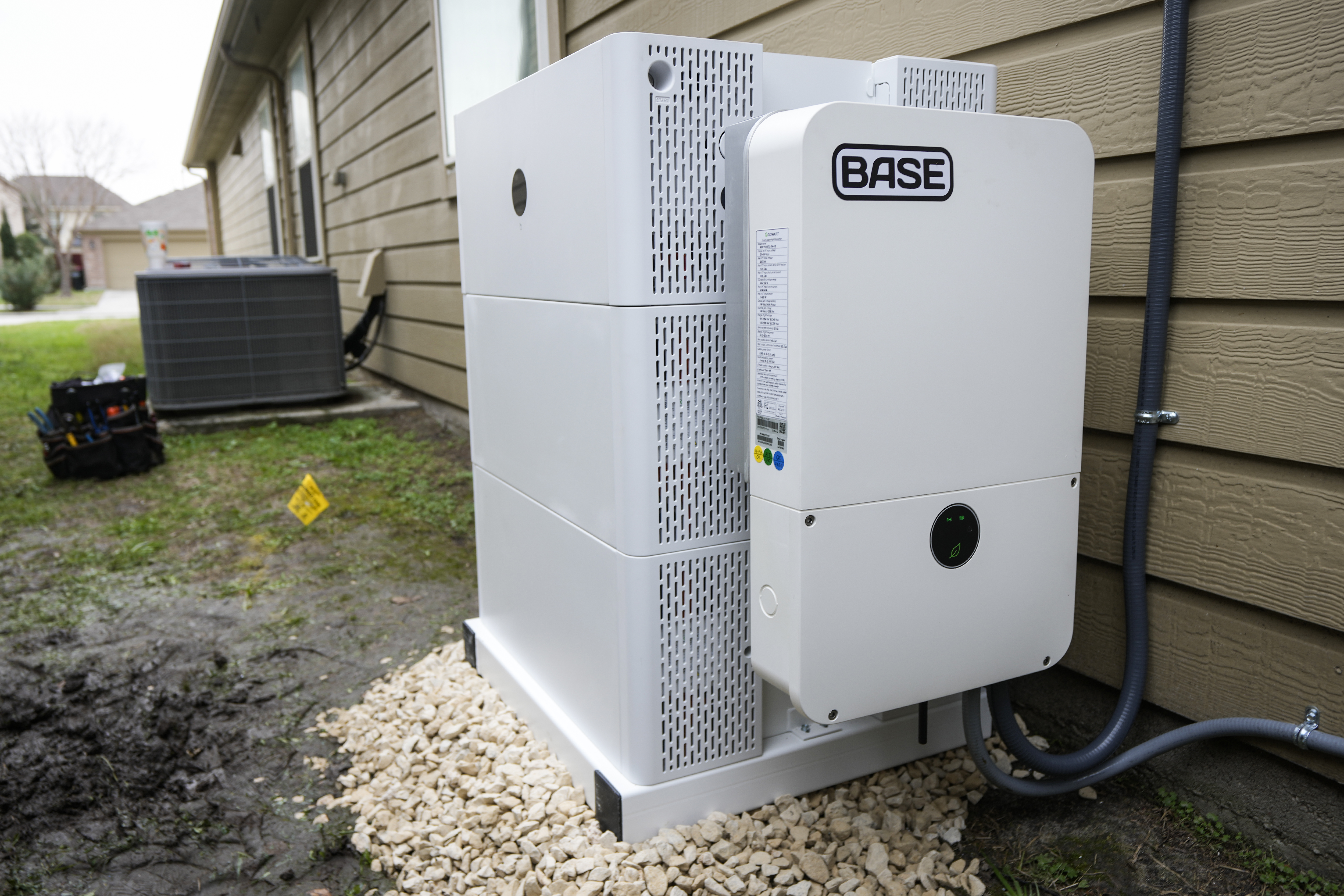
Emerging utility partnerships, such as Base Power’s collaborations with Texas utilities El Paso and Co-Serve, illustrate a novel ownership model where companies own and operate home battery systems at minimal cost to homeowners, using them to reduce peak loads and enhance grid reliability. This model exemplifies a collaborative utility-customer framework that accelerates distributed battery deployment while delivering dual benefits: homeowners gain backup power and cost savings, and utilities rapidly augment capacity without traditional infrastructure investments.




VPPs Scale With AI & Leasing
AI-powered aggregation and innovative leasing models are making virtual power plants mainstream, allowing even regulated utility customers to monetize home batteries while large data centers bankroll residential grid capacity.
Virtual power plants (VPPs) have evolved into a transformative force in distributed energy, with companies like Lunar Energy leveraging deep hardware-software integration to create consumer-friendly battery ecosystems that seamlessly connect with solar panels and VPPs. Drawing on experience from Tesla’s residential energy business, Lunar aims to scale deployment across the 75 million US homes by improving integration and user experience, while the VPP model—selling home batteries and operating them collectively—has attracted substantial investor interest, exemplified by Lunar’s $232 million raise following Base Power’s billion-dollar funding round.
Leasing models pioneered by providers such as Sunrun enable customers to pay less than their previous utility bills from day one while allowing the company to retain control of distributed solar-plus-battery assets for VPP participation. This approach unlocks grid capacity that can be monetized by partnering with large energy consumers like hyperscale AI data centers, which urgently need flexible power solutions and have the financial means to subsidize residential deployments. However, regulatory complexities in regulated utility territories, such as California, require tri-party negotiations involving utilities, customers, and VPP operators, though these challenges are viewed as manageable given the benefits of rapid capacity deployment compared to traditional power plant interconnections.
FERC Order 2222 stands as a pivotal policy enabler, allowing behind-the-meter assets to participate directly in wholesale energy markets and thus vastly expanding the potential scale of VPPs. Aggregation platforms play a critical role in managing the computational and operational complexity by bundling millions of home batteries into manageable blocks for Independent System Operators (ISOs), while local distribution system operators (DSOs) and emerging local markets complement wholesale participation by addressing distribution-level grid impacts. This multi-layered aggregation strategy, combined with innovations like high-power DC EV charging and vehicle-to-grid integration, enhances both grid resilience and customer value.
Behind-the-meter (BTM) battery storage has become a strategic shortcut for large energy consumers such as Microsoft, Google, and Meta to bypass the protracted 5-to-8-year front-of-the-meter interconnection queues, enabling rapid deployment of private microgrids that smooth demand and provide critical grid services. By charging during off-peak hours and discharging during peak loads, BTM systems effectively extend capacity without increasing peak grid demand, offering substantial cost savings through peak shaving and acting as resilient backup power for valuable AI infrastructure. This regulatory and market environment, marked by slow interconnection processes, incentivizes BTM solutions as practical, profitable, and essential for grid resilience and commercial energy autonomy.
By mid-2026, VPPs aggregating residential solar and battery systems have scaled dramatically to meet surging electricity demands from AI data centers and other large consumers, with Sunrun reporting a 400% year-over-year increase in VPP enrollments, reaching over 106,000 customers and delivering peak instantaneous capacity near 80 MW. Texas, benefiting from its deregulated ERCOT market, serves as a proving ground for gigawatt-scale VPP pilots, such as Renew Home’s partnership with NRG Energy and Google Cloud targeting 1 GW of capacity and aiming for 50 GW by 2030. These aggregated resources not only rival traditional peaker plants but also create new revenue streams for providers through grid services, positioning residential energy assets as strategic solutions to manage rising AI infrastructure loads and interconnection delays.
VPPs have transitioned from pilot projects to mainstream grid assets, as evidenced by the 153% surge in US home battery capacity aggregated by VPPs in 2025 and the ability of 100,000 home batteries to outpower large gas peaker plants. Business models like Base Power’s offer discounted batteries and electricity rates in exchange for grid management participation, incentivizing homeowner enrollment. Large-scale collaborations among Sunrun, Tesla, and Renew Home have created the largest distributed power plant in the US, capable of delivering over 16 GW to hyperscale data centers and utilities, while utilities increasingly rely on VPPs to shave thousands of megawatts off peak demand during extreme weather, avoiding costly infrastructure upgrades and fostering a cultural shift toward seamless customer load flexibility.
Utility-led VPP programs like Eversource Energy’s ConnectedSolutions in New England demonstrate the operational and financial viability of aggregating residential batteries to provide grid services such as peak load reduction and deferral of costly infrastructure upgrades. Utilizing cloud-based automation, these programs enable near-autonomous battery dispatch during peak events, rewarding customers with performance-based incentives tied to kilowatt output, supported by regulatory frameworks that align with regional clean energy goals. Similarly, Green Mountain Power’s VPP in Vermont, now the state’s largest power source at 110 MW capacity, leverages over 10,000 batteries to supply nearly 10% of summer peak demand, enabling the retirement of fossil fuel peaker plants and delivering millions in cost savings to customers.
The UK market exemplifies the global momentum behind VPPs, where rising grid strain from electrification, plummeting battery costs, and record solar generation in 2026 have propelled VPPs from experimental pilots to mainstream adoption. Households participating in these programs can earn income by exporting stored energy during peak periods, though compensation structures vary widely—from cash payments to loyalty points or vouchers. Addressing consumer concerns about non-cash rewards, new offerings like Hugo Energy’s Hugo Flex aim to return 100% of generated value as real money, signaling a maturation of VPP business models focused on transparency and equitable customer benefits.


Tech Integration Drives Scale
Hardware-software integration and vehicle-to-grid advances are turning home and EV batteries into dispatchable grid resources, with behind-the-meter systems now critical for both resilience and peak demand reduction.
By early 2026, Lunar Energy emerged as a frontrunner in integrating hardware and software for behind-the-meter battery systems, leveraging CEO Kunal Girotra’s Tesla experience to create a consumer-friendly ecosystem that seamlessly connects home batteries with solar panels and virtual power plants (VPPs). This tight integration not only enhances grid participation flexibility but has attracted significant investor confidence, exemplified by Lunar’s recent $232 million funding round, underscoring the scalability of their VPP-enabled battery deployment model.
Technological advances are pushing beyond traditional battery storage by incorporating high-power DC EV charging and vehicle-to-grid (V2G) capabilities, as companies like Lunar and Tesla pioneer programs such as Tesla’s Cybertruck V2G in Texas, allowing EV owners to monetize their batteries while providing critical grid flexibility. Although commercial-scale V2G integration remains in pilot phases, the rapid acceleration of these technologies, combined with AI-driven software coordinating thousands of interconnected batteries, is transforming home and EV batteries into virtual power plants that can shave thousands of megawatts off peak demand without disrupting user experience.
Behind-the-meter (BTM) battery systems have become a strategic shortcut to grid resilience and cost savings, especially for energy-intensive users like AI data centers, by bypassing front-of-the-meter interconnection delays and acting as virtual capacity expansions. These systems smooth power demand, replace traditional UPS with longer-duration lithium batteries, and enable peak shaving to reduce demand charges, effectively safeguarding high-value infrastructure from outages and grid instability—a role aptly described as a 'Noah’s Ark' for expensive GPU assets.
Smart energy hubs, exemplified by Sunrun’s Brightbox and supported by partnerships with Tesla and LG Chem, combine solar, home batteries, and bidirectional EV charging to optimize behind-the-meter storage and grid services. These hubs leverage AI-driven software to prioritize critical loads during outages and aggregate distributed batteries for virtual power plant participation, delivering both resilience and financial benefits—Tesla alone paid $9.9 million to Powerwall customers in 2024. Meanwhile, modular commercial solutions like Huijue Solar’s containerized battery systems enable rapid, scalable deployment with integrated safety and monitoring, further enhancing operational flexibility and cost-effectiveness across diverse applications.
Resilience for a New Normal
Utilities and homeowners are relying on distributed solar and batteries to weather outages and extreme events, with virtual power plants cutting costs, replacing peaker plants, and redefining grid reliability.
By mid-2026, utilities across diverse regions such as Texas and Vermont have embraced distributed solar paired with battery storage to dramatically bolster grid resilience amid escalating extreme weather events and aging infrastructure. Partnerships like Base Power's 100MW battery deal with El Paso and Co-Serve utilities illustrate how near-zero-cost home batteries not only provide critical backup power during outages but also enable utilities to reduce peak loads and defer costly infrastructure upgrades. Similarly, Green Mountain Power’s virtual power plant (VPP) in Vermont, aggregating over 10,000 residential batteries, dispatched 90 MW during a heat wave, cutting $6 million in peak costs and facilitating the retirement of carbon-intensive peaker plants, showcasing a scalable model of grid stabilization through behind-the-meter resources.
The rise of virtual power plants (VPPs) powered by home and electric vehicle batteries represents a cost-effective and customer-friendly approach to grid stabilization during extreme weather and peak demand periods. Thousands of homeowners now participate in programs like Tesla and PG&E’s VPP or Eversource Energy’s ConnectedSolutions in Massachusetts, which automate battery dispatch to shave thousands of megawatts off peak loads while compensating participants with incentives up to $1,000 annually. This model not only prevents blackouts and stabilizes electricity prices but also aligns with regional clean energy policies aiming to replace fossil-fuel peaker plants, thereby advancing decarbonization goals without compromising customer backup power.
Frequent power outages throughout 2026, driven by extreme weather and decades-old grid infrastructure, have accelerated a cultural and technological shift toward grid independence via distributed solar and battery storage. Case studies from Florida, Long Island, and across the US reveal how homeowners increasingly rely on these systems to maintain critical functions—such as indoor cooling during hurricanes or energy time-shifting amid high utility costs—while utilities grapple with strained grids and reliability challenges. Innovations like Pila’s affordable plug-and-play batteries and SUNation Energy’s milestone of 800 residential installations on Long Island underscore growing consumer trust and the vital role of local expertise in enhancing resilience against an outage-prone “new normal.”
Beyond residential applications, commercial facilities are adopting integrated on-site solar, battery storage, and EV charging systems to achieve energy resilience and reduce grid dependence amid extreme weather and peak demand pressures. Costco’s Florida distribution center, outfitted by Trinity Energy, exemplifies this trend by operating independently from the grid to ensure continuous operations while lowering energy costs and benefiting from tax incentives. As energy buyer Ime Ntekpere notes, such projects not only enhance facility reliability but also inspire broader community support for behind-the-meter clean energy solutions, signaling a scalable pathway for energy-intensive operations to contribute to grid stability and decarbonization.

Smart Hubs Power Industry
Integrated solar, battery, and EV charging hubs are letting commercial sites like Costco and UNFI slash energy costs, electrify fleets, and operate through outages—often without expensive grid upgrades.
By mid-2026, commercial and industrial sites have increasingly adopted integrated smart energy hubs that combine solar generation, battery storage, and bidirectional EV charging to drive down energy costs and enhance operational resilience. Cenex's July report highlights that tailored systems—optimized for specific vehicle charging patterns, tariff structures, and site demands—can save thousands annually, with high-demand factories cutting peak loads by up to 150kW. This bespoke approach is critical, as Steve Carroll of Cenex emphasizes that smart DC microgrids like Fasthub are essential for fleet electrification in grid-constrained environments, enabling higher-powered EV charging without costly grid upgrades while maximizing on-site renewable use.
Huijue Solar’s late July launch of containerized modular battery storage systems marks a significant leap in commercial energy management by enabling rapid deployment and scalable capacity expansion without operational disruption. These preconfigured units support vital applications such as outage protection, peak shaving, and load management, integrating seamlessly with on-site solar to optimize energy use and reduce demand charges. Their modularity and real-time monitoring capabilities not only enhance reliability but also empower businesses to stabilize energy costs and maintain continuity amid fluctuating consumption patterns.
Leading commercial operators like UNFI and Costco exemplify how integrated solar, battery, and EV charging infrastructures can transform energy and fleet management to bolster supply chain resilience and grid stability. UNFI’s California distribution center, with its 1.5-megawatt solar array and capacity to charge 30 electric trucks, showcases a strategic, holistic approach to electrification supported by public funding and sustainability partnerships. Meanwhile, Costco’s Florida facility operates largely off-grid during outages, reducing exposure to rising utility rates and benefiting from tax incentives, while gathering granular energy data to identify waste and optimize operations—demonstrating a replicable model for energy-intensive sites aiming to stabilize expenses and ease local grid demand.
AI Platforms Accelerate Returns
AI-native platforms like trutility are slashing project timelines from months to hours, driving billion-dollar investments and delivering double-digit returns for distributed solar and battery portfolios.
By mid-2026, Distributed Sun’s strategic investment exceeding $1 billion in trutility—a cutting-edge AI-native energy infrastructure platform—has revolutionized the speed and scale of distributed energy resource deployment. Trutility’s autonomous processes have compressed traditionally month-long development and operational tasks into mere hours, enabling rapid scaling of multi-state community solar projects, expanding battery storage systems, and pioneering initiatives like PG&E’s Flex Connect EV fleet-charging microgrid. This platform-driven acceleration not only enhances operational efficiency but also exemplifies how technological innovation is critical to integrating diverse distributed energy resources across regions.
Distributed Sun’s financial performance since 2019 underscores the robust investment case for distributed energy resources scaled through platforms like trutility, boasting a remarkable 9.2x multiple on invested capital and a 14.3% average levered operating asset return. These strong returns highlight the viability and attractiveness of capital deployment in distributed solar and battery projects, signaling growing investor confidence in the sector’s ability to deliver both sustainable energy solutions and compelling economic outcomes amid the clean energy transition.
