Walmart’s drone delivery blitz hits 1 million
The gist
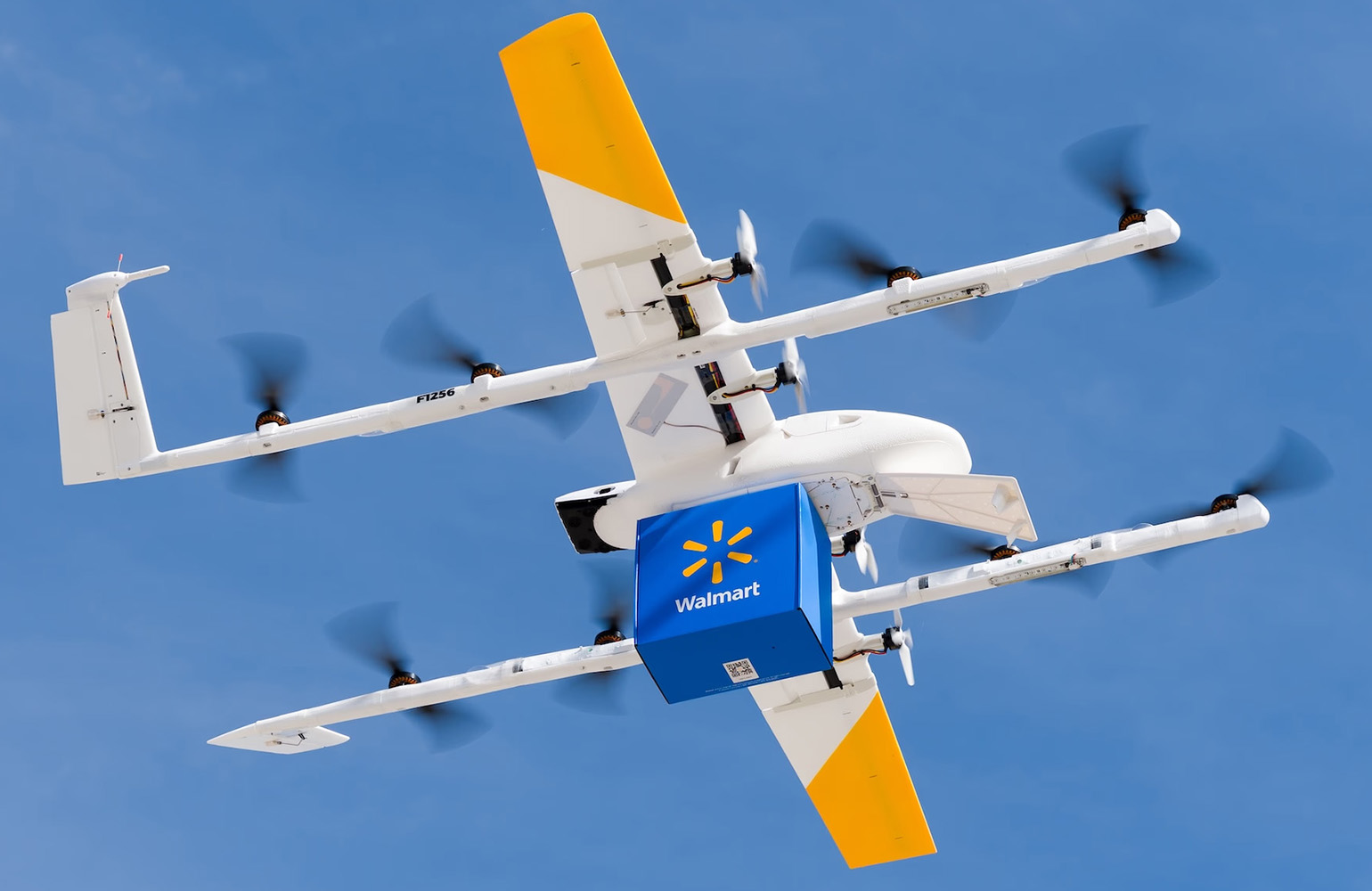
Walmart has shattered the 1-million mark in drone deliveries, now reaching 60% of Americans in under 30 minutes—and it’s not slowing down.
What to know
- By mid-2026, Walmart’s drone network—powered by Wing and Zipline—expanded to 270+ stores, enabling customers in 20 metro markets to get essentials delivered in as little as 23 minutes.
- Regulatory breakthroughs, including FAA approvals for beyond-visual-line-of-sight and night flights, fueled Walmart’s rapid scale-up and allowed 40% of all drone deliveries to happen in a single quarter.
- Walmart’s drone blitz has driven a 26% surge in eCommerce growth and over 50% jump in fast-delivery sales, all while hosting community forums to address noise and neighborhood feedback.
Inside the Drone Rollout
Walmart’s drone network is scaling rapidly through direct store integration and frequent customer use, with some shoppers ordering by drone up to three times a week for everyday essentials.
By early 2026, Walmart’s drone delivery network, powered primarily through its partnership with Wing Aviation, was undergoing rapid expansion, with plans to add drone services to 150 additional stores across major U.S. cities including Houston, Los Angeles, and Miami. This growth aims to cover over 10% of the U.S. population from more than 270 Walmart locations by 2027, driven by strong customer adoption where frequent repeat orders—some users ordering up to three times weekly—underscore the service’s appeal for everyday essentials like groceries and snacks. Wing’s strategic integration of drone operations directly with Walmart stores is central to scaling delivery volume and sustaining the economic model behind this innovation.
Walmart’s drone delivery milestone of surpassing one million commercial deliveries by mid-2026, with 40% of those deliveries occurring in a single fiscal quarter, signals a sharp acceleration in both customer adoption and operational capacity. This surge is geographically diverse, with 66 stores across four states and five metro markets actively participating, and Texas alone accounting for over 200,000 deliveries. The company leverages two distinct drone partners—Wing Aviation and Zipline—each employing specialized drone technologies tailored for different delivery needs, such as Zipline’s tethered P2 drone designed for precise urban drops, reflecting a sophisticated, multi-pronged approach to scaling.
Regulatory advancements have been pivotal in enabling Walmart’s scalable drone delivery expansion, with the FAA granting beyond-visual-line-of-sight (BVLOS) authorizations that allow a single remote pilot to oversee multiple drones simultaneously. This regulatory progress, including Wing’s approval for after-sunset flights, has transformed drone delivery from a novelty into a routine service, facilitating rapid network growth into nearly 20 metropolitan markets such as Memphis, Philadelphia, and the San Francisco Bay Area. Walmart’s focus remains on small-basket household replenishment items—typically under $30 and payloads of 3 to 8 pounds—optimizing delivery efficiency and aligning with core retail strengths while actively collaborating with local communities to support sustainable scaling.


Speed and Scale in Action
Walmart’s dual-partner drone strategy now delivers essentials to 60% of Americans in under 30 minutes, fueling eCommerce growth and outpacing Amazon in fast-delivery reach.
By mid-2026, Walmart's drone delivery operations have scaled impressively, completing over 1 million deliveries with 40% occurring in just the latest fiscal quarter, reflecting rapid expansion fueled by FAA approvals and operational execution. Leveraging partnerships with Wing Aviation and Zipline, Walmart utilizes complementary drone technologies—Wing's hybrid drones and Zipline's P2 models—to efficiently deliver small-basket household essentials like bananas and cold medicine within an average of 23 minutes from order to drop. This dual-partner strategy not only enhances delivery speed but also broadens Walmart's geographic footprint across 66 stores in four states and five metro markets, with Texas alone accounting for over 200,000 deliveries, underscoring a robust operational model that rivals Amazon's capabilities.
Walmart’s drone network now reaches approximately 60% of the U.S. population within a 30-minute delivery window, a milestone that significantly strengthens its competitive positioning against Amazon. This expansive geographic coverage, combined with a delivery speed where over 36% of store deliveries arrive within three hours and drone deliveries average just 23 minutes, has translated into tangible business outcomes, including a 26% enterprise-wide eCommerce growth and a more than 50% year-over-year surge in fast-delivery category sales. These operational gains highlight how Walmart’s investment in drone delivery technology is not only enhancing customer satisfaction but also driving substantial market share gains in the rapidly evolving eCommerce landscape.
Community Buy-In and Backlash
Walmart is co-hosting forums and adapting flight paths to address neighborhood concerns, aiming to keep public support as drone deliveries multiply in urban areas.
Walmart has taken a proactive stance in engaging local communities about its drone delivery program by co-hosting meetings with Zipline, the operator managing deliveries in Lake Highlands and Hamilton Park. These gatherings, such as the one scheduled for June 30, 2026, serve as vital platforms for residents to voice concerns and learn about the expanding service, underscoring Walmart’s commitment to transparency and fostering positive public relations amid rapid innovation.
Learning from the challenges faced by competitors like Amazon, which adjusted its Prime Air drone flight paths and altitudes in Richardson to mitigate noise complaints, Walmart demonstrates a willingness to adapt its operations based on community feedback. This strategic responsiveness not only helps minimize disturbances but also signals Walmart’s dedication to balancing technological advancement with neighborhood quality of life.
Regulators and Real-World Tests
FAA approvals for night and BVLOS flights are letting Walmart prove large-scale drone logistics in new cities, cementing its leadership in compliant, autonomous delivery.
By mid-2026, Walmart significantly accelerated its autonomous drone delivery ambitions by expanding its partnership with Wing to more cities, marking a decisive step toward routine, scalable drone logistics. This expansion not only broadens geographic reach but also underscores Walmart's strategic commitment to leveraging Wing’s cutting-edge autonomous drone technology to enhance last-mile delivery speed and efficiency directly from Walmart fulfillment centers to customers’ doorsteps.
This broader rollout acts as a real-world proving ground for both Walmart’s operational capabilities and the evolving regulatory landscape, particularly the FAA’s increasing acceptance of drone delivery innovations. The expansion into new markets reflects tangible progress in regulatory readiness, including permissions that facilitate after-sunset flights and integration with local drone airport infrastructure, positioning Walmart at the forefront of pioneering scalable, compliant drone logistics.
AI Powers the Supply Chain
Walmart’s use of digital twins, machine learning, and associate-facing AI tools is optimizing deliveries and empowering employees to solve supply chain bottlenecks at scale.
By mid-2026, Walmart had deeply integrated AI technologies, including digital twins and machine learning, to revolutionize its supply chain management. Indira Uppuluri, senior vice president of supply chain technology, highlighted how combining data on weather patterns and customer buying history with advanced AI has significantly sharpened predictive capabilities and optimized resource allocation across Walmart’s vast network. This strategic use of AI not only enhances efficiency but also supports the rapid delivery demands driven by Walmart’s expanding drone logistics.
Walmart’s innovative approach extends beyond technology adoption to empowering its workforce through AI-driven tools and partnerships. Collaborations with OpenAI and Google have enabled Walmart to embed large language models and custom AI solutions into its associate-facing platform, Squiggly, offering role-specific AI certifications that encourage employees to develop tailored tools. This democratization of AI expertise ensures that supply chain teams can holistically optimize operations, balancing assortment, speed, and cost by leveraging AI agents and digital twins to identify and resolve bottlenecks across the entire supply chain.