Warsh’s hawkish Fed adds pressure on gold
The gist
Fed Chair Kevin Warsh is rattling markets with signals of up to three rate hikes in 2026 as inflation, oil shocks, and AI chaos collide.
What to know
- Warsh’s hawkish Fed is eyeing as many as three rate hikes next year, prioritizing inflation control despite a resilient labor market and surging AI-driven shifts.
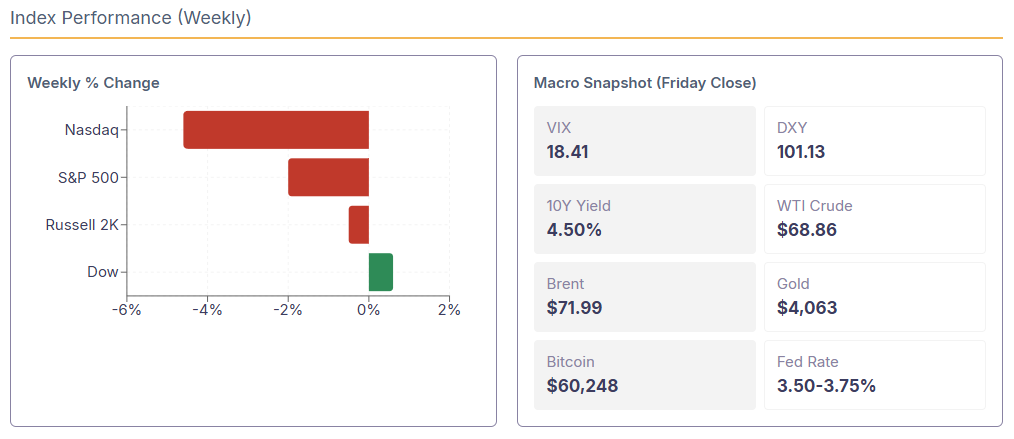
- Inflation has spiked to a three-year high, fueled by Middle East turmoil and oil price swings between $67 and $78 per barrel, keeping the Fed on edge.
- Over $1 trillion has rotated out of tech and energy stocks into industrials and chipmakers, while safe-haven demand for gold and market volatility hit new highs.
Warsh’s Hawkish Playbook
Kevin Warsh’s Fed is doubling down on aggressive rate hikes, reshaping policy to tackle inflation and AI-driven upheaval while navigating internal rifts and global volatility.
Fed Chair Kevin Warsh has signaled a decidedly hawkish monetary policy stance amid persistent inflation and a resilient labor market, indicating the possibility of up to three interest rate hikes in 2026. This approach reflects the Federal Reserve's prioritization of inflation control despite strong consumer spending and robust job growth, with Warsh emphasizing demand-led inflation pressures in the context of stable unemployment rates in the low 4 percent range. By anticipating structural economic shifts, including AI-driven labor market changes and tech sector upheaval, Warsh’s policy framework integrates broader economic dynamics while maintaining a firm commitment to tightening monetary conditions.
Recent FOMC minutes and Warsh’s July 14 Senate testimony reveal a nuanced hawkish posture that balances the potential for a pause in rate hikes with readiness to act if inflation remains sticky. While the Fed unanimously held rates steady in June, several officials advocated for modest increases—interpreted as 25 basis point hikes in September and December—to ensure inflation excesses are temporary. This cautious yet firm approach underscores the Fed’s focus on core inflation rather than headline figures influenced by volatile oil prices, reflecting a strategic tightening amid ongoing geopolitical turmoil and inflation jitters.
Geopolitical tensions, particularly the Iran conflict, have reinforced Warsh’s hawkish stance by exacerbating inflationary pressures and pushing yields higher, prompting fixed income markets to brace for at least one more rate hike in 2026. This external volatility is reshaping investment strategies across sectors—from AI-powered semiconductors to private credit—while complicating the Fed’s policy calculus. Warsh’s communication overhaul amid internal Fed rifts and market roilings highlights the complexity of navigating inflation control in a turbulent global environment, where geopolitical risks and AI-driven cost pressures pose unprecedented challenges to monetary policy.
Fed officials like Christopher Waller have shifted from dovish to hawkish positions, emphasizing that strong labor market data—such as low unemployment and solid job growth—justify continued monetary tightening despite some perceptions of soft economic signals. Waller’s hawkish pivot, coupled with Warsh’s readiness to act on inflation amid rate hike debates and geopolitical uncertainty, signals that the Fed is prepared to extend monetary tightening over the next 6 to 12 months unless clear inflation improvements emerge. This stance reflects a consensus that controlling inflation now is paramount, even as the Fed grapples with emerging inflation drivers linked to AI and evolving economic conditions.





Inflation’s Hidden Drivers
Supply shocks from AI infrastructure and labor market strains are fueling persistent inflation that rate hikes alone can’t tame, forcing the Fed into a complex balancing act.
Inflation has surged to a three-year high, largely fueled by geopolitical tensions such as the Iran conflict and volatile oil prices, creating persistent inflationary pressures that complicate the Federal Reserve’s policy path. Fed Chair Kevin Warsh and other officials are navigating a razor-thin line between maintaining a hawkish stance to tame inflation and avoiding market turbulence, with the Fed signaling a potential pause on rate hikes contingent on labor market softness. This delicate balancing act reflects the complexity of managing inflation amid external shocks and economic data that continue to challenge traditional monetary tools.
Labor market dynamics remain a critical influence on the Fed’s monetary policy decisions, as strong labor data—highlighted by tightening labor supply, sector-specific wage pressures, and immigration challenges—sustain inflation concerns despite some easing in headline inflation. June’s jobs report, showing sluggish growth but steady wages, has intensified market jitters and underscored vulnerabilities in credit and mortgage sectors, while wage growth lagging behind soaring costs points to a complex labor market that limits consumer purchasing power and prolongs inflation persistence.
Supply-driven inflation, including cost pressures from AI infrastructure and lingering effects of tariffs and geopolitical shocks, complicates the Fed’s ability to control inflation through interest rate hikes alone. Analysts like Adam Shapiro of the San Francisco Fed emphasize that most current inflation stems from supply constraints, which may worsen if rates rise further by reducing investment and supply availability. While some sectors, notably those propelled by AI innovation, appear insulated from traditional inflationary pressures, the Fed must remain vigilant on demand-led inflation, driven by strong nominal growth and a tight labor market, to achieve overall price stability.
Recent inflation data offers a nuanced picture: June’s Consumer Price Index fell 0.4%, the largest monthly drop since 2020, and core 12-month inflation edged closer to the Fed’s 2% target, prompting markets to lower near-term rate hike odds. Nevertheless, Chair Warsh maintains a hawkish tone, emphasizing zero tolerance for persistently elevated inflation and the need to keep inflation under control within one to two years. The Fed’s outlook remains cautious, hinging on upcoming inflation prints—especially core PCE inflation above 0.25%—and key components like shelter costs, which are pivotal to moderating core inflation trends moving forward.

Oil Shocks and Fed Pressure
Iran conflict and Strait of Hormuz instability are driving oil price swings that amplify inflation and force the Fed to weigh energy risks against economic stability.
Geopolitical tensions centered on the Iran conflict and renewed instability in the Strait of Hormuz have directly fueled oil price volatility, with prices fluctuating between $67 and $78 per barrel throughout mid-2026. This volatility has triggered inflation shocks that surged consumer prices to a three-year high, complicating the Federal Reserve's monetary policy calculus. Fed Chair Kevin Warsh and hawkish officials like Christopher Waller have cited these energy shocks as reinforcing the need for continued rate hikes, despite market turbulence and labor market uncertainties, underscoring the delicate balancing act policymakers face amid persistent inflation and geopolitical risks.
Although military de-escalation in the Iran conflict has somewhat stabilized oil prices, lingering effects such as a jet fuel crisis and infrastructure disruptions—including the UAE’s costly new port and container terminal projects—continue to strain global supply chains and investment flows. These developments have prompted a pullback in Middle Eastern funding for technology sectors, notably Silicon Valley, as regional reconstruction demands divert capital, thereby raising yields and adding another layer of complexity to the Fed’s hawkish stance and market expectations for potential rate hikes in October.
Market resilience amid rising Treasury yields and geopolitical jitters reflects investor confidence that any Gulf shipping disruptions will be temporary; however, analysts warn that a prolonged closure of the Strait of Hormuz could severely tighten global oil supplies and reignite inflation pressures. This looming risk amplifies uncertainty around the Fed’s policy trajectory under Warsh, whose communication overhaul and internal Fed rifts have already roiled markets. The convergence of geopolitical energy shocks with sticky inflation and AI-driven economic shifts has forced policymakers into a high-stakes balancing act, navigating between hawkish pivots and the threat of market instability.



Markets Shift Amid Uncertainty
A trillion-dollar rotation from tech to industrials and chipmakers, surging gold demand, and volatile crypto reflect investor anxiety as the Fed’s hawkish turn collides with global turmoil.
Investors have executed a massive rotation exceeding a trillion dollars, shifting capital away from traditional tech giants and energy stocks into industrials and chipmakers, driven by a confluence of Fed Chair Kevin Warsh's hawkish surprise, persistent inflation, and geopolitical tensions stemming from Middle East conflicts. This sectoral reshuffling is further accelerated by AI-driven disruptions, notably the surge in chip demand that is unsettling established tech players, while Bitcoin's heightened volatility adds to investor caution. As markets brace for continued Fed rate hikes amid fractured signals, the dollar has strengthened, prompting a flight to safe-haven assets such as gold, which central banks including China’s PBOC are increasingly accumulating despite downward price pressures.
Market volatility has surged in 2026 as hawkish Federal Reserve signals intersect with geopolitical oil shocks and AI-driven labor and technological upheavals, reshaping inflation dynamics and investor sentiment. This turbulence has forced sectors like insurance and private credit to rethink strategies, while emerging markets display notable resilience amid the fracturing global economic landscape. Meanwhile, the tech sector experiences tremors not only from monetary tightening but also from soaring AI-related tech debt, prompting cautious optimism from institutions like Wells Fargo that highlight the complex risks ahead as Warsh’s Fed challenges established policy norms.
Amid the hawkish Fed stance and simmering geopolitical tensions, markets are preparing for heightened volatility in gold, mortgage sectors, and cryptocurrencies, with the latter’s future hinging on regulatory clarity and innovation. Despite Fed-induced pressure on gold prices, institutional confidence remains robust as central banks ramp up bullion purchases, signaling a strategic pivot towards safe-haven assets. Concurrently, the strengthening dollar and ongoing inflation pressures continue to fuel safe-haven jockeying among gold, bitcoin, and the yuan, underscoring the complex interplay of monetary policy and geopolitical risks in shaping currency and asset flows.
By mid-2026, inflation has emerged as the ultimate driver behind global risk-free rates, overshadowing central bank power struggles and amplifying volatility across equities, commodities, and crypto markets. This inflationary backdrop, combined with Fed hawkishness and geopolitical tensions, has catalyzed significant sector rotations, particularly from technology to industrials and chipmakers amid AI chip wars and fractured market signals. Yet, as markets brace for a potential extended Fed hold and ongoing geopolitical shocks, emerging markets and select tech sectors are reclaiming leadership, reflecting a nuanced and evolving investment landscape.