Wearables graduate: from step counters to personalized health coaches and stress gyms
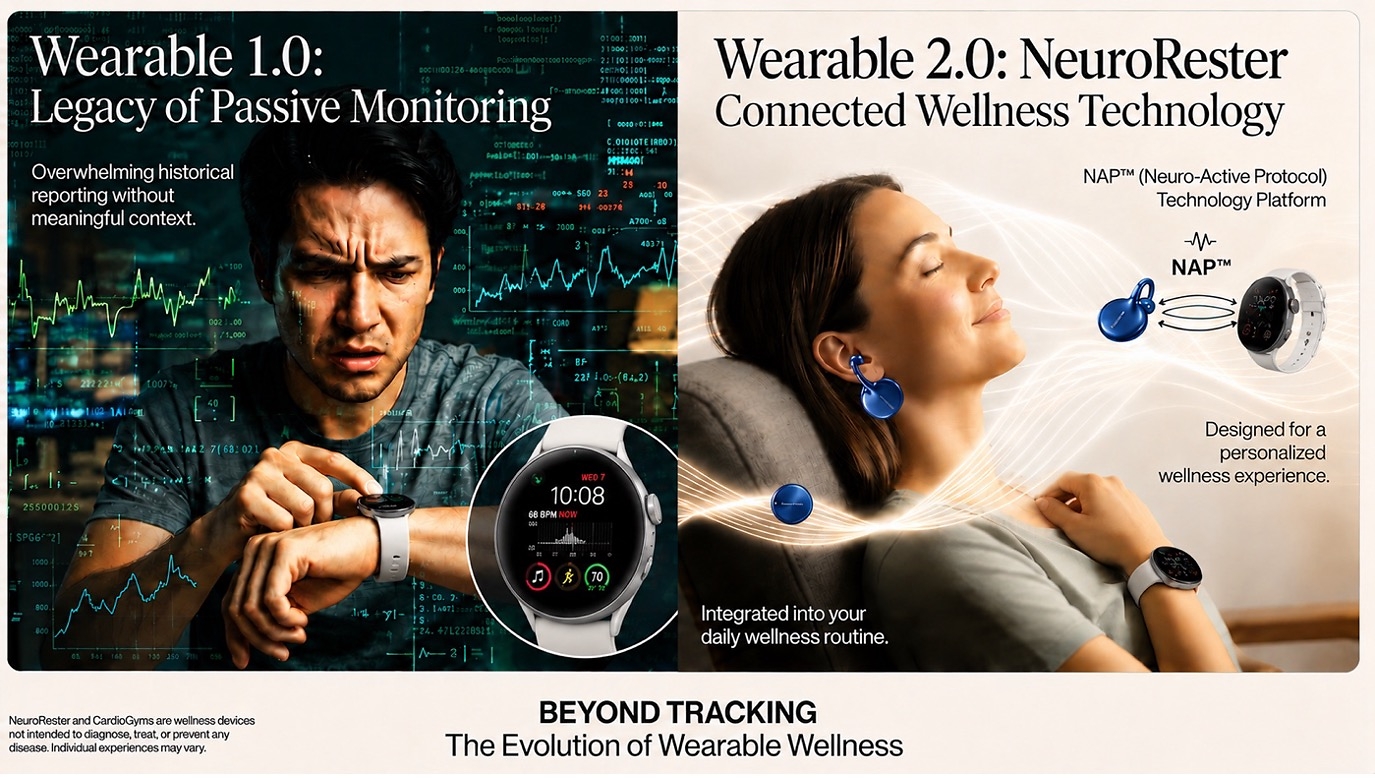
The gist
Wearables have graduated from simple step counters to AI-powered personal health coaches and 'stress gyms,' fusing clinical data, biometric sensors, and real-time insights for truly personalized wellness.
What to know
- By mid-2026, NeuroRester, Oura Ring 4, and WHOOP transformed wearables into holistic health platforms, integrating biometric sensors and clinical records for tailored recovery and wellness routines.
- Oura and WHOOP now combine clinical data with biometric tracking—supporting GLP-1 therapy monitoring and personalized insights—while fiercely protecting privacy and user data ownership.
- INVI MindHealth’s ARPA-H-backed EVIDENT platform and next-gen wearables enable precision mental health care and active stress training, with stress recovery now treated like a fitness discipline.
Wearable 2.0: Beyond Tracking
NeuroRester and Oura Ring 4 are redefining wearables with advanced hardware and multi-sensor integration, delivering personalized recovery routines and real-time lifestyle feedback far beyond step counting.
By mid-2026, NeuroRester propelled wearables beyond mere biometric tracking with the launch of its Wearable 2.0 ecosystem, anchored by proprietary NAP™ (Nightly-Active Protocol) technology. This innovation seamlessly connects users’ existing devices with NeuroRester’s hardware, crafting personalized relaxation and recovery routines tailored to individual wellness preferences. Complementing this, the ecosystem integrates specialized hardware like NeuroRester earbuds featuring Bioboosti® technology and CardioGyms® wearables, designed for continuous, comfortable daily support, signaling a holistic approach to health management.
Similarly, the Oura Ring 4 exemplifies the transition from simple tracking to comprehensive health platforms by monitoring over 50 health metrics, including detailed sleep stages such as REM and deep sleep, which are crucial for recovery and longevity. Its sophisticated integration of multiple biometric sensors—blood oxygen, heart rate, HRV, and respiration—into a single wearable enables continuous, nuanced health monitoring. By synthesizing data into actionable daily scores like Sleep, Readiness, and Activity Scores, Oura empowers users to discern lifestyle impacts on their wellness, such as how late-night eating or alcohol consumption can degrade sleep quality.

Clinical Data Meets Daily Life
WHOOP and Oura now unite biometric wearables with clinical health records, empowering users to manage therapies and chronic conditions while maintaining strict data privacy and ownership.
By mid-2026, WHOOP's strategic partnership with HealthEx marked a pivotal advancement in integrating continuous biometric data with electronic health records, allowing U.S. members to create a comprehensive and secure health profile within the WHOOP app. This collaboration leverages WHOOP AI and the My Memory feature to synthesize clinical factors—such as chronic conditions, medical procedures, and medication changes—with biometric metrics like recovery and strain, delivering deeply personalized health insights. Importantly, this integration addresses growing consumer demand for connected health experiences by maintaining stringent privacy controls and user data ownership, exemplifying the evolving landscape of consumer-driven, yet clinically informed, healthcare.
Simultaneously, Oura has pushed the envelope by integrating clinical data with wearable metrics to support specialized healthcare applications, notably for users undergoing GLP-1 therapy. Their GLP-1 Insights feature enables members to log medication doses, side effects, and weight fluctuations alongside biometric data, complemented by Lab Uploads that import clinical test results. This connected approach not only empowers users with a holistic view of their health journey but also underscores a broader industry trend where wearables evolve beyond fitness tracking into personalized, data-driven therapeutic support systems.

Precision Mental Health in Action
INVI MindHealth’s EVIDENT platform leverages continuous biometric and cognitive data to personalize mental health care for veterans, pioneering real-time, multimodal insights without replacing clinical judgment.
By mid-2026, INVI MindHealth has positioned itself at the forefront of integrating wearable technology into mental health research through its ARPA-H-funded EVIDENT platform, which leverages continuous biometric data from ŌURA smart rings alongside EEG, self-reports, and clinical assessments to deepen understanding of veteran mental health responses. Central to this approach is INVI's MindScore™, a trend-based mental resilience metric that tracks wellbeing changes over time while emphasizing privacy and consent, thus complementing clinical data without serving as a diagnostic tool.
The EVIDENT platform exemplifies a multimodal, precision mental healthcare ecosystem by combining biometric signals, behavioral insights, and peer support to enable earlier awareness and richer context in mental health care, particularly for veterans undergoing innovative treatments such as psychedelics and neuromodulation. This integrated approach is further strengthened by collaborations with technology and clinical partners, aiming to advance real-time detection of treatment responses through continuous data streams paired with trusted human connection.
The collaboration between ŌURA and UK-based Cambridge Cognition, launched in May 2026, adds cognitive assessment tools as an opt-in feature, enhancing the fusion of wearable data with neuroscience research and supporting longitudinal studies of veterans’ mental health during psychedelic therapies. This partnership underscores a broader trend toward precision mental healthcare that integrates biomarkers, clinical context, and longitudinal data to create infrastructure connecting treatments, clinicians, and patients in a more personalized and data-driven manner.
Stress Fitness Goes Mainstream
Wearables like WHOOP and Oura have transformed stress management into an active discipline, using biofeedback and guided interventions to train resilience just like physical fitness.
Wearables have transitioned from merely tracking stress passively to actively training the nervous system, treating stress recovery as a workout complete with reps, load, and recovery windows. WHOOP pioneered this shift in March 2023 with its Stress Monitor, which quantified stress on a 0-3 scale and paired it with guided breathing exercises, turning stress into a real-time, actionable metric that prompts micro-interventions. This approach laid the groundwork for a broader movement where stress fitness is framed similarly to physical fitness, emphasizing resilience building through biofeedback.
By early 2024, Oura deepened this paradigm shift with its Resilience model, a 14-day framework that moved beyond daily stress scores to assess multi-week nervous system capacity, effectively treating stress as an accumulative training load akin to cardio or strength training. The following year, Oura’s redesigned app introduced a Cumulative Stress feature, reinforcing this concept and helping users understand stress recovery as a dynamic, trainable process rather than a static state. This evolution reflects a maturing market that increasingly views stress management through the lens of fitness and adaptation.
The rapid consumerization of nervous system training has given rise to a new category of 'nervous system gyms,' with companies like Oura, WHOOP, and Apollo Neuro leading the charge. These early-stage products promise to help users build resilience and speed recovery by quantifying regulation capacity through biofeedback techniques originally developed in clinical settings. This innovation signals a mainstreaming of stress fitness, supported by projections that the U.S. wearable market will surpass 100 million users by 2025, underscoring the significant scale and appetite for active stress intervention technologies.
From Data Overload to Smart Guidance
ŌURA and clinicians are shaping wearables into intelligent health coaches, distilling vast physiological data into actionable insights that matter most for prevention and daily decision-making.
By mid-2026, ŌURA’s Dr. Chris Curry emphasized that user experience is pivotal in evolving wearables beyond mere data collectors into personalized health guides. ŌURA Ring users explicitly seek tools that help prevent disease and promote healthy choices through integrated data, rather than just raw metrics like heart rate graphs. This shift towards actionable insights reflects a broader trend where wearables, enhanced by AI and clinical expertise, offer a richer, continuous health narrative that captures real-time physiological, environmental, and behavioral nuances often missed in traditional clinical visits.
Dr. Curry also highlighted the indispensable role of clinician collaboration in refining wearable outputs to avoid overwhelming users with excessive information. Partnerships with physicians have revealed that more data does not equate to better care; instead, wearables must distill information to what is clinically valuable in specific moments. This clinician-driven feedback loop ensures that wearables deliver trustworthy, actionable health insights, fostering a smart care continuum that balances comprehensive monitoring with user-friendly clarity.