WHCD shooting fallout fuels security, mistrust push
The gist
A shocking shooting at the 2026 White House Correspondents' Dinner exposed gaping security failures, unleashed a wave of media mistrust, and handed Trump a political megaphone to push his most controversial project yet.
What to know
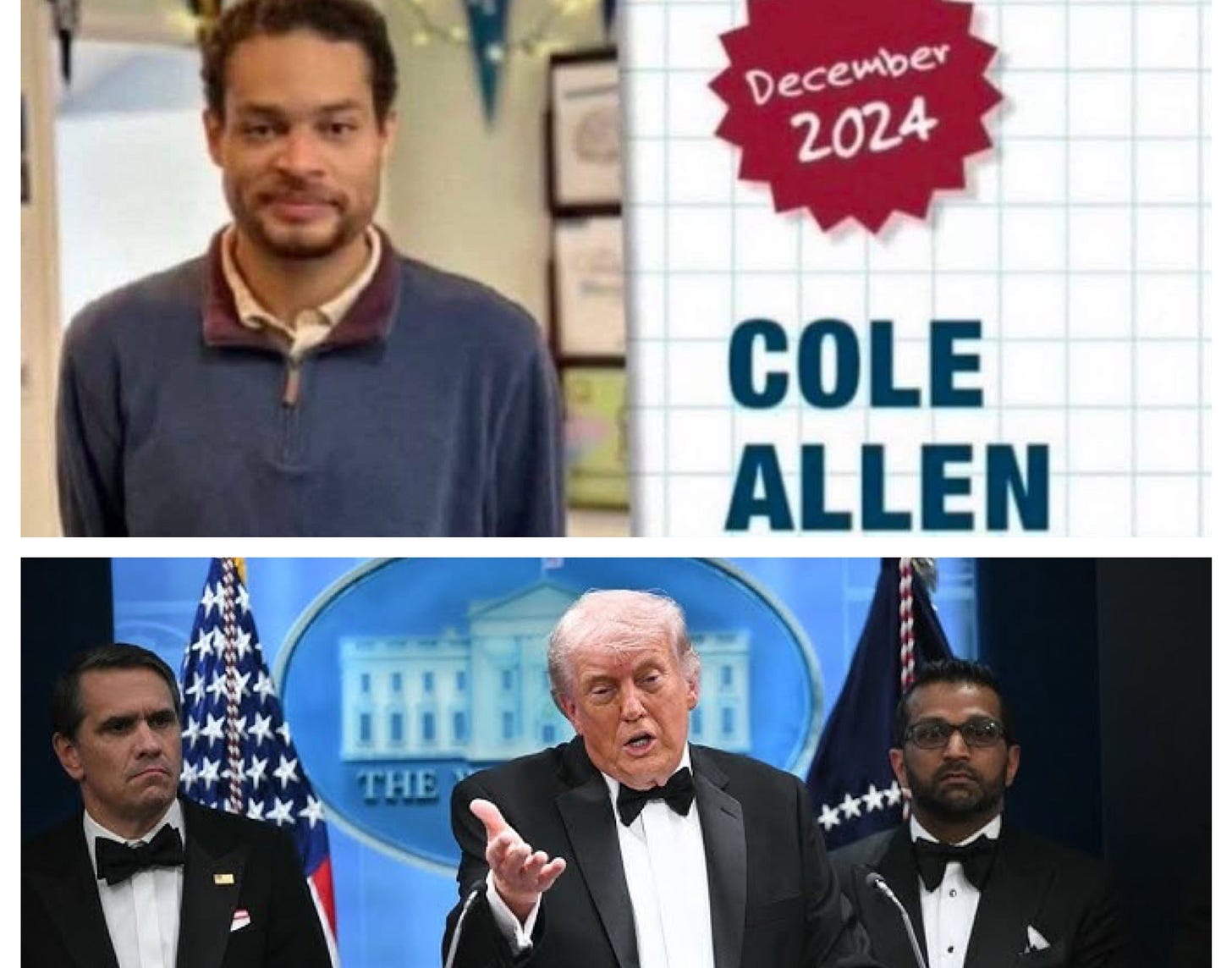
- Shooter Cole Tomas Allen bypassed multiple security layers to get dangerously close to former President Trump and VP JD Vance before being stopped by law enforcement.
- The incident fueled a torrent of misinformation and conspiracy theories, with journalists battling to report the truth as public trust in both media and official narratives hit new lows.
- Trump swiftly politicized the chaos, demanding $400 million in taxpayer funds for a new ballroom project and using the crisis to stoke division and consolidate power.
Security Gaps Exposed
Despite heavy federal presence, glaring lapses in event security allowed a gunman to breach multiple layers and threaten the presidential line of succession, prompting a scramble for both accountability and policy leverage.
The April 2026 shooting at the White House Correspondents' Dinner forced the urgent evacuation of former President Donald Trump, exposing critical vulnerabilities in security at a highly surveilled political event. Despite hundreds of federal agents present, the shooter, Cole Tomas Allen, managed to bypass multiple security layers, including running through a security scanner and reaching a floor just above the ballroom where Trump and Vice President JD Vance were seated. This breach underscored alarming gaps in protective measures, especially given the proximity of both top officials on the same dais, raising concerns about the presidential line of succession in the event of a worst-case scenario.
The rapid law enforcement response was pivotal in neutralizing the threat and safeguarding Trump. When Allen fired a shotgun toward the ballroom stairs, a Secret Service officer was shot in the chest but was protected by his vest and quickly returned fire, incapacitating the assailant. Trump was never in direct line of fire and was promptly flanked by armed security as he was evacuated, demonstrating the effectiveness of immediate counterterrorism operations despite the initial breach.
In the aftermath, the Trump administration swiftly politicized the incident to push for relocating future presidential dinners to the White House East Wing ballroom, framing it as a more secure venue. This move came amid ongoing legal challenges, including a judge ruling the proposed ballroom rebuild unlawful. Within hours of the shooting, the Department of Justice demanded a conservation group drop their lawsuit blocking the construction, citing the security breach as justification, revealing how the crisis was leveraged to advance controversial policy goals.

Media Trust in Crisis
Journalists faced a barrage of conspiracy theories and political pressure, as the rush to report clashed with a fractured information landscape and accusations of media coziness with power.
In the chaotic aftermath of the April 2026 White House Correspondents' Dinner shooting, journalists grappled with the dual pressures of rapid reporting and the imperative to maintain accuracy amid widespread misinformation. As reporters scrambled to capture unfolding events—filming from different rooms and levels of danger—they faced an immediate onslaught of partisan framing and reflexive blame that often overshadowed nuanced analysis, reflecting a media landscape where "the cycle had already restarted" even as facts were still emerging. This environment was further complicated by a pervasive erosion of shared facts, where "anger has become a kind of currency," making it increasingly difficult for the press to sustain public trust and objective reporting.
The media's relationship with former President Trump during the incident drew sharp criticism, particularly for what some saw as an overly deferential stance that blurred the line between independent journalism and political unity. White House Correspondents' Association President Weijia Jiang's hope to "restore some normalcy" by welcoming Trump and describing the post-shooting atmosphere as "a room that was just totally unified" exemplified this problematic closeness, which critics argue risks undermining the press’s role as truth-seekers and obscuring authoritarian threats posed by the administration. This dynamic highlights a troubling shift where journalists may prioritize social standing over democratic accountability, further eroding public confidence.
False flag conspiracy theories claiming the shooting was staged or orchestrated by Trump’s camp proliferated rapidly, fueled by monetized disinformation networks and deep political animosities that complicated truthful reporting and public understanding. Political scientist Seth Masket debunked these theories, noting there is "zero evidence" that assassination attempts have benefited Trump electorally, emphasizing instead the grim reality that political violence is a persistent problem in the U.S. The spread of such conspiracies not only diverts attention from actual threats but also deepens political polarization and empowers extremist violence, thereby undermining effective counterterrorism efforts and the media’s ability to provide accurate news coverage.
Public skepticism toward official narratives surrounding the shooting reflects a structural mistrust cultivated over years of institutional failures and media fatigue, where disbelief has become a form of self-defense and a marker of sophistication. This pervasive doubt is evident even among journalists’ own circles, with some friends and colleagues initially questioning the attack’s authenticity. Such skepticism, coupled with rampant disinformation and low public interest, poses a formidable challenge for the media, forcing reporters to carefully navigate between verifying facts—such as the suspect’s weaponry—and countering unfounded claims that threaten to trivialize the seriousness of the event.





Power Play After Chaos
Trump rapidly weaponized the shooting to demand taxpayer funding for his ballroom project, using divisive rhetoric and misinformation to shift focus from security failures to partisan advantage.
The April 2026 White House Correspondents' Dinner shooting rapidly became a tool for political exploitation, with former President Trump seizing the moment to aggressively push for his controversial $400 million ballroom project, despite prior claims it would be privately funded. Within hours, Trump held a press conference framing the incident as justification for increased security and taxpayer-funded construction, a move echoed by Republican lawmakers who introduced legislation to finance the project. This opportunistic pivot not only advanced Trump's personal agenda but also distracted from broader national concerns, illustrating how authoritarian-leaning figures manipulate crises to deepen societal divides and consolidate power.
Trump's handling of the shooting starkly contrasted with past presidential responses to assassination attempts, as he consistently employed self-promotional and divisive rhetoric that blamed political opponents and stoked an 'us vs. them' mentality. Unlike Ronald Reagan, who sought unity after an attempt on his life, Trump vilified Democrats as 'the enemy from within' and weaponized the event to deepen polarization, contributing to public fatigue and cynicism even among his own supporters. This pattern of exploiting violence for partisan gain exacerbates societal fractures and undermines efforts to foster national cohesion.
The incident also intensified the proliferation of conspiracy theories and misinformation, with some factions alleging the shooting was staged or a false flag operation despite evidence of the suspect's mental instability. This environment of distrust was fueled by Trump's history of dishonesty and the politicized rhetoric from his administration, which labeled dissenters with derogatory terms like 'TRUMP DERANGEMENT SYNDROME' in official documents. Such tactics shifted the focus from factual security concerns to partisan narratives, further polarizing the public and eroding trust in both media and government institutions.
Independent media outlets seized on the incident to expose the corporate media's shortcomings in addressing the systemic political violence and abuses that underpin America's deep societal divides. By demanding accountability and highlighting how political actors exploited the shooting to advance divisive agendas, these outlets underscored the broader implications of the event beyond immediate security failures. This critical coverage illuminated the complex interplay between media, political power, and societal polarization in a fraught democratic landscape.